Ask Hackaday: What Are Your Apollo Memories?

This month will mark the 50th anniversary of the Apollo 11 mission that brought to a successful conclusion the challenge laid down by President Kennedy only eight years earlier. Three men went to the Moon, two walked on it, and they all came back safely, in a dramatic eight-day display of engineering and scientific prowess that was televised live to the world.

If you’ve made more than 50 trips around the sun, chances are good that you have some kind of memories of the first Moon landing. An anniversary like this is a good time to take stock of those memories, especially for something like Apollo, which very likely struck a chord in many of those that witnessed it and launched them on careers in science and engineering. We suspect that a fair number of Hackaday readers are in that group, and so we want to ask you: What are your memories of Apollo?

A Real American Hero

My memory of the Moon landing is admittedly vague. I had just turned five the month before, hadn’t even started kindergarten yet, but I had already caught the space bug in a big way. I lived and breathed the space program, and I knew everything about the Mercury missions that were over by the time I was born, and the Gemini missions that had just wrapped up. Apollo was incredibly exciting to me, and I was pumped to witness the landing in the way that only a five-year-old can be.
Continue reading “Ask Hackaday: What Are Your Apollo Memories?”
Teardown: VeriFone MX 925CTLS Payment Terminal

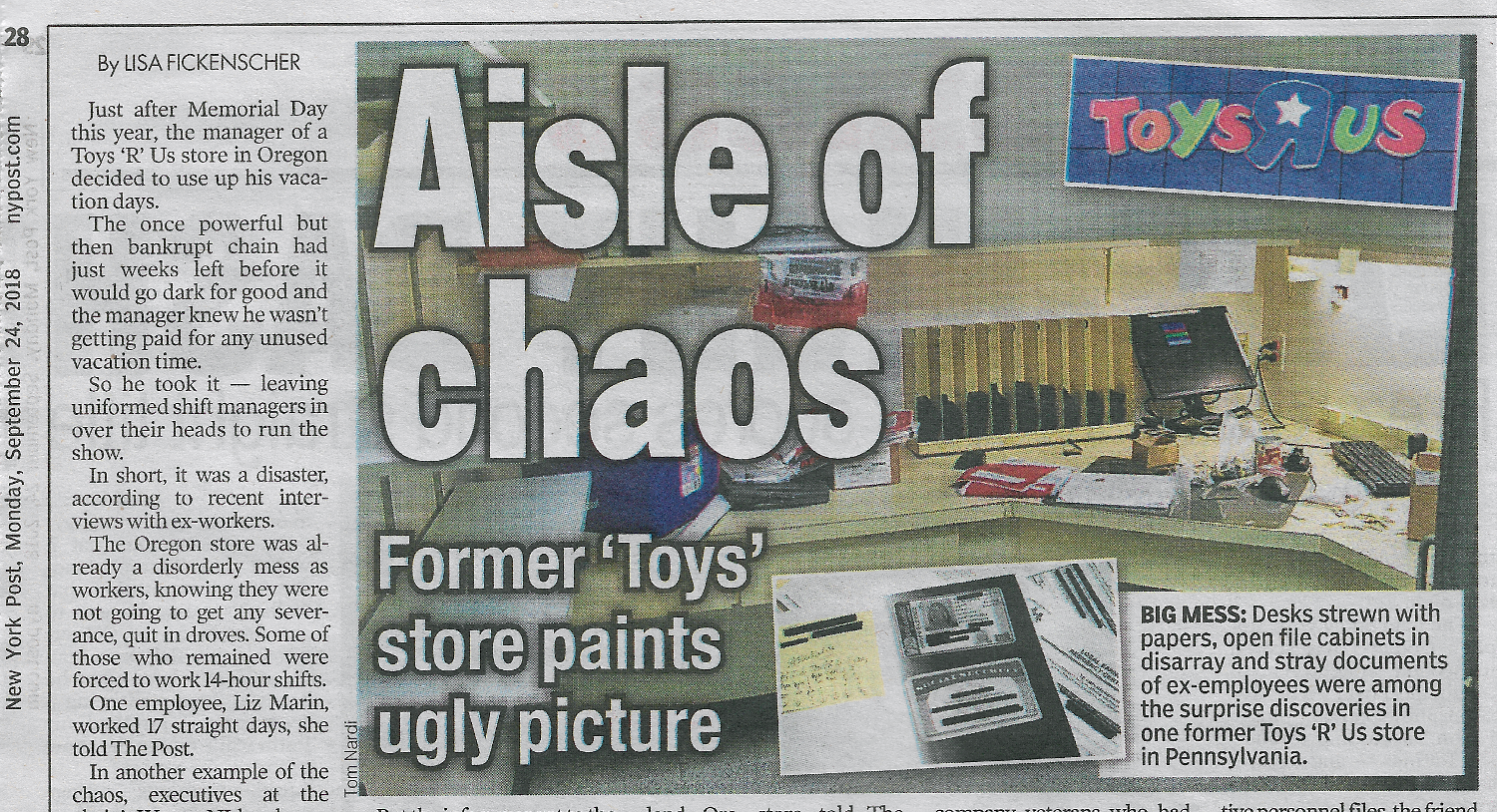
Regular Hackaday readers may recall that a little less than a year ago, I had the opportunity to explore a shuttered Toys “R” Us before the new owners gutted the building. Despite playing host to the customary fixture liquidation sale that takes place during the last death throes of such an establishment, this particular location was notable because of how much stuff was left behind. It was now the responsibility of the new owners to deal with all the detritus of a failed retail giant, from the security camera DVRs and point of sale systems to the boxes of employee medical records tucked away in a back office.

Clipping from New York Post. September 24th, 2018.

The resulting article and accompanying YouTube video were quite popular, and the revelation that employee information including copies of social security cards and driver’s licenses were left behind even secured Hackaday and yours truly a mention in the New York Post. As a result of the media attention, it was revealed that the management teams of several other stores were similarly derelict in their duty to properly dispose of Toys “R” Us equipment and documents.

Ironically, I too have been somewhat derelict in my duty to the good readers of Hackaday. I liberated several carloads worth of equipment from Geoffrey’s fallen castle with every intention of doing a series of teardowns on them, but it’s been nine months and I’ve got nothing to show for it. You could have a baby in that amount of time. Which, incidentally, I did. Perhaps that accounts for the reshuffling of priorities, but I don’t want to make excuses. You deserve better than that.

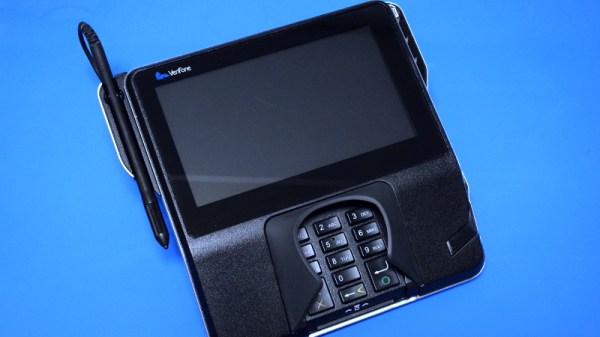
So without further ado, I present the first piece of hardware from my Toys “R” Us expedition: the VeriFone MX 925CTLS. This is a fairly modern payment terminal with all the bells and whistles you’d expect, such as support for NFC and EMV chip cards. There’s a good chance that you’ve seen one of these, or at least something very similar, while checking out at a retail chain. So if you’ve ever wondered what’s inside that machine that was swallowing up your debit card, let’s find out.

Continue reading “Teardown: VeriFone MX 925CTLS Payment Terminal”

Five Years Of The Raspberry Pi Model B+ Form Factor, What Has It Taught Us?

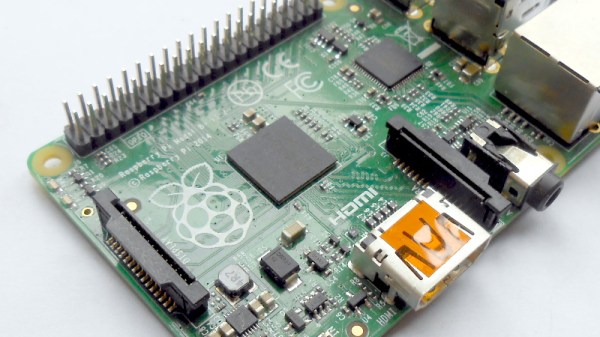
With all the hoopla surrounding the recent launch of the new Raspberry Pi 4, it’s easy to overlook another event in the Pi calendar. July will see the fifth anniversary of the launch of the Raspberry Pi Model B+ that ushered in a revised form factor. It’s familiar to us now, but at the time it was a huge change to a 40-pin expansion connector, four mounting holes, no composite video socket, and more carefully arranged interface connectors.

As the Pi 4 with its dual mini-HDMI connectors and reversed Ethernet and USB positions marks the first significant deviation from the standard set by the B+ and its successors, it’s worth taking a look at the success of the form factor and its wider impact. Is it still something that the Raspberry Pi designers can take in a new direction, or like so many standards before it has it passed from its originator to the collective ownership of the community of manufacturers that support it?

Continue reading “Five Years Of The Raspberry Pi Model B+ Form Factor, What Has It Taught Us?”

Ask Hackaday: How Can You Build For A Ten Millennia Lifespan?

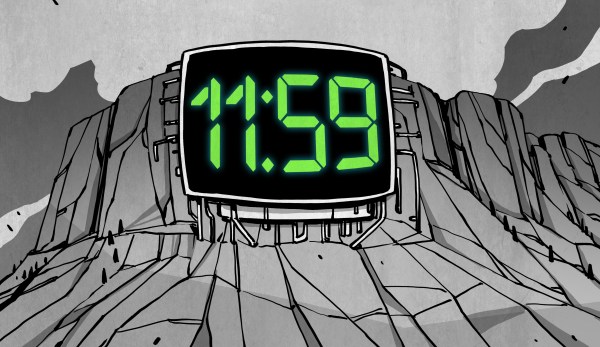
There’s been a lot of news lately about the Long Now Foundation and Jeff Bezos spending $42 million or so on a giant mechanical clock that is supposed to run for 10,000 years. We aren’t sure we really agree that it is truly a 10,000 year clock because it draws energy — in part — from people visiting it. As far as we can tell, inventor Danny Hills has made the clock to hoard energy from several sources and occasionally chime when it has enough energy, so we aren’t sure how it truly sustains itself. However, it did lead us to an interesting question: how could you design something that really worked for 10,000 years?

Continue reading “Ask Hackaday: How Can You Build For A Ten Millennia Lifespan?”

What’s The Deal With Square Traces On PCBs

When designing a printed circuit board, there are certain rules. You should place decoupling capacitors near the power pins to each chip. Your ground planes should be one gigantic fill of copper; two ground planes connected by a single trace is better known as an antenna. Analog sections should be kept separate from digital sections, and if you’re dealing with high voltage, that section needs to be isolated.

One that I hear a lot is that you must never put a 90-degree angle on a trace. Some fear the mere sight of a 90-degree angle on a PCB tells everyone you don’t know what you’re doing. But is there is really no greater sin than a 90-degree trace on a circuit board?

This conventional wisdom of eschewing 90-degree traces is baked into everything we know about circuit board design. It is the first thing you’re taught, and it’s the first thing you’ll criticize when you find a board with 90-degree traces. Do square traces actually matter? The short answer is no, but there’s still a reason we don’t do it.

Continue reading “What’s The Deal With Square Traces On PCBs”

You’re Sitting On An Engineering Masterpiece: Chairs As A Design Challenge

If you move as a hardware hacker through the sometimes surprisingly similar world of artists, craftspeople, designers, blacksmiths, and even architects, there’s one piece of work that you will see time and time again as an object that exerts a curious fascination. It seems that designing and building a chair is a rite of passage, and not just a simple chair, but in many cases an interesting chair.

An American-made Windsor chair from the turn of the 19th century. Los Angeles County Museum of Art [Public domain]
Some of the most iconic seating designs that you will be instantly familiar with through countless mass-produced imitations began their lives as one-off design exercises. Yet we rarely see them in our community of hackers and makers, a search turns up only a couple of examples. This is surprising, not least because there is more than meets the eye to this particular piece of furniture. Your simple seat can be a surprisingly complex challenge.

Moving Charis From Artisan to Mass Market

The new materials and mass production techniques of the 19th and 20th centuries have brought high-end design into the hands of the masses, but while wealthy homes in earlier centuries had high-quality bespoke furniture in the style of the day, the traditional furniture of the masses was hand-made in the same way for centuries often to a particular style dependent on the region in which it was produced.

Continue reading “You’re Sitting On An Engineering Masterpiece: Chairs As A Design Challenge”

Snoopy Come Home: The Search For Apollo 10

When it comes to the quest for artifacts from the Space Race of the 1960s, few items are more sought after than flown hardware. Oh sure, there have been stories of small samples of the 382 kg of moon rocks and dust that were returned at the cost of something like $25 billion making it into the hands of private collectors, and chunks of the moon may be the ultimate collector’s item, but really, at the end of the day it’s just rock and dust. The serious space junkie wants hardware – the actual pieces of human engineering that helped bring an epic adventure to fruition, and the closer to the moon the artifact got, the more desirable it is.

Sadly, of the 3,000,000 kg launch weight of a Saturn V rocket, only the 5,600 kg command module ever returned to Earth intact. The rest was left along the way, mostly either burned up in the atmosphere or left on the surface of the Moon. While some of these artifacts are recoverable – Jeff Bezos himself devoted a portion of his sizable fortune to salvage one of the 65 F1 engines that were deposited into the Atlantic ocean – those left on the Moon are, for now, unrecoverable, and in most cases they are twisted heaps of wreckage that was intentionally crashed into the lunar surface.

But at least one artifact escaped this ignominious fate, silently orbiting the sun for the last 50 years. This lonely outpost of the space program, the ascent stage from the Apollo 10 Lunar Module, appears to have been located by a team of amateur astronomers, and if indeed the spacecraft, dubbed “Snoopy” by its crew, is still out there, it raises the intriguing possibility of scoring the ultimate Apollo artifact by recovering it and bringing it back home.

Continue reading “Snoopy Come Home: The Search For Apollo 10”