Fueling Up For Fusion: MAST’s Super-X, JET’s Deuterium-Tritium Experiments For ITER, And More

We’ve had nuclear fission reactors in operation all over the world for ages, but nuclear fusion always seems to be a decade or two away. While one cannot predict when we’ll reach the goal of sustained nuclear fusion, the cutting edge in test hardware is advancing at a rapid pace that makes us optimistic. Beginning as soon as this month and extending over a few years, we’re living through a very exciting time for nuclear fusion and plasma physics.

The Mega Ampere Spherical Tokamak (MAST) got a big upgrade to test a new cooled divertor design. JET (Joint European Torus) will be testing the deuterium-tritium fuel mixture that will be powering the ITER (the research project whose name began as an acronym for International Thermonuclear Experimental Reactor but has since been changed to just ITER). And the Wendelstein 7-X stellarator is coming back online with upgraded cooled divertors by next year.

Here the MAST Upgrade’s Super-X divertors have so far shown a ten-fold decrease in the temperature which the divertor is exposed to while carrying thermal energy out of the tokamak reactor. This means a divertor design and ultimately a fusion reactor that will last longer between maintenance sessions. On the stellarator side of things, Wendelstein 7-X’s new divertors may allow it to demonstrate the first continuous operation of a stellarator fusion reactor. Meanwhile, JET’s fuel experiments should allow us to test the deuterium-tritium fuel while ITER is working towards first plasma by 2025.

Continue reading “Fueling Up For Fusion: MAST’s Super-X, JET’s Deuterium-Tritium Experiments For ITER, And More”

Virgin Galactic’s Long Road To Commercial Spaceflight

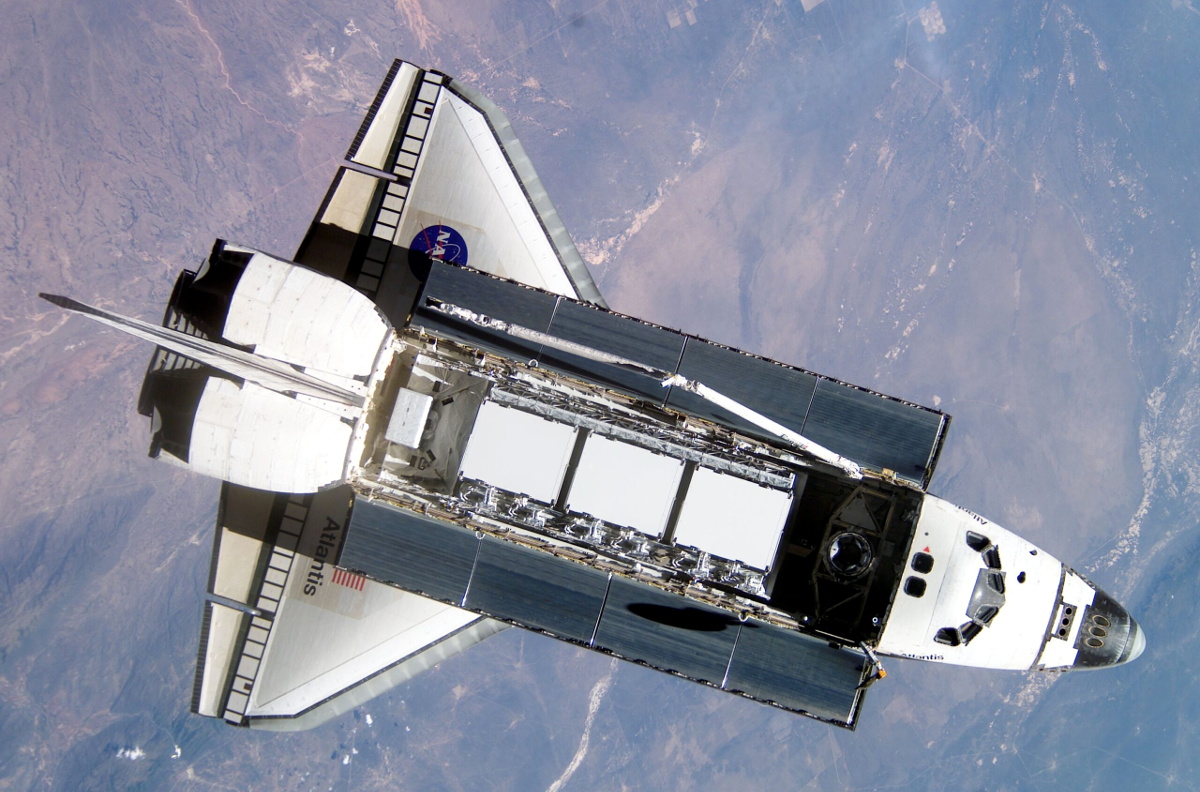
To hear founder Richard Branson tell it, the first operational flight of Virgin Galactic’s SpaceShipTwo has been 18 months out since at least 2008. But a series of delays, technical glitches, and several tragic accidents have continually pushed the date back to the point that many have wondered if it will ever happen at all. The company’s glacial pace has only been made more obvious when compared with their rivals in the commercial spaceflight field such as SpaceX and Blue Origin, which have made incredible leaps in bounds in the last decade.

Richard Branson watching Unity’s test flight.

But now, at long last, it seems like Branson’s suborbital spaceplane might finally start generating some income for the fledgling company. Their recent successful test flight, while technically the company’s third to reach space, represents an important milestone on the road to commercial service. Not only did it prove that changes made to Virgin Space Ship (VSS) Unity in response to issues identified during last year’s aborted flight were successful, but it was the first full duration mission to fly from Spaceport America, the company’s new operational base in New Mexico.

The data collected from this flight, which took pilots Frederick “CJ” Sturckow and Dave Mackay to an altitude of 89.23 kilometers (55.45 miles), will be thoroughly reviewed by the Federal Aviation Administration as part of the process to get the vehicle licensed for commercial service. The next flight will have four Virgin Galactic employees join the pilots, to test the craft’s performance when loaded with passengers. Finally, Branson himself will ride to the edge of space on Unity’s final test flight as a public demonstration of his faith in the vehicle.

If all goes according to plan, the whole process should be wrapped up before the end of the year. At that point, between the government contracts Virgin Galactic has secured for testing equipment and training astronauts in a weightless environment, and the backlog of more than 600 paying passengers, the company should be bringing in millions of dollars in revenue with each flight.

Continue reading “Virgin Galactic’s Long Road To Commercial Spaceflight”

The Many Levels Of Autonomous Motoring

For years now we have been told that self-driving cars will be the Next Big Thing, and we’ve seen some companies — yes, Tesla but others too — touting current and planned features with names like “Autopilot” and “self-driving”. Cutting through the marketing hype to unpacking what that really means is difficult. But there is a standard for describing these capabilities, assigning them as levels from zero to five.

Now we’re greeted with the news that Honda have put a small number of vehicles in the showrooms in Japan that are claimed to be the first commercially available level 3 autonomous cars. That claim is debatable as for example Audi briefly had level 3 capabilities on one of their luxury sedans despite having few places to sell it in which it could be legally used. But the Honda Legend SENSING Elite can justifiably claim to be the only car on the market to the general public with the feature at the moment. It has a battery of sensors to keep track of its driver, its position, and the road conditions surrounding it. The car boasts a “Traffic Jam Pilot” mode, which “enables the automated driving system to drive the vehicle under certain conditions, instead of the driver, such as when the vehicle is in congested traffic on an expressway“.

Sounds impressive, but just what is a level 3 autonomous car, and what are all the other levels?

Continue reading “The Many Levels Of Autonomous Motoring”

History Of Closed Captions: Entering The Digital Era

When you want to read what is being said on a television program, movie, or video you turn on the captions. Looking under the hood to see how this text is delivered is a fascinating story that stared with a technology called Closed Captions, and extended into another called Subtitles (which is arguably the older technology).

I covered the difference between the two, and their backstory, in my previous article on the analog era of closed captions. Today I want to jump into another fascinating chapter of the story: what happened to closed captions as the digital age took over? From peculiar implementations on disc media to esoteric decoding hardware and a baffling quirk of HDMI, it’s a fantastic story.

There were some great questions in the comments section from last time, hopefully I have answered most of these here. Let’s start with some of the off-label uses of closed captioning and Vertical Blanking Interval (VBI) data.

Continue reading “History Of Closed Captions: Entering The Digital Era”

Electric Vehicles Do Battle On Pikes Peak

When we think of electric cars, more often than not we’re drawn to the environmental benefits and the smooth quiet commuter drives they’re so ideally suited for. However, EVs can also offer screaming performance, most notably due to their instant-on torque that gives them a big boost over internal combustion vehicles.

In recent years, this has led to a variety of independent and manufacturer-supported efforts taking on some of motorsport’s classic events. Today, we’re looking at a handful of recent entries that have tackled one of the most gruelling events in motorsport – the Pikes Peak International Hillclimb. Continue reading “Electric Vehicles Do Battle On Pikes Peak”

Flat-Pack Pasta: Like Ikea Furniture Without The Weird Wrench

When it comes to food packaging, there’s no bigger scam than potato chip bags, right? People complain about the air (nitrogen, actually) inside, but it’s there for a reason — nitrogen pushes out oxygen, so the chips live in a state of factory-fresh dormancy until you rip open the bag and release the gas. If you want flat-pack chips, there’s always those uniformly-shaped potato slurry wafers that come in a can. But even those usually manage to have a few broken ones.

On the other hand, no one complains about the extra space in their box of fusilli — that would be silly. But seriously, successfully shipping fragile foods requires either flat packing or a lot of extra space, especially if that food comes in a myriad of fun 3D shapes like pasta does. Everybody knows that 3D pasta is superior to flat pasta because it holds sauces so much better. The pasta must be kept intact!

The great thing about pasta as a food is that it’s simple to make, and it’s more nutritious than potato chips. Because of these factors, pasta is often served in extreme situations to large groups of people, like soldiers and the involuntarily displaced. But storing large quantities of shapely pasta takes up quite a bit of space. And because of all that necessary air, much of the packaging goes to waste.

So what if you could keep your plethora of pasta in, say, a filing cabinet? A research team led by the Morphing Matter Lab at Carnegie Mellon University have created a way to make flat-pack pasta that springs to life after a few minutes in boiling water.

Continue reading “Flat-Pack Pasta: Like Ikea Furniture Without The Weird Wrench”

Getting Started With Aluminum Extrusions

T-slot extrusions used to be somewhat mysterious, but today they are quite common thanks to their use in many 3D printers. However, it is one thing to assemble a kit with some extrusions and another thing to design your own creations with the material. If you ever had a Play-Doh Fun Factory as a kid, then you know about extrusions. You push some material out through a die to make a shape. Of course, aluminum extrusions aren’t made from modeling clay, but usually 6105-T5 aluminum. Oddly, there doesn’t seem to be an official standard, but it is so common that there’s usually not much variation between different vendors.

We use extrusions to create frames for 3D printers, laser cutters, and CNC machines. But you can use it anywhere you need a sturdy and versatile frame. There seems to be a lot of people using them, for example, to build custom fixtures inside vans. If you need a custom workbench, a light fixture, or even a picture frame, you can build anything you like using extrusions. Continue reading “Getting Started With Aluminum Extrusions”