Technical Audacity And The Phone Book

I often think we — or maybe the people who control our money — lack the audacity to take on really big projects. It is hard to imagine laying the transatlantic cable for the first time today, for example. When I want a good example of this effect, I usually say something like: “Can you imagine going to a boardroom of a major company today and saying, ‘We plan to run wire to every house and business in the world and connect them all together.'” Yet that’s what the phone company did. But it turns out, running copper wire everywhere was only one major challenge for the phone company. The other was printing phone directories. In today’s world, it is easy to imagine a computer system that keeps track of all the phone numbers that can spit out a printed version for duplication. But that’s a relatively recent innovation. How did big city phonebooks work before the advent of the computer?

Turns out, the Saturday Evening Post talked about how it all worked in a 1954 article. We aren’t sure there weren’t some computerized records by 1954, but the whole process was still largely manual. By that year, an estimated 60,000,000 directories went out each year in the United States alone. Some of these were small, but the Chicago directory — not including suburban directories — had over 2,100 pages. In New York City, the solution was to print a separate book for each borough. Even then. the Manhattan book was three inches thick and projected to grow to five inches by 1975.

Continue reading “Technical Audacity And The Phone Book”

Ask Hackaday: How Is The Chip Shortage Affecting You?

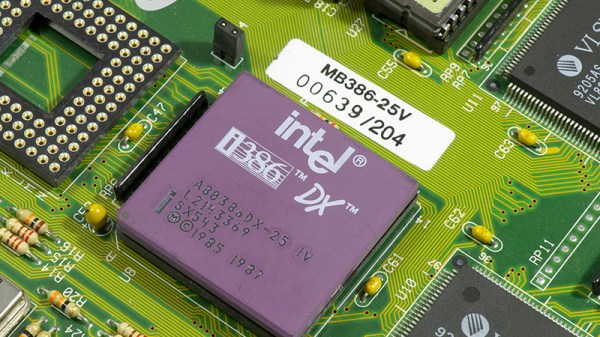
Some friends of mine are designing a new board around the STM32F103 microcontroller, the commodity ARM chip that you’ll find in numerous projects and on plenty of development boards. When the time came to order the parts for the prototype, they were surprised to find that the usual stockholders don’t have any of these chips in stock, and more surprisingly, even the Chinese pin-compatible clones couldn’t be found. The astute among you may by now have guessed that the culprit behind such a commodity part’s curious lack of availability lies in the global semiconductor shortage.

A perfect storm of political unintended consequences, climate-related crises throttling Taiwanese chip foundries and shutting down those in the USA, and faulty pandemic recovery planning, has left the chipmakers unable to keep up with the demand from industries on the rebound from their COVID-induced slump. Particularly mentioned in this context is the automotive industry, which has seen plants closing for lack of chips and even models ditching digital dashboards for their analogue predecessors.

Chips on order everywhere on the Mouser website.

The fall-out from all this drama in the world’s car factories has filtered down through all levels that depend upon semiconductors; as the carmakers bag every scrap of chip fab capacity that they can, so in turn have other chip customers scrambled to keep their own supply lines in place. A quick scan for microcontrollers through distributors like Mouser or Digi-Key finds pages and pages of lines on back-order or out of stock, with those lines still available being largely either for niche applications, unusual package options, or from extremely outdated product lines. The chances of scoring your chosen chip seem remote and most designers would probably baulk at trying to redesign around an ancient 8-bit part from the 1990s, so what’s to be done?

Such things typically involve commercially sensitive information so we understand not all readers will be able to respond, but we’d like to ask the question: how has the semiconductor shortage affected you? We’ve heard tales of unusual choices being made to ship a product with any microcontroller that works, of hugely overpowered chips replacing commodity devices, and even of specialist systems-on-chip being drafted in to fill the gap. In a few years maybe we’ll feature a teardown whose author wonders why a Bluetooth SoC is present without using the radio functions and with a 50R resistor replacing the antenna, and we’ll recognise it as a desperate measure from an engineer caught up in 2021’s chip shortage.

So tell us your tales from the coalface in the comments below. Are you that desperate engineer scouring the distributors’ stock lists for any microcontroller you can find, or has your chosen device remained in production? Whatever your experience we’d like to know what the real state of the semiconductor market is, so over to you!

Retrotechtacular: Double For Nothing

If you are in the market for web hosting in 2021 and you sign up with one of the cloud computing providers, you’ll soon see how the different resources are priced. Storage and bandwidth are cheap, while CPU time is expensive. This reflects the state of a modern computer, in which a typical disk drive now holds a terabyte or more and rising by the year while a new processor is becoming a bottleneck whose performance hasn’t increased as much as the manufacturers would like over models from years ago.

Twice As Much Hardware From A Bit Of Software?

In the early 1990s though it was a different matter. A 486 or early Pentium processor was pretty powerful compared to the DOS or Windows 3.1 software it was expected to run, and it was the memory and disk space attached to it that limited performance… and cost an arm and a leg. There was a period in about 1995 when a supposed fire in a chip factory somewhere sent RAM prices into the hundreds of dollars per megabyte, briefly causing an epidemic of RAM raiding in which criminals would break into offices and take only the SIMs from the computers.

A solution to this problem came perhaps surprisingly from the software industry. Disk Doubler was a DOS driver that promised more disk space, achieving this seemingly impossible feat by compressing the disk to fit more data on it. Processor power swapped for disk space was a reasonable trade at the time so it became extremely popular, and eventually Microsoft incorporated their own disk compression into DOS. In some cases it could even speed up a computer with a slow disk drive, as I found out as a student with a 286 packing an MFM drive.

Something For Nothing, Perhaps It’s Too Good To Be True.

If compression could increase disk space then couldn’t it do the same for RAM? The industry came to the rescue once more with an array of RAM doubler products, first applying the disk doubling technique to on-disk virtual memory, and then doing the same with the contents of the memory itself. The first approach worked at the expense of a system slow-down, while the second, not so much. In fact it was little more than a scam, with software products promising much but delivering absolutely nothing behind the scenes.

Continue reading “Retrotechtacular: Double For Nothing”

Freenode Debacle Prompts Staff Exodus, New Network

It’s no secret that Internet Relay Chat (IRC) has lost some of its appeal in recent years. These days there’s plenty of free chat platforms boasting slick web interfaces and smartphone push notifications, to say nothing of social networks like Facebook and Twitter. The ability to communicate with like minded individuals from all over the planet in real-time is now something we take for granted, so it’s little surprise that newer and flashier protocols and services have steadily eroded the IRC user base.

But there’s often a hidden cost to using these more modern communication protocols. A lack of operational transparency naturally leads to concerns over monitoring and censorship, which makes such services a poor match for the free and open source community. As such, many open projects have eschewed these newer and more popular services for IRC networks that were developed and maintained by the community itself. Among these, the best-known and most respected is Freenode. Originally started as a Linux support channel in 1995, Freenode grew to become the defacto communication and support tool for free and open source projects of all shapes and sizes, and by 2013 had officially become the largest and most active IRC network in the world.

Unfortunately, the incredible legacy of Freenode is now being jeopardized by what former staff members are describing as nothing short of a hostile takeover. Through a complex series of events which actually started several years ago, control of Freenode has been taken from the community and put into the hands of an enigmatic and wealthy entrepreneur who claims his ultimate goal is to revolutionize IRC and return it to the forefront of online communication. Here’s where it gets weird.

Continue reading “Freenode Debacle Prompts Staff Exodus, New Network”

River Cleanup Aims To Expand In Earnest To Tackle Plastic Pollution

The Great Pacific Garbage Patch is just one of a number of pollution disasters affecting the world’s oceans. All over the globe, huge amounts of plastic enter waterways every day, causing havoc in delicate ecosystems.

Heading up the charge to deal with the problem, The Ocean Cleanup have been working on a variety of projects to help clean up plastic pollution. Chief among these is their river cleanup efforts, aiming to stop plastic pollution from reaching the ocean in the first place. The non-profit group intends to rapidly scale up its efforts, partnering with Finnish industrial manufacturer Konecranes in order to put its latest river cleaning design into series production.

We last reported on the group’s efforts in 2020, with their Interceptor craft operating in rivers in Malaysia, Indonesia, and the Dominican Republic. They’ve since refined the design for better functionality and easier deployment. Let’s jump in and see what they’ve learned and how their hunt for plastic pollution is shaping up.

Continue reading “River Cleanup Aims To Expand In Earnest To Tackle Plastic Pollution”

Telemetry Debate Rocks Audacity Community In Open Source Dustup

Starting an open source project is easy: write some code, pick a compatible license, and push it up to GitHub. Extra points awarded if you came up with a clever logo and remembered to actually document what the project is supposed to do. But maintaining a large open source project and keeping its community happy while continuing to evolve and stay on the cutting edge is another story entirely.

Just ask the maintainers of Audacity. The GPLv2 licensed multi-platform audio editor has been providing a powerful and easy to use set of tools for amateurs and professionals alike since 1999, and is used daily by…well, it’s hard to say. Millions, tens of millions? Nobody really knows how many people are using this particular tool and on what platforms, so it’s not hard to see why a pull request was recently proposed which would bake analytics into the software in an effort to start answering some of these core questions.

Now, the sort of folks who believe that software should be free as in speech tend to be a prickly bunch. They hold privacy in high regard, and any talk of monitoring their activity is always going to be met with strong resistance. Sure enough, the comments for this particular pull request went south quickly. The accusations started flying, and it didn’t take long before the F-word started getting bandied around: fork. If Audacity was going to start snooping on its users, they argued, then it was time to take the source and spin it off into a new project free of such monitoring.

The situation may sound dire, but truth be told, it’s a common enough occurrence in the world of free and open source software (FOSS) development. You’d be hard pressed to find any large FOSS project that hasn’t been threatened with a fork or two when a subset of its users didn’t like the direction they felt things were moving in, and arguably, that’s exactly how the system is supposed to work. Under normal circumstances, you could just chalk this one up to Raymond’s Bazaar at work.

But this time, things were a bit more complicated. Proposing such large and sweeping changes with no warning showed a troubling lack of transparency, and some of the decisions on how to implement this new telemetry system were downright concerning. Combined with the fact that the pull request was made just days after it was announced that Audacity was to be brought under new management, there was plenty of reason to sound the alarm.

Continue reading “Telemetry Debate Rocks Audacity Community In Open Source Dustup”

Gassing Up: Understanding The Liquid Fuel Distribution Network

When someone talks about “The Grid,” as in “dropping off the grid” or “the grid is down,” we tend to think in terms of the electromagnetic aspects of the infrastructure of modern life. The mind’s eye sees The Grid as the network of wires that moves electricity from power plants to homes and businesses, or the wires, optical cables, and wireless links that form the web of data lines that have stitched the world together informatically.

The Grid isn’t just about power and data, though. A huge portion of the infrastructure of the developed world is devoted to the simple but vital task of moving liquid fuels from one place to another as efficiently and safely as possible. This fuel distribution network, comprised of pipelines, railways, and tanker trucks, is very much part of The Grid, even if it goes largely unseen and unnoticed. At least until something major happens to shift attention to it, like the recent Colonial Pipeline cyberattack.

Continue reading “Gassing Up: Understanding The Liquid Fuel Distribution Network”