Take Better Pictures Of Your Projects

[PT] let us know about a fantastic guide to taking better photographs of your projects. It’s a hefty read but well worth the effort. Author [Johngineer] helps us understand how to use simple (and possibly inexpensive) tools like lights, mirrors, and a background material. He also gives some tips on how to recognize what your image processing software is telling your about your photography skills (get the correct camera setup and you won’t need correct your levels in The GIMP). There’s even some tips on photographing LEDs, a topic we’ve seen before, which you’re bound to find useful when trying to make that blinky thing you built into an Internet sensation.

Microscope Camera Adapter

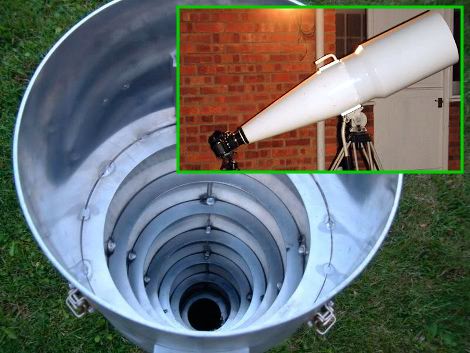
[Ben Krasnow] is capturing some great snapshots using a microscope adapter and some tricks. The camera attachment is just a lens adapter ring with a tube added. Unlike other microscope imaging hacks we’ve seen he used a real microscope but found that the pictures had a bit of light distortion to them. The camera sensor was picking up a glare reflected on the inside of the black tube. By adding a washer and repositioning the apparatus he got over that hurdle. The final part of the puzzle is image processing. By taking several pictures at different focal lengths and compositing them he gets killer photos like the compound eyes of that house fly seen above.

Snapping Pics At The Right Moment With A Pressure Plate

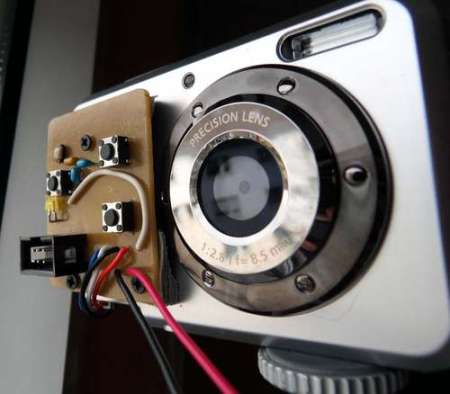
[BiOzZ] built a pressure sensitive camera accessory to snap pictures at just the right moment. Before turning out all the lights the camera is set up with a twenty-second timer and a three-second exposure. The pressure plate doesn’t take the photo, but fires the flash to catch an image in the middle of the action.

The hack uses a piece of acrylic as the base of the pressure plate. A switch is constructed by placing aluminum tape on the base, and attaching a thin metal strip that is bent to add just a bit of spring. When an object is place on the plate the thin metal contacts the aluminum tape completing the circuit, a change in the weight breaks it. A simple circuit connects to this, using a relay to actuate the flash from a disposable camera. This is perfect for documenting the moment when you exercise that fruit-induced rage that has been consuming you lately.

Guide To Producing Tilt-shift Photography

[Bhautik] is back again with more tilt-shift photography.  This time, hes brought us a quite in depth guide to tilt-shift photography. He covers the technical side of how tilt-shift works, showing the differences in several methods. There is a breakdown of different cameras and ease of modification as well as links to several of his past projects. He even shows comparisons between instant tilt-shift Photoshop methods and the real thing, pointing out key things to look for to identify the real deal.

Miniscule Intervalometer

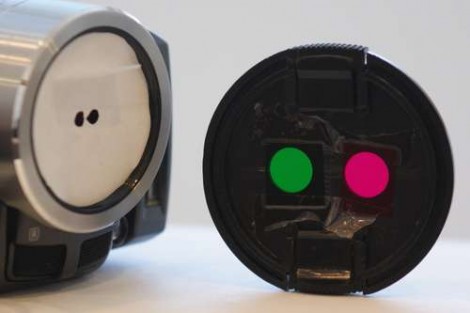
Calling this intervalomemter small would be a glaring understatement. It’s tiny enough to fit inside the plastic cover for a 2.5mm jack for use with a Canon DSLR camera. We should point out that the image we put together is a bit misleading. The picture of the jack is version 1 of this circuit and uses an 8-pin SOIC chip. The board in the oval is version 2, with a PIC 10f222 SOT23-6 package making it even smaller than the original version.

This is used for time-lapse photography. When plugged in the chip draws power from the camera. Get this: it learns the timing interval by listening for the first two images. Once you’ve snapped the first two pictures the PIC will continue to take images based on that initial delay. Amazing.

[Thanks AW via DIY Photography]

3 Camera Booms For Your Wednesday Afternoon

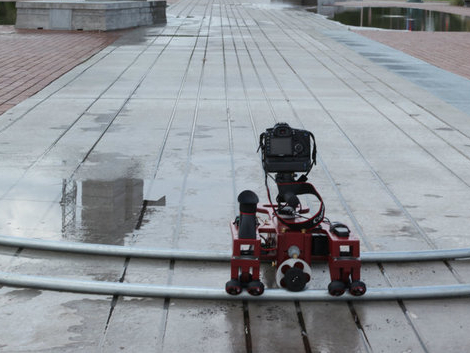
[Andrew] tipped us off about his Cable Cam built out of some lumber and clothes line. It is small enough to fit into a backpack,  includes a safety line and the camera can pan and tilt. A future version is planned with a small remote motor to move the trolley more effectively.

[Andrew] accidentally linked us to his other Camera Crane, taking the same ‘cheap yet effective’ approach as his Cable Cam. Once again, just some lumber and creative engineering are used to pull this one off.

For those without the ability to weld, check out [Bill Van Loo’s] all wood version of a Camera Crane. Same parallelogram design, without remote video output or central pivot.

Panoramic And Spheric Tripod Rig

This simple yet precise build takes your camera for a spin in order to take spherical and multi-row panorama photographs. The rig mounts to a tripod, using two servo motors for motion, producing images that can be stitched together perfectly. An Arduino handles the hardware with an LCD interface for dialing in the settings.It’s not the cheapest way to get 360 degree shots but the example images are amazing.

[Thanks Juan]