Hackaday Meetup With [Chris Gammell]

hackaday-meetup-with-chris-gammell

Update: We have it figured out. We’re bringing the awesome at The Blind Donkey in Pasadena, CA at 6pm this evening. Stop in with your hardware and your war stories. Chris Gammell, Mathieu Stephan, and I can’t wait to talk Arduino hardware hacking with you!

I’m getting to meet all kinds of cool people in person this year, and so can you! Well… if you happen to be in Pasadena, California on Wednesday after work and have nothing better to do. [Chris Gammell] — well-known for The Amp Hour and Contextual Electronics — and I are both going to be in town. We’re meeting up for a beer and thought we’d invite you along for the fun.

Details are scarce right now. I’m not sure of time or place (other than Pasadena area) so make sure you follow @Hackaday on Twitter and watch for the #HaD_meetup tag Wednesday afternoon for the details. We’ll also update the Hackaday Projects event page at the time. I’ll bring along some swag; you’d better cart along a piece of hardware to show off in return for a t-shirt or stickers. You’re on your own for food and beverages at this one.

Wondering what I meant about meeting lots of cool people? In addition to the nearly 500 awesome readers who showed up at The Gathering, I met [Brian] and [Eliot] for the first time.

Guest Post: Try Radar For Your Next Project

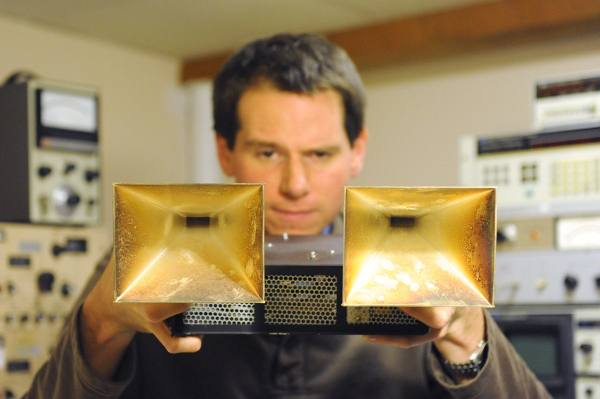
Sensors. The low-end stuff that we can get our hands on usually suffers from poor range, lack of sensitivity, and no way to characterize what the target is. But today we can use the good stuff that, until recently, was only available to military: radar. In this post we will discuss how radar works, commercially available small radar devices, and where to learn more to help make it easy to add radar to your next project. Reach out and sense something!
Continue reading “Guest Post: Try Radar For Your Next Project”

Introducing: Hackaday Projects

Today Hackaday is launching a new site that furthers our goal of being a Virtual Hackerspace. Now you can host your own hacks and builds in a place truly worthy of what we’re all about. We present to you: Hackaday Projects.

What’s so great about it? It has a dark theme, just like the blog! Actually, the awesome of the new site is a combination of what’s already available and what we have planned. First and foremost, the site has been built from the ground up with open data in mind. This means you own what you create on Hackaday Projects. You can export your work, delete it, and use a public API to extend the usefulness of the data. Secondly, we have a range of different tools which are extremely easy and quick to use, but allow rich styling and presentation when you need it. Want to see what we mean? Go check out the NFC Voting Rig that was at The Gathering.

Where do we go from here? A huge part of that is up to you. We need Hackaday readers to get in there and tell us what works, what doesn’t work, and what needs to be added. Are you up to the task? Request your alpha testing invite now and guide Hackaday Projects to be the hosting site the Hackaday community has always dreamed about!

Call For Hams And Hackers: Welcome ICE/ISEE-3 Home

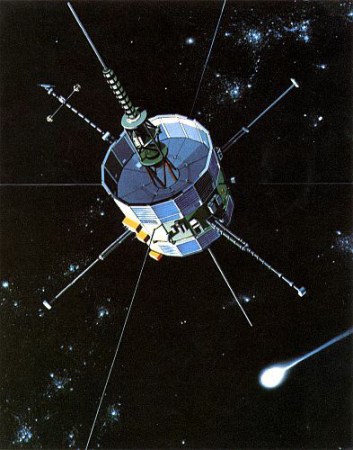
ISEE-3, one of America’s most dedicated space exploration vessels is on its way home. Unfortunately, when it gets here, no one will be talking to it. NASA decommissioned the equipment needed to communicate with the satellite nearly 15 years ago. [Emily Lakdawalla] at the planetary society has been following the long traveled probe for years. Her recent article on the topic includes the news that NASA essentially gave up the battle before it even started.

Originally named International Sun/Earth Explorer 3 (ISEE-3), the spacecraft was launched atop a Delta rocket on August 12, 1978. Its mission was to study interaction between the Earth’s magnetic field and solar wind. As part of this mission ISEE-3 became the first spacecraft to enter halo orbit. It did this by positioning itself at Lagrangian point L1, directly between the sun and the Earth. In 1982, scientists on earth were preparing for the 1986 flyby of Halley’s Comet. ISEE-3 was repurposed as a comet hunter, and renamed International Cometary Explorer (ICE). The craft flew back to Earth and entered lunar orbit, coming within 120km of the moon’s surface. It used this momentum to achieve a heliocentric orbit, on track for two comet encounters. ICE/ISEE-3 encountered Comet Giacobini-Zinner on September 11, 1985, collecting data and becoming the first spacecraft to fly through a comet’s plasma tail. While not considered part of the Halley Armada, ICE/ISEE-3 took measurements as it passed within 28 million km of Comet Halley’s nucleus. Since then, ICE/ISEE-3 has continued on its 355 day heliocentric orbit. It studied coronal mass ejections in the early 90’s, before being shut down in May of 1997. Follow us past the break to learn ICE/ISEE-3’s fate.

Continue reading “Call For Hams And Hackers: Welcome ICE/ISEE-3 Home”

Hackaday Retro Edition: Retro Roundup

retro

We’ve rebooted the Hackaday Retro Edition and again we’re getting a few submissions for retro successes – old computers that somehow managed to load our crappy, pure-HTML, no-javascript edition.


Inspired by the Palm Lifedrive in the previous retro roundup, [Bobby] dug out his Palm TX and loaded up the retro edition with the Blazer browser. Given this device has WiFi and a browser, it’s not much, but [Bobby] did run in to a bit of a problem: Palm never released WPA2 for personal use, and this device’s WPA abilities are buried away in a server somewhere. Interesting that a device that’s relatively young could run into problems so easily.

How about another Palm? [nezb]’s first smartphone, back in 2003, was a Treo 600. He dug it out, got it activated (no WiFi), and was able to load the retro edition. Even the Palm-optimized edition of Slashdot works!

How about some Xenix action? [Lorenzo] had an Olivetti 386 box with 4MB of RAM with Xenix – Microsoft Unix – as the operating system. The connection was over Ethernet using a thinnet card. Here’s a video of it booting.

[Eugenio] sent in a twofer. The first is a Thinkpad 600, a neat little laptop that would make for a great portable DOS gaming rig. It’s running Mandrake Linux 9, his very first Linux. Next up is the venerable Mac SE/30 with a Kinetics Etherport network card. It’s using a telnet client to talk to a Debian box.

Here’s one that was cool enough for its own post: [Hudson] over at NYC Resistor salvaged an old Mac SE with a BeagleBone Black connected to the CRT. This effectively turns the SE into a modern (if low powered) ARM Linux box. Emulators are always an option, though, as is loading our retro edition in xterm.

Links to the pics below, and you’re always welcome to dust off your old boxxen, fire it up, and load up the retro edition. It’s new and improved! Every half hour or so, five classic hacks from the first 10,000 Hackaday posts are converted to pure HTML. Take a pic and send it in.

Continue reading “Hackaday Retro Edition: Retro Roundup”

Hackaday Terms Of Use (aka: The Lawyers Are Coming!)

they-laywers-are-coming

Hackaday has posted Terms of Use and Privacy Policy documents which you should read. These can also be accessed through the Policies Page which is linked in the footer. We’ve edited this post to take up less room since it will be sticky for a few days. Original text and updates after the jump.

Continue reading “Hackaday Terms Of Use (aka: The Lawyers Are Coming!)”

Hackaday Visits The Clark Magnet High School

school

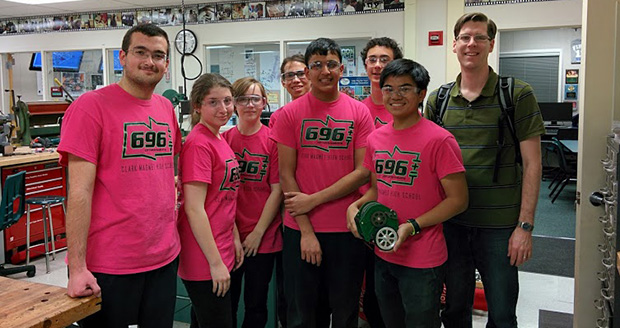
Thought Hackaday’s trip to LA was all about hackerspaces, parties, and rummaging through piles of awesome junk? Nope. We’re also tasked with some community outreach that brought us to the Clark Magnet High School in Glendale, CA.

This isn’t your usual high school. Each year, it accepts around 300 new freshmen (grade 9) from the other high schools in the Glendale district. Selection is done through a lottery system, ensuring it’s not just the kids “on the good side of the tracks” or whose parents are active in the PTA that are selected; about 52% of the students at Clark can be classified as at or below the poverty line.

The curriculum? Instead of stopping at the classical comprehensive high school education, the students at Clark Magnet are focused primarily on the STEM fields. They’re also the home base for Team 696, a FIRST robotics team that has done very well in robotics competitions. A few mentors from JPL and IBM help the students out on their projects, and the head of Clark’s engineering program, [David Black], as well as the principal, were once students themselves.

As far as their engineering program goes, they have a very impressive setup; their workshop features a Haas minimll with a 10-tool carousel, a huge CNC wood router, more than one 3D printer, a small woodshop, a CAD classroom – in short, enough tools to make just about anything. Because Clark Magnet is in sunny California, they’ve been able to get a few grants and build a 358kW peak solar array behind the football field. It’s enough to keep the lights on, and the electric bill down, allowing them to hire an additional teacher or two.

In addition to an impressive engineering/shop class, there’s also an audio and video production suite filled with Mac Pros, cameras, mixing boards and 96 Terabytes of storage. It’s not an exaggeration to say this high school is better equipped than some colleges.

Clark also does some other very interesting stuff outside of class; they’ve launched and recovered high altitude balloons, traveled to elementary schools to play with Lego robots, and some students also have impressive home-built projects they bring in to tinker with. We saw a homebrew quadcopter and a very awesome Mecanum wheel robot that we expect to see in the Hackaday tip line shortly.

Despite how awesome the Clark engineering department is, and how capable the students are, they’ve said the FIRST robotics team has been getting a lot of flak from the rest of the maker community. Apparently some people see an amazing engineering program as a waste of resources. From our short time at Clark, we think nothing could be further from the truth. These students are quickly becoming experts at CAD design and CNC operations. They’re competent embedded programmers and well on their way to becoming awesome engineers. Students who don’t want to build a robot or program firmware get involved in project planning, marketing, and all the rest of the business that goes into running a initiative of this size. It’s a truly awesome program, and I have to say I’m a little bit jealous I didn’t graduate from Clark.

Gallery of pics and two videos below: going over the workshops at Clark and a robot project. Our fanboyism for Clark also demands we link to the (very small and very resonable) Kickstarter the FIRST robotics team is using for their 2014 budget.

Continue reading “Hackaday Visits The Clark Magnet High School”