Supercon 2022: Sophy Wong Is Making An Impact With Artistic Wearables

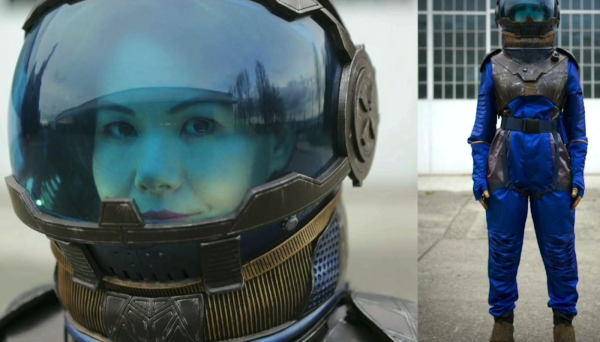
Prolific designer and maker Sophy Wong is always looking toward the future, and that goes for everything from the costume pieces she makes to the idea of making itself. In her excellent and highly-visual Supercon talk, Sophy explores both, and gives the viewer a window on her evolved-and-evolving design philosophy.

You likely know Sophy as That Maker Who 3D Prints On Fabric, a label she is quick to dismiss, pointing animatedly toward the seminal work of one David Shorey, who also happened to be at Supercon 2022. As Sophy explains, the process begins by modeling disconnected bodies to be printed, then printing the first layer and pausing the print. At this point, a piece of nylon mesh is inserted, and the print is resumed. The result is that the mesh is trapped between the first and second layers, and the bodies are now connected by a common thread. Carefully remove the sandwich from the print bed and you have a highly-flexible, mesmerizing piece of material that almost acts like chain maille.

Continue reading “Supercon 2022: Sophy Wong Is Making An Impact With Artistic Wearables”
Open-Sourcing The Lisa, Mac’s Bigger Sister

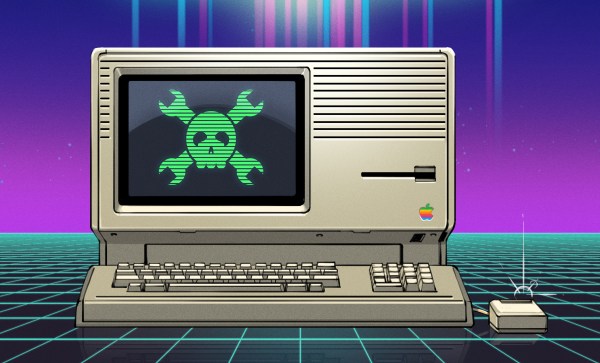
Forty years ago, on January 19th of 1983, Apple released the Lisa, which was in many ways a revolutionary system. On January 19th of 2023, to celebrate the system’s 40th birthday, the Computer History Museum released the source code for Lisa OS version 3.1 under the Apple Academic License Agreement. Written in Pascal, the source includes over 1,300 source files, covering the OS itself, the Lisa Toolkit development system and a number of applications. The questions one might ask at this point include what the Apple Lisa even is, and why it was such an important system in computer history.

This especially in light of the terrible flop that the Lisa turned out to be, with only 10,000 units sold over two years. Part of this failure was definitely due to the introductory price, that was set at $9,995 (over $27,000 in 2021 dollars). Although it featured an OS with memory protection, despite the lack of an MMU on the Motorola 68k, among other advanced features that placed it well beyond other desktop computers of the time, it got quickly crushed in the market by Apple’s MacIntosh, even after successive Lisa successor releases that sought to address its shortcomings.

Continue reading “Open-Sourcing The Lisa, Mac’s Bigger Sister”

Hackaday.io Low-Power Challenge Begins Today

How low can you go? The 2023 Hackaday.io Low-Power Challenge is about doing the most with the least juice – bang for the power-budget buck, if you get our drift. And with three $150 gift certificates from Digi-Key on the line, you’ll be able to keep your projects going forever. The Challenge runs until March 21st, but with low-power, the devil is often in the details, so get started today!

More and more projects need to run on their own power, and more often than not, that means getting by without access to a wall plug. This contest is to encourage your designs that run on solar, small batteries, and generally energy harvested from wherever you can get it. But the power generation mechanism is taking the back seat here – we want to see what you can do with a few good electrons. Surprise us with your maximum minimalism!

Continue reading “Hackaday.io Low-Power Challenge Begins Today”

Broken Genes And Scrambled Proteins: How Radiation Causes Biological Damage

If decades of cheesy sci-fi and pop culture have taught us anything, it’s that radiation is a universally bad thing that invariably causes the genetic mutations that gifted us with everything from Godzilla to Blinky the Three-Eyed Fish. There’s a kernel of truth there, of course. One only needs to look at pictures of what happened to Hiroshima survivors or the first responders at Chernobyl to see extreme examples of what radiation can do to living tissues.

But as is usually the case, a closer look at examples a little further away from the extremes can be instructive, and tell us a little more about how radiation, both ionizing and non-ionizing, can cause damage to biochemical structures and processes. Doing so reveals that, while DNA is certainly in the crosshairs for damage by radiation, it’s not the only target — proteins, carbohydrates, and even the lipids that form the membranes within cells are subject to radiation damage, both directly and indirectly. And the mechanisms underlying all of this end up revealing a lot about how life evolved, as well as being interesting in their own right.

Continue reading “Broken Genes And Scrambled Proteins: How Radiation Causes Biological Damage”

Smiling ad family with 3D printer

Ask Hackaday: Do Kids Need 3D Printers?

Mattel holds a fond place in most people’s hearts as they made many of the toys we played with as kids. You might remember the Thingmaker, which was essentially an Easy Bake Oven with some goop and molds that let you make rubbery creatures. But back in 2016, Mattel had an aborted attempt to bring 3D printing to kids under the Thingmaker label. You can see a promo video of the device below. You might not have seen one in real life, though. The product was delayed and eventually canceled. Even so, we frequently see press releases for “kids printers” and we’ve been wondering, should this be a thing? Continue reading “Ask Hackaday: Do Kids Need 3D Printers?”

Vintage Electronics Hack Chat

Join us on Wednesday, January 25 at noon Pacific for the Vintage Electronics Hack Chat with Keri Szafir!

The world of the hardware hacker is filled with smells. The forbidden but enticing waft of solder smoke, the acrid bite of the Magic Blue Smoke, the heady aroma of freshly greased gears, the unmistakable smell of hot metal — they all tell a story, sometimes good, sometimes bad.

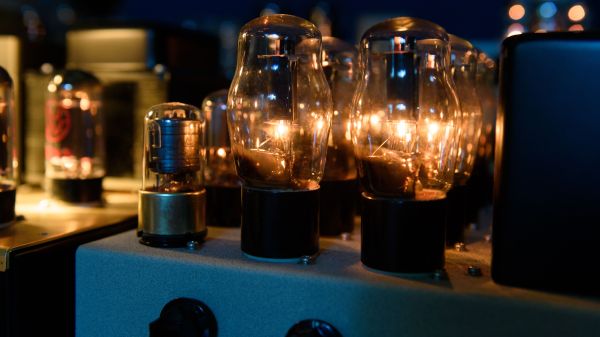
But the smell inside a piece of vintage electronics? Now that’s a complicated story indeed. It might be the wax of the old capacitors, the resinous scent of well-baked resistors, the enameled wire in transformers, or just the smell of the hot glass of the vacuum tubes. Whatever it is, once you smell it, you’ll never forget it

join-hack-chatFor some of us, that first whiff starts a lifelong passion for vintage gear. Keri Szafir knows quite well what it’s like to be bitten by the vintage bug, so much so that she goes by “The Vacuum Tube Witch” over on her YouTube channel. Her projects include repairs and restorations of vintage amps and radios, and even new builds with old tubes. She’ll stop by the Hack Chat to talk about vintage electronics, tube hoarding collecting, and even her new interest in retro display technologies. Where there’s a tube, there’s a way!

Our Hack Chats are live community events in the Hackaday.io Hack Chat group messaging. This week we’ll be sitting down on Wednesday, January 25 at 12:00 PM Pacific time. If time zones have you tied up, we have a handy time zone converter.

NASA Lunar Probe Finds Out It’s Not Easy Being Green

If you’re a space fan, these are very exciting days. There’s so much happening overhead that sometimes it can be difficult to keep up with the latest news. Artemis I just got back from the Moon, the International Space Station crew are dealing with a busted Soyuz, SpaceX is making incredible progress with their Starship architecture, CubeSats are being flung all over the solar system, and it seems like every month a new company is unveiling their own commercially-developed launch vehicle.

Lunar Flashlight

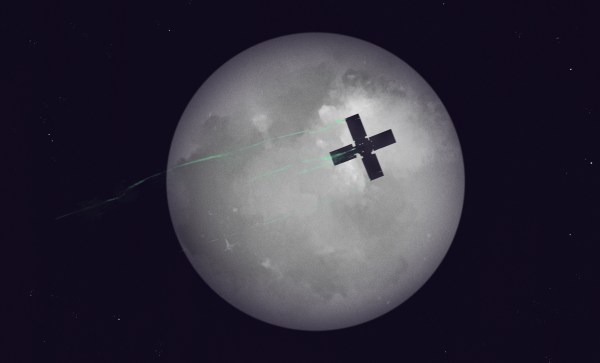
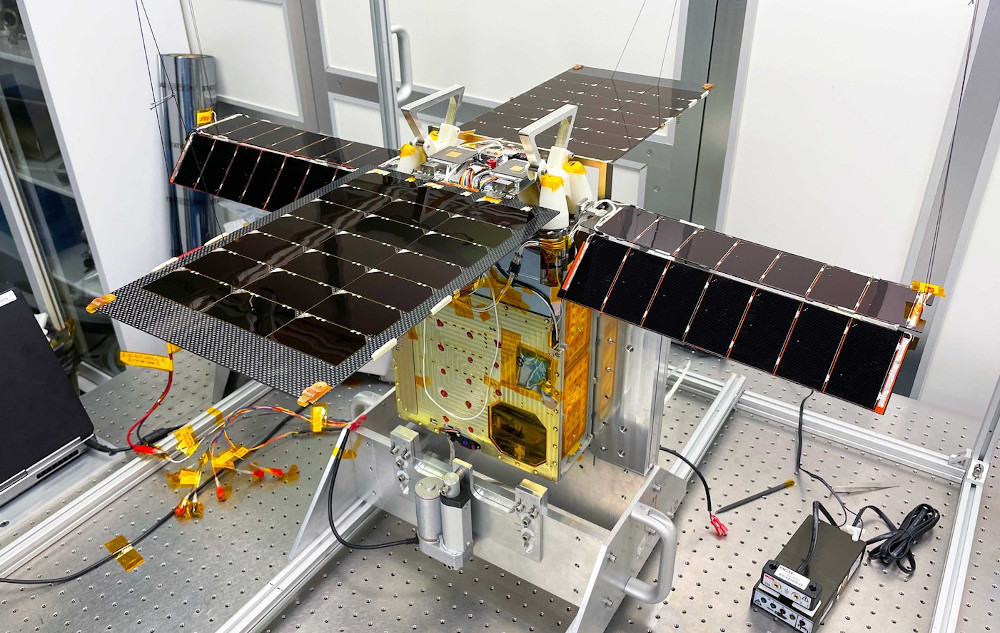
So with everything going on, we wouldn’t be surprised if you haven’t heard about NASA’s Lunar Flashlight mission. The briefcase-sized spacecraft was launched aboard a special “rideshare” flight of SpaceX’s Falcon 9 rocket back on December 11th — tagging along with two other craft heading to our nearest celestial neighbor, the Japanese Hakuto-R lander, and a small rover developed by the United Arab Emirates. There was a time when a launch like that would have been big news, but being that it was only the second of seven launches that SpaceX performed in December alone, it didn’t make many headlines.

But recently, that’s started to change. There’s a growing buzz around Lunar Flashlight, though unfortunately, not for the reasons we’d usually hope. It seems the diminutive explorer has run into some trouble with its cutting-edge “green” propellant system, and unless the issue can be resolved soon, the promising mission could come to an end before it even had a chance to start.

Continue reading “NASA Lunar Probe Finds Out It’s Not Easy Being Green”