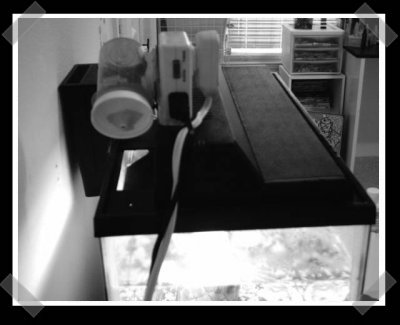
[BahaTanju] sent in this oh so simple fish feeder. It’s a mechanical light timer with a simple dispensing bottle mounted to the rotating time wheel. As the timer rotates, food is dispensed and the aquarium light is activated. If you have bigger fish, you could adapt this to work on a solenoid and use a timer with multiple on/off settings.
home hacks1938 Articles
How-To: Make An RGB Combination Door Lock (Part 2)

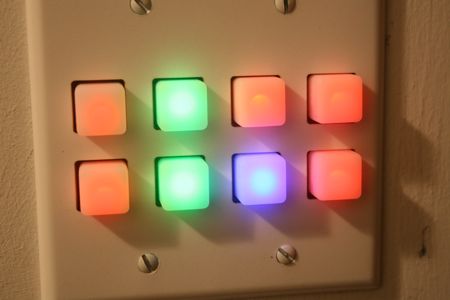
In part 1 we showed you how to build your own prototype RGB keypad. Today we’ll show off some new ideas we worked on to create the project and turn it from prototype to fully functional battle station er door lock.
Continue reading “How-To: Make An RGB Combination Door Lock (Part 2)”
How-To: Make An RGB Combination Door Lock (Part 1)

Part 2 can be found here
Putting a custom designed electronic lock on your space seems like a geek right of passage. For our latest workspace, we decided to skip the boring numbered keypad and build a custom RGB backlit keypad powered by an Arduino. Instead of typing in numbers, your password is a unique set of colors. In today’s How-To, we’ll show you how to build your own and give you the code to make it all work.
Continue reading “How-To: Make An RGB Combination Door Lock (Part 1)”
IR Controlled Relays

If you’re thinking of building some DIY home automation, this looks like an interesting idea. At the heart is a PIC16F84 that decodes IR signals and controls six outputs – in this case, relays to activate various appliances. The PIC is dirt cheap – if you get a deal on some relays you should be able to build a small local IR HA system for $30… This might be just the thing for my office. It’s cheap enough that it probably wouldn’t walk off.
3 Liter Homebrew Beer Keg

Beer kegs are several things. They are expensive, heavy, but most importantly delicious. We found a nice guide for creating your own 3 liter beer keg. This is an inexpensive solution for homebrewers looking to keg their own beer.
The guide goes into detail on assembly and parts needed to create the bottle adapter. Most of the parts can be picked up locally or through MoreBeer.com. CO2 cartridges are used to pressurize the bottle. To keep everything cool you can use a standard water cooler with a few simple modifications. The 3 liter bottle is too tall for some coolers so you’ll need to cut a hole in the lid. Add a piece of aluminum covered styrofoam to the top and bottom, toss in some ice, and your brew should stay cold for about 3 hours.
The author does note that this is not recommended for long term storage. So drink up!
Parasitic Power Devices

Aside from having a very cool name, parasitic power is an innovate way to recapture already spent power. This power can come in the form of wasted heating or cooling of a building for example. Last week the Southern Methodist University activated the first commercial Green Machine from ElectraTherm. The unit recycles residual heat from the building into electricity. So far, the 50kW Green Machine has exceeded expectations. The company also says owners can recoup the units cost after about three years.
What It Takes To Go Solar

ExtremeTech has posted an article detailing the process of adding solar power to a house. The author included some interesting detail about his personal power consumption, and details about the process of selecting his contractor too. The total cost of the installation came to about $36,000 after state and federal rebates for going solar.
It’s not a homebrew setup, but it’s good to see an article detailing all that is involved. We’ll take you through the tech side of it after the break.