A Flexible Light Inspired By IKEA

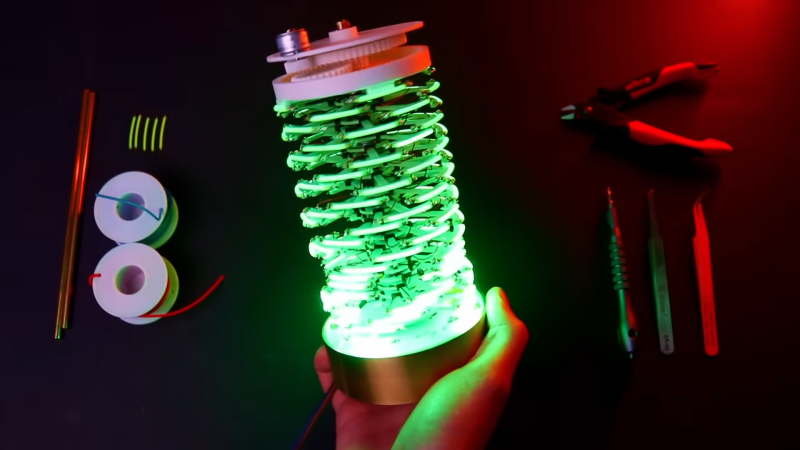
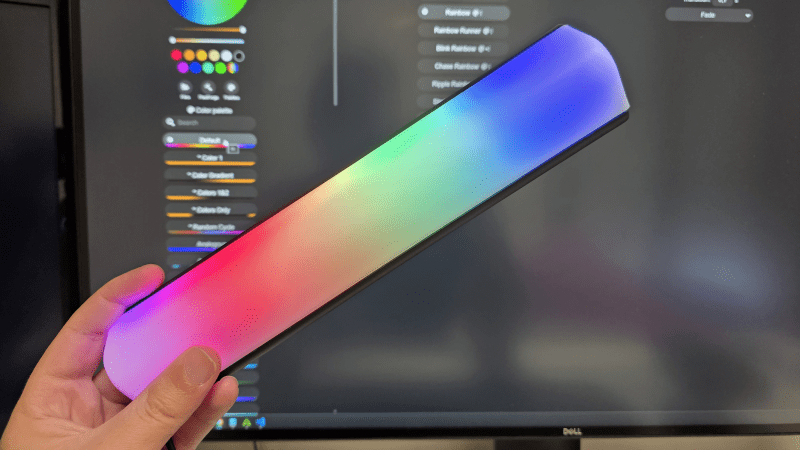
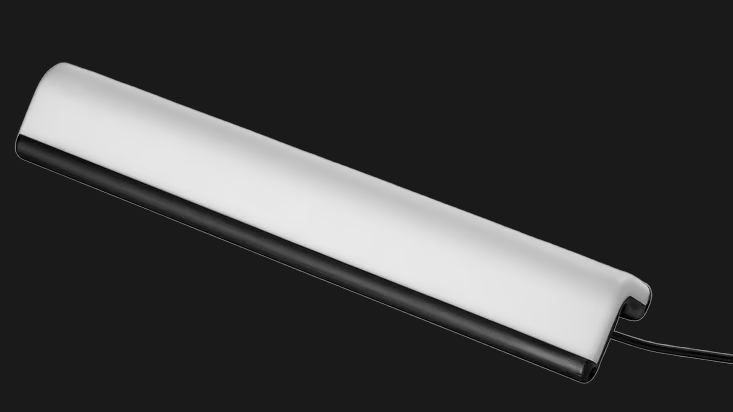
The IKEA SMÅSNÖRE is a flexible silicone rod with an embedded LED strip, attached at each end to a base. It’s eye-catching enough, and it has the useful property of providing a diffuse light from multiple angles that makes it a promising candidate for a work lamp. That’s enough for [Daniel James] to create his own lamp on a similar vein.

The electronics of his lamp are straightforward enough: a 12 volt LED strip whose brightness is controlled by a Pi Pico in response to a potentiometer as a brightness control. It’s not quite stiff enough to form the arch itself, so he’s created a 3D printed chain that forms the structure of the lamp. Similar to a bicycle chain in the way it’s constructed, it has individual links that slot together and pivot. The electronics are in the printed base at one end.

We like this lamp a lot, for the light it gives on the bench and for the ingenuity of the printed chain. We might even make one for ourselves.

Build A Stranger Things Wall You Can Freak Out At In Your Own Home

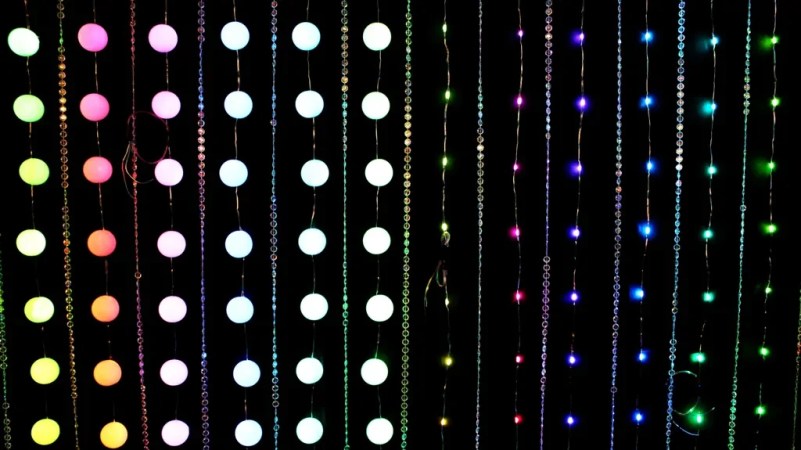
When Stranger Things premiered in 2016, it was a cultural force. Foreign DJs gushed over the lush 80s soundtrack, fashionistas loved the clothing, and the world became obsessed with the idea of using Christmas lights to communicate across material planes. [kyjohnso] has recreated that experience with the technology of today.

If you haven’t watched the show — Joyce Byers is trying to communicate with her son Will, who just so happens to be stuck in another plane of existence called the Upside Down. She screams questions at her living room wall, upon which hangs a series of Christmas lights, marked with the letters A to Z. Will is able to communicate back by causing the lights to flash, one letter at a time.

This build works a little differently. You basically type a message into a terminal on a Raspberry Pi, and it gets sent to a large language model—namely, the Claude API. The response from Claude (or Will Byers, if you’re imagining) is then flashed out on a WS2812B set of LED Christmas lights on the wall. [kyjohnso] added dramatic pauses whenever there’s a space in the output, somewhat replicating the dramatic elements of the show itself. Files are on GitHub for the spooky and curious.

It’s a neat build that would be a hit at any Halloween party. We can’t imagine how much more immersive it would be if paired with a speech-to-text engine so you could actually scream at the thing like a distraught Midwestern parent who has just lost her youngest child. It’s all about committing to the bit; if you build such a thing, don’t hesitate to notify the tipsline!

2025 Component Abuse Challenge: Light An LED With Nothing

Should you spend some time around the less scientifically informed parts of the internet, it’s easy to find “Free power” stories. Usually they’re some form of perpetual motion machine flying in the face of the laws of conservation of energy, but that’s not to say that there is no free power.

The power just has to come from somewhere, and if you’re not paying for it there’s the bonus. [joekutz] has just such a project, lighting up LEDs with no power source or other active electronics.

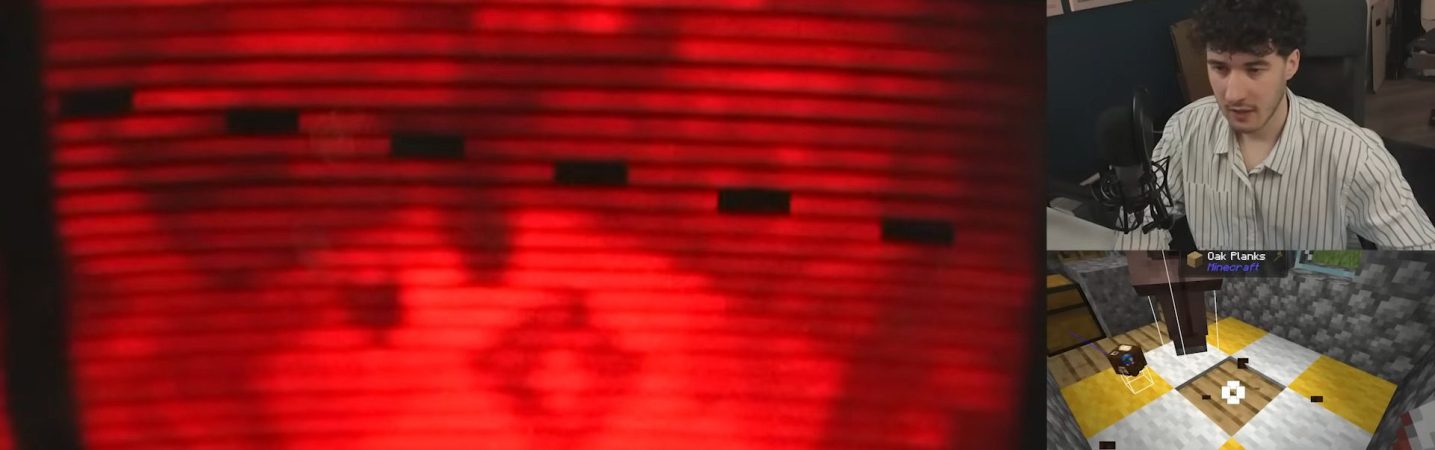
Of course, he’s not discovered perpetual motion. Rather, while an LED normally requires a bit of current to light up properly, it seems many will produce a tiny amount of light on almost nothing. Ambient electromagnetic fields are enough, and it’s this effect that’s under investigation. Using a phone camera and a magnifier as a light detector he’s able to observe the feeble glow as the device is exposed to ambient fields.

In effect this is using the LED as the very simplest form of radio receiver, a crystal set with no headphone and only the leads, some wires, and high value resistors as an antenna. The LED is after all a diode, and it can thus perform as a rectifier. We like the demonstration even if we can’t quite see an application for it.

While we’re no longer taking new entries for the 2025 Component Abuse Challenge, we’ve still got plenty of creative hacks from the competition to show off. We’re currently tabulating the votes, and will announce the winners of this particularly lively challenge soon.

[Gerry] holding up a DIP IC

Emulating A 74LS48 BCD-to-7-Segment Decoder/Driver With An Altera MAX 7000 “S” Series Complex Programmable Logic Device

Over on the [Behind The Code with Gerry] YouTube channel our hacker [Gerry] shows us how to emulate a 74LS48 BCD-to-7-segment decoder/driver using an Altera CPLD Logic Chip From 1998.

This is very much a das blinkenlights kind of project. The goal is to get a 7-segment display to count from 0 to 9, and that’s it. [Gerry] has a 74LS193 Up/Down Binary Counter, a 74LS42 BCD to Decimal Decoder, and some 74LS00 NAND gates, but he “doesn’t have” an 74LS48 to drive the 7-segment display so he emulates one with an old Altera CPLD model EPM7064SLC44 which dates back to the late nineties. A CPLD is a Complex Programmable Logic Device which is a kind of precursor to FPGA technology.

Continue reading “Emulating A 74LS48 BCD-to-7-Segment Decoder/Driver With An Altera MAX 7000 “S” Series Complex Programmable Logic Device”

The two types of LED candle, side by side.

2025 Component Abuse Challenge: Heat Activated LED Candles

[Miroslav Hancar] wasn’t satisfied with abusing just a single component for our Component Abuse Challenge. He decided to abuse a whole assembly, in particular, some LED candles.

In this project, LEDs are abused as temperature sensors. When the temperature gets hot enough for long enough, the microcontroller will turn on its LEDs. How? A diode’s forward voltage is temperature-related. By monitoring the forward voltage, the microcontroller can infer the temperature and respond appropriately.

This particular project is really two projects in one, centered around a common theme, heat activation. The first version has four LEDs and, in response to heat, four LEDs flicker to simulate a real candle. The second version is also heat-activated, but it has only one LED. You can snuff out this LED by pinching the top of it with your fingers. You can see a demo of each version in the videos below.

Continue reading “2025 Component Abuse Challenge: Heat Activated LED Candles”

An LED Projector As A Lighting Effect

If you had an array of high power addressable LEDs, how would you project them onto a wall? Perhaps you’d use a Fresnel lens, or maybe an individual lens on the top of each. [Joo] faced this problem when making a lighting effect using just such an array, and the solution they came up with used both.

The problem facing a would-be LED array projector is that should the lens be too good, it will project the individual points of light from the LEDs themselves, when a more diffuse point is required. Thus the Fresnel required the aid of a separate array of lenses, resin printed in one in clear plastic. From this we get some useful tips on how to do this for best lens quality, and while the result is not quite optically perfect, it’s certainly good enough for the job in hand.

The linked Printables page comes with all you need to make the parts, and you too can have your own projected LED effect. Now we want one, too! Perhaps we really need our own Wrencher signal instead.

A drone is shown hovering in the sky, with two bright lights shining from its underside.

2025 Component Abuse Challenge: Overdriven LEDs Outshine The Sun

Tagging wildlife is never straightforward in the best of times, but it becomes a great deal more complicated when you’re trying to track flying insects. Instead of trying to use a sensor package, [DeepSOIC] attached tiny, light retroreflectors to bees and hornets, then used a pulsed infrared light mounted on a drone to illuminate them. Two infrared cameras on the drone track the bright dot that indicates the insect, letting the drone follow it. To get a spot bright enough to track in full sunlight, though, [DeepSOIC] had to drive some infrared LEDs well above their rated tolerances.

The LEDs manage to survive because they only fire in 15-µs pulses at 100 Hz, in synchrony with the frame rate of the cameras, rather like some welding cameras. The driver circuit is very simple, just a MOSFET switch driven by an external pulse source, a capacitor to steady the supply voltage, and a current-limiting resistor doing so little limiting that it could probably be removed. LEDs can indeed survive high-current pulses, so this might not really seem like component abuse, but the 5-6 amps used here are well beyond the rated pulse current of 3 amps for the original SFH4715AS LEDs. After proving the concept, [DeepSOIC] switched to 940 nm LEDs, which provide more contrast because the atmosphere absorbs more sunlight around this wavelength. These new LEDs were rated for 5A, so they weren’t being driven so far out of spec, but in tests they did survive current up to 10A.

We’ve seen a similar principle used to drive laser diodes in very high-power pulses a few times before. For an opposite approach to putting every last bit of current through an LED, check out this low-power safety light.

Continue reading “2025 Component Abuse Challenge: Overdriven LEDs Outshine The Sun”