Coronavirus Testing Follow-Up: Rapid Immunologic Testing

When I started writing my recent article on COVID-19 testing, I assumed that I would be doing a compare and contrast sort of article. Like many people, I assumed that the “gold standard” test would be the reverse transcriptase-polymerase chain reaction (RT-PCR) test that I described in some detail. And indeed it is, but it’s not without its problems, such as the lack of certified labs and the need for trained technicians to run the samples. I also assumed there would be another test, a simple serological test that could use antibodies to discern if there was an active or even a previous, resolved infection.

At the time I wrote the first article, I could find no indication of an immunologic test for COVID-19 (more specifically, a test for SARS-Cov-2, the virus that causes COVID-19). But almost as rapidly as the number of COVID-19 cases rises, the news changes, and it appears that simple, rapidly performed antibody tests are now or soon will be available. They likely won’t replace the gold standard RT-PCR test, but they do stand to be a game-changer for the front line providers and the victims of this disease. So it pays to take a quick look at immunoassays for infectious diseases, and learn how they work.

Continue reading “Coronavirus Testing Follow-Up: Rapid Immunologic Testing”

NIH Approved 3D-Printed Face Shield Design For Hospitals Running Out Of PPE

As the world faces a pandemic of monumental proportions, hospitals have been hit hard. The dual problems of disrupted manufacturing and supply chains and huge spikes in demand have led to many medical centres running out of protective gear. Makers have stepped up to help in many ways by producing equipment, with varying results. [Packy] has shared a link to a 3D-printable face shield that, unlike some designs floating around, is actually approved by the National Institute of Health in the USA.

The shield consists of a 3D printed headband, which is then coupled with a transparent piece of plastic for the face shield itself. This can be lasercut, or sourced from a document cover or transparency sheet. The design is printable in PLA or a variety of other common materials, and can be assembled easily with office supplies where necessary.

The design is available from the NIH here. (Update: 4/1/2020 here’s an alternate link as original link seems to be suffering from heavy server load) For those eager to help out, it’s important to do so in an organised fashion that doesn’t unduly take resources away from healthcare professionals trying to get an important job done. We’ve seen other hacks too, such as these 3D printed ventilator components being rushed into service in Italy. 

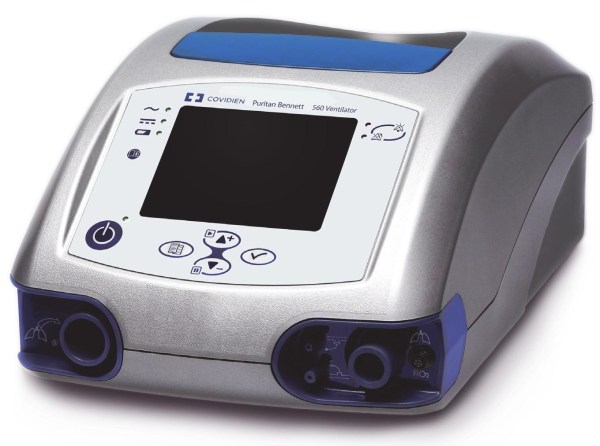
Ventilators 101: What They Do And How They Work

Treating the most serious cases of COVID-19 calls for the use of ventilators. We’ve all heard this, and also that there is a shortage of these devices. But there is not one single type of ventilator, and that type of machine is not the only option when it comes to assisted breathing being used in treatment. Information is power and having better grasp on this topic will help us all better understand the situation.

We recently wrote about a Facebook group focused on open source ventilators and other technology that could assist in the COVID-19 pandemic. There was an outpouring of support, and while the community is great when it comes to building things, it’s clear we all need more information about the problems doctors are currently dealing with, and how existing equipment was designed to address them.

It’s a long and complicated topic, though, so go get what’s left of your quarantine snacks and let’s dig in.

Continue reading “Ventilators 101: What They Do And How They Work”

Hack The Quarantine, Not Just The Medical Equipment

As the COVID-19 pandemic invades in some way every corner of life, we’ve seen significant effort from the hardware community in considering the problem of inadequate supplies of medical equipment. The pandemic and its associated quarantine and lockdowns do not stop at medical supplies though, a whole host of problems associated with the whole population self-isolating are there to be solved. This makes Hack Quarantine, an online event that bills itself as “A global virtual hackathon”, particularly interesting. It’s encouraging its participants to look at the wider aspects of the whole thing rather than solely dreaming up an open-source ventilator design, because in the absence of clinical trials or indeed any experts in medical devices it’s possible that medical equipment from a hackathon might be of limited usability.

The hackathon will run from March 23rd to April 12th, and it already has a schedule of talks and workshops. We can’t help noticing a dearth of hardware-related stuff among all the software, and perhaps this could be where you come in. It’s something that never ceases to amaze us as Hackaday writers, the depth of hardware skill among our readership, and we’re guessing that plenty of you could bring something to this event.

We’ve brought you more than a few COVID-19 stories over the last few weeks. If this hackathon isn’t for you then can we point you at our Folding@Home team? Also, you may wish to look at the best fabric choice for your own face masks.

Coronavirus Testing: Just The Facts

The news these days is dominated by the one big story: the COVID-19 pandemic. Since the first reports of infection surfaced in China sometime in late 2019, the novel coronavirus that causes the disease, bloodlessly dubbed SARS-CoV-19, has swept around the globe destroying lives, livelihoods, and economies. Getting a handle on the disease has required drastic actions by governments and sacrifices by citizens as we try to slow the rate of infection

As with all infectious diseases, getting ahead of COVID-19 is a numbers game. To fight the spread of the virus, we need to know who has it, where they are, where they’ve been, and whom they’ve had contact with. If we are unable to gather the information needed to isolate potential carriers, all that we can do is impose mass quarantines and hope for the best. Hence the need for mass COVID-19 testing, and the understandable hue and cry about its slow pace and the limited availability of test kits.

But what exactly do these test kits contain? What makes mass testing so difficult to implement? As we shall see, COVID-19 testing is anything but simple, even if the underlying technology, PCR, is well-understood and readily available. A lot of the bottlenecks are, as usual, bureaucratic, but there are technical limits too. Luckily, there are clever ways around those restrictions, but understanding the basics of COVID-19 testing is the best place to start.

Continue reading “Coronavirus Testing: Just The Facts”

MIT Ventilator Designed With Common Manual Resuscitator; Submitted For FDA Testing

In many parts of the world the COVID-19 pandemic is causing shortages in hospital space, staff, medical supplies, and equipment. Severe cases may require breathing support, but there are only so many ventilators available. With that in mind, MIT is working on FDA approval of an emergency ventilator system (E-Vent). They have submitted the design to the FDA for fast track review. The project is open source, so once they have approval the team will release all the data needed to replicate it.

The design is actually made simple by using something that is very common: a manual resuscitator. You have doubtlessly seen these on your favorite medical show. It is the bag someone squeezes while the main character struggles valiantly to save their patient. Of course, having someone sit and squeeze the bag for days on end for thousands of people isn’t very practical and that’s where they’ve included an Arduino-controlled motor to automate the process.

Continue reading “MIT Ventilator Designed With Common Manual Resuscitator; Submitted For FDA Testing”

Coronavirus And Folding@Home; More On How Your Computer Helps Medical Research

On Wednesday morning we asked the Hackaday community to donate their extra computer cycles for Coronavirus research. On Thursday morning the number of people contributing to Team Hackaday had doubled, and on Friday it had doubled again. Thank you for putting those computers to work in pursuit of drug therapies for COVID-19.

I’m writing today for two reasons, we want to keep up this trend, and also answer some of the most common questions out there. Folding@Home (FAH) is an initiative that simulates proteins associated with several diseases, searching for indicators that will help medical researchers identify treatments. These are complex problems and your efforts right now are incredibly important to finding treatments faster. FAH loads the research pipeline, generating a data set that researchers can then follow in every step of the process, from identifying which chemical compounds may be effective and how to deliver them, to testing they hypothesis and moving toward human trials.

Continue reading “Coronavirus And Folding@Home; More On How Your Computer Helps Medical Research”