The Catweazle Mini: A Super Small ARM Based Embedded Platform

Catweazle

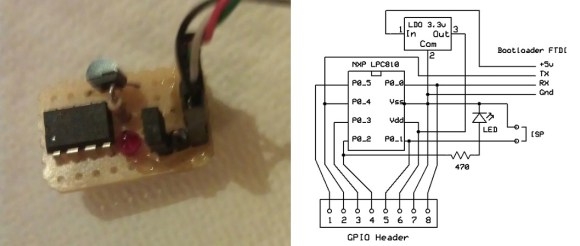
There has been a recent trend in miniaturizing embedded platforms. [Jan] wrote in to tell us about his very tiny ARM based embedded platform, the Catweazle Mini. Who knew that an ARM based system could be so simple and so small?!?

With the success of the Trinket and Femtoduino (miniature Arduino compatible boards) and many other KickStarter campaigns, it is only natural for there to be a mini platform based on the ARM architecture. Built around the NXP LPC810 ARM Cortex M0+ MCU at 30MHz (which only costs slightly more than $1, by the way), this small embedded platform packs some pretty impressive processing power. The board contains a simple linear regulator, and can be programmed via UART. [Jan’s] development environment of choice is the mbed compiler, which is free and requires no installation. If you need some help getting started Adafruit has a nice guide for the LPC810.

Do you need some more processing power for your next wearable project? Be sure to use the Catweazle Mini.
Giant Tetris Adds Some Retro To Your Room

giant tetris

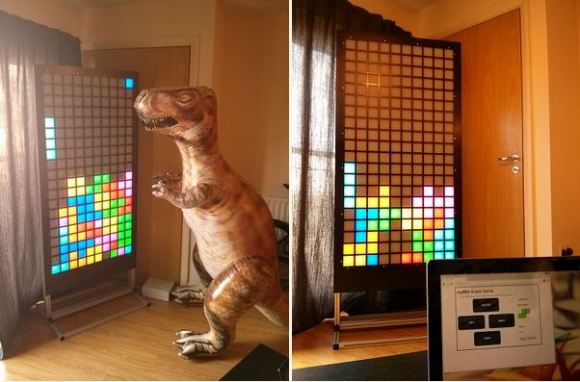
[Sam] just finished off this awesome 6 foot tall Tetris game using National Instruments myRIO with FPGA.

The build makes use of a 10 x 20 grid of RGB LEDs controlled by the myRIO. It’s played by using a web interface on any device, as long as you have WebSockets support. [Sam] had originally built it using an Arduino at the heart, but wanted a stand-alone device to do everything — no extra computer or Raspberry Pi for the web interface. That’s when he discovered the myRIO — it’s a pretty cool piece of hardware that we haven’t seen too much of yet, other than the recent Picasso with a Paintball gun project…

Don’t forget to watch the following video to see the game in action!

Continue reading “Giant Tetris Adds Some Retro To Your Room”

NXP’s ARM Micros With Motor Controllers

motor

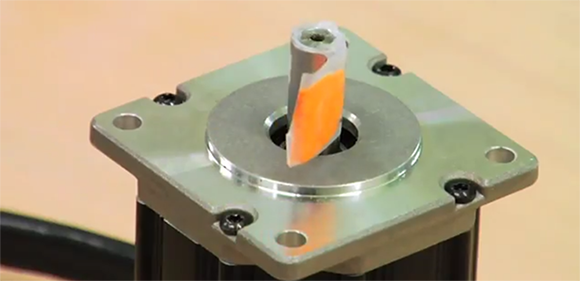
It’s still relitavely early in the year, and all those silicon manufacturers are coming out with new toys to satiate the engineer and hobbyist for years to come. NXP’s offering is the LPC1500, a series of ARM microcontrollers optimized for motor and motion-control applications.

The specs for the new chips include an ARM Cortex-M3 running at 72MHz, up to 256kB Flash, 36kB SRAM, USB, CAN, 28 PWM outputs, an a real-time clock. There are options for controlling brushless, permanent magnet, or AC induction motors on the LPC1500, with dev boards for each type of motor. Each chip has support for two Despite NXP’s amazing commitment to DIP-packaged ARM chips, the LPC1500 chips are only available in QFP packages with 48, 64, and 100 pins.

Don’t think the LPC1500 would be a perfect chip for a CNC controller – the chips only support control of two motors. However, this would be a fantastic platform for building a few robots, an electric car, or a lot of the other really cool projects we see around here.

Smart Reflow Oven Is Over-Engineered

reflow

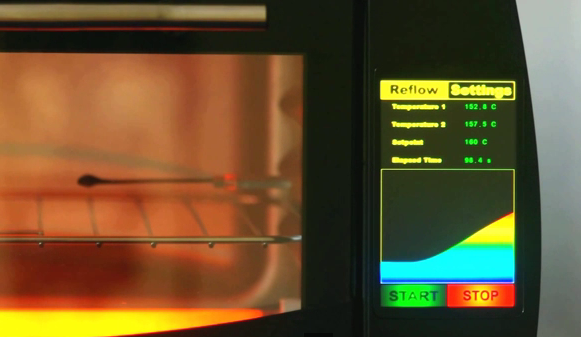
[Linas] reverse engineered an AMOLED HTC 800×480 screen and interfaced it with an STM32 micro-controller, along with some other components, to make a gorgeously over engineered reflow oven.

Under the hood there is a PSoC5LP PID controller to control the 800W IR heating coil and two K-type thermocouples for sensing.

The real beauty is in the relatively small STM32 chip powering the HTC AMOLED screen. The AMOLED screen is high contrast and has a wide viewing angle, giving it a clear crisp view from all front facing viewpoints. Though pushing the limits of what the STM32F429i can do, [Linas] managed to make a very nice “home-grown” user interface, complete with user configurable settings and current temperature graphs.

The user interface looks very responsive and using some clever programming, [Linas] was able to make use of the potential of the screen to provide beautiful plots and interface widgets.

[Linas] goes into quite a bit of detail about the programming involved with rendering to the screen, so be sure to check out the video after the jump.

Continue reading “Smart Reflow Oven Is Over-Engineered”

Open Bitcoin ATM

openBitcoinAtm

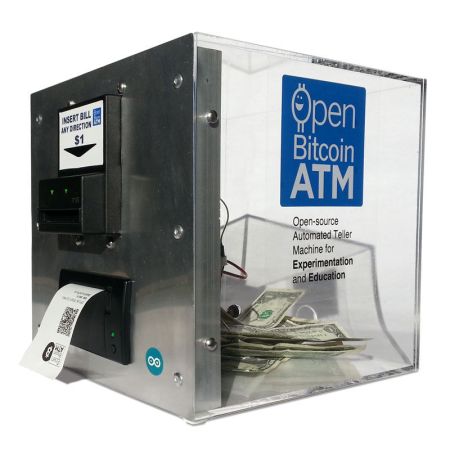
If there’s one thing Bitcoins can benefit from, it’s easier accessibility for first-time users. The process can be a bit daunting if you’re new to cryptocurrency, but [mayosmith] is developing an open Bitcoin ATM to help get coins in the hands of the masses. There are already some Bitcoin dispensers out there. The Lamassu is around 5k a pop, and then there’s always the option of low-tech Condom Vending Machine conversions.

[mayosmith’s] build is still in the proof-of-concept phase, but has some powerful functionality underway. The box is made from acrylic with a front plate of 12″x12″ aluminum sheet metal, held on by 2 aluminum angles and some bolts. Slots were carved out of the aluminum sheet for the thermal printer and for bill acceptor—the comments identify it as an Apex 7000. Inside is an Arduino with an SD Shield attached. Dollars inserted into the acceptor trigger the Arduino to spit out a previously-generated QR code for some coins via the thermal printer, though all values are pre-determined at the time of creation and stored sequentially on the SD card. Stick around for a quick video below, and check out the official page for more information: http://openbitcoinatm.org

Continue reading “Open Bitcoin ATM”

FT232RL: Real Or Fake?

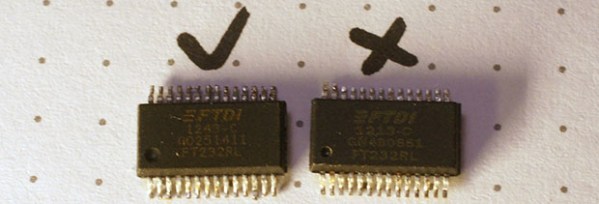
Above are two FTDI FT232RL chips, an extremely common chip used to add a USB serial port to projects, builds, and products. The one on the left is a genuine part, while the chip on the right was purchased from a shady supplier and won’t work with the current FTDI drivers. Can you tell the difference?

[Zeptobars], the folks behind those great die shots of various ICs took a look at both versions of the FT232 and the differences are staggering. Compared to the real chip, the fake chip has two types of SRAM etched in the silicon – evidence this chip was pieced together from different layouts.

The conclusion [Zeptobars] reached indicated the fake chip is really just a microcontroller made protocol compatable with the addition of a mask ROM. If you’re wondering if the FTDI chips in your part drawers are genuine, the real chips have laser engraved markings, while the clone markings are usually printed.

STM32 Nucleo, The Mbed-Enabled, Arduino-Compatable Board

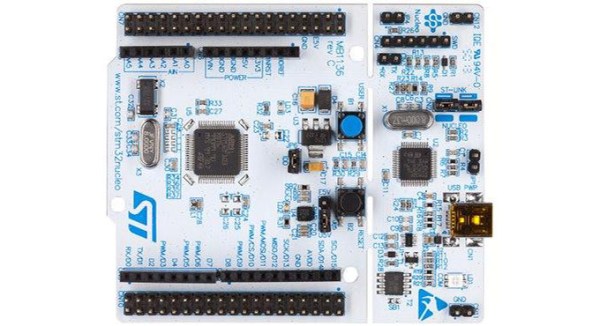
The STM32 line of microcontrollers – usually seen in the form of an ST Discovery dev board – are amazingly powerful and very popular micros seen in projects with some very hefty processing and memory requirements. Now, ST has released a great way to try out the STM32 line with the Nucleo board.

There are two really great features about these new Nucleo boards. First, they’re mbed compatable, making them a great way to get started in the ARM development world. Secondly, they have Arduino pin headers right on the board, giving you access to all your shields right out of the box.

Right now, there are four varieties of the Nucleo board based on the STM32F030, -F103, -F152, and -F401 microcontrollers. The STM32F401 is the high-powered variant, An ARM Cortex-M4 microcontroller running at 84 MHz, 512kB of Flash, and enough I/O for just about any project.

If you’d like to get your hands on one of the STM32 Nucleo boards, you can order a voucher to pick one up at Embedded World in Germany next week. Otherwise, you’re stuck ordering from Mouser or Farnell. Bonus: the high-end F401-based board is only $10 USD.