3D Carver Makes Magnetic Fields Visible

The history of science is full of examples when a 3D physical model led to a big discovery. But modelling something that’s actually invisible can be tough. Take magnetic fields – iron filings on a card will give you a 2D model, but a 3D visualization of the field would be much more revealing. For that job, this magnetic field following 3D carving machine is just the thing.

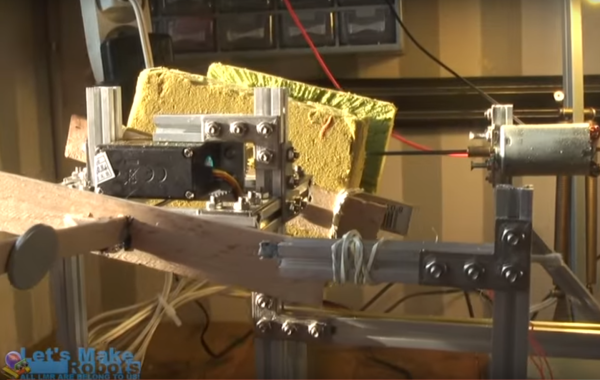
What started out as a rapid prototyping session with servos and hot glue ended up as quick and dirty 3D carving rig for [Frits Lyneborg]. The video shows his thought progression and details how he went from hot glue and sticks to LEGO Technics parts and eventually onto Makerbeam extrusions for the frame of his carver. A probe with a Hall effect sensor is coupled to a motor spinning a bit that cuts into a block of floral foam. A microcontroller keeps the Hall sensor a more or less fixed distance from a rare-earth magnet, resulting in a 3D model of the magnetic field in the foam, as well as a mess of foam nubbles. Despite a few artifacts due to in-flight adjustments of the rig, the field presents clearly in the block as two large lobes.

Carving foam isn’t the only way to visualize a magnetic field in three dimensions, of course. If you’d rather have a light show based on the local magnetic field, try this 3D compass build we covered a while back.

Continue reading “3D Carver Makes Magnetic Fields Visible”

Hacking Chinese State Media

A while ago, a few journalists from China visited the Metalab hackerspace in Vienna. They wanted to do a story on ‘fablabs’ and ‘makerspaces’, despite the objections to the residents of the Metalab hackerspace. Apparently, mentioning ‘hacking’ on China Central Television (yes, it’s called CCTV) is a big no-no.

hacking-chinese-state-mediaWanting to send a message to at least a few people in China, the members of the hackerspace had to think laterally. Metalab member [amir] came up with a way to encode data that could be printed on t-shirts. These bright, colorful squares featured in all of the interviews with Metalab members carried messages like, “free tibet!”, “remember tian’anmen 1989” and “question the government. dont trust the propaganda”

All the videos are available in this playlist, and [amir]’s code to generate the colorful rectangles of political activism can be found here.

In a related note, we’d like to say ‘hi’ to our one reader in North Korea. Yes, according to the stats and analytics, we have one reader in North Korea.

Continue reading “Hacking Chinese State Media”

Speaker Science Project

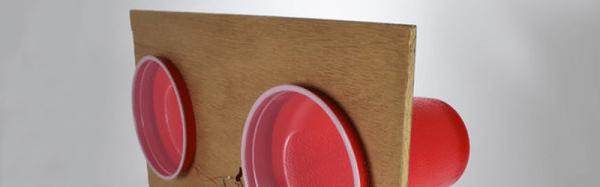
They probably won’t please the audiophiles, but [KJMagnetics] shows you that can create a pair of speakers with some magnets, some plastic cups, and a bit of magnet wire. Creating speakers out of junk isn’t a new idea, of course. However, there’s something pleasant about the build. Maybe it is the symmetry of the cups or the workbench look of the woodworking.

We couldn’t help but think that this would make a good science fair project or a classroom activity. Especially since there is a good write up on how speakers work and it would be easy to make simple changes to test different hypothesis about speakers. For example, what happens with more or less wire in the coils? What magnets work best? What does best even mean? Is it louder? Less distortion?

Continue reading “Speaker Science Project”

Old-school Rotary Phone Gets GSM Upgrade

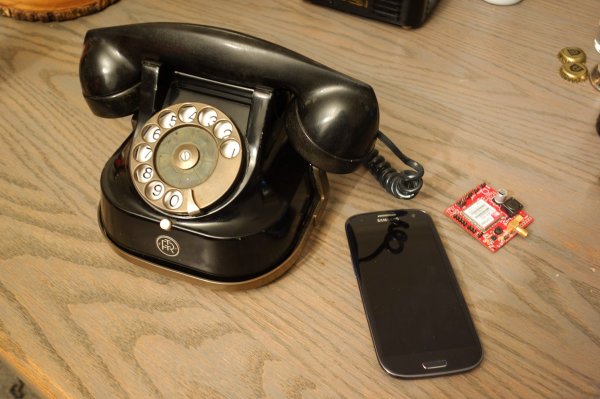
Sometimes, the answer to, “Why would you bother with a project like that?” is just as simple as, “Because it’s cool.” We suspect that was the motivation behind [Dirk-Jan]’s project to make portable versions of classic rotary telephones.

On style points alone, [Dirk-Jan] scores big. The mid-1950s vintage Belgian RTT model 56 phone has wonderful lines in its Bakelite case and handset and a really cool flip-up bail to carry it around, making it a great choice for a portable. The guts of the phone were replaced with a SIM900 GSM module coupled with a PIC microcontroller and an H-bridge to drive the ringer solenoids, along with a Li-ion battery and charger to keep it totally wireless – except for the original handset cord, of course. The video after the break show the phone in action both making and receiving calls; there’s something pleasing on a very basic level about the sound of a dial tone and the gentle ringing of the bell. And it may be slow, but a rotary dial has plenty of tactile appeal too.

Rotary-to-cell conversions are a popular “just because” project, like this conversion designed to allow an angry slam-down of the handset. The orange Siemens phone in that project is nice and all, but we really favor the ’50s look for a portable.

Continue reading “Old-school Rotary Phone Gets GSM Upgrade”

Smell Colors With A Synesthesia Mask

Synesthesia is a mix-up of sensory perception where stimulation of one sense leads to a stimulation of a second sense. This is the condition where Wednesdays can be blue, the best part of your favorite song can be orange, and six can be up and to the right of seventy-three. While you can’t teach yourself synesthesia – it’s something you’re born with – [Zachary] decided to emulate color to smell synesthesia with his most recent electronics project.

For his synesthesia mask, [Zach] is turning varying amounts of red, green, and blue found with a color sensor into scents. He’s doing this with an off-the-shelf color sensor, an Intel Edison, and a few servos and test tubes filled with essential oils. The color sensor is mounted on a ring, allowing [Zach] to pick which colors he wants to smell, and the scent helmet contains a small electronics box fitted with fans to blow the scent into his face.

There’s more than one type of synesthesia, and if you’re looking for something a little more painful, you can make objects feel loud with a tiny webcam that converts pixels into pulses of a small vibration motor.

Continue reading “Smell Colors With A Synesthesia Mask”

Pea-Whistle Steganography

Do you see the patterns everywhere around you? No? Look closer. Still no? Look again. OK, maybe there’s nothing there.

[Oona Räisänen] hears signals and then takes them apart. And even when there’s nothing there, she’s thinking “what if they were?” Case in point: could one hypothetically transmit coded information in the trilling of a referee’s whistle at the start of a soccer match?

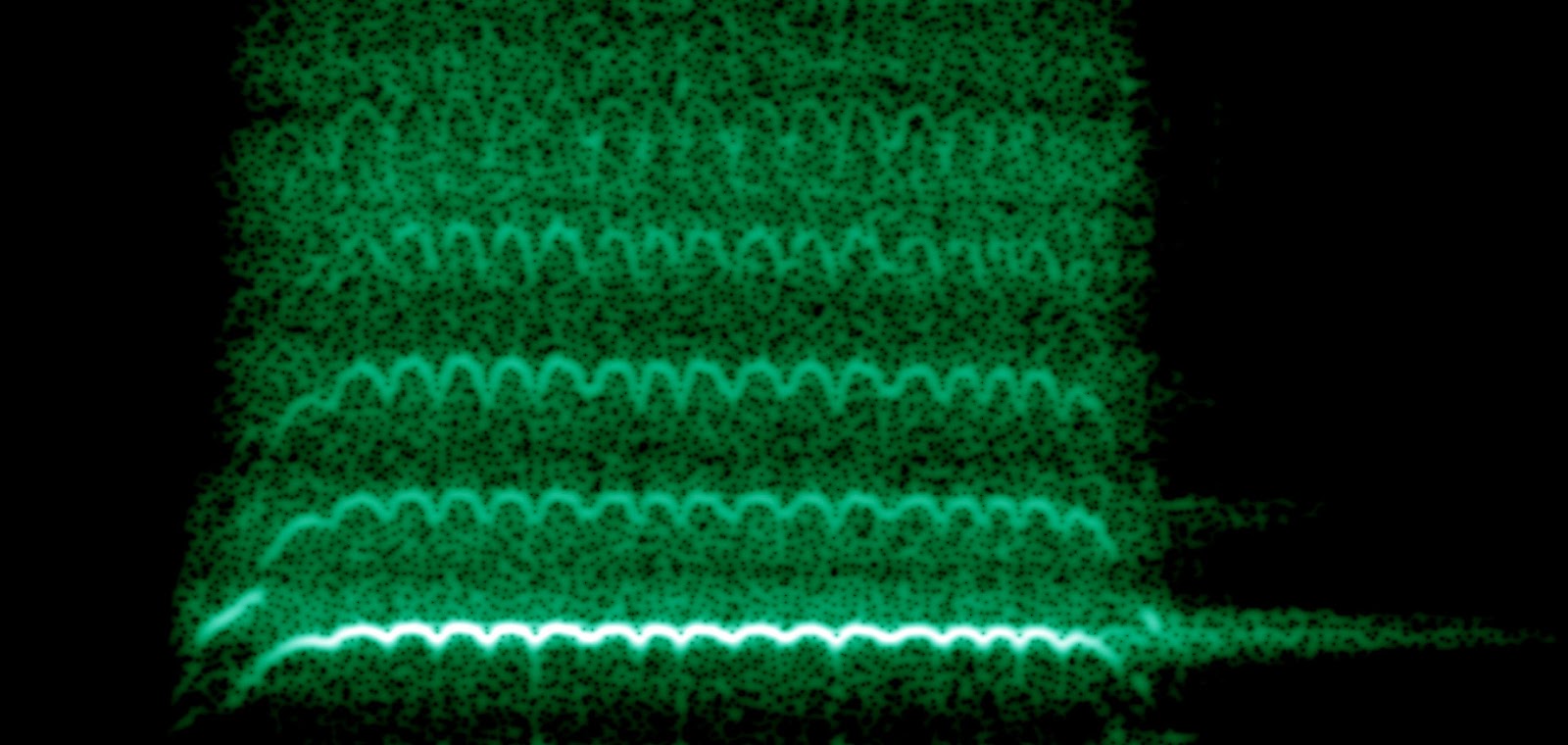
acme-spektriTo you, the rapid pitch changes made by the little ball that’s inside a ref’s whistle sounds like “trilling” or “warbling” or something. To [Oona], it sounds like frequency-shift key (FSK) modulation. Could you make a non-random trilling, then, that would sound like a normal whistle?

Her perl script says yes. It takes the data you want to send, encodes it up as 100 baud FSK, smoothes it out, adds some noise and additional harmonics, and wraps it up in an audio file. There’s even a couple of sync bytes at the front, and then a byte for packet size. Standard pea-whistle protocol (PWP), naturally. If you listen really closely to the samples, you can tell which contains data, but it’s a really good match. Cool!

[Oona] has graced our pages before, naturally. From this beautiful infographic tracing out a dial-up modem handshake to her work reversing her local bus stop information signs or decoding this strange sound emitted by a news helicopter, She’s full of curiosity and good ideas — a hacker’s hacker. Her talk on the bus stop work is inspirational.. She’s one of our secret heroes!

Powdered Glue Activates When Squished

Sometimes a hack needs something more than duct tape. Cyanoacrylate glue is great, if you don’t mind sticking your fingers together. But it doesn’t stick to everything, nor does it fill gaps. Epoxy is strong, but isn’t nearly as convenient. The point is, one type of glue doesn’t fit every situation, and that’s why you have to keep a lot of options.  [Syuji Fujii] of Japan’s Osaka Institute of Technology (and his colleagues) have a new option: a glue that goes on dry and sticks when squished.

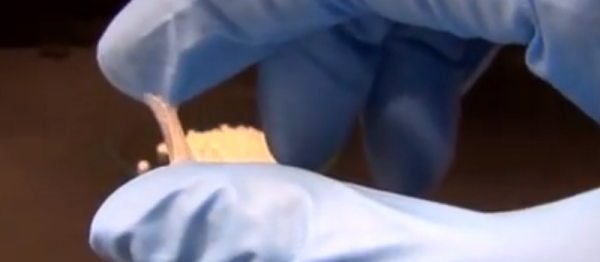
According to New Scientist,  the researchers rolled spheres of a latex liquid in a layer of calcium-carbonate nanoparticles. The resulting spheres are a few millimeters across and pour easily. When put under pressure for a few seconds, the nanoparticles are pushed inside, and the sticky liquid contacts the surface. The source paper is also available if you want to read the gory details. Or you can cut right to the video below to see it in action.

If you don’t think glue is a good hacking material, you don’t know [Kevin Dady]. You can even glue wires if you really hate soldering, although we’d rather solder.

Continue reading “Powdered Glue Activates When Squished”