3D Mineral Printer

The last few days many people have been talking about the USC’s contour printer. It’s a device that prints concrete outlines with the hopes of eventually printing entire houses. Caterpillar has decided to back the initiative.

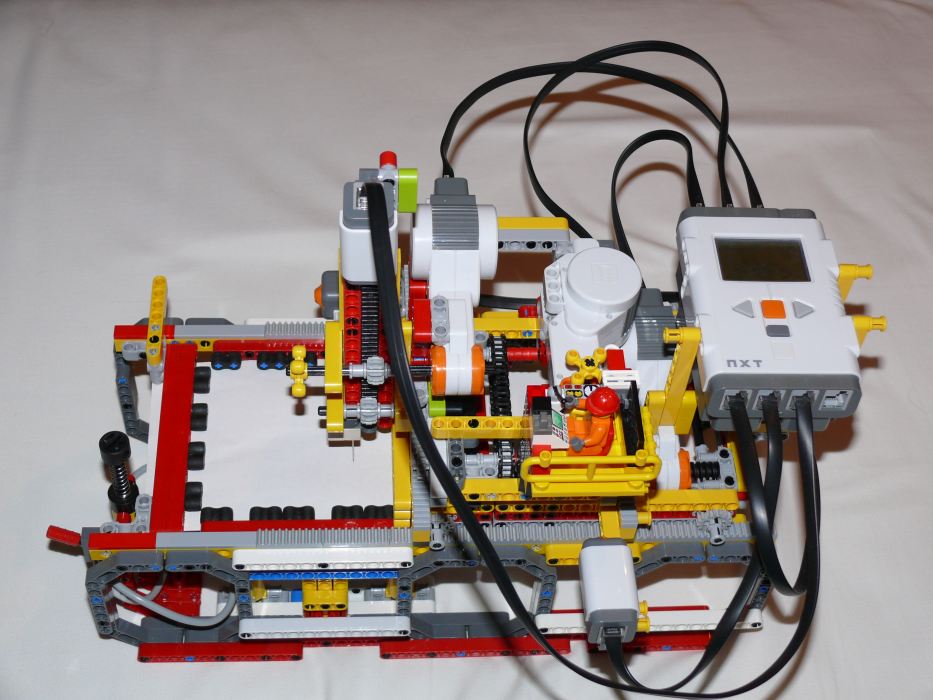
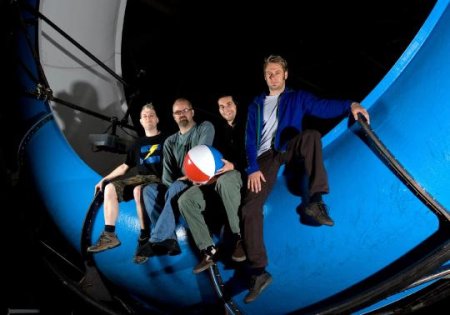
It reminded us of a project we came across at Maker Faire. [Leif Ames], [Matthew Bowman], [Marides Athanasiadis], and [Terrell Edwards] built a 3D Mineral Printer as their senior engineering design project at UC Santa Cruz. The printer works by first laying down a layer of dry concrete powder. It then selectively wets the powder where it wants a solid form. The reaction doesn’t require air to dry, so the next layer can be applied immediately. The printer only creates contours and the team imagines this being used to create temporary casting molds. The build envelop is nearly a cubic meter. When we talked to them, they were experimenting with many different types of material mixes. A video of the first test is after the break. Continue reading “3D Mineral Printer”

Toaster Computer

[Gordon Johnson] recently completed part 1 of his toaster computer project. He used a standard four slot toaster as the enclosure and cut holes for access to the ports and a wireless antenna. While the specifications of the components used are not mentioned, the build is well documented on his site, complete with lots of pictures and a video. While he used a traditional fan based cooling method for part 1 of the build, he plans on using a special cooling method for part 2 that uses aluminum and mineral oil to create a thermoelectric cooling effect.

High Altitude Photographic Balloon

[Earl Foster] recently completed his 4th high altitude photographic balloon (HAPB-4) launch. This launch reached a peak altitude of 106,384 feet, and lasted about 3 hours. The final weight of the capsule was 5lb 3-3/8 oz, with all the electronics, GPS, digital camera, and HD video camera. His balloons operate under the exempt rules of FAA Part 101 subpart a governing unmanned balloon flight. This program has been setup to encouraging interest in science, mathematics, and engineering through unmanned ballooning. HAPB-4 uses a Parallax SPIN Stamp microcontroller, this multicore chip offers eight 32-bit processors (cogs) sharing 32kB RAM and ROM. Having eight separate COG’s allows him to log GPS data, control the camera, log and monitor sensors, and control LCD functions simultaneously with minimal hardware. During this flight he did have some equipment failures, but he was still able to capture some nice pictures.

LCD PIC Graphics Demo

[conville] has been pushing standard HD44780 character displays to the limit. Embedded above is an example spectrum analyzer and text scrolling demo. Below you’ll find a scope demo. Both of these are created using a PIC 16F688 that dynamically rewrites a custom character set to create the animation. You can find the source code on mikrocontroller.net. Continue reading “LCD PIC Graphics Demo”

The Phone Phreaking Files

[Jason Scott] curated a nice collection of links related to [Phil Lapsley]’s work on phone phreaking. [Lapsley]’s book, The History of Phone Phreaking, will be released in 2009. Meanwhile phone phreak enthusiasts can peruse his site and bone up on some interesting material, including documents that revealed the inner workings of the telephone switchboard(PDF), and the Youth International Party Line (YIPL)/Technological American Party (TAP) FBI files(PDF), which is really intriguing for the various doodles and conversations that were documented. If you have some spare time, we definitely recommend sifting through it.

[via Waxy]

Aurora Mixer No Longer Available

A few days ago we wrote about the aurora open source mixer being available and that orders for the DIY or completed kit needed to be in by September 1, 2008. Well that day has since past and if you were on the fence about it and didn’t get your order in don’t worry about it. Turns out no one will be getting a mixer.

Aurora informs us that they needed to secure a minimum of 50 orders to cover cost, but in reality they were only able to secure less than 20 orders. Because of this, they will not be able to meet the initial production numbers and have postponed the sale of the mixer indefinitely.

All is not lost as they will keep the site up, along with the instructions on how to build your own mixer from scratch.

Dot Matrix Business Card

In most settings business cards are given out without much thought. But what if you could make your card stand out from the rest? By using a 5×15 LED matrix screen, a single micro controller, a number of resistors, switches, and other parts, [tomward] has put together one very slick business card that’s sure to draw attention.

The included instructions go into great detail on the construction, but [tomward]admits that you will need some knowledge in electronics in order to build one yourself.  After reading the instructions ourselves we would have to agree with him.

If you’re into programing micro controllers and are handy with a soldering iron you may want to give this a shot.