Ask Hackaday: Where Are All The Fuel Cells?

Given all the incredible technology developed or improved during the Apollo program, it’s impossible to pick out just one piece of hardware that made humanity’s first crewed landing on another celestial body possible. But if you had to make a list of the top ten most important pieces of gear stacked on top of the Saturn V back in 1969, the fuel cell would have to place pretty high up there.

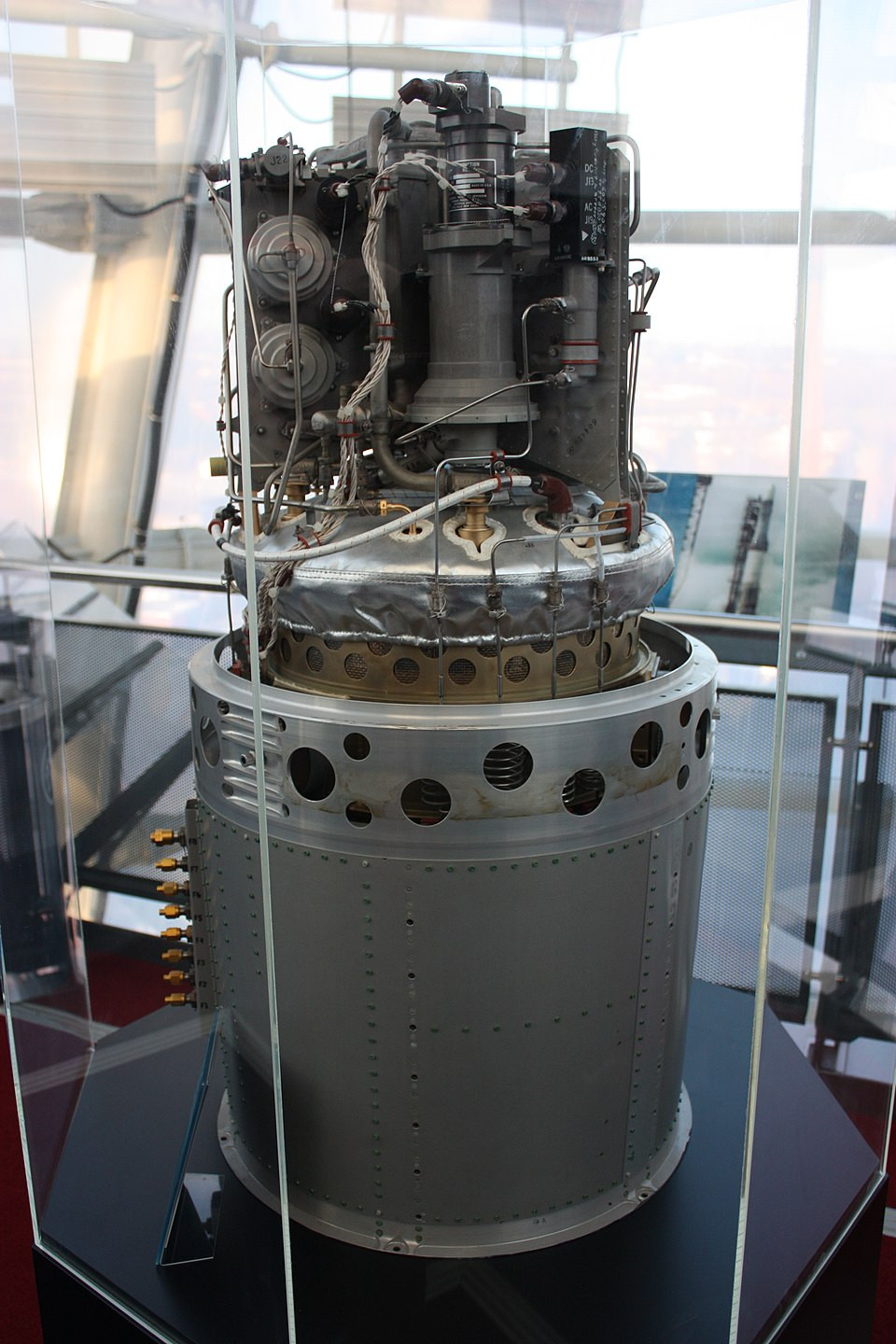
Apollo fuel cell. Credit: James Humphreys

Smaller and lighter than batteries of the era, each of the three alkaline fuel cells (AFCs) used in the Apollo Service Module could produce up to 2,300 watts of power when fed liquid hydrogen and liquid oxygen, the latter of which the spacecraft needed to bring along anyway for its life support system. The best part was, as a byproduct of the reaction, the fuel cells produced drinkable water.

The AFC was about as perfectly suited to human spaceflight as you could get, so when NASA was designing the Space Shuttle a few years later, it’s no surprise that they decided to make them the vehicle’s primary electrical power source. While each Orbiter did have backup batteries for emergency purposes, the fuel cells were responsible for powering the vehicle from a few minutes before launch all the way to landing. There was no Plan B. If an issue came up with the fuel cells, the mission would be cut short and the crew would head back home — an event that actually did happen a few times during the Shuttle’s 30 year career.

This might seem like an incredible amount of faith for NASA to put into such a new technology, but in reality, fuel cells weren’t really all that new even then. The space agency first tested their suitability for crewed spacecraft during the later Gemini missions in 1965, and Francis Thomas Bacon developed the core technology all the way back in 1932.

So one has to ask…if fuel cell technology is nearly 100 years old, and was reliable and capable enough to send astronauts to the Moon back in 1960s, why don’t we see them used more today?

Continue reading “Ask Hackaday: Where Are All The Fuel Cells?”

The WHY 2025 Badge And Its 18650s

The largest European hacker camp this year was in the Netherlands —  What Hackers Yearn (WHY) 2025 is the latest in the long-running series of four-yearly events from that country, and 2025 saw a move from the Flevoland site used by SHA2017 and MCH2021, back to just north of Alkmaar in Noord-Holland, where the OHM2013 event took place. WHY has found itself making the news in the Dutch technical media for all the wrong reasons over the last few days, after serious concerns were raised about the fire safety of its badge.

The cell supplied with a WHY 2025 badge, with very clear fire safety warning
This is the cell supplied with the WHY badge, complete with manufacturer’s warning.

The concerns were raised from the RevSpace hackerspace in Leidschendam, and centre around the design of the battery power traces on the PCB between the battery holders and the power supply circuitry. Because the 18650 cells supplied with that badge lack any protection circuitry, bridging the power traces could be a fire risk.

In short: their report names the cell holders as having tags too large for their pads on the PCB, a too-tight gap between positive and negative battery traces, protected only by soldermask, and the inadequacy of the badge’s short circuit protection. In the event that metal shorted these battery tags, or wore through the soldermask, the batteries would be effectively shorted, and traces or components could get dangerously hot.

The WHY organizers have responded with a printed disclaimer leaflet warning against misuse of the cells, and added a last-minute epoxy coating to the boards to offer additional protection. Some people are 3D-printing cases, which should also help reduce the risk of short-circuiting due to foreign metal objects. Using an external powerbank with short-circuit protection instead of the cells would solve the problem as well. Meanwhile a group of hackers collecting aid for Ukraine are accepting the batteries as donations.

It’s understood that sometimes bugs find their way into any project, and in that an event badge is no exception. In this particular case, the original Dutch badge team resigned en masse at the start of the year following a disagreement with the  WHY2025 organizers, so this badge has been a particularly hurried production. Either way, we are fortunate that the issue was spotted, and conference organizers took action before any regrettable incidents occurred.

Get Your Tickets For Supercon 2025 Now!

The wait is over — once this post hits the front page, ticket sales for the 2025 Hackaday Supercon will officially be live!

As is tradition, we’ve reserved 100 tickets priced at $148 (plus fees) for what we like to call the True-Believers. Those are the folks that are willing to sign up even without knowing who will be speaking or what this year’s badge looks like. Once those are sold out, the regular admission tickets will cost $296 (plus fees). We might be slightly biased, but even at full price, we like to think Supercon is a screaming deal.

Those who join us in Pasadena, California from October 31st through November 2nd can look forward to a weekend of talks, workshops, demos, and badge hacking. But what’s more, you’ll experience the unique sense of camaraderie that’s produced when you pack hundreds of hardware hackers into an alleyway and ply them with as much caffeine as they can handle. Some treat it like a normal hacker con, others as a social experiment, but nobody thinks of it as anything less than a fantastic time.

We’re still working closely with our friends at Supplyframe, DigiKey, and Framework to put together a full itinerary for Supercon 2025, so stay tuned over the coming weeks as things are finalized. But in the meantime, we’ve got a couple new additions this year that we’re pretty excited about.

Continue reading “Get Your Tickets For Supercon 2025 Now!”

What Happens When Lightning Strikes A Plane?

Lightning is a powerful force, one seemingly capable of great destruction in the right circumstances. It announces itself with a searing flash, followed by a deep rumble heard for miles around.

Intuitively, it might seem like a lightning strike would be disastrous for something like a plane flying at altitude. And yet, while damage is possible, more often than not—a plane will get through a lightning storm unscathed. Let’s explore the physics at play.

Continue reading “What Happens When Lightning Strikes A Plane?”

Raspberry Pi Pico LED display sitting in window sill

An Ode To The Aesthetic Of Light In 1024 Pixels

Sometimes, brilliant perspectives need a bit of an introduction first, and this is clearly one. This video essay by [Cleggy] delivers what it promises: an ode to the aesthetic of light. But he goes further, materializing his way of viewing things into a beautiful physical build — and the full explanation of how to do it at home.

What’s outstanding here is not just the visual result, but the path to it. We’ve covered tons of different LED matrices, and while they’re all functional, their eventual purpose is left up to the builder, like coasters or earknobs. [Cleggy] provides both. He captured a vision in the streets and then built an LED matrix from scratch.

The matrix consists of 1024 hand-soldered diodes. They’re driven by a Raspberry Pi Pico and a symphony of square waves. It’s not exactly a WS2812 plug-and-play job. It’s engineered from the silicon up, with D-latches and demultiplexers orchestrating a mesmerizing grayscale visual.

Pulse-width modulation (PWM) is the secret ingredient of this hack. [Cleggy] dims each white pixel separately, by varying the duty cycle of its light signal. The grayscale video data, compressed into CSV files, is parsed line-by-line by the Pico, translating intensity values into shimmering time slices.

It transforms the way you see and perceive things. All that, with a 1000 LED monochrome display. Light shows are all highly personal, and each one is a little different. Some of them are really kid stuff.

Continue reading “An Ode To The Aesthetic Of Light In 1024 Pixels”

Raspberry Pi RP2350 A4 Stepping Addresses E9 Current Leakage Bug

The RP2350 MCU in A4 stepping.

When Raspberry Pi’s new RP2350 MCU was released in 2024, it had a slight issue in that its GPIO pins would leak a significant amount of current when a pin is configured as input with the input buffer enabled. Known as erratum 9 (E9), it has now been addressed per the July 29 Product Change Note from Raspberry Pi for the A4 stepping along with a host of other hardware and software issues.

Although the PCN is for stepping A4, it covers both steppings A3 and A4, with the hardware fixes in A3 and only software (bootrom) fixes present in A4, as confirmed by the updated RP2350 datasheet. It tells us that A3 was an internal development stepping, ergo we should only be seeing the A4 stepping in the wild alongside the original defective A2 stepping.

When we first reported on the E9 bug it was still quite unclear what this issue was about, but nearly a month later it was officially defined as an input mode current leakage issue due to an internal pull-up that was too weak. This silicon-level issue has now finally been addressed in the A3 and thus new public A4 stepping.

Although we still have to see whether this is the end of the E9 saga, this should at least offer a way forward to those who wish to use the RP2350 MCU, but who were balking at the workarounds required for E9 such as external pull-downs.

Farewell Shunsaku Tamiya: The Man Who Gave Us The Best Things To Build

In the formative experiences of most Hackaday readers there will almost certainly be a number of common threads, for example the ownership of a particular game console, or being inspired into engineering curiosity by the same TV shows. A home computer of a TV show may mark you as coming from a particular generation, but there are some touchstones which cross the decades.

Of those, we are guessing that few readers will not at some point have either built, owned, or lusted after a Tamiya model kit at some point over the last many decades, so it’s with some sadness that we note the passing of Mr. Tamiya himself, Shunsaku Tamiya, who has died at the age of 90.

Continue reading “Farewell Shunsaku Tamiya: The Man Who Gave Us The Best Things To Build”