Tindie Is Growing Up

Tindie, the etsy for electronics and DIY projects is growing up. After growing 300% in August, the creator of Tindie,  [emile], is now working full-time as the head of Tindie, LLC.

Intended to be a place to connect makers with homebrew project connoisseurs, Tindie is seeing new projects and builds added every day. [emile] figures since some Tindie contributors are using the platform as the source of their livelihood, the least he could do would be to focus his energies into turning Tindie into a profitable and sustainable enterprise.

From the humble beginnings of an empty storefront, Tindie has grown large enough to feature some very cool projects such as a GoPro time lapse control board, a CNC router control board, a LiPo charger the size of a USB plug, a Raspi case milled out of a billet of aluminum, and a gag gift we wouldn’t want to take through airport security. Not bad for a web site that only launched a few months ago.

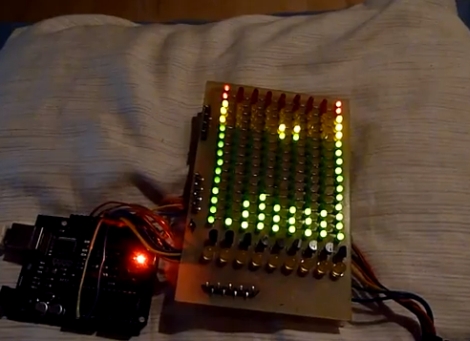
Turning A MIDI Sequencer Display Into A Tetris Clone

led-midi-display-tetris

Tetris is unquestionably a game for the ages. Despite its simplicity, someone, somewhere will always find a way to port the game (Translation) to just about any electronic device that can handle it.

Earlier this year we showed you a slick MIDI sequencer project that was constructed using an Arduino Mega, which also happened to drive an incredibly detailed touch screen display. [Christian] must have gotten bored with his awesome creation one day, because he pulled the drum level display out of his Arduino Sequencer 808, and turned the LED array into a mini Tetris game.

As you can see in the video below, the game runs pretty well, though from what we can see it lacks any sort of score keeping. We dig it because we never really tire of Tetris clones, and we think it’s great that he kept his 808 sequencer design modular enough that he can pluck different components out for reuse in other projects.

Continue reading “Turning A MIDI Sequencer Display Into A Tetris Clone”

Hackaday Links August 31, 2012

Landing a fixed-wing through hotel balcony french doors

As you can see, launching an RC airplane off of a hotel balcony is easy. But watch the video and you’ll find out trying to fly through the french doors for a landing is another story. [Team BlackSheep] hits (har, har) Thailand in this collection of breathtaking flights.

Quieting rack-mount switch for home use

[VictorB] got his hands on this switch to beef up his home network. Since the three fans on the back sound like a jet engine he did some cutting to use a larger, quieter fan.

Component package alphabet

Sure, you probably know what SOIC stands for, but what is a CSP? You can clear things up a bit by studying your IC Alphabet.

ZX Spectrum audio card

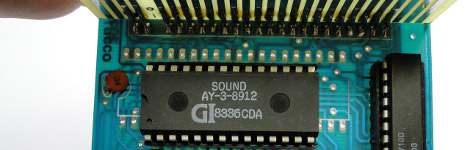
For those still looking to squeeze everything they can out of a classic ZX Spectrum, here’s a way to improve the audio with a custom sound card (translated).

AVR programmer reprogrammed as an NES controller interface

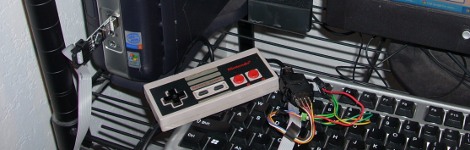
[Slack] modified his USBasp programmer to uses as an NES controller interface. The hardware can be had on eBay for under $10, and he was already using one as a dev board. After seeing this USB to NES dongle post it didn’t take long to make the programmer into a gaming tool.

What Does The Government Think About That Drone In Your Home?

The world is buzzing about drones right now. Even we’re joining in the fun with some antics of our own. Right now, it is basically a legal free-for all since no one is enforcing regulation, but is that about to change? Should it?

Lets start off by establishing the definition of a “drone”. For this article, we’ll settle for any “unmanned aerial vehicle”, though we can all agree that that limiting this to airspace is fairly restrictive. This is the specific type that are making the news right now and quite possibly catching the eye of people who make the rules.

Continue reading “What Does The Government Think About That Drone In Your Home?”

Forget Treating Your Diabetes – Use Your Insulin Syringe As A Logic Probe

syringe-logic-probe

Hackaday reader [JumperOne] was in need of a logic probe that he could use to reliably test some tiny .5mm pitch IC pins. The probe that came with his oscilloscope was a bit too big and not near sharp enough to do the job, but he figured that a syringe might do the trick nicely.

He drilled a small hole near the business end of the syringe, through which he fed a piece of stripped twisted pair cabling. [JumperOne] then soldered a pair of pins to a small piece of coaxial cable, attaching the opposite end to the twisted pair already in the syringe. After carefully coiling the thin cable around the needle, he secured the coaxial cable and its pins in place with a bit of hot glue.

[JumperOne] says that his makeshift logic probe works very well and the sharp needle would easily pierce through any oxidation or solder mask that stands in its way. One extra benefit of using a syringe as a probe is that they come complete with caps which help protect both ends of the delicate tool.

10bitworks Shows Us How To Light Up A Synchronized Swarm Of LED Jellyfish

10bitworks-led-tshirts

[Jeremy Zunker] from 10bitworks recently wrote in to share a cool build the group put together for the Luminaria 2012 festival which took place in March of this year. As you might have guessed, the fest is home to a wide array of light-themed projects, so the team at 10bitworks thought long and hard to come up with a design which would help them stand out from the other 79 featured artists.

At the core of their project is a t-shirt which features a deep-sea diver surrounded by swarm of jellyfish. Each of the jellyfish is backlit by an LED module, allowing the group to create intricate light patterns on the shirt.

10bitworks brought 8 shirts to the show, each fitted with a small control pack that contained a set of batteries and a Jeenode wireless board. A ninth Jeenode and a large antenna were used as the master control unit, sending signals to each of the t-shirts in order to synchronize the light display.

The final result turned out very nicely as you can see in the video below, where [Jeremy] walks through all of the project’s finer details.

Continue reading “10bitworks Shows Us How To Light Up A Synchronized Swarm Of LED Jellyfish”

Building A Resistor Substitution Decade Box

[George] built an incredibly tidy resistor substitution decade box. These devices feature a pair of connections and a way to select the resistance between the two of them. In [George’s] case it’s a pair of banana jacks and these eight thumbwheel switches.

What you see above is the side of each thumbwheel switch. These are panel mount devices which show one digit with an up and down button to change the setting. As you can see, the PCB for each provides connections to which a set of resistors can be mounted. This is the difficult part which he goes to great lengths to explain.

At this point he’s got the resistor groups for each digit soldered in place, the next step is to stack the switches next to each other and connect them electrically. From there it’s off to a project box in which they will be mounted.

This project does a great job of explaining the assembly process. If you’re interested in the theory behind a substitution box check out this other project.