
We were pretty excited by the prospect of location-aware software and its ability to pull map data into its functions, but what do you get when build software on top of a map-based service? Well, one possibility is 2D gaming on real maps.
News3729 Articles
Water Runner Robot

Researchers at Carnegie Mellon University’s NanoRobotics Lab have developed a robot that is capable of running on the surface of a pool of water. Like their wall climbing Waalbot, the Water Runner was inspired by the abilities of a lizard, in this case, the basilisk. The team studied the motions of the basilisk and found morphological features and aspects of the lizard’s stride that make running on water possible. Both the lizard and the robot run on water by slapping the surface to create an air cavity like the one above, then push against the water for the necessary lift and thrust. Several prototypes have been built, and there are variants with 2 or 4 legs and with on and off-board power sources. You can see a slow motion video of the robot’s movement below.
The purpose of their research is to create robots that can traverse any surface on earth and waste less energy to viscous drag than a swimming robot would. Though another of the team’s goals is to further legged robot research, the Water Runner is not without potential practical applications. It could be used to collect water samples, monitor waterways with a camera, or even deliver small packages. Download the full abstract in PDF format for more information.
LAMP On Ubuntu
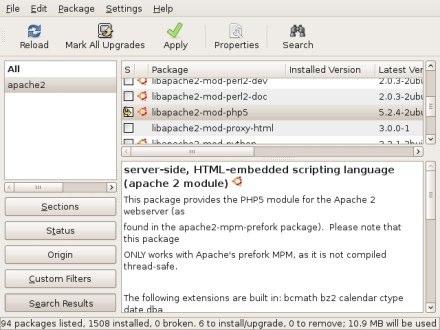
Download Squad’s [Kristin Shoemaker] has just published part 2 of their guide to web development using Linux. This time around they’re installing Apache, MySQL, and PHP on Ubuntu Hardy Heron. It’s a straight forward process under Ubuntu since you just need to select the few packages in Synaptic. Once installed, she shows you how to poke at Apache to verify that it’s running. They finish up by installing phpMyAdmin and the WordPress CMS.
Having a web server installed is useful for more than just development work. Many open source tools have a simple web based interface you’ll be able to access through your local web server.
The Best Of 2600

2600 editor [Emmanuel Goldstein], has decided to publish The Best of 2600. It features some of the best essays on lockpicking, phone phreaking, social engineering, and other topics that the hacker quarterly had to offer.
Founded in 1984, 2600 was one of the major catalysts that got the modern hacker scene going. They published controversial articles on topics like red boxing and spawned monthly meetings. This firsthand account of the development of hacker culture will be released in July at The Last HOPE in New York.
Malware Alters DNS Data On Routers
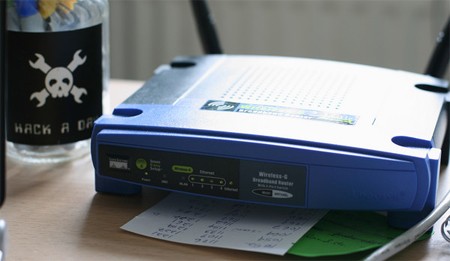
The Zlob trojan, also known as DNSChanger, has been around for a few years, but recent Zlob variants to appear in the wild attempt to log into routers using a list of default admin/password combos. If they succeed, they alter the DNS records on the router to reroute traffic through the attacker’s server.
Our friend [Dan Kaminisky] recently did a presentation warning against vulnerabilities in internet browser plugins that allow attackers to mount DNS rebinding attacks against routers with default passwords.. Though it achieves the same end, Zlob is different because it infects by the tried-and-true method of fooling users into downloading it inside a fake video codec. Once it is running on a client machine, it is free to attempt to use the default admin id and password of the router to log in and alter DNS settings. It even supports the DD-WRT firmware.
Even if a system is wiped clean of Zlob trojans, the router could still be compromised. The good news is that it is easy to fix and even easier to prevent. Fixing it takes no more than wiping all network clients clean, then resetting the router and restoring custom settings. Prevention is a simple matter of changing the router’s password.
[photo: fbz]
Web Based Bittorrent Support

We recently came across a new bittorrent service called Torrent Relay that features an innovative yet simple function: it allows you to download torrents to web-enabled devices like the PlayStation 3 and iPhone. Torrent Relay works by having the user surf to their site using the web-enabled device and upload a local copy or enter the url of a torrent file. The file is downloaded as normal, only all the work happens on Torrent Relay servers. It works especially well with Mininova, using torrent IDs from the site instead of the torrent’s URL. Once Torrent Relay has the completed file it sends it to the web-enabled device. It is not without a few kinks, however, as it only seems to be able to download a single file from a torrent whether or not it contains more than one, and it has a size cap of 400MB for that file. That limit means you’re probably just going to be watching television and not grabbing ISOs, albums, or movies. Far from perfect, but how else are you supposed to watch Battlestar Gallactica on your iPhone?
Hubless Inline Skateboard

We’ve been talking a lot about alternate modes of transportation lately. The 360 inline skateboard immediately caught our eye for its simplicity and hubless wheel design. The usage seems fairly straightforward, but the videos posted by designer [Francesco Sommacal] don’t make it look exceptionally fun; more like they’re daring you to use the thing. What we find most jarring about this is how similar it is to the Bushpig. Did the commercial gas powered version really predate this unpowered device?
The design is simple enough to understand, but we’re not really sure where you can easily source hubless wheels like this. Any ideas?
[via Gizmodo]