Das Uber Airsoft Gun Turret


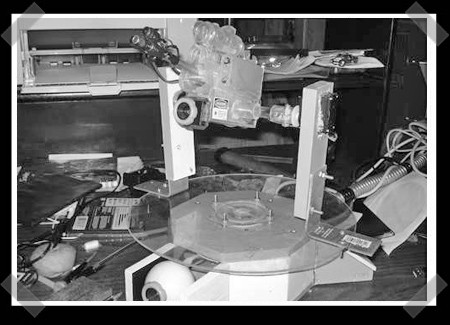
Hot on the heels of the Wii missile launcher, Das Uber Airsoft Gun Turret is here to put our past airsoft turrets to shame. Made by [Miltron_B], this autonomous beast not only has gorgeous LED indicators, it has lasers. Three of them. Three freaking lasers. Take a moment to wipe the drool from your chin.

We’ve seen plenty of turrets before, but this one really excels in design. It features two webcams for more precision detection and tracking and when set to manual mode, it can be controlled with an XBox 360 controller. He’s posted great pictures of the process with a step by step break down. Tons of useful links are included to help you out.

Someone should construct a Portal sentry gun case for this thing and add voice clips.
British Bots Compete For Attention


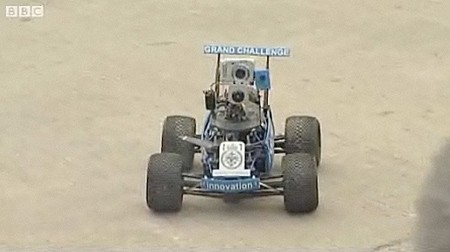
The British military held a competition to find the newest batch of robotic surveillance drones. The article mentions that they compete in a mockup village, but sadly we don’t get to see any of the action. We strongly recommend watching the video so you can see some of the robots. There is an interesting helicopter concept that has angled props for better stability and lateral motion, but more importantly you get to see the little guy pictured above. He very well could be Wall-E’s great grandfather. Though his constant buzzing around during the interviews is slightly annoying, his little camera mount looking all around is instantly endearing. If he doesn’t win this contest, he may have a shot at the [crabfu] challenge.

[via Engadget]

Plotter Made Entirely From Lego


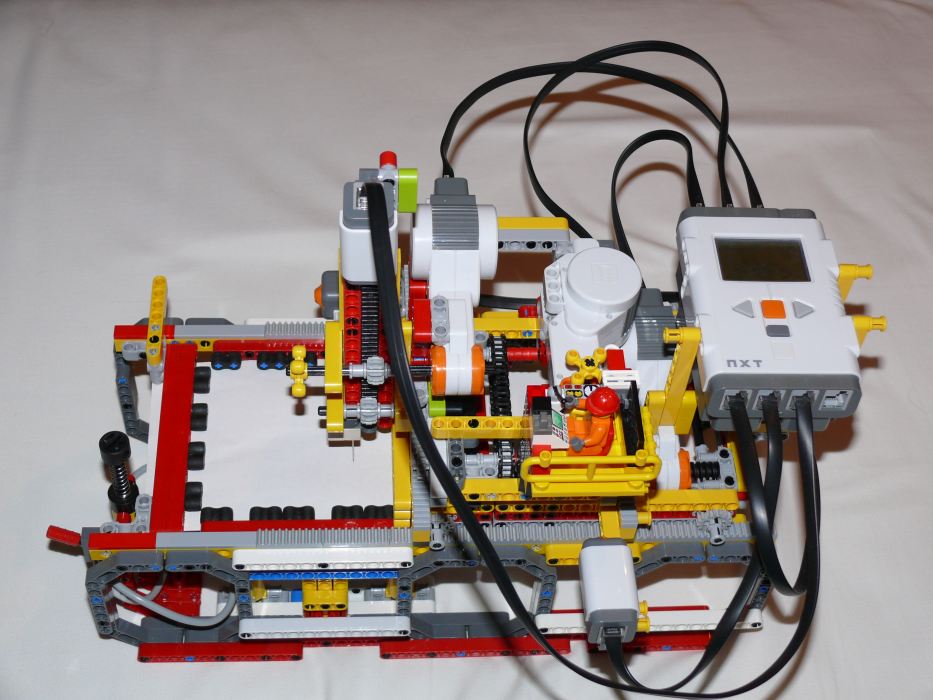
Check out this awesome tool that [Alfonso Martone] built and wrote in to tell us about: a pin plotter made entirely from Lego (except for the addition of a pin in one brick). [Alfonso] has managed to get 33dpi resolution with a “printable” area of 90x70mm. The NXT device reads 1bit bitmapped images in PBM format and outputs onto a sheet of paper, which is held in place by Lego pneumatics pushing against rubber Lego bricks. Output is not what you might call speedy, though: it takes 35-40 minutes to output a drawing with 1,500 holes.

Continue reading “Plotter Made Entirely From Lego”

Robot That Runs On Rat Brain Cells


Scientists at the University of Reading have created a robot that runs not on microprocessors, but on brain cells extracted from a rat fetus. The robot is equipped with several sensors which stimulate the rat neurons whenever the robot approaches a wall; the response of the neurons then determines whether the robot avoids the wall or crashes into it. The truly fascinating bit is that the rat brain cells don’t automatically know how to respond to the stimuli from the sensors, but instead learn to respond appropriately through repeated stimuli.

No word yet on whether the scientists will teach the robot to sing “Despite all my rage / I am still just a brain in a vat”.

Creepy Robot Eye Follows You And Winks In Response


Opto-Isolator is an interesting art installation that was on display at the Bitforms Gallery in NYC. This single movement-tracking eye creates a statement about how we view art and is a response to the question “what if art could view us?”. The somewhat creepy display not only follows the person viewing it, but mimics blinks a second later and averts its gaze if eye contact is kept up for too long. Its creators [Golan Levin] and [Greg Baltus] have done a great job mimicking human behavior with such a simple element and the social implications of it are truly fascinating.

If they wanted to, [Levin] and [Baltus] could possibly crank up the spook factor by adding facial recognition and programming it to remember how certain people interact with it, then tailor its behavior to wink at different rates or become more shy or bold, depending on the personality of the person watching it. Of course, that would require that someone goes back to it more than once…

[via Glass Tumbler]

Autonomous Helicopter Learns Autorotation


Stanford’s autonomous helicopter group has made some impressive advancements in the field of autonomous helicopter control, including inverted hovering and performing aerobatic stunts. The group uses reinforcement learning to teach its control system various maneuvers and has been very successful in doing so. One of their latest achievements was teaching the bot the emergency landing technique autorotation. Autorotation is used when a helicopter’s engine fails or is disengaged and works by changing the collective pitch to use the airflow from descent to rotate the blades. The group has more flight demonstrations on their YouTube channel.

[via BotJunkie]

Drive A Robot In Australia Over The Web


BP Australia has commissioned an online game where you get to drive robots around an obstacle course. Make no mistake, these are real robots. Actually they are modified versions of the Surveyor SRV-1 vehicles that are popular with research labs, and schools everywhere.

Go to the website, get in queue and pray for no clouds. These babies are solar powered, so you’ll have to try to get in while its day time in Australia. The entire set is built in miniature, so you feel like you’re driving a tank around a city.

[via Robots Dreams]