2020 saw the world rocked by widespread turmoil, as a virulent new pathogen started claiming lives around the globe. The COVID-19 pandemic saw a rush on masks, air filtration systems, and hand sanitizer, as terrified populations sought to stave off the deadly virus by any means possible.
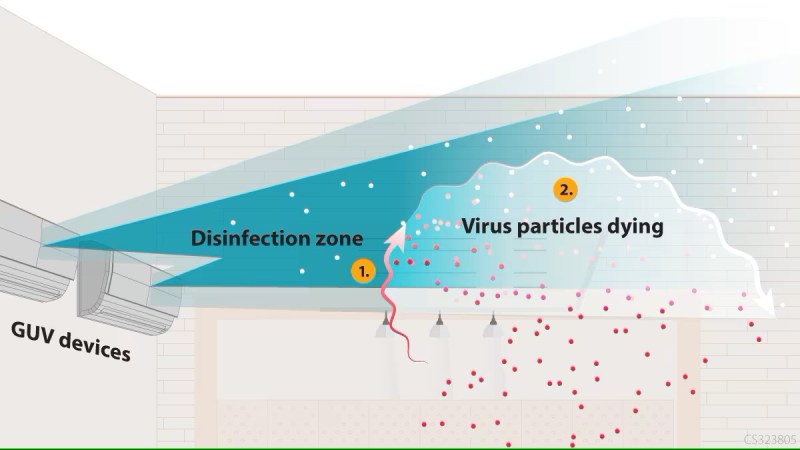
Despite the fresh attention given to indoor air quality and airborne disease transmission, there remains one technology that was largely overlooked. It’s the concept of upper-room UV sterilization—a remarkably simple way of tackling biological nastiness in the air.
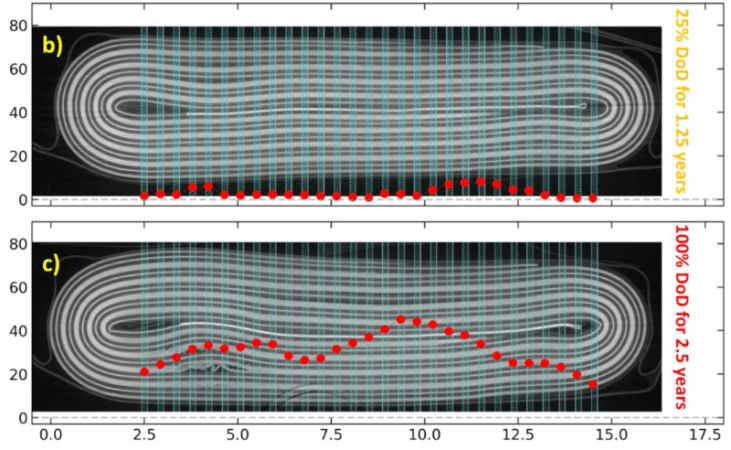
Researchers have been testing a new type of lithium ion battery that uses single-crystal electrodes. Over several years, they’ve found that the technology could keep 80% of its capacity after 20,000 charge and discharge cycles. For reference, a conventional cell reaches 80% after about 2,400 cycles.
The researchers say that the number of cycles would be equivalent to driving about 8 million kilometers in an electric vehicle. This is within striking distance of having the battery last longer than the other parts of the vehicle. The researchers employed synchrotron x-ray diffraction to study the wear on the electrodes. One interesting result is that after use, the single-crystal electrode showed very little degradation. According to reports, the batteries are already in production and they expect to see them used more often in the near future.
The technology shows promise, too, for other demanding battery applications like grid storage. Of course, better batteries are always welcome, although it is hard to tell which new technologies will catch on and which will be forgotten.
There are many researchers working on making better batteries. Even AI is getting into the act.
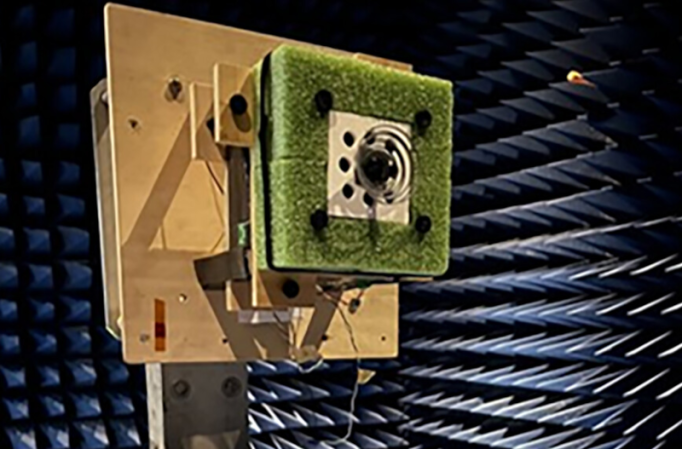
The shape of an antenna can make a big difference in its performance. Researchers at the Johns Hopkins Applied Physics Laboratory have used shape memory alloy to construct an antenna that changes shape depending on the signals it is receiving. Nitinol, a common shape memory alloy made from nickel and titanium, is an obvious choice, but it’s not obvious how you’d make a shape-changing antenna out of nitinol wire. That changed when a mechanical engineer found a way to 3D print the substance. You can find a paper about the research online from Applied Engineering Materials.
In practice, the antenna is a double spiral made of nitinol. A channel contains a copper wire that can heat the antenna and, therefore, change its shape. Having a powered wire in the antenna can cause problems, so special designs route the signal away from the heating element. It looks like the antenna can assume a flat configuration or a spiral conic configuration.
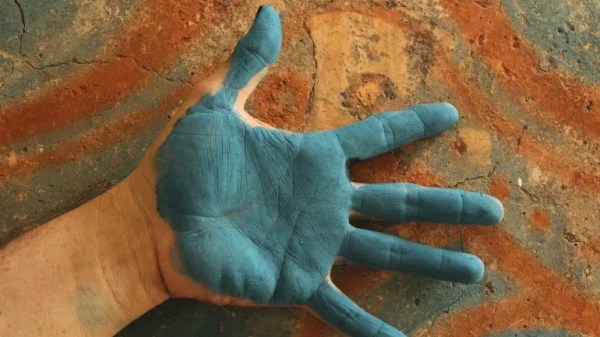
A distinct blue pigment reminiscent of turquoise or a clear sky was used by the ancient Maya to paint pottery, sculptures, clothing, murals, jewelry, and even human sacrifices. What makes it so interesting is not only its rich palette — ranging from bright turquoise to a dark greenish blue — but also its remarkable durability. Only a small number of blue pigments were created by ancient civilizations, and even among those Maya blue is unique. The secret of its creation was thought to be lost, until ceramicist and artist [Luis May Ku] rediscovered it.
Maya blue is not just a dye, nor a ground-up mineral like lapis lazuli. It is an unusual and highly durable organic-inorganic hybrid; the result of a complex chemical process that involves two colorants. Here is how it is made: Indigotin is a dye extracted from ch’oj, the Mayan name for a specific indigenous indigo plant. That extract is combined with a very specific type of clay. Heating the mixture in an oven both stabilizes it produces a second colorant: dehydroindigo. Together, this creates Maya blue.
Luis May Ku posing with Maya blue.
The road to rediscovery was not a simple one. While the chemical makeup and particulars of Maya blue had been known for decades, the nuts and bolts of actually making it, not to mention sourcing the correct materials, and determining the correct techniques, was a long road. [May] made progress by piecing together invaluable ancestral knowledge and finally cracked the code after a lot of time and effort and experimentation. He remembers the moment of watching a batch shift in color from a soft blue to a vibrant turquoise, and knew he had finally done it.
Before synthetic blue pigments arrived on the scene after the industrial revolution, blue was rare and highly valuable in Europe. The Spanish exploitation of the New World included controlling Maya blue until synthetic blue colorants arrived on the scene, after which Maya blue faded from common knowledge. [May]’s rediscovered formula marks the first time the world has seen genuine Maya blue made using its original formula and methods in almost two hundred years.
Maya blue is a technological wonder of the ancient world, and its rediscovery demonstrates the resilience and scientific value of ancestral knowledge as well as the ingenuity of those dedicated to reviving lost arts.
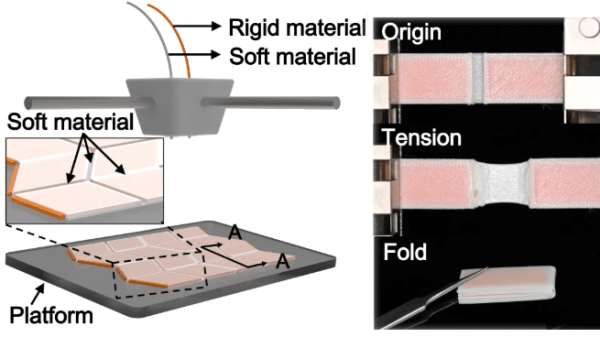
The 3D structure of origami-inspired designs comes from mountain and valley fold lines in a flat material. Origami designs classically assume a material of zero thickness. Paper is fine, but as the material gets thicker things get less cooperative. This technique helps avoid such problems.
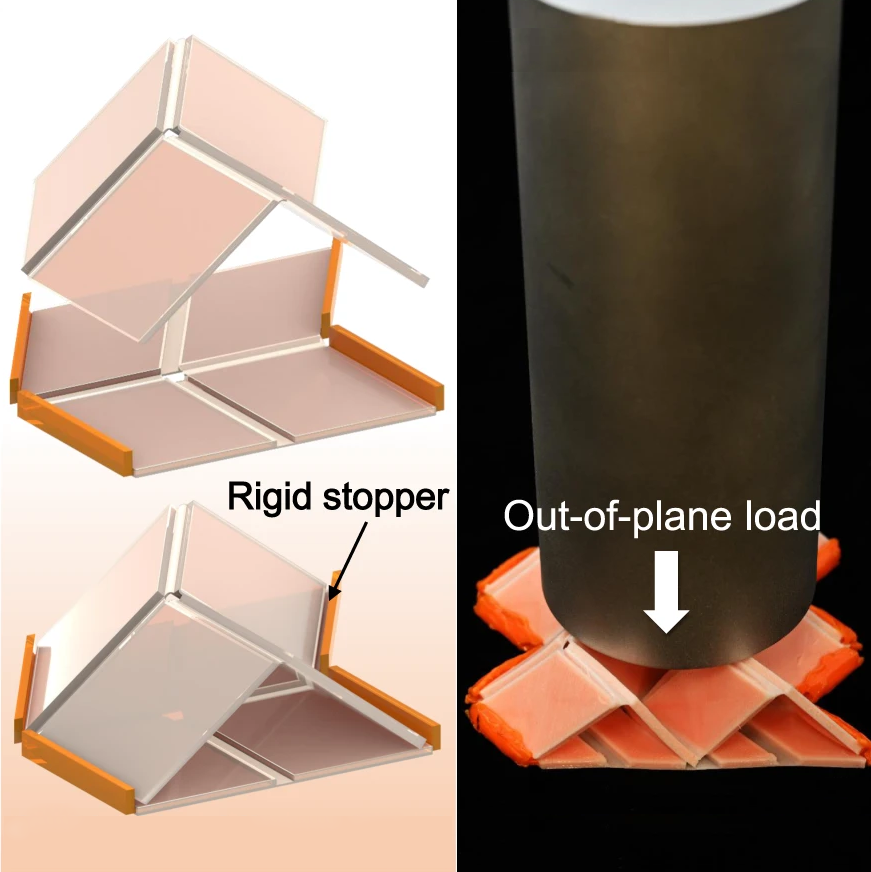
An example of a load-bearing thick-film structure.
The research focuses on creating so-called “thick-panel origami” that wraps rigid panels in a softer, flexible material like TPU. This creates a soft hinge point between panels that has some compliance and elasticity, shifting the mechanics of the folds away from the panels themselves. These hinge areas can also be biased in different ways, depending on how they are made. For example, putting the material further to one side or the other will mechanically bias that hinge to fold into either a mountain, or a valley.
Thick-panel origami made in this way paves the way towards self-locking structures. The research paper describes several different load-bearing designs made by folding sheets and adding small rigid pieces (which are themselves 3D printed) to act as latches or stoppers. There are plenty of examples, so give them a peek and see if you get any ideas.
We recently saw a breakdown of what does (and doesn’t) stick to what when it comes to 3D printing, which seems worth keeping in mind if one wishes to do some of their own thick-panel experiments. Being able to produce a multi-material object as a single piece highlights the potential for 3D printing to create complex and functional structures that don’t need separate assembly. Especially since printing a flat structure that can transform into a 3D shape is significantly more efficient than printing the finished 3D shape.
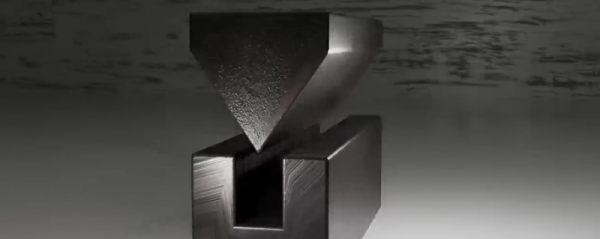
Two guys — Stern and Gerlach — did an experiment in 1922. They wanted to measure magnetism caused by electron orbits. At the time, they didn’t know about particles having angular momentum due to spin. So — as explained by [The Science Asylum] in the video below — they clearly showed quantum spin, they just didn’t know it and Physics didn’t catch on for many years.
The experiment was fairly simple. They heated a piece of silver foil to cause atoms to stream out through a tiny pinhole. The choice of silver was because it was a simple material that had a single electron in its outer shell. An external magnet then pulls silver atoms into a different position before it hits some film and that position depends on its magnetic field.
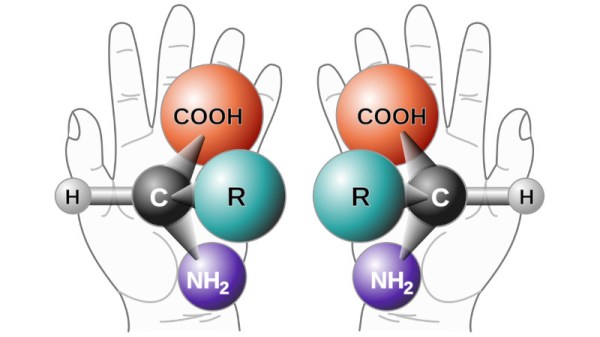
In our high school chemistry classes we all learn about chirality, the property of organic molecules in which two chemically identical molecules can have different structures that are mirror images of each other. This can lead to their exhibiting different properties, and one aspect of chirality is causing significant concerns in the field of synthetic biology. The prospect of so-called mirror organisms is leading to calls from a group of prominent scientists for research in the field to be curtailed due to the risks they would present.
Chirality is baked into all life; our DNA is formed of right-handed molecules while our proteins are left handed. The “mirror” organisms would reverse either or both of these, and could in theory be used to improve biochemical production processes. The concern is that these organisms would evade both the immune systems of all natural life forms, and any human defences such as antibiotics, thus posing an existential risk to life. It’s estimated that the capacity to produce such a life form lies more than a decade away, and the scientists wish to forestall that by starting the conversation early. They are calling for a halt to research likely to result in these organisms, and a commitment from funding bodies not to support such research.
Warnings of the dangers from scientific advances are as old as science itself, and it’s safe to say that many such prophecies have come from dubious sources and proved not to have a basis in fact. But this one, given the body of opinion behind it, is perhaps one that should be heeded.
Header: Original: Unknown Vector: — πϵρήλιο, Public domain.