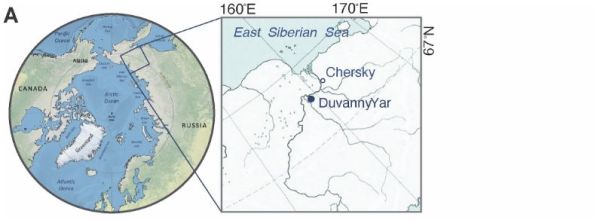
The general consensus among us mammals is that if we get very cold, we die. Within the world of nematodes, however, they’d like to differ on that viewpoint. This is demonstrated succinctly after researchers coaxed a batch of these worms back into action after they had been frozen in Siberian permafrost for an estimated 46,000 years. The mechanism underlying this phenomenon is called cryptobiosis, which is essentially a metabolic state that certain lifeforms can enter when environmental conditions become unsuitable.
In the case of nematodes, they hold a number of records, with a group of them having survived the STS-107 Space Shuttle Columbia in 2003 when it broke up during reentry, making it the first known lifeform to have achieved such a feat. During arctic experiments it was found that these roundworms can withstand intracellular freezing even while active depending on its diet. Continue reading “Nematodes From The Siberian Permafrost Woke Up After A 46,000 Year Long Nap”→
Most of what humankind and other mammalian species on Earth experience of the Universe is primarily restricted to the part of the electromagnetic spectrum which our optical organs can register. Despite these limitations, we have found ways over the centuries which enable us to perceive the rest of the EM spectrum, to see both what is incredibly far away, and what is incredibly small, to constantly get a little bit closer to understanding what makes the Universe into what we can observe today, and what it may look like in the future.
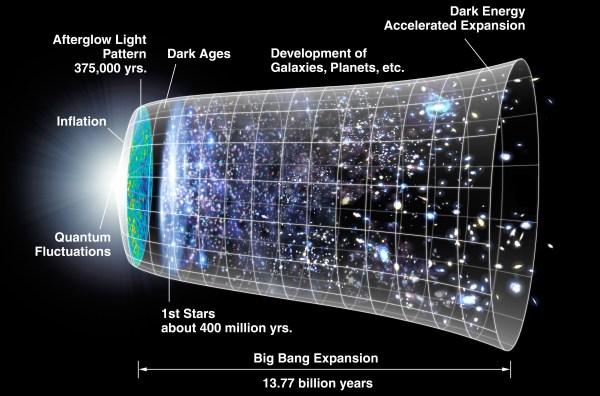
An essential element of this effort are space telescopes, which gaze into the depths of the Universe with no limitations imposed by the Earth’s atmosphere, or human activity. Among the many uses of space telescopes, the investigation of the expansion of the Universe is perhaps the most fascinating, as this brings us ever closer to the answers to the most fundamental questions about not only its shape, but also to its future, which may include hitherto unknown types of matter and energy.
With the recently launched Euclid space telescope, another chapter is being opened in the saga on dark energy and matter, and their nature and effects on the Universe, as well as whether they exist at all. Yet how exactly do you use a space telescope to ferret out the potential effects of dark energy?
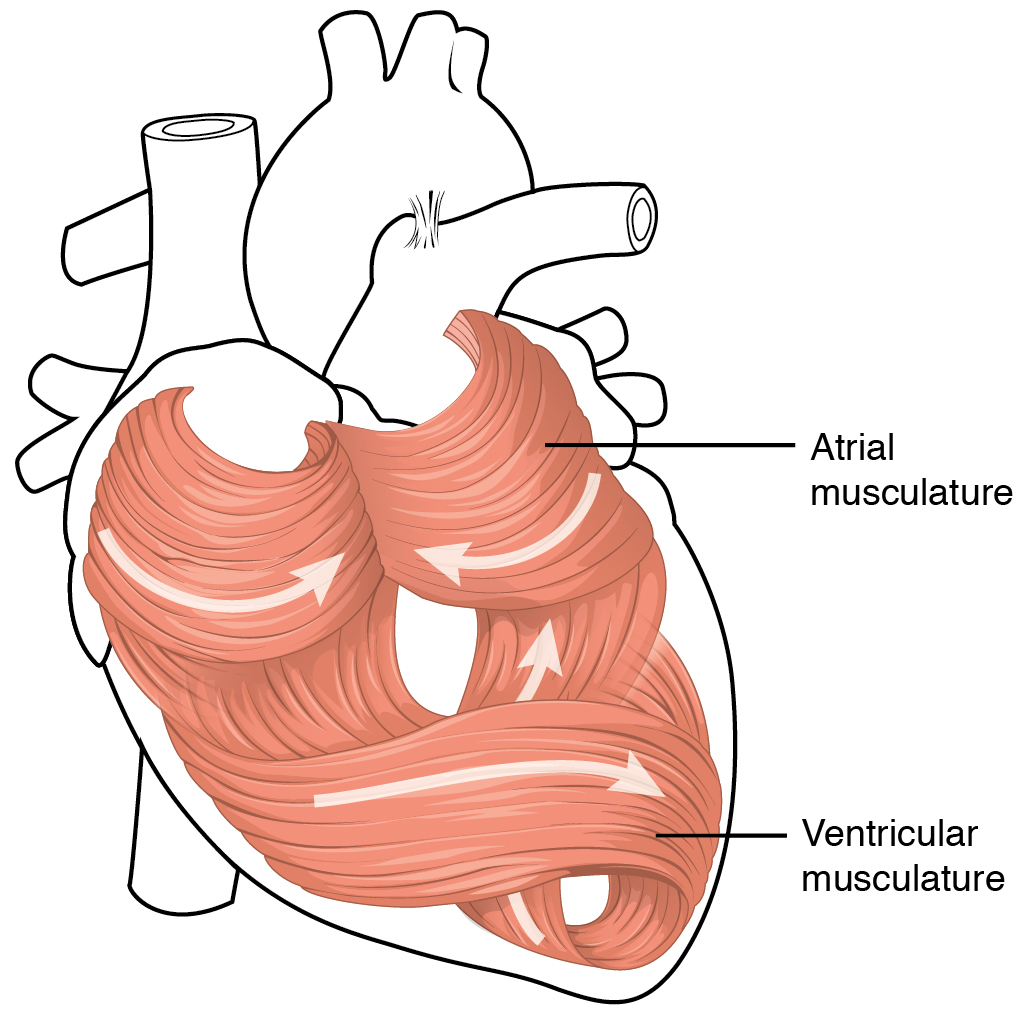
What makes a body’s organs into what they are is more than just a grouping of specialized cells. They also need to be oriented and attached to each other and scaffolding in order to create structures which can effectively perform the desired function. A good example here is the heart, which requires a large number of muscle cells to contract in unison in order for the heart component (like a ventricle) to effectively pump blood. This complication is what has so far complicated efforts to 3D print complex tissues and entire organs, but recently researchers have demonstrated a way to 3D print heart muscle which can contract when stimulated similarly to a human heart’s ventricle.
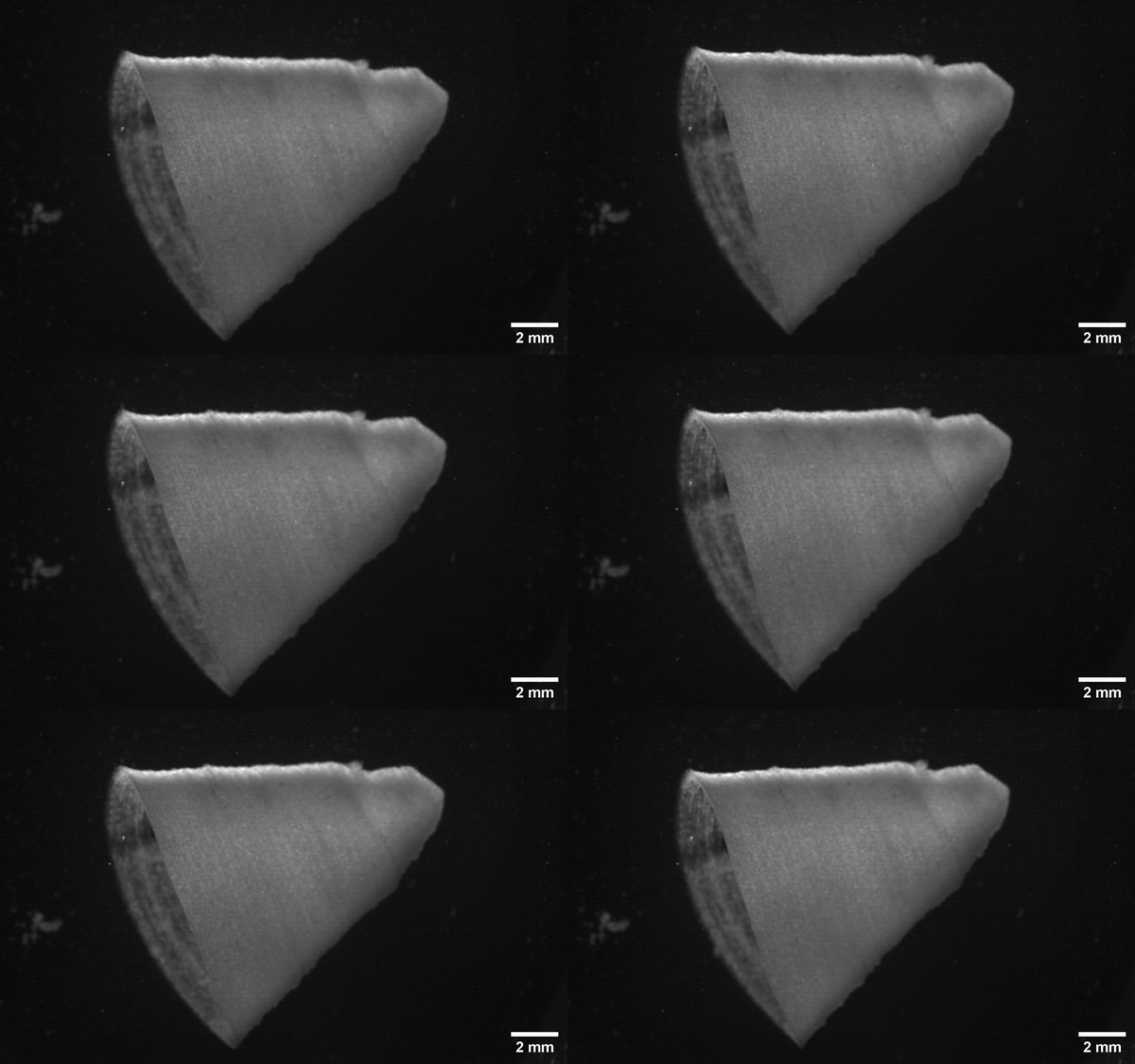
At the center of this technique lies a hydrogel that is infused with gelatin fibers. Using a previously developed Rotary Jet-Spinning technology that was reported on in 2016, a sheet of spun fibers was produced that were then cut up into micrometer-sized fibers which were dispersed into the hydrogel. After printing the desired structure – taking into account the fiber alignment – it was found that the cardiomyocytes (the cells responsible for carrying the contractile signal in the heart muscle) align along the thus laid out pattern, ultimately creating a cardiac muscle capable of organized contraction.
These findings come after many years of research into the topic, with e.g. Zihan Wang and colleagues in a 2021 paper reporting on the challenges remaining with 3D printing cardiac tissue, yet also the massive opportunities that this could provide. Although entire heart replacements (via therapeutic cloning with the patient’s own cells) might become possible too, more immediate applications would involve replacements for damaged cardiac muscle and other large structures of the heart.
There’s a common critique in science fiction series like Star Trek about the extraterrestrial species not looking ‘alien’ enough, as well as about their technology being strangely similar to our own, not to mention compatible to the point where their widgets can be integrated into terrestrial systems by any plucky engineer. Is this critique justified, or perhaps more succinctly put: if we came across real extraterrestrial life with real extraterrestrial technology, would we even notice? Would an alien widget borrowed of an alien spacecraft even work with our own terrestrial spacecraft’s system?
Within the domain of exobiology there are still plenty of discussions on the possible formation and evolutionary paths conceivable within the Universe, but the overarching consensus seems to be that it’s hard to escape the herding effect of fundamental physics. For lifeforms, carbon-based chemistry is the only reasonable option, and when it comes to technology, it’s hard to not end up at technology using the same physical principles which we presume to exist across the Universe, which would practically guarantee some level of interoperability.
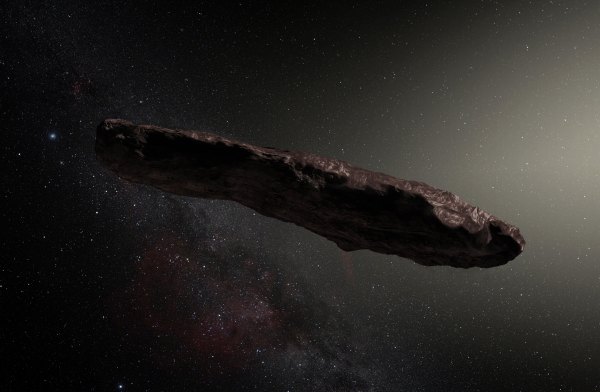
What’s notable here is that over the past years, a number of people have claimed to have observed potential alien technology in our Solar System, in particular the ʻOumuamua asteroid in 2017 and a more recent claim by astrophysicist Abraham Loeb regarding an interstellar meteor that impacted Earth in 2019, which he says could be proof of ‘alien technology’. This raises the question of whether we are literally being pummeled by extraterrestrial spacecraft these days.
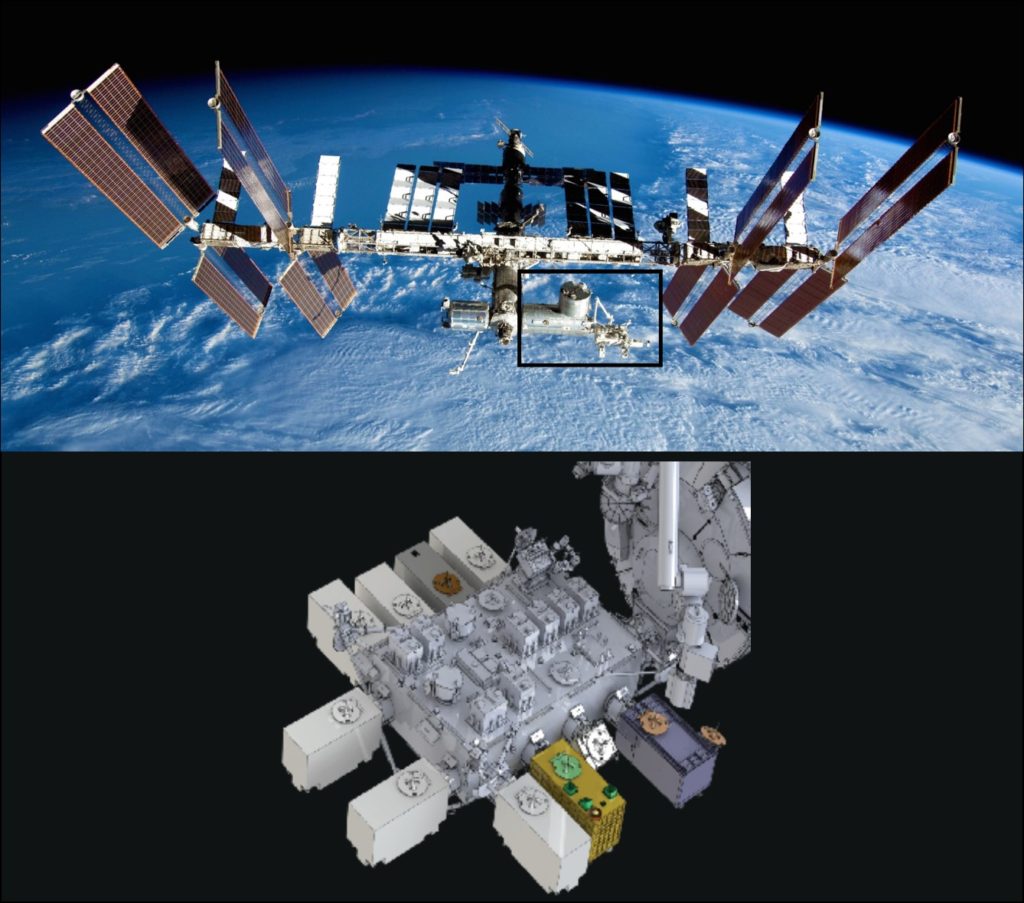
GEDI is deployed on the the Japanese Experiment Module – Exposed Facility (JEM-EF). The highlighted box shows the location of GEDI on the JEM-EF.
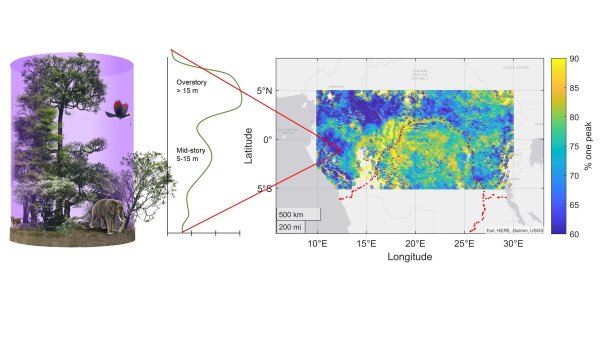
Even though it may seem like we have already explored every single square centimeter of the Earth, there are still many areas that are practically unmapped. These areas include the bottom of the Earth’s oceans, but also the canopy of the planet’s rainforests. Rather having herds of explorers clamber around in the upper reaches of these forests to take measurements, researchers decided to use LiDAR to create a 3D map of these forests (press release).
The resulting GEDI (Global Ecosystem Dynamics Investigation) NASA project includes a triple-laser-based LiDAR system that was launched to the International Space Station in late 2018 by CRS-16 where it has fulfilled its two-year mission which began in March of 2019. Included in the parameters recorded this way are surface topography, canopy height metrics, canopy cover metrics and vertical structure metrics.
Originally, the LiDAR scanner was supposed to be decommissioned by stuffing it into the trunk of a Dragon craft before its deorbit, but after NASA found a way to scoot the scanner over to make way for a DOD payload, the project looks to resume scanning the Earth’s forests next year, where it can safely remain until the ISS is deorbited in 2031. Courtesy of the ISS’s continuous orbiting of the Earth, it’ll enable daily monitoring of its rainforests in particular, which gives us invaluable information about the ecosystems they harbor, as well as whether they’re thriving or not.
Hopefully after its hibernation period the orbital LiDAR scanner will be back in action, as the instrument is subjected to quite severe temperature changes in its storage location. Regardless, putting LiDAR scanners in orbit has to be one of those amazing ideas to help us keep track of such simple things as measuring the height of trees and density of foliage.
Territories across the northern hemisphere are suffering through record-breaking heatwaves this summer. Climate scientists are publishing graphs with red lines jagging dangerously upwards as unprecedented numbers pour in. Residents of the southern hemisphere watch on, wondering what the coming hot season will bring.
2023 is hinting at a very real climate change that we can’t ignore. As the mercury rises to new heights, it’s time to educate yourself on the very real dangers of a wet bulb event. Scientists predict that these deadly weather conditions could soon strike in the hottest parts of the world. What you learn here could end up saving your life one day.
Hot Bodies
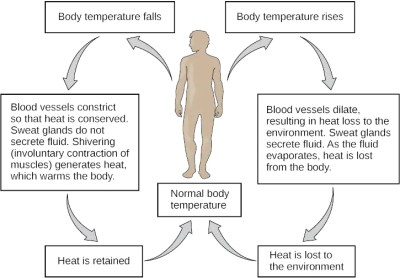
The body has methods of maintaining a set temperature. Credit: Wikimedia Commons, CNX OpenStax, CC BY-SA 4.0
To understand the danger of a wet bulb event, we must first understand how our bodies work. The human body likes to maintain its temperature at approximately 37 °C (98.6 °F). That temperature can drift slightly, and the body itself will sometimes move its temperature setpoint higher to tackle infection, for example. The body is a delicate thing, however, and a body temperature above 40 °C (104 °F) can become life threatening. Seizures, organ failures, and unconsciousness are common symptoms of an overheating human. Death is a near-certainty if the body’s temperature reaches 44 °C (112 °F), though in one rare case, a patient in a coma survived a body temperature of 46.5 °C (115.7 °F).
Thankfully, the body has a host of automated systems for maintaining its temperature at its chosen set point. Blood flow can be controlled across the body, and we instinctively seek to shed clothes in the heat and cover ourselves in the cold. However, the bare naked fact is that one system is most crucial to our body’s ability to cool itself. The perspiration system is vital, as it uses sweat to cool our body via evaporation. Water is a hugely effective coolant in this way, with beads of sweat soaking up huge amounts of heat from our skin as they make the phase change from liquid to vapor.
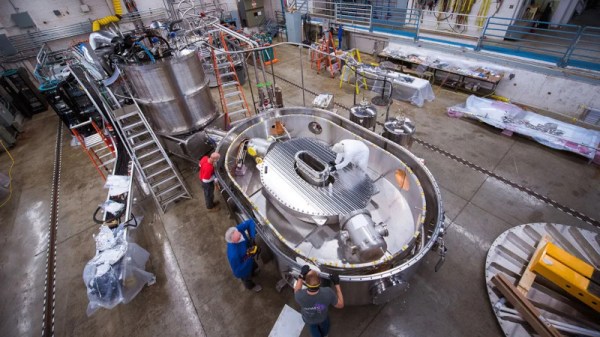
Attempts to make a viable nuclear fusion reactor have on the whole been the domain of megabucks projects supported by countries or groups of countries, such as the European JET or newer ITER projects. This is not to say that smaller efforts aren’t capable of making their own advances, operations in both the USA and the UK are working on new reactors that use a novel superconducting tape to achieve a much smaller device.
The reactors in the works from both Oxfordshire-based Tokamak Energy and Massachusetts-based Commonwealth Fusion Systems, or CFS, are tokamaks, a Russian acronym describing a toroidal chamber in which a ring of high-temperature plasma is contained within a spiral magnetic field. Reactors such as JET or ITER are also tokamaks, and among the many challenges facing a tokamak designer is the stable creation and maintenance of that field. In this, the new tokamaks have an ace up their sleeve, in the form of a high-temperature superconducting tape from which those super-powerful magnets can be constructed. This makes the magnets easier to make, cheaper to maintain at their required temperature, and smaller than the low-temperature superconductors found in previous designs.
The world of nuclear fusion is a particularly exciting one to follow in these times of climate crisis, with competing approaches from laser-based devices racing with the tokamak projects to produce the research which will eventually lead to safer carbon-free power. If the CFS or Tokamak Energy reactors lead eventually to a fusion power station on the edge of our cities then it may just be some of the most important work we’ve ever reported.