NASA’s Voyager Space Probe’s Reserve Power, And The Intricacies Of RTG-Based Power Systems

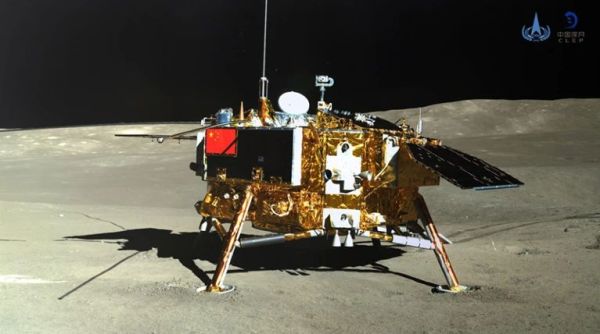
Launched in 1977, the Voyager 1 and 2 space probes have been operating non-stop for over 45 years, making their way from Earth to our solar system’s outer planets and beyond. Courtesy of the radioisotope thermoelectric generators (RTGs) which provided 470 W at launch, they are able to function in the darkness of Deep Space as well as they did within the confines of our Sun-lit solar system. Yet as nothing in the Universe is really infinite, so too do these RTGs wear out over time, both from natural decay of their radioactive source and from the degradation of the thermocouples.

Despite this gradual drop in power, NASA recently announced that Voyager 2 has a hitherto seemingly unknown source of reserve power that will postpone the shutdown of more science instruments for a few more years. The change essentially bypasses a voltage regulator circuit and associated backup power system, freeing up the power consumed by this for the scientific instruments which would otherwise have begun to shut down years sooner.

While this is good news in itself, it’s also noteworthy because the Voyager’s 45+ year old Multi-Hundred Watt (MHW) RTGs are the predecessor to the RTGs that are still powering the New Horizons probe after 17 years, and the Mars Science Laboratory (Curiosity) for over 10 years, showing the value of RTGs in long-term exploration missions.

Although the basic principle behind an RTG is quite simple, their design has changed significantly since the US put a SNAP-3 RTG on the Transit 4B satellite in 1961.

Continue reading “NASA’s Voyager Space Probe’s Reserve Power, And The Intricacies Of RTG-Based Power Systems”

China's Chang'e-4 mission made the first-ever landing on the far side of the Moon in 2019. (Credit: Xinhua/Alamy)

Moon Mission Failures, Or Why Are Lunar Landings So Hard?

Given the number of spacecraft (both crewed and uncrewed) that touched down on the Moon during the Space Race it’s sometimes hard to imagine why today, with all our modern technology, our remotely operated vehicles seem to have so much trouble not smashing themselves to bits on the regolith surface.

This is the focus of a recent article in Nature that explores the aspects which still make soft landings on our closest space body so much harder than the tragic lithobraking as most recently demonstrated by ispace’s M1 lander.

So far only three entities have successfully landed a craft on the Moon’s surface: the government-funded space agencies of the US, USSR, and China. Of them, only China managed to do so on their first try in 2013 (Chang’e-3), and again in 2019 on the far side of the Moon (Chang’e-4). What is the toughest part about a Moon landing is not to get near the Moon, but it’s about getting close to the surface without getting lost. Since there are no navigation satellites beyond those you put up before the landing, and a lot of Moon dust that will be kicked up by any landing rocket engines, it can be tough to gauge one’s exact location and distance to the surface.

In the case of the ispace lander it would appear that it tragically ran out of propellant before it could safely touch down, which is another major concern. Both the US and USSR would smash Moon landers into its surface until the first successful landing in 1966, which makes the manned touchdown by Apollo 11 in 1969 even more impressive.

Getting Ready For Act 2 Of The Great American Eclipse

It seems like only yesterday that the “Great American Eclipse” swept from coast to coast, and for those who were lucky enough to watch it from along the path of totality, it was a true life experience. No natural phenomenon can compete with the beauty of a total solar eclipse, and if there’s one thing I heard more than anything else in those golden moments after the Sun returned from behind the Moon, it was, “When’s the next one?” Everyone wanted to do it again, and for good reason.

Back in 2017, that question was kind of rhetorical; everyone knew the next eclipse to cross the United States was a mere seven years off. For me personally, the passage of time has not dampened my enthusiasm for eclipses one bit, and I suspect the feeling is mutual among the many people who gazed in wonder and childlike glee at the celestial proceedings of 2017. But except for the very lucky who live within the path of totality, mounting an expedition that optimizes the viewing experience takes preparation. Now that we’re a little less than a year away for the next one, it’s time to get geared up and make plans for the 2024 eclipse.

Where and When?

The 2017 eclipse’s “Great American Eclipse” moniker was well earned, as the continental United States was the sole beneficiary of the view. This time around, the US isn’t the only country along the path; Mexico and Canada will also get in on the fun. In fact, Mexico may well be the best place to watch the eclipse from, but more on that later. Continue reading “Getting Ready For Act 2 Of The Great American Eclipse”

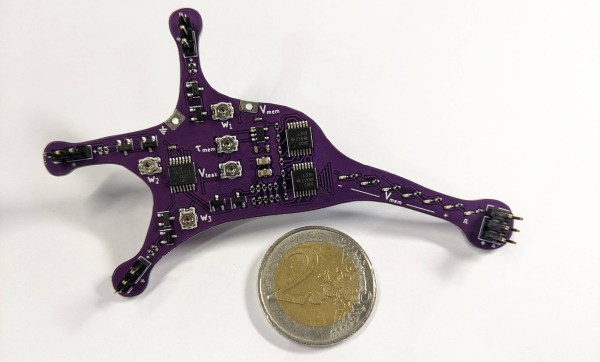
An electronic neuron implemented on a purple neuron-shaped PCB

Hackaday Prize 2023: Explore The Basics Of Neuroscience With This Electronic Neuron

Brains are the most complex systems in the universe, but their basic building blocks are surprisingly simple — the complexity arises from billions of neurons, axons and synapses working together. Simulating an entire brain therefore requires vast computing resources, but if it’s just a few cells you’re interested in, you don’t need much: a handful of op-amps and transistors will do the job, as [Sebastian Billaudelle] has demonstrated. He has designed an electronic neuron called Lu.i that does everything a real neuron does, in a convenient package suitable for educational use.

[Sebastian]’s neuron implements what’s known as the leaky integrate-and-fire model, first proposed by [Louis Lapicque] as a simple model for a neuron’s behavior. Basically, the neuron acts as an integrator that stores all incoming charge in a capacitor and generates a spiky output signal once its voltage reaches a certain threshold level. The capacitor is slowly discharged however, which means the neuron will only “fire” when it gets a strong enough input signal.

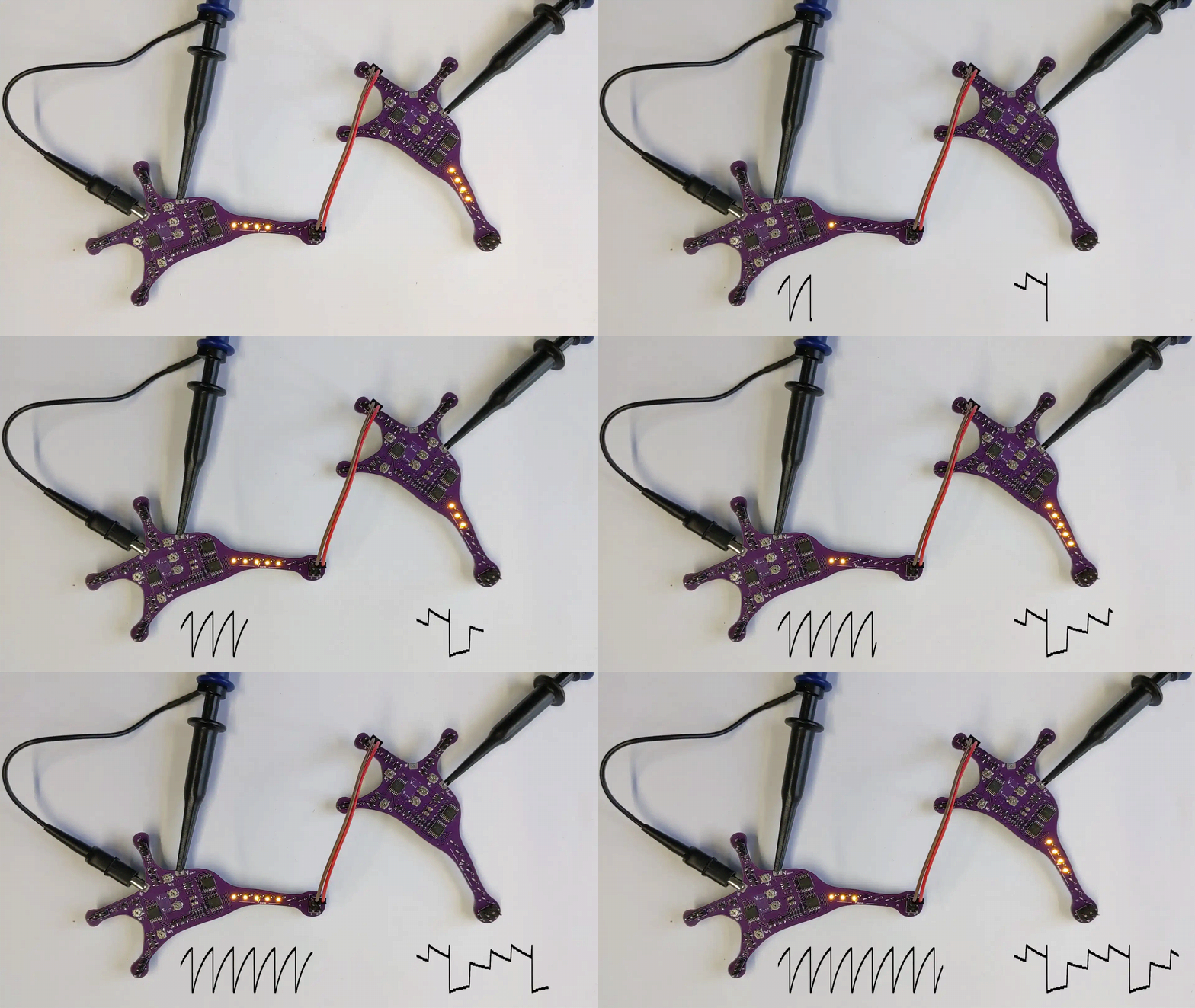
Two neuron-shaped PCBs exchanging signalsA couple of MCP6004 op-amps implement this model, with an LM339 comparator acting as the threshold detector. The neuron’s inputs are generated by electronic synapses made from logic-level MOSFETS. These circuits route signals between different neurons and can be manually set to either source or sink current, thereby increasing or decreasing the neuron’s voltage level.

All of this is built onto a neat purple PCB in the shape of a nerve cell, with external connections on the tips of its dendrites. The neuron’s internal state is made visible by an LED bar graph, giving the user an immediate feel for what’s going on inside the network. Multiple neurons can be connected together to form reasonably complex networks that can implement things like oscillators or logic functions, examples of which are shown on the project’s GitHub page.

The Lu.i project is a great way to teach the basics of neuroscience, turning dry differential equations into a neat display of signals racing around a network. Neurons are fascinating things that we’re learning more about every day, enabling things like brain-computer interfaces and neuromorphic computing.

A Microneedle Vaccine Patch Printer For Thermostable MRNA Vaccines

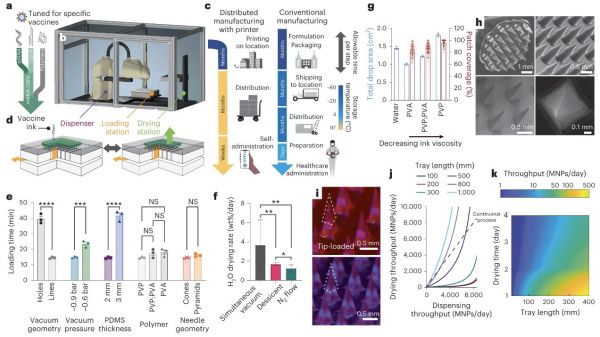
What if you could get vaccinated with the ease of putting on an adhesive bandage? This is the promise of microneedle patches (MNP), which are essentially what they sound like. These would also have uses in diagnostics that might one day obliviate the need for drawing blood. The one major issue with MNPs is their manufacturing, which has been a laborious and highly manual process. In a recent paper in Nature Biotechnology researchers detail the construction and testing of a MNP printer, or microneedle vaccine printer (MVP) that can print dissolving polymers containing stabilized mRNA vaccine.

These mRNA strands are as usual encapsulated in a liquid nanoparticle container, which is mixed with the soluble and biocompatible polymer. This mixture is then added to a mold and dried, after which it retains the microneedle structure of the mold. On tests involving pig skin, the MNPs were capable of penetrating the skin and delivering the vaccine contained in the needles. Produced patches were shown to be shelf-stable for at least six months, which would make these ideal for vaccine distribution in areas where refrigeration and similar are problematic.

Using MNPs for delivering vaccines has previously been researched for e.g. delivering rotavirus and poliovirus vaccine, and a 2021 study in Nature Biomedical Engineering looked at the viability of using MNPs to rapidly sample protein biomarkers in interstitial fluid, which could make diagnostics for certain biomarkers as uncomplicated as putting on the patch, removing it and examining it, removing the need for drawing blood or sampling large amounts of interstitial fluid for external analysis.

If the concept of the MVP and similar MNP printers can be commercialized, it might make it possible to strongly shorten the supply chain for vaccines in less developed regions, while also enabling diagnostics that are very costly and cumbersome today.

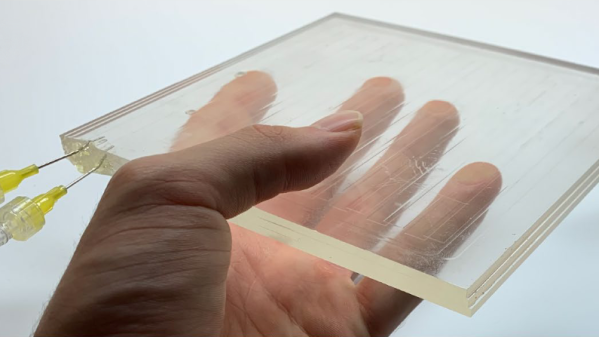
A human hand holds a stack of several plexiglass sheets with needles glued into the ends. Very faint lines can be seen in the transparent stackup.

Biomimetic Building Facades To Reduce HVAC Loads

Buildings currently consume about 50% of the world’s electricity, so finding ways to reduce the loads they place on the grid can save money and reduce carbon emissions. Scientists at the University of Toronto have developed an “optofluidic” system for tuning light coming into a building.

The researchers devised a biomimetic system inspired by the multi-layered skins of squid and chameleons for active camouflage to be able to actively control light intensity, spectrum, and scattering independently. While there are plenty of technologies that can regulate these properties, doing so independently has been too complicated a task for current window shades or electrochromic devices.

To make the prototype devices (15 × 15 × 2 cm), 3 mm PMMA sheets were stacked after millifluidic channels (1.5 mm deep and 6.35 mm wide) were CNC milled into the sheets. Fluids could be injected and removed by needles glued into the ends of the channels. By using different fluids in the channels, researchers were able to tune various aspects of the incoming light. Scaled up, one application of the system could be to keep buildings cooler on hot days without keeping out IR on colder days which is one disadvantage of static window coatings currently in use.

If you want to control some of the light going OUT of your windows, maybe you should try building this smart LED curtain instead?

Continue reading “Biomimetic Building Facades To Reduce HVAC Loads”

Transistors That Grow On Trees

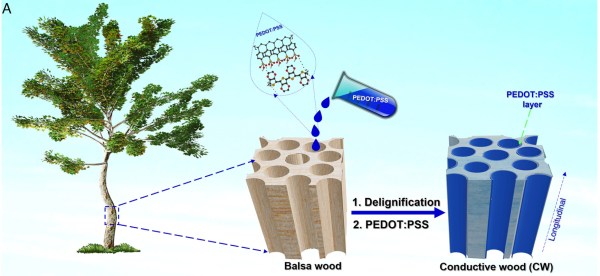
Modern technology is riddled with innovations that were initially inspired by the natural world. Velcro, bullet trains, airplanes, solar panels, and many other technologies took inspiration from nature to become what they are today. While some of these examples might seem like obvious places to look, scientists are peering into more unconventional locations for this transistor design which is both inspired by and made out of wood.

The first obvious hurdle to overcome with any electronics made out of wood is that wood isn’t particularly conductive, but then again a block of silicon needs some work before it reliably conducts electricity too. First, the lignin is removed from the wood by dissolving it in acetate, leaving behind mostly the cellulose structure. Then a conductive polymer is added to create a lattice structure of sorts using the wood cellulose as the structure. Within this structure, transistors can be constructed that function mostly the same as a conventional transistor might.

It might seem counterintuitive to use wood to build electronics like transistors, but this method might offer a number of advantages including sustainability, lower cost, recyclability, and physical flexibility. Wood can be worked in a number of ways once the lignin is removed, most notably when making paper, but removing the lignin can also make the wood relatively transparent as well which has a number of other potential uses.

Thanks to [Adrian] for the tip!