How-to: Thermite Hard Drive Destruction

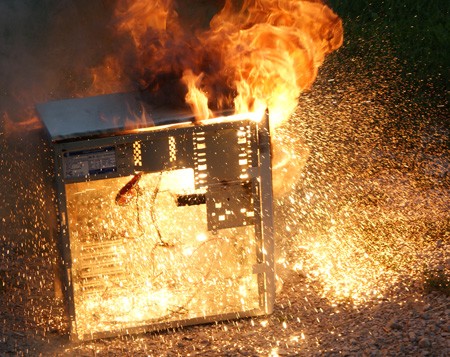
After the overwhelming response to the Hackit we posted about automated hard drive destruction last fall, we finally decided to test out some thermite hard drive destruction ourselves. This has been done on The Screen Savers but they did not show up close results of the platters. So, aluminum and black iron oxide were procured through eBay, and until it arrived we watched some YouTube videos that showed a lot of fire and no real results. We decided to see what it would take to completely obliterate a drive.

With the amount of personal data stored on your computer, we all understand the importance of destroying the data that is stored on the platters of a hard drive before disposing of it. There are many ways to destroy a hard drive; software, physical disassembly, drills, hammers, magnets/electromagnets, and acid, but none are quite as outrageous and dangerous as thermite. That’s what we’re going to do here today. Follow along for pictures and videos of the results.


Continue reading “How-to: Thermite Hard Drive Destruction”

Apple Finally Fixes DNS Bug

With today’s release of Security Update 2008-006 Apple has finally addressed this summer’s DNS bug. In their previous update they fixed BIND, but that only affects people running servers. Now, they’ve updated mDNSResponder. Clients are no longer susceptible to DNS cache poisoning attacks thanks to the inclusion of source port randomization.

The Security Update addresses some other interesting bugs. Time Machine was saving sensitive logs without using the proper permissions, so any user could view them.

[photo: edans]

LockCon Coming Soon

The Open Organisation Of Lockpickers (TOOOL) is planning a new annual gathering for lockpickers. October 9-12th they will hold the first ever LockCon in Sneek, Netherlands. The event was spawned from the Dutch Open lockpicking championships, but they’ve decided to expand beyond just competition into a full conference. This year the conference is limited to just 100 lockpickers, technicians, manufacturers, hackers, and law enforcement members. They’ll compete in picking competitions, safe manipulation, and key impressioning.

On a related note: Organizer [Barry Wels] just became the first non-German to win an SSDeV competition with his key impressioning skills. We covered key impressioning when we saw his talk about high security keys at The Last Hope. He says it’s only been about two years worth of study and 500 keys to become a master. He managed to open the lock in 5:13 filing two whole keys during that time.

[photo: Rija 2.0]

Passive Network Tap

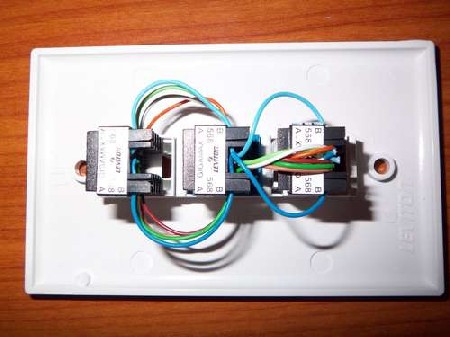
Making a passive network tap can be an easy and inexpensive undertaking as shown in this Instructable. Passive monitoring or port mirroring is needed because most networks use switches which isolate the network traffic and this does not allow for the entire network to be monitored.  This example uses a single tap, using multiple taps will provide access to the full-duplex data separately. By using two taps you are able to monitor inbound data that is passed through one tap, and outbound data that is passed through the other tap.  Separate taps are desired because most sniffer software handles half-duplex traffic only and requires two network cards for full-duplex.

Continue reading “Passive Network Tap”

Reverse Engineering Silicon Logic

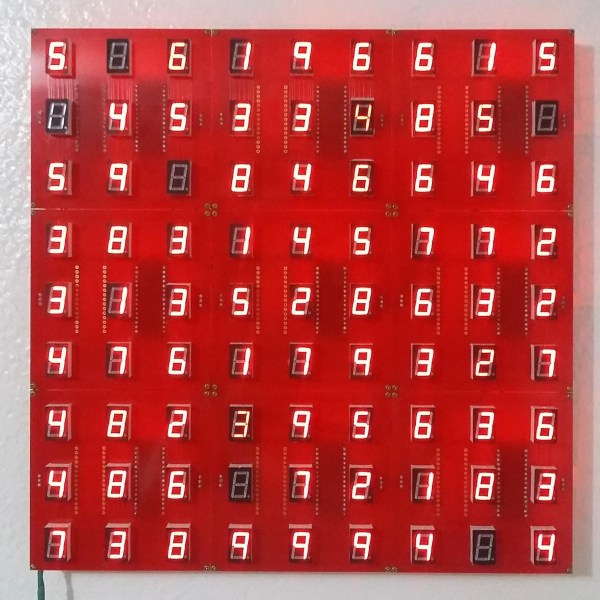
[Karsten Nohl] has recently joined the team on Flylogic’s blog. You may remember him as part of the team that reverse engineered the crypto in MiFare RFID chips. In his first post, he starts out with the basics of identifying logic cells. By studying the specific layout of the transistors you can reproduce the actual logic functions of the chip. The end of post holds a challenge for next week (pictured above). It has 34 transistors, 3 inputs, 2 outputs, and time variant behavior. Also, check out the Silicon Zoo which catalogs individual logic cells for identification.

IPhone Screengrab Issues

This is unfortunately another story we missed out on while we were trying to keep things from burning down. We told you that [Jonathan Zdziarski] was going to demonstrate iPhone lock code bypassing in a webcast. The real surprise came when he pointed out that the iPhone takes a screenshot every time you use the home button. It does this so it can do the scaling animation. The image files are presumably deleted immediately, but as we’ve seen before it’s nearly impossible to guarantee deletion on a solid state device. There’s currently no way to disable this behavior. So, even privacy conscious people have no way to prevent their iPhone from filling up storage with screenshots of all their text message, email, and browsing activities. Hopefully Apple will address this problem just like they did with the previous secure erase issue. O’Reilly promises to publish the full webcast soon.

[via Gizmodo]

Israeli Hacker “the Analyzer” Arrested

The Israeli hacker [Ehud Tenenbaum], known as “the Analyzer”, was arrested along with 3 Canadians for allegedly hacking into a Calgary-based financial services company and withdrawing almost CDN $2 million. The arrests were the results of a months-long investigation by both the Canadian police and the U.S. Secret Service.  In 1998, [Tenenbaum] was accused of hacking into unclassified computer systems owned by NASA, and the Pentagon, among others. He is in custody without bail, although the three other suspects have been released on bond.

[thanks vor]