The Flash Memory Lifespan Question: Why QLC May Be NAND Flash’s Swan Song

The late 1990s saw the widespread introduction of solid-state storage based around NAND Flash. Ranging from memory cards for portable devices to storage for desktops and laptops, the data storage future was prophesied to rid us of the shackles of magnetic storage that had held us down until then. As solid-state drives (SSDs) took off in the consumer market, there were those who confidently knew that before long everyone would be using SSDs and hard-disk drives (HDDs) would be relegated to the dust bin of history as the price per gigabyte and general performance of SSDs would just be too competitive.

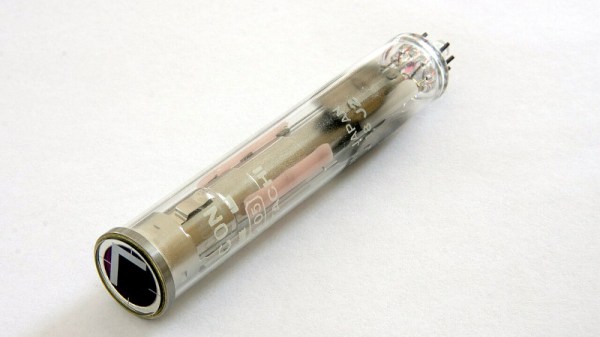
Fast-forward a number of years, and we are now in a timeline where people are modifying SSDs to have less storage space, just so that their performance and lifespan are less terrible. The reason for this is that by now NAND Flash has hit a number of limits that prevent it from further scaling density-wise, mostly in terms of its feature size. Workarounds include stacking more layers on top of each other (3D NAND) and increasing the number of voltage levels – and thus bits – within an individual cell. Although this has boosted the storage capacity, the transition from single-level cell (SLC) to multi-level (MLC) and today’s TLC and QLC NAND Flash have come at severe penalties, mostly in the form of limited write cycles and much reduced transfer speeds.

So how did we get here, and is there life beyond QLC NAND Flash?

Continue reading “The Flash Memory Lifespan Question: Why QLC May Be NAND Flash’s Swan Song”

Hackaday Links Column Banner

Hackaday Links: July 7, 2024

Begun, the Spectrum Wars have. First, it was AM radio getting the shaft (last item) and being yanked out of cars for the supposed impossibility of peaceful coexistence with rolling broadband EMI generators EVs. That battle has gone back and forth for the last year or two here in the US, with lawmakers even getting involved at one point (first item) by threatening legislation to make terrestrial AM radio available in every car sold. We’re honestly not sure where it stands now in the US, but now the Swiss seem to be entering the fray a little up the dial by turning off all their analog FM broadcasts at the end of the year. This doesn’t seem to be related to interference — after all, no static at all — but more from the standpoint of reclaiming spectrum that’s no longer turning a profit. There are apparently very few analog FM receivers in use in Switzerland anymore, with everyone having switched to DAB+ or streaming to get their music fix, and keeping FM transmitters on the air isn’t cheap, so the numbers are just stacked against the analog stations. It’s hard to say if this is a portent of things to come in other parts of the world, but it certainly doesn’t bode well for the overall health of terrestrial broadcasting. “First they came for AM radio, and I did nothing because I’m not old enough to listen to AM radio. But then they came for analog FM radio, and when I lost my album-oriented classic rock station, I realized that I’m actually old enough for AM.”

Continue reading “Hackaday Links: July 7, 2024”

Halfway Between Inspiration And Engineering

We see a lot of hacks where the path to success is pretty obvious, if maybe strewn with all sorts of complications, land-mines, and time-sinks. Then we get other hacks that are just totally out-of-the-box. Maybe the work itself isn’t so impressive, or even “correct” by engineering standards, but the inner idea that’s so crazy it just might work shines through.

This week, for instance, we saw an adaptive backlight LED TV modification that no engineer would ever design. Whether it was just the easiest way out, or used up parts on hand, [Mousa] cracked the problem of assigning brightnesses to the LED backlights by taking a tiny screen, playing the same movie on it, pointing it at an array of light sensors, and driving the LEDs inside his big TV off of that. No image processing, no computation, just light hitting LDRs. It’s mad, and it involves many, many wires, but it gets the job done.

Similarly, we saw an answer to the wet-3D-filament problem that’s as simple as it could possibly be: basically a tube with heated, dry air running through it that the filament must pass through on it’s way to the hot end. We’ve seen plenty of engineered solutions to damp filament, ranging from an ounce of prevention in the form of various desiccant storage options, to a pound of cure – putting the spools in the oven to bake out. We’re sure that drying filament inline isn’t the right way to do it, but we’re glad to see it work. The idea is there when you need it.

Not that there’s anything wrong with the engineering mindset. Quite the contrary: most often taking things one reasonable step at a time, quantifying up all the unknowns, and thinking through the path of least resistance gets you to the finish line of your project faster. But we still have to admire the off-the-wall hacks, where the way that makes the most sense isn’t always the most beautiful way to go. It’s a good week on Hackaday when we get both types of projects in even doses.

Hackaday Podcast Episode 278: DIY Subs, The ErgoRing, And Finding NEMA 17

In this episode, Hackaday Editors Elliot Williams and Tom Nardi kick things off with a reminder about the impending deadline for Supercon talk and workshop proposals. From there discussion moves on to the absolutely incredible tale of two brothers who solved a pair of missing person cases with their homebrew underwater vehicle, false data sneaking into OctoPrint’s usage statics, and an organic input device that could give the classic mouse a run for its money.

You’ll also hear about cheap radar modules, open source Xbox mod chips, and lawnmowers from the grocery store. The episode wraps up with a look at the enduring mystique of perpetual motion devices, and the story of a legendary ship that might soon end up being turned into paper clips.

Check out the links below if you want to follow along, and as always, tell us what you think about this episode in the comments!

As always, this week’s episode is available as a DRM-free MP3.

Continue reading “Hackaday Podcast Episode 278: DIY Subs, The ErgoRing, And Finding NEMA 17”

FLOSS Weekly Episode 790: Better Bash Scripting With Amber

This week Jonathan Bennett and Dan Lynch chat with Paweł Karaś about Amber, a modern scripting language that compiles into a Bash script. Want to write scripts with built-in error handling, or prefer strongly typed languages? Amber may be for you!

Continue reading “FLOSS Weekly Episode 790: Better Bash Scripting With Amber”

USB And The Myth Of 500 Milliamps

If you’re designing a universal port, you will be expected to provide power. This was a lesson learned in the times of LPT and COM ports, where factory-made peripherals and DIY boards alike had to pull peculiar tricks to get a few milliamps, often tapping data lines. Do it wrong, and a port will burn up – in the best case, it’ll be your port, in worst case, ports of a number of your customers.

Want a single-cable device on a COM port? You might end up doing something like this.

Having a dedicated power rail on your connector simply solves this problem. We might’ve never gotten DB-11 and DB-27, but we did eventually get USB, with one of its four pins dedicated to a 5 V power rail. I vividly remember seeing my first USB port, on the side of a Thinkpad 390E that my dad bought in 2000s – I was eight years old at the time. It was merely USB 1.0, and yet, while I never got to properly make use of that port, it definitely marked the beginning of my USB adventures.

About six years later, I was sitting at my desk, trying to build a USB docking station for my EEE PC, as I was hoping, with tons of peripherals inside. Shorting out the USB port due to faulty connections or too many devices connected at once was a regular occurrence; thankfully, the laptop persevered as much as I did. Trying to do some research, one thing I kept stumbling upon was the 500 mA limit. That didn’t really help, since none of the devices I used even attempted to indicate their power consumption on the package – you would get a USB hub saying “100 mA” or a mouse saying “500 mA” with nary an elaboration.

Fifteen more years have passed, and I am here, having gone through hundreds of laptop schematics, investigated and learned from design decisions, harvested laptops for both parts and even ICs on their motherboards, designed and built laptop mods, nowadays I’m even designing my own laptop motherboards! If you ever read about the 500 mA limit and thought of it as a constraint for your project, worry not – it’s not as cut and dried as the specification might have you believe.
Continue reading “USB And The Myth Of 500 Milliamps”

Peering Into The Black Box Of Large Language Models

Large Language Models (LLMs) can produce extremely human-like communication, but their inner workings are something of a mystery. Not a mystery in the sense that we don’t know how an LLM works, but a mystery in the sense that the exact process of turning a particular input into a particular output is something of a black box.

This “black box” trait is common to neural networks in general, and LLMs are very deep neural networks. It is not really possible to explain precisely why a specific input produces a particular output, and not something else.

Why? Because neural networks are neither databases, nor lookup tables. In a neural network, discrete activation of neurons cannot be meaningfully mapped to specific concepts or words. The connections are complex, numerous, and multidimensional to the point that trying to tease out their relationships in any straightforward way simply does not make sense.

Continue reading “Peering Into The Black Box Of Large Language Models”