High Voltage Please, But Don’t Forget The Current

In high voltage applications involving tens of thousands of volts, too often people think about the high voltage needed but don’t consider the current. This is especially so when part of the circuit that the charge travels through is an air gap, and the charge is in the form of ions. That’s a far cry from electrons flowing in copper wire or moving through resistors.

Consider the lifter. The lifter is a fun, lightweight flying machine. It consists of a thin wire and an aluminum foil skirt separated by an air gap. Apply 25kV volts across that air gap and it lifts into the air.

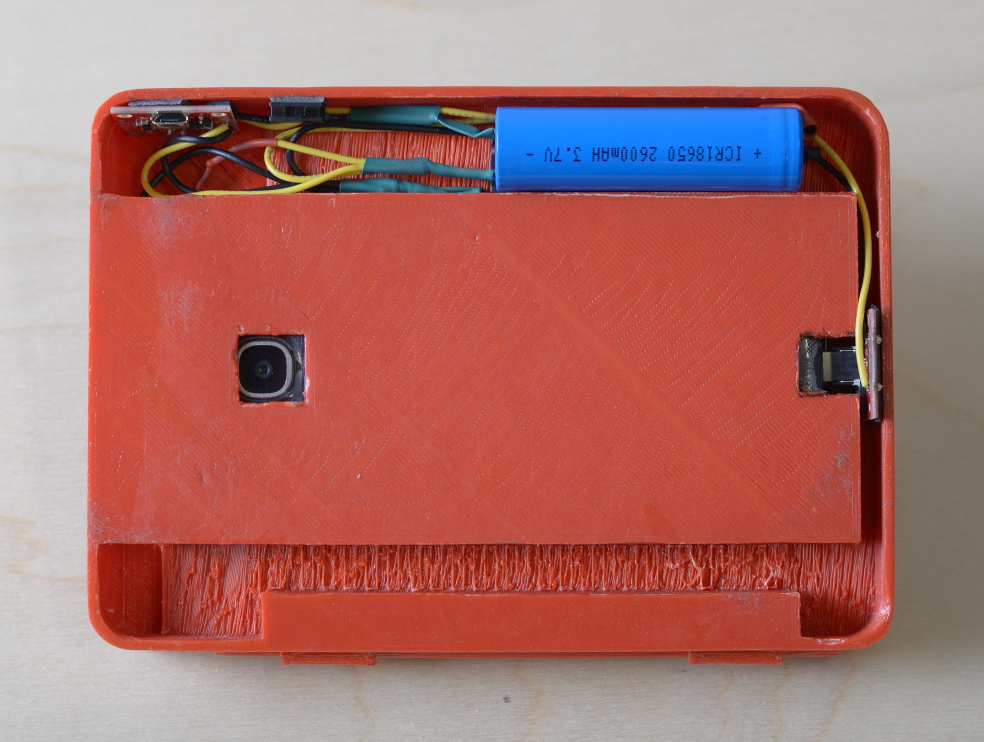
So you’d think that the small handheld Van de Graaff generator pictured below, that’s capable of 80kV, could power the lifter. However, like many high voltage applications, the lifter works by ionizing air, in this case ionizing air surrounding the thin wire resulting in a bluish corona. That sets off a chain of events that produces a downward flowing jet of air, commonly called ion wind, lifting the lifter upward.

Continue reading “High Voltage Please, But Don’t Forget The Current”

One Man’s Awesome Collection Of Projects Done Over A Lifetime

[Robert Glaser] kept all his projects, all of them, from the 1960s to now. What results is a collection so pure we feel an historian should stop by his house, if anything, to investigate the long-term effects of the knack.

He starts with an opaque projector he built in the third grade, which puts it at 1963. Next is an, “idiot box,” which looks suspiciously like “the Internet”, but is actually a few relaxation oscillators lighting up neon bulbs. After that, the condition really sets in, but luckily he’s gone as far as to catalog them all chronologically.

We especially enjoyed the computer projects. It starts with his experiences with punch cards in high school. He would hand-write his code and then give it to the punch card ladies who would punch them out. Once a week, a school-bus would take the class to the county’s computer, and they’d get to run their code. In university he got to experience the onset of UNIX, C, and even used an analog computer for actual work.

There’s so much to read, and it’s all good. There’s a section on Ham radio, and a very interesting section on the start-up and eventual demise of a telecom business. Thanks to reader, [Itay Ramot], for the tip!

Stay Scrappy, Hackers! Hardware Startups Versus Goliath

A toast to all the hackers out there who like to do it scrappy, who fight hard to get your products to work, who make your own tools and testing jigs and assembly lines in your basement, and who pound the pavement (and the keyboards) to get your product out there. Here’s to you (*clink*).

I had the fortune of a job interview recently in a big faceless company that you may have never heard of but probably use their stuff all the time. They make billions. And it was surreal. This article is about what it’s like for a scrappy start-up engineer to walk into the belly of the beast of an organization that counts its engineers in the tens of thousands. For obvious reasons, I can’t go into specific details, but let me paint for you in broad strokes what you, the hacker and entrepreneur, are up against.

When you have a company that’s been around for decades and whose yearly sales volume has more digits than some countries, everything is a few orders of magnitude bigger in scale. People, resources, volumes, everything.

Continue reading “Stay Scrappy, Hackers! Hardware Startups Versus Goliath”

Hacking A Fluke Multimeter To Serve Readings Over WiFi

Your multimeter is probably your most useful instrument if you work regularly with electronics. It goes with you everywhere, and is your first port of call in most cases when you are presented with a piece of equipment. And when you think about it, it’s a pretty amazing instrument. Multimeter technology has advanced to the point at which even an inexpensive modern device has functions that would have required a hefty budget a few decades ago.

There is still one thing affordable multimeters remain unable to do: they can’t log their readings for analysis on a computer. They’re an instantaneous instrument, just as they always have been.

Lord of Hackaday [Sprite_TM] decided to hack his multimeter to serve its readings over Wi-Fi. Rather than start with a throwaway meter from the bargain bin, he did it with a Fluke. The meter he chose was a Fluke 15B+, the company’s budget offering for the Indian and Chinese markets, since he had one spare.

Opening up the 15B+, he was presented with its processor concealed under a blob of epoxy and thus unidentifiable. Armed with the knowledge that other similar Flukes contain Fortune Semiconductor parts, he investigated as many data sheets as he could find from the same company and finally identified it as an FS98O24 one-time-programmable microprocessor. Sadly this chip has no serial port, but he did find an I2C EEPROM which he correctly guessed held calibration settings. Removing this chip gave him a meter with slightly off calibration, but also gave him a serial port of sorts.

Further detective work allowed him to identify the baud rate, and supplying random commands delivered him some that returned data packets. Eventually he identified a packet containing the states of the LCD’s segments, from which he could derive its displayed value. Connecting an ESP8266 module with appropriate software left him with a Wi-Fi connected multimeter. There was a little more refinement to his hack, he created a power management board to activate the ESP when needed, and a neat hack to display its IP address on the screen.

Multimeter hacks have featured several times here at Hackaday. We’ve had another serial port hack, or how about a remote display for another Fluke on a Gameboy Advance?

Mining Platinum From The Road

For several decades now all petrol-driven motor vehicles have had to feature a catalytic converter in their exhaust systems to meet the requirements of emissions legislation. These feature a high surface area coated with platinum, palladium, and rhodium, which catalyses the high-temperature breakdown of the exhaust gasses.

When a vehicle reaches the end of its life its catalytic converter is recycled and those metals are recovered, but this recovery does not account for all the metal. [Cody Reeder] noticed that the weight of platinum in a catalytic converter taken from a scrap vehicle is significantly less than that of a new one. Some of that metal has escaped, so where has it gone?

The answer to that question is that it has become detached from the converter and blown out through the rear of the exhaust pipe. Therefore in the area around a busy highway with many thousands of cars passing there must be a reasonable concentration of platinum. The video below the break details [Cody]’s quest to verify that theory, and it opens with him and a friend sweeping dust from beside a freeway in the early hours. The resulting bags contain a lot of gravel and bits of tire, plus a few cigarette butts and a large amount of very fine dust. He sieves away the debris, and heats a sample of dust in a furnace with a flux mixture containing lead oxide. He hopes that as this oxide degrades to metallic lead it will dissolve any platinum and settle in the bottom of his crucible, and indeed when he pours out the resulting slag there is a bead of lead. Taking away the lead reveals a speck of impure platinum, which he further purifies and assays to determine the percentage of platinum and to detect the other catalyst metals.

He finally arrives at a figure of 6.7 g per ton of his fine-sifted roadside dirt “ore”, a figure which as he points out would be considered quite valuable were it to be encountered in a mine. His process might be a little difficult for individuals with sweeping brushes to hit pay dirt and a modern gold rush to descend on their local Interstate, but it’s not impossible that a highways agency equipped with sweeper trucks could have the metal extracted at a more profitable level.

Continue reading “Mining Platinum From The Road”

Learn To Program With Literate Programming

My heyday in programming was about five years ago, and I’ve really let my skills fade. I started finding myself making excuses for my lack of ability. I’d tackle harder ways to work around problems just so I wouldn’t have to code. Worst of all, I’d find myself shelving projects because I no longer enjoyed coding enough to do that portion. So I decided to put in the time and get back up to speed.

Normally, I’d get back into programming out of necessity. I’d go on a coding binge, read a lot of documentation, and cut and paste a lot of code. It works, but I’d end up with a really mixed understanding of what I did to get the working code. This time I wanted to structure my learning so I’d end up with a more, well, structured understanding.

However, there’s a problem. Programming books are universally boring. I own a really big pile of them, and that’s after I gave a bunch away. It’s not really the fault of the writer; it’s an awkward subject to teach. It usually starts off by torturing the reader with a chapter or two of painfully basic concepts with just enough arcana sprinkled in to massage a migraine into existence. Typically they also like to mention that the arcana will be demystified in another chapter. The next step is to make you play typist and transcribe a big block of code with new and interesting bits into an editor and run it. Presumably, the act of typing along leaves the reader with such a burning curiosity that the next seventeen pages of dry monologue about the thirteen lines of code are transformed into riveting prose within the reader’s mind. Maybe a structured understanding just isn’t worth it.

I wanted to find a new way to study programming. One where I could interact with the example code as I typed it. I wanted to end up with a full understanding before I pressed that run button for the first time, not after.

When I first read about literate programming, my very first instinct said: “nope, not doing that.” Donald Knuth, who is no small name in computing, proposes a new way of doing things in his Literate Programming. Rather than writing the code in the order the compiler likes to see it, write the code in the order you’d like to think about it along with a constant narrative about your thoughts while you’re developing it. The method by which he’d like people to achieve this feat is with the extensive use of macros. So, for example, a literate program would start with a section like this:

Continue reading “Learn To Program With Literate Programming”

The World’s Supply Of DB-19 Connectors

[Steve] over at Big Mess O’ Wires has a very, very niche product. It’s the Floppy Emu, a hard disk emulator for the Apple II, Lisa, and very old Macs. The Floppy Emu takes data stored on an SD card and presents it to these classic computers through a contemporary connector, the venerable DB-19. This connector is in the same family as the familiar DB-25 parallel port, DE-9 serial port and the old DA-15 joystick port, but there’s something very special about the DB-19 connector – nobody makes it anymore, and no surplus electronics store has any in stock. They’re unobtanium, and when you’re making a product built around this connector, you’re going to have a few problems.

Those problems have come to a head over the past year, but getting a few thousand DB-19 connectors manufactured has always seemed just out of reach. It would be a five-figure investment for a very niche product, and [Steve] would have to find someone to make the connectors.

The world’s shortage of DB-19 connectors is no more. After chatting up a few people in the NeXT and Atari communities, [Steve] set up a group buy and manufactured the first batch of DB-19 connectors in recent memory. The world’s supply of DB-19 connectors, all 10,000 of them, is now in [Steve]’s living room.

The process of manufacturing ten thousand DB-19 connectors actually wasn’t that hard for [Steve]. Over the past year, he’s reached out to manufacturers to get a quote, and he still had those numbers in his rolodex. The only problem was finding an engineering drawing of a DB-19 connector and transferring a large amount of money to Hong Kong. The drawing was easy enough, as datasheets sometimes last longer than the parts they describe. Transferring the money over to the manufacturer meant convincing a bank manager there is not a Nigerian prince in Hong Kong and thirty minutes of paperwork.

After a few months, a round of prototyping, and a trip through customs, the world’s supply of DB-19 connectors finally landed on [Steve]’s porch. He still needs to ship them out to the NeXT and Atari folk who participated in the group buy, but the great shortage of DB-19 connectors is over for now.