This year marks the 30th anniversary of the Hubble Space Telescope. When you see all the great pictures today, it is hard to remember that when it first launched, it was nearly a failure, taking fuzzy pictures. The story of how that problem was fixed while the telescope was whizzing through space is a good one. But there’s another story: how did a $1.5 billion satellite get launched with defective optics? After all, we know space hardware gets tested and retested and, typically, little expense is spared to make sure once a satellite is in orbit, it will work well for a long time.
The problem was with a mirror. You might think mirrors are pretty simple, but it turns out there’s a lot to know about mirrors. For astronomy, you need a first surface mirror which is different from your bathroom mirror which almost certainly reflects off the back of the glass. In addition, the mirrors need a very precise curve to focus light.
Astronomy is undoubtedly one of the most exciting subjects in physics. Especially the search for exoplanets has been a thriving field in the last decades. While the first exoplanet was only discovered in 1992, there are now 4,144 confirmed exoplanets (as of 2nd April 2020). Naturally, we Sci-Fi lovers are most interested in the 55 potentially habitable exoplanets. Unfortunately, taking an image of an Earth 2.0 with enough detail to identify potential features of life is impossible with conventional telescopes.
[Tarik and Kemal] have an objective in mind: to drop a home-made autonomous glider from a high-altitude balloon and safely return it to home. To motivate them, [Tarik] has decided not to cut his hair until they reach 18,000 feet. Given the ambition of their project, it isn’t surprising that his hair is getting rather long now.
Under the current Administration, NASA has been tasked with returning American astronauts to the Moon as quickly as possible. The Artemis program would launch a crewed mission to our nearest celestial neighbor as soon as 2024, and establish a system for sustainable exploration and habitation by 2028. It’s an extremely aggressive timeline, to put it mildly.
To have any chance of meeting these goals, NASA will have to enlist the help of not only its international partners, but private industry. There simply isn’t enough time for the agency to design, build, and test all of the hardware that will eventually be required for any sort of sustained presence on or around the Moon. By awarding a series of contracts, NASA plans to offload some of the logistical components of the Artemis program to qualified companies and agencies.
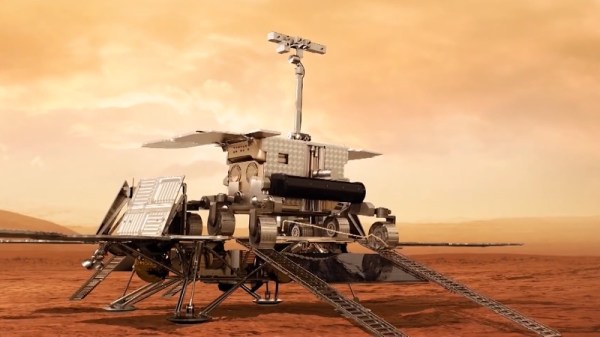
Artist’s Rendering of the Dragon XL
For anyone who’s been following the New Space race these last few years, it should come as no surprise to hear that SpaceX has already been awarded one of these lucrative logistics contracts. They’ve been selected as the first commercial provider for cargo deliveries to Gateway, a small space station that NASA intendeds to operate in lunar orbit. Considering SpaceX already has a contract to resupply the International Space Station, they were the ideal candidate to offer similar services for a future lunar outpost.
But that certainly doesn’t mean it will be easy. The so-called “Gateway Logistics Services” contract stipulates that providers must be able to deliver at least 3,400 kilograms (7,500 pounds) of pressurized cargo and 1,000 kilograms (2,200 pounds) of unpressurized cargo to lunar orbit. That’s beyond the capabilities of SpaceX’s Dragon spacecraft, which was only designed to service low Earth orbit.
To complete this new mission, the company is proposing a new vehicle they’re calling the Dragon XL that would ride to orbit on the Falcon Heavy booster. But even for this New Space darling, there’s not a lot of time to design, test, and build a brand-new spacecraft. To get the Dragon XL flying as quickly as possible, SpaceX is going to need to strip the craft down to the bare minimum.
At this point, most of us are painfully aware of the restrictions that COVID-19 social distancing protocols have put on our daily lives. Anyone who can is working from home, major events are canceled, non-essential businesses are closed, and travel is either strongly discouraged or prohibited outright. In particularly hard hit areas, life and commerce has nearly ground to a halt with no clear end date in sight.
Naturally, there are far reaching consequences for this shutdown beyond what’s happening on the individual level. Large scale projects are also being slowed or halted entirely, as there’s only so much you can do remotely. That’s especially true when the assembly of hardware is concerned, which has put some industries in a particularly tight spot. One sector that’s really feeling the strain is aerospace. Around the world, space agencies are finding that their best laid plans are suddenly falling apart in the face of COVID-19.
In some cases it’s a minor annoyance, requiring nothing more than some tweaks to procedures. But when the movements of the planets are concerned, a delay of weeks or months changes everything. While things are still changing too rapidly to make an exhaustive list, we already know of a few missions that are being impacted in these uncertain times.
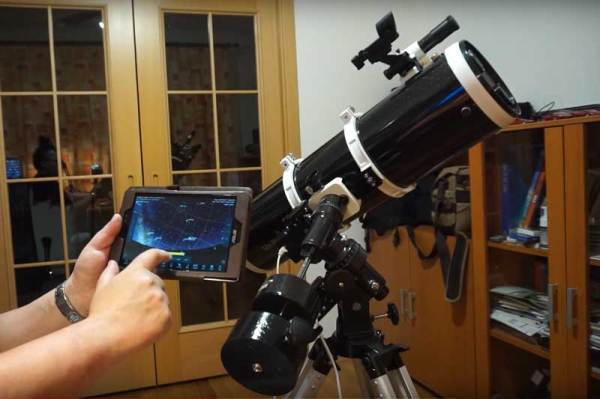
In times like these, we all need to look beyond ourselves. This project might help: OnStep is an open-source telescope controller, a device that controls a telescope to point at something interesting in the sky. Want to take a look at M31? Use an app on a PC or smartphone, select the object and the OnStep will pan and tilt your telescope until the Andromeda Galaxy pops into view.
Regular followers of space news will know that when satellites or space probes reach the end of their life, they either are de-orbited in a fiery re-entry, or they stay lifeless in orbit, often in a safe graveyard orbit where they are unlikely to harm other craft. Sometimes these deactivated satellites spring back into life, and there is a dedicated band of enthusiasts who seek out these oddities. Dead satellite finder extraordinaire [Scott Tilley] has turned up a particularly unusual one, a craft that is quite likely to be the oldest still-working geostationary satellite.
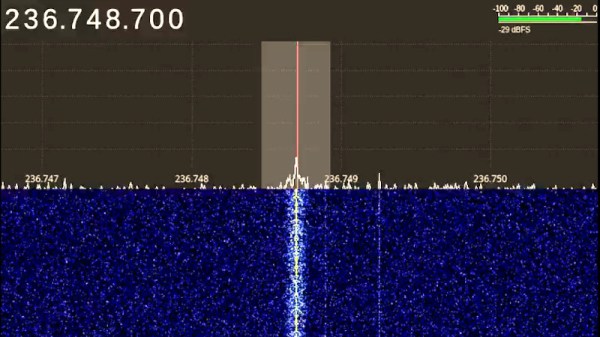
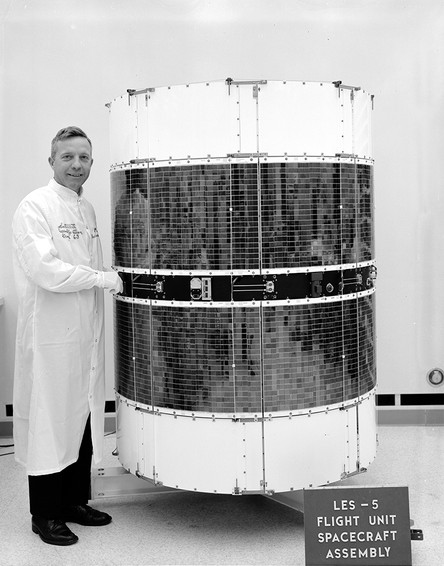
LES-5 is an experimental satellite built by MIT’s Lincoln Labs, launched in 1967, and used to test military UHF communications in a geosynchronous orbit. It had an active life into the early 1970s after which it was placed in a graveyard orbital slot for redundant craft. It’s lain forgotten ever since, until this month when [Scott] found its beacon transmitting on 236.75 MHz. The Twitter thread is an extremely interesting glimpse into the satellite finder’s art, as first he’s not certain at all that it is LES-5 so he waits for its solar eclipse to identify its exact position.
Whether anything on the craft can find another use today is not certain, as he finds no evidence of its transponder. Still, that something is working again 53 years after its launch is a testament to the quality of its construction. Should its transponder be reactivated again it’s not impossible that people might find illicit uses for it, after all that’s not the first time this has happened.