Quiet Dust Extractor From Scavenged Materials

As with many of the projects covered on hackaday, [bongodrummer]’s Dust Sniper came about because of a lack of effective commercial solutions, in this case to the problem of quiet dust extraction.

Workshops are generally full of dust and noise, both of which take their toll on the human body. This is why safety regulations exist for noisy and dusty workplaces and–as [bongodrummer] rightly points out–we have to take precautions in our own home and community workshops. Hearing protectors, dust masks and safety goggles are integral, but reducing the amount of dust and noise in the fist place is paramount.

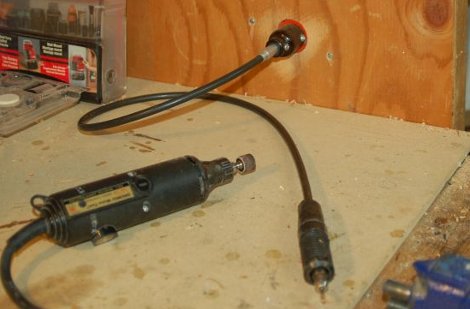
Using mostly scavenged materials [bongodrummer] did a quality job building the Dust Sniper–and all for a bill of materials totaling £20. It has an integrated work surface, automatic switches on 2 vacuum lines to sync up with power tools, a cyclonic air filter that prevents clogging the HEPA filter and reducing suction power, inlet and outlet soundproofing, and a plain old power outlet for good measure.

Whether or not you’re interested in building an integrated workbench/extractor system like this one, we recommend you check out the details of the cyclone filter and the sound reducing components. Not only are they an interesting read, but they could be useful to apply in other projects, for example a soldering station with fume hood.

We think it would be really neat to include more cyclones in our projects. Stick around after the break to see [bongodrummer]’s prototype cyclone filter in action.

Continue reading “Quiet Dust Extractor From Scavenged Materials”

Versaloon Can Program Hardware From Several Manufacturers

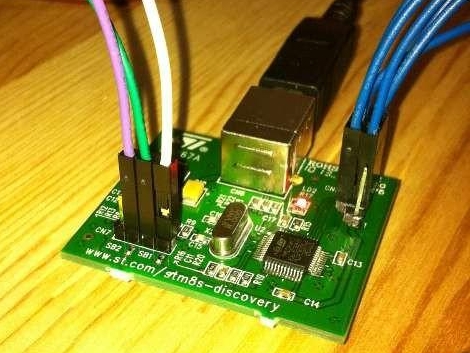
Versaloon is an open source, USB connected project, that centers around an STM32 processor and provides a standard JTAG pinout. Above you see the Nano version which has a 10-pin JTAG connector, but there is also a 20-pin option on the Handy model. Great, another JTAG programmer. Well this can do a bit more than that. With a bit of help from the software it has been turned into a programmer for ten different types of hardware. Obviously this should be able to program anything that works with the JTAG protocol, but the script adapts it to work as an In System (or In Circuit) Programmer too. So far the list of programming targets includes STM32, LPC1000, LPC900, STM8, AR8, MSP430, and a few others.

We had some trouble finding an actual picture of this hardware. If you’ve got one, snap a picture and leave a link to it in the comments along with your thoughts on the device.

[Thanks Geekabit]

Reading A Digital Caliper With A Microcontroller

[Maris] wanted a way to read measurements from a digital caliper electronically. He ended up using the TI Launchpad to accomplish this, but not all of the necessary hardware is seen above. The calipers cost him about $7 on eBay, and they have four interface pins which made this hack quite a bit easier. After a bit of probing he established their purpose; voltage, ground, clock and data. A bit of scoping proved that data was being sent in 24-bit burst in packets that are quite easy to decode.

From there it’s just a matter of interfacing with a microcontroller. The chip he’s using is an MSP430G2231 that runs at 3.3V, but the caliper’s logic high is only 1.5v. By constructing an adapter using a pair of transistors, the data and clock from the calipers are able to pull pins on the MSP430 low. This is collected and analyzed by [Maris’] firmware and can be read on a PC using a terminal program.

[Thanks Chris]

Make Your Own Minimalist AVR ISP

Giving a programmer is a great way to get people started in microcontrollers so If you want a cheap simple AVR programmer this might just be what you’re looking for. It combines the V-USB firmware, USBtiny software, a few resistors, and some zener diodes. An interesting trick using this programmer is if your trying to program another 8 pin ATtiny you can use some tape to isolate the USB data pins and then piggyback the target ATtiny on the programmer.

Unfortunately in order to flash the ATtiny for your programmer you need a working programmer so it’s somewhat of a catch-22.  Make sure your careful when setting the fuse bits because it will use the reset pin making it hard to reprogram without additional programming hardware. AVRs in general are a great way to start using microcontrollers so if your interested give out tutorials a go. You’ll find some tips to get started in addition to information about using an Arduino, or a DAPA cable to flash the firmware to this chip.

DIY Clamp Helps With Surface Mount Soldering

Hackaday writer [Gerrit Coetzee] built a simple clamp to aid in surface mount component soldering. This cheap, easily made device uses gravity to hold tiny components in place. The tip of the bolt is pointed, but gently like a ballpoint pen so as not to harm the components with a sharp tip. Roughly position your component, rest the tip of the clamp on its center, then nudge for final positioning. [Gerrit] also points out that this acts as a heat sink, helping to prevent damage to the component if you’re too lethargic with the soldering iron.

It seems like this device has been around in one form or another for quite a long time. But the best ideas do keep on popping up. Another nice tip to go along with this one is the use of a dowel when ironing during toner transfer for your PCBs.

Skillet Reflow Controller

Using an electric skillet to reflow surface mount circuit boards is a popular alternate use for those kitchen appliances. The real trick is monitoring and controlling the temperature. [Mechatronics Guy] built his own skillet temperature controller using a thermistor, a solid state relay, and an Arduino.

He was inspired by [Ladyada’s] work which used a servo to adjust the temperature dial on the skillet’s power supply. This started by attaching the thermistor to the bottom of the skillet using JB weld. since this area will be heating up he also attached a terminal block for connecting the feed wires as the heat would melt any solder joints. Those wires travel back to a control box housing the Arduino and solid state relay. To gain finer control over the heating element the relay is switched on and off, resulting in low-frequency Pulse Width Modulation, which should help maintain a consistent temperature better than just turning the temperature dial on the cord.

Pair this up with the vacuum tweezers hack and you’re on your way to a surface mount assembly line. If you want to see this process in action check out this post. It goes from stenciling, to populating, to reflowing in a toaster oven.

[Thanks Rob]

ATX Psu Turned Into An Adjustable Voltage Bench Supply

Here’s a fancy way to convert an ATX powers supply into a bench supply. [TG] didn’t just cut off the motherboard connector and add banana plugs, but improved the functionality. Right off the bat you’ll notice that he’s added a control panel. There is an Ammeter and Ohmmeter to let you know what the unit is putting out. He added an MIC29152WT adjustable voltage regulator so that he’s not limited to the fixed voltages of the psu. As a final touch he added an external voltage probe which can be used with the flick of a switch. It’s no replacement for a proper bench supply, especially since it doesn’t have adjustable current limiting, but it’s a nice improvement upon previous psu hacks.