Build Yourself A Set Of Glowing Wings

Humans didn’t come with wings from the factory, and most efforts to fit them after the fact have been at least as far as flight is concerned, largely fruitless. That doesn’t mean you can’t cut a devastatingly sharp aesthetic though, and [Natalina’s] fiber optic wings are a great way to do just that. 

The wings are a leathercraft project, consisting of a harness worn around the torso. This serves as the mounting point for the fiber optics, as well as the RGB Critter flashlight used to drive the lightshow. Leather parts are lasercut to the right shape, making it easy to create the delicate feather shapes in the design. The pieces are then dyed appropriately and sewn together into the final shape. Bundles of optical fibers are then wound through the harness, sprouting from either shoulder of the wearer. EVA foam is used to help create the right shape for the wings, allowing the different layers to remain separated to create more visual depth.

It’s a build that looks absolutely striking at night, and unlike some other wing-based cosplays, doesn’t have as many drawbacks as far as crowds and transportation. It would make a killer look if you’re going as a Hacker Angel for Halloween this.

Makers certainly know how to craft some cutting-edge wearables. Got your own sweet build? Throw it at the tips line!

Lessons Learned Building A DIY Rebreather

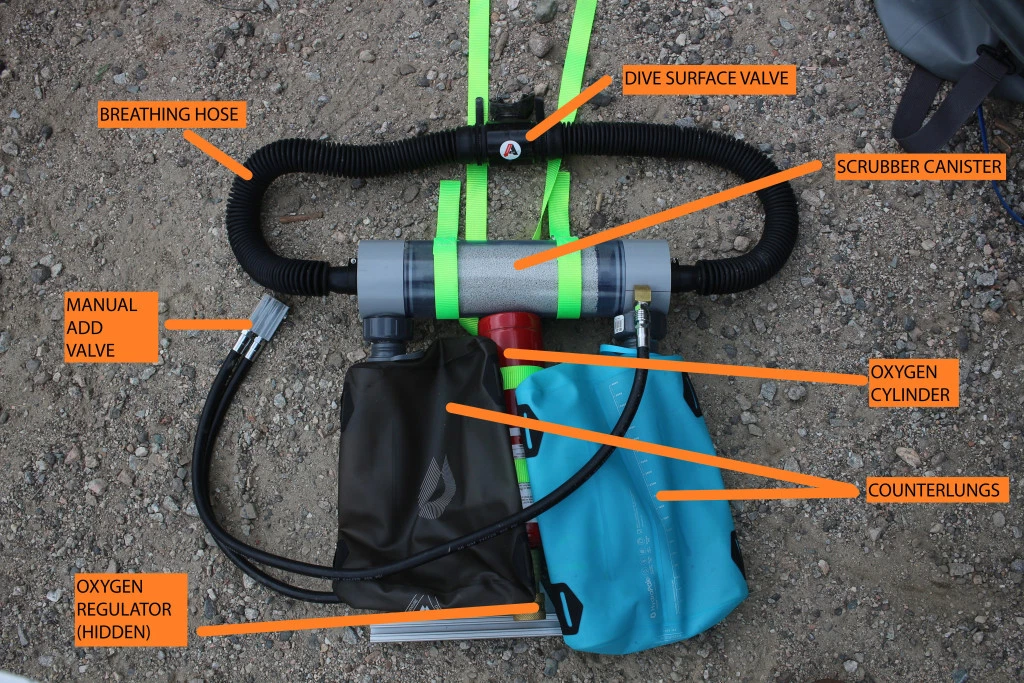
While the homebrew rebreather the [AyLo] describes on his blog looks exceptionally well engineered and is documented to a level we don’t often see, he still makes it very clear that he’s not suggesting you actually build one yourself. He’s very upfront about the fact that he has no formal training, and notes that he’s already identified several critical mistakes. That being said, he’s taken his rebreather out for a few dives and has (quite literally) lived to tell the tale, so he figured others might be interested in reading about his experiments.

For the landlubbers in the audience, a rebreather removes the CO2 from exhaled air and recirculates the remaining O2 for another pass through the lungs. Compared to open circuit systems, a rebreather can substantially increase the amount of time a diver can remain submerged for a given volume of gas. Rebreathers aren’t just for diving either, the same basic concept was used in the Apollo PLSS to increase the amount of time the astronauts could spend on the surface of the Moon.

The science behind it seemed simple enough, so [AyLo] did his research and starting designing a bare-minimum rebreather system in CAD. Rather than completely hack something together with zip ties, he wanted to take the time to make sure that he could at least mate his hardware with legitimate commercial scuba components wherever possible to minimize his points of failure. It meant more time designing and machining his parts, but the higher safety factor seems well worth the effort.

[AyLo] has limited the durations of his dives to ten minutes or less out of caution, but so far reports no problems with the setup. As with our coverage of the 3D printed pressure regulator or the Arduino nitrox analyser, we acknowledge there’s a higher than usual danger factor in these projects. But with a scientific approach and more conventional gear reserved for backups, these projects prove that hardware hacking is possible in even the most inhospitable conditions.

Hacking Pixmob Bands And Finding A Toolchain

The Pixmob band is an LED wrist strap, of the type often used at big concerts or other public events. Many have tinkered with the device, but as of yet, nobody was running custom code. It wouldn’t be easy, but [JinGen Lim] got down to work.

The wristbands are given out to concertgoers to create synchronized light shows in the crowd.

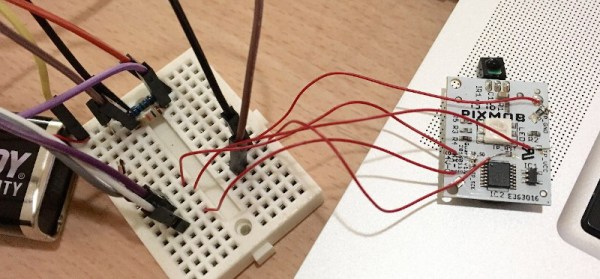
A teardown of a 2016 device revealed it consisted of an RGB LED, an IR sensor, a small EEPROM and a coin cell, which were all common parts. Unfortunately, the ABOV MC81F4204 microcontroller was a little more obscure. It’s a part that’s quite hard to find, and uses a proprietary programmer and an ancient IDE.

Searches online proved fruitless, and a working programmer remained outside [JinGen]’s grasp. Undeterred, he decided to simply walk into the company’s Korean headquarters and ask for help. As the part was end-of-life, they were unable to supply a programming device, but happily provided documentation for the chip that wasn’t publicly available. With this in hand, it was possible for [JinGen] to build his own programmer instead.

Booting up a copy of the ABOV IDE, with his newly-built programmer in hand, it was relatively easy to get the chip running custom code. Going the extra mile, [JinGen] even hacked the Arduino IDE to be partially compatible with the platform! A silicon error in the MC81F4204 design bricks the chips after only a few flash rewrites, so its never going to be the most useful platform, but it works nonetheless.

The Pixmob hardware has continued to evolve, and it’s unlikely modern units still use the same chip. Despite this, it’s a great example of what can be achieved by a little sleuthing and asking the right people the right questions. Others have attempted to hack similar products before, found at Disneyland and Coldplay concerts. You won’t catch this author at either, but if you’ve hacked something similar, be sure to reach out on the tip line!

Literal Stretch-Sensing Glove Reconstructs Your Hand Poses

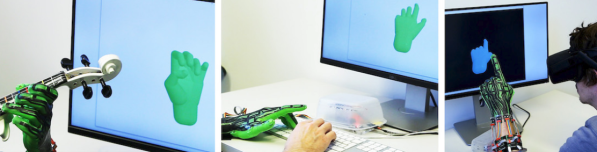
Our hands are rich forms of gestural expression, but capturing these expressions without hindering the hand itself is no easy task–even in today’s world of virtual reality hardware. Fret not, though, as researchers at the Interactive Geometry Lab have recently developed a glove that’s both comfortable and straightforward to fabricate while capturing not simply gestures but entire hand poses.

Like many hand-recognition gloves, this “stretch-sensing soft glove” mounts the sensors directly into the glove such that movements can be captured while hands are out of plain sight. However, unlike other gloves, sensors are custom-made from two stretchable conductive layers sandwiched between a plain layer of silicone. The result is a grid of 44 capacitive stretch sensors. The team feeds this datastream into a neural network for gesture processing, and the result is a system capable of reconstructing hand poses at 60Hz refresh rates.

In their paper [PDF], the research team details a process of making the glove with a conventional CO2 laser cutter. They first cast a conductive silicone layer onto a conventional sheet of silicone. Then, with two samples, they selectively etch away the conductive layer with the unique capacitive grid images. Finally, they sandwich these layers together with an additional insulating and glue it into a hand-shaped textile pattern. The resulting process is a classy use of the laser cutter for the design of flexible capacitive circuits without any further specialized hardware processes.

While we’re no stranger to retrofitting gloves with sensors or etching unconventional materials, the fidelity of this research project is in a class of its own. We can’t wait to see folks extend this technique into other wearable stretch sensors. For a deeper dive into the glove’s capabilities, have a look at the video after the break.

Continue reading “Literal Stretch-Sensing Glove Reconstructs Your Hand Poses”

Ask Hackaday: What’s The Perfect Hacker Smart Watch?

Since Dick Tracy all the way back in ’46, smart watches have captured the public imagination. After several false starts, the technology has gone through a renaissance in the last 10 years or so. For the average consumer, there’s been a proliferation of hardware in the marketplace, with scores of different models to choose from. For the hackers, however, pickings are a little more slim. So what is the best smart watch for the tinkerers among us? Continue reading “Ask Hackaday: What’s The Perfect Hacker Smart Watch?”

This Biofuel Cell Harvests Energy From Your Sweat

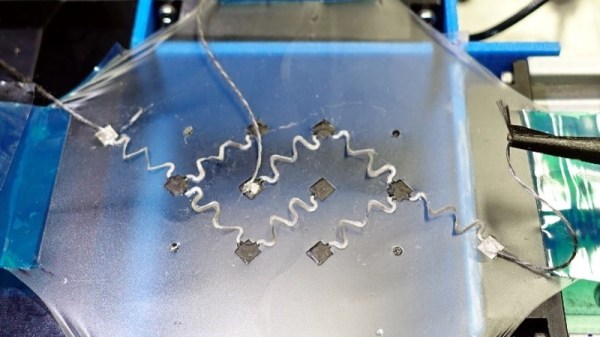
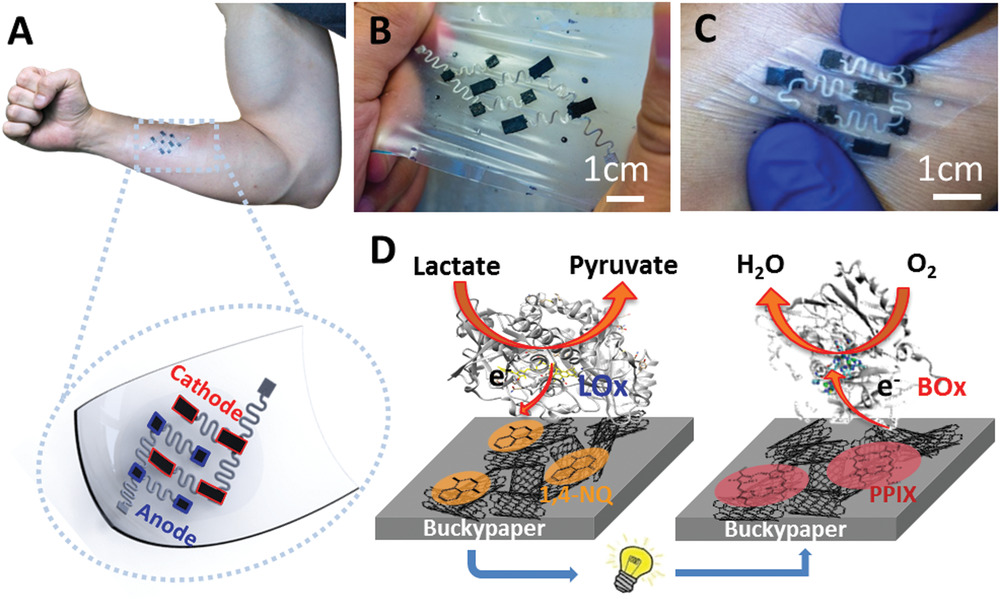
Researchers from l’Université Grenoble Alpes and the University of San Diego recently developed and patented a flexible device that’s able to produce electrical energy from human sweat. The lactate/O2 biofuel cell has been demonstrated to light an LED, leading to further development in the area of harvesting energy through wearables.

[via Advanced Functional Materials]
The research was published in Advanced Functional Materials on September 25, 2019. The potential use cases for this type of biofuel cell within the wearables space include medical and athletic monitoring. By using biofuels present in human fluids, the devices can rely on an efficient energy source that easily integrated with the human body.

Scientists have developed a flexible conductive material made up of carbon nanotubes, cross-linked polymers, and enzymes connected to each and printed through screen-printing. This type of composite is known as a buckypaper, and uses the carbon nanotubes as the electrode material.

The lactate oxidase works as the anode and the bilirubin oxidase (from the yellowish compound found in blood) as the cathode. Given the theoretical high power density of lactate, this technology has the potential to produce even more power than its current power generation of 450 µW.

[via Advanced Functional Materials]
The cell follows deformations in the skin and produces electrical energy through oxygen reduction and oxidation of the lactate in perspiration. A boost converter is used to increase the voltage to continuously power an LED. The biofuel cells currently delivered 0.74V of open circuit voltage. As measurements for power generation had to be taken with the biofuel cell against human skin, the device has shown to be productive even when stretched and compressed.

At the moment, the biggest cost for production is the price of the enzymes that transform the compounds in sweat. Beyond cost considerations, the researchers also need to look at ways to increase the voltage in order to power larger portable devices.

With all the exciting research surrounding wearable technology right now, hopefully we’ll be hearing about further developments and applications from this research group soon!

[Thanks to Qes for the tip!]

Lighting The Way For The Visually Impaired

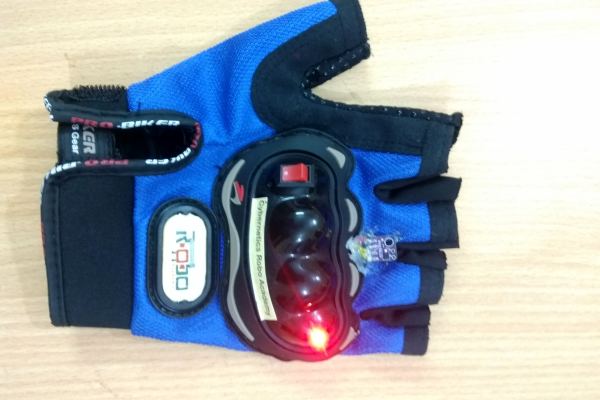
The latest creation from Bengali roboticist [nabilphysics] might sound familiar. His laser-augmented glove gives users the ability to detect objects horizontally in front of them, much like a cane or pole is used by the visually impaired to navigate through a physical space.

As a stand in for the physical cane, he uses the VL53L0X time-of-flight (TOF) sensor which detects the time taken for a laser source to bounce back to the sensor. Theses are much more accurate than IR distance sensors and have a much finer focus than ultrasonic sensors for excellent directionality.

While the sensors can succumb to interferences from background light or other time-of-flight sensors, the main advantages are speed of calculation (it relies on a single shot to compute the distances within a scene) and an efficient distance algorithm that simplifies the measurement of distance data. In contrast to stereo vision, which requires complex correlation algorithms, the process for extracting information for a time-of-flight sensor is entirely direct, requiring a small amount of processing power.

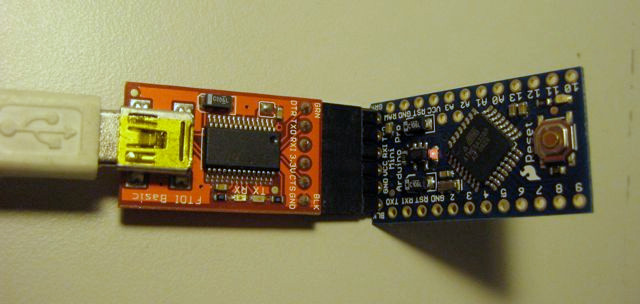
The glove delivers haptic feedback to the user to determine if an object is in their way. The feedback is controlled through an Arduino Pro Mini, powered remotely by a LiPo battery. The code is uploaded to the Arduino from an FTDI adapter, and works by taking continuous readings from the time-of-flight sensor and determining if the object in front is within 450 millimeters of the glove, at which point it triggers the vibration motor to alert the user of the object’s presence.

Since the glove used for the project is a bicycle glove, the form factor is straightforward — the Arduino, motor, battery, and switch are all located inside a plastic box on the top of the glove, while the time-of-flight sensor sticks out to make continuous measurements when the glove is switched on.

In general, the setup is fairly simple, but the idea of using a time-of-flight sensor rather than an IR or sonar sensor is interesting. In the broader usage of sensors, LIDARs are already the de facto sensor used for autonomous vehicles and robotic components that rely on distance sensing. This three-dimensional data wouldn’t be much use here and this sensor works without mechanical moving parts since it doesn’t rely on the point-by-point scan from a laser beam that LIDAR systems use.