IPhone SSH Client Roundup

iPhone and keyboard
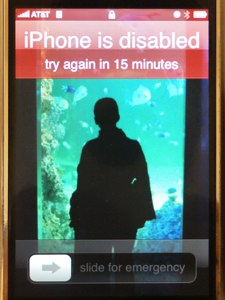
Considering an iPhone but not sure if you can live without SSH in your pocket? Have no fear! Hot off the press is this review of four SSH clients for the iPhone: iSSH, pTerm, TouchTerm, and SSH. All four clients have their strengths and weaknesses, and iSSH seems to be the best option so far. Although each of these is an early release, and therefore has its own idiosyncrasies, they’ve got improved features being planned for the next major release. Furthermore, they’re surprisingly inexpensive (none of them are more than five dollars), and so you should give them a shot if you see the need to SSH without being bound to your terminal.

iSSH is the best of the reviewed clients, giving you a good balance of usability and features. It has is share of problems, though, primarily related to the way it handles scrolling, pTerm comes in second, and is almost perfect. Its two rather glaring weaknesses are a too-large font that requires plenty of scrolling, and a lack of Ctrl, ESC, and Tab keys. TouchTerm, which comes in third, is the most configurable of the reviewed SSH clients,but is otherwise irrationally quirky. SSH is even quirkier than TouchTerm, and is a waste of your time and money.

Between the idiosyncrasies of iSSH, pTerm, and TouchTerm, you’re bound to find one that you like. Furthermore, these are initial releases; all three have exciting features on the roadmap (like implementing the ESC key) which should improve their usability.

Should you give one of them a try? For five bucks, it wouldn’t hurt.

[photo: edans]

[via Waxy]

Apple Newton Dev Kit?


[phooky] picked up this bizarre bit of dev hardware three years ago and isn’t really sure what it is. It has lots of general purpose switches, LEDs, and audio jacks. The processor is a StrongARM chip in a ZIF socket. It has two serial ports, a CF, and PCMCIA slot too. Commenter [Glen Raphael] says it looks a lot like the early prototype development boards for the Apple Newton which also used a StrongARM chip. It’s definitely an interesting piece of history. Make sure you check out the full item on NYC Resistor.

Iphone-dev Team Progress Update


The iphone-dev team hasn’t been resting on their laurels since releasing the iPhone Pwnage Tool 2.0 nearly two weeks ago and decided to update everyone on their progress. Despite the iPhone 2.0 jailbreak, there still isn’t a way to unlock a 3G phone. They’ve managed to do other things like downgrade a 3G to an older baseband firmware, which demonstrates their ability to bypass security checks and run unsigned code on the baseband. A nice side effect of all the downgrade work is that they’ve perfected the percautions they take to prevent bricking. The team has been following threads about using SIM proxy devices for unlocks as well, but concluded that the devices are a kludge at best and reliability can vary wildly depending on the phone’s location. They also pointed out the fine work that RiP Dev has been doing on Installer 4 which will help you install software that isn’t from the AppStore.

Securing DNS On OSX


It’s been a few weeks since [Dan Kaminsky] announced the nature of the DNS vulnerability and allowed 30 days of non-disclosure for patches to be applied before details of the exploit went public. Unfortunately, the details were leaked early and it didn’t take long for a functional exploit to be released into the wild. Since then, many ISPs have taken steps to prevent their users from falling victim to the attack, and BIND, the widely-used DNS protocol implementation, was updated to minimize the threat. Even then, there were reports of a version of the attack being actively used on AT&T’s DNS servers.

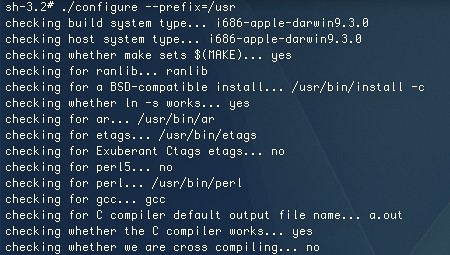
Mac OSX uses a BIND implementation but as of yet, Apple has not released a patch updating the system (Microsoft, on the other hand, patched this up on July 8). As a result, machines running OSX are at risk of being exploited. Individual users are less likely to be targeted, since the attacks are directed towards servers, but it’s not a smart idea to leave this vulnerability open. [Glenn Fleishman] has published a way to update BIND on OSX manually, rather than waiting on Apple to patch it themselves. It requires Xcode and a bit of terminal work, but it’s a relatively painless update. When we tried it, the “make test” step skipped a few tests and told us to run “bin/tests/system/ifconfig.sh up”. That allowed us to re-run the tests and continue the update without further interruption. [Fleischman] warns that people who manually update BIND may break the official update, but he will update his instructions when it happens with any possible workarounds. Unfortunately, this fix only works for 10.5 but alternative, yet less effective methods may work for 10.4 and earlier.

If you’d like to know if your preferred DNS servers are vulnerable or not, you can use the DNS checker tool from Doxpara. As an alternative to your ISP’s DNS servers, you can use OpenDNS, which many prefer for its security features and configuration options.

Boxee Available For Ubuntu


The Boxee blog has recently announced that they have finally released a Linux version. So far, only Ubuntu 7.10 through 8.04 support is available. We covered Boxee when they released their alpha version a few months ago. One of the unique things we found about it was the added social layer that allows the user to share their viewing and listening information on various social networking sites.

This XBMC based media streamer has won a lot of praise lately and we are excited to finally see it step into the Linux platform. Up until now, Boxee was strictly run on OSX 10.5 and thus bound to Apple’s hardware configurations. Once they get a stable version running, it will be extremely easy for anyone to build a media streamer from an old PC with various hardware configurations.

Creating Web Applications For The IPhone

[Dominiek ter Heid] wanted to prototype an application for the iPhone that incorporated GPS. He experimented, and came up with a step-by-step tutorial on how to create a web application that would push GPS information to his iPhone through the use of JavaScript and AJAX. This tutorial will save web hackers who want to play with the iPhone 3G a lot of grief. Using Cocoa Touch, and a CSS/JavaScript pack called IUI, he successfully created a web application that looks native to the iPhone and is able to grab GPS information. The application integrates the GoogleMaps API with the GeoNames database. We look forward to seeing the types of creative applications that this prototype will inspire. What sort of web application would you want to create for the iPhone?

[via digg]