PSPSeq 3.0, PSP Sequencer Release And Interview


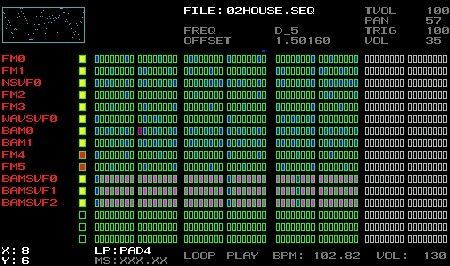
DSPmusic.org has just released the latest version of its homebrew PSP music sequencer PSPSeq 3.0. With PSPSeq you can create songs with up to 16 independent audio tracks, use WAV audio clips of your own and then modify them with a number of settings, or even use some of the built in synthesizers to generate sounds. There are strong looping and recording features as well. If you are into homebrew music apps on the PSP, then this will give you a strong offering of features. We had a chance to catch up with the author, [Ethan Bordeaux], and ask a few questions. You can check out the short interview after the break.

Continue reading “PSPSeq 3.0, PSP Sequencer Release And Interview”
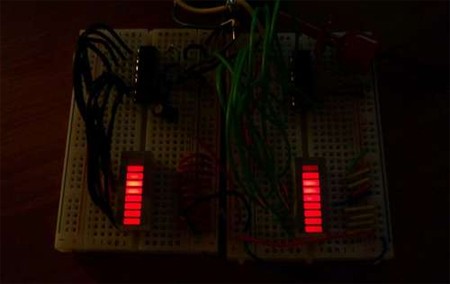
VU Meter Made With An LM3915


So here’s the situation: you have an audio device, maybe a boombox, perhaps one you built yourself, but it has no VU meter. No problem; building a VU meter is easy with these instructions from [Joe].

You’ll need either an LM3915 or LM3916 chip, a couple of bread boards, two audio jacks, ten LEDs, and a few other components. Wire them all together per the schematic, then plug an audio source into the input jack. You can plug your speakers or output device into the output jack, and you’re done. Keep in mind that LM3916s switch negative, so positive to positive wiring from LEDs to the bread board will be necessary. The wiring on [Joe]’s version is a bit convoluted, but it can be cleaned up on yours if you take the time. Video embedded below.

Continue reading “VU Meter Made With An LM3915”

External CD-ROM Turned Class A Headphone Amp


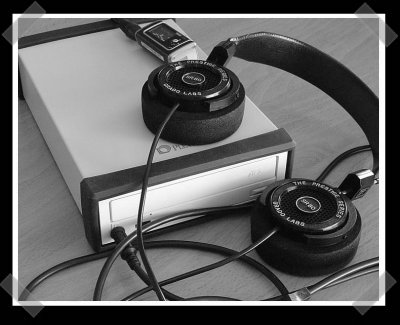
[Gio] sent in this slick Class A headphone amp. An old CD-ROM case was gutted to hold the goods. The design is fairly simple. Cost can be kept fairly low although the capacitors can add up if you’re a fanatic about quality. If you’ve ever lost any of your headphone gear to sticky fingers, you know that having it blending in to the background can be a great feature.

Cigarette Tin Amp


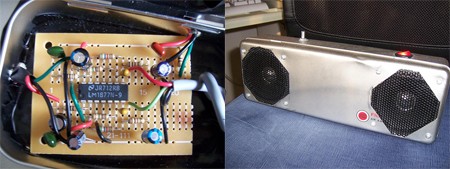
We’re a little confused: [xXxMrCarlosxXx] built an amp out of a cigarette tin and calls it a Mobile Oppression Unit, but we thought all mobile oppression came in the form of giant, invincible crab-shaped palaces. In any case, or more specifically, in a repurposed Lucky Strikes case, he used an mp3 player, some speakers from a garage sale, and a bread board packing an LM1877N-9 chip “optimized for loudness” to construct a great-looking, compact boom box. Check out his Flickr stream at the read link and begin oppressing your neighbors with sheer volume today.

Plants As Speakers

You can make pretty much anything a speaker by vibrating it. Japanese engineer, [Keiji Koga], has been working for many years to perfect his plant based sound transmission system. The voice coil is at the bottom of the plant container and transfers sound up the stalk to the leaves. It’s and interesting idea, but we can’t imagine it sounds much better than vibrating a rigid surface.

[via io9]

Tube Amp Monitor


Sparkfun contributor [Pete] really loves tube amps, but he’s a very safety-conscious guy who doesn’t like being electrocuted. This is a problem, since tube amps are usually very high voltage, and a small mistake can be fatal. To deal with this voltage issue, he built a tube amp with a control system built around a 6DOF v3 controller board. The control system is there mainly in case of a failure, automatically shutting off the high voltage transformer in any such event. It has the added benefit of filtering any 60Hz noise from getting into the audio, which happened before he installed the control system.

In addition to regulating power, the controller board also monitors bias points in the output tubes and displays its diagnostics on an LCD. Aside from getting great sound from the tube amp, [Pete] made it look great too, installing colored LEDs under the tubes. We love his design: just because safety comes first it doesn’t mean cool-factor can’t come in a close second.

Obsolete Technology Band


Radiohead held a contest for fans to remix the single Nude from their album In Rainbows. Frontman Thom Yorke mentioned on NPR that the contest was essentially a joke, since the Nude track is recorded at 6/8 timing and 63bpm, much slower than traditionally mixed music. The above video from [James Houston] is one of the most creative entries. Using old computer hardware he has recreated the track in a very unique way. He uses a Sinclair ZX Spectrum for the guitar track, a dot matrix printer for the drums, a scanner for bass, and a hard drive array for vocals.

Want to make your own band with obsolete technology? Click through for a few pointers to get you started.

Continue reading “Obsolete Technology Band”