That Power Bank Isn’t Quite So Sweet

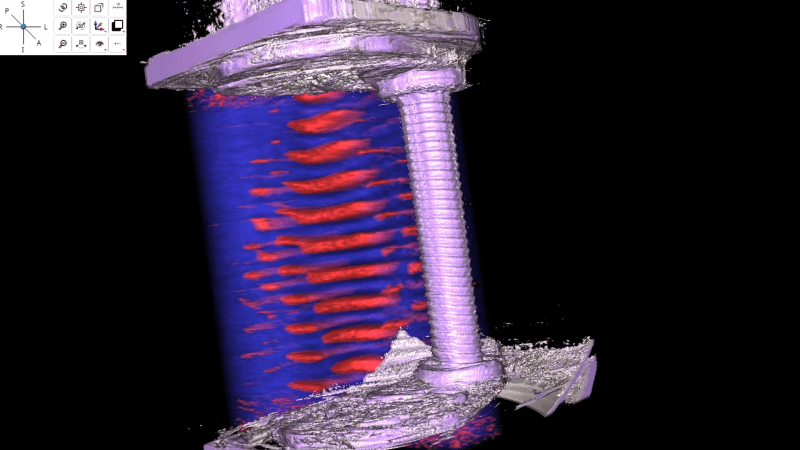
An unlikely hit of the last few months’ consumer hardware has been a power bank branded by the German confectionery company Haribo. It first gained attention in backpacking circles because of its high capacity for a reasonable weight, and since then has been selling like the proverbial hot cakes. Now Amazon have withdrawn it from their store over “A potential safety or quality issue”. The industrial imaging company Lumafield have taken a look at the power bank with a CT scanner, to find out why.

As you might imagine, the power bank is all battery inside, with pouch type lithium ion cells taking up all of the space. Immediately a clue appears as to why Amazon withdrew them, as the individual layers of the cells are misaligned, laying open a risk of failure. They also take a look at a set of earbuds from the same source and find something even more concerning — torn electrodes. Thus neither device can be regarded as safe, and the backpackers will have to haul around a little bit more in the future.

You’ll not find the Wrencher on a power bank, but you can be sure if you did, we’d make sure there was an element of quality control at play. Meanwhile we feel slightly sorry for the branding executive responsible at Haribo, who we are guessing has had a bad day. We’ve featured Lumafield’s work here before quite a few times, most recently looking at similar defects in 18650 cells.

Lumafield Shows Why Your Cheap 18650 Cells Are Terrible

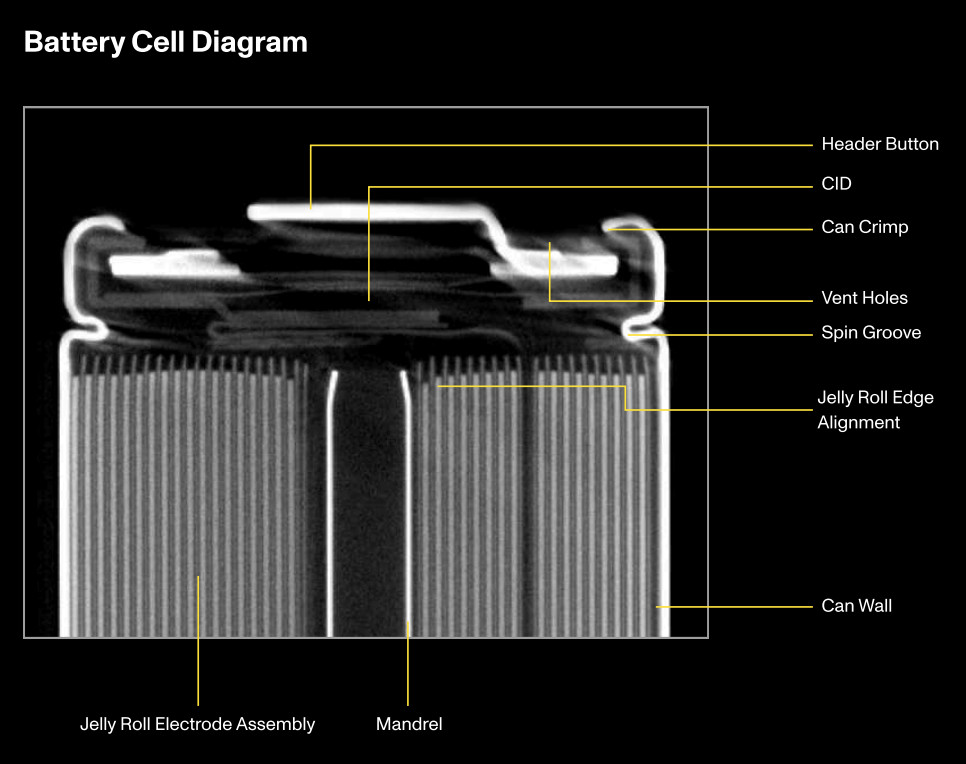
Lithium-ion cells deliver very high energy densities compared to many other battery technologies, but they bring with them a danger of fire or explosion if they are misused. We’re mostly aware of the battery conditioning requirements to ensure cells stay in a safe condition, but how much do we know about the construction of the cells as a factor? [Lumafield] is an industrial imaging company, and to demonstrate their expertise, they’ve subjected a large number of 18650 cells from different brands to a CT scan.

The construction of an 18650 sees the various layers of the cell rolled up in a spiral inside the metal tube that makes up the cell body. The construction of this “jellyroll” is key to the quality of the cell. [Lumafield’s] conclusions go into detail over the various inconsistencies in this spiral, which can result in cell failure. It’s important that the edges of the spiral be straight and that there is no electrode overhang. Perhaps unsurprisingly, they find that cheap no-name cells are poorly constructed and more likely to fail, but it’s also interesting to note that these low-quality cells also have fewer layers in their spiral.

We hope that none of you see more of the inside of a cell in real life than you have to, as they’re best left alone, but this report certainly sheds some light as to what’s going on inside a cell. Of course, even the best cells can still be dangerous without protection.

3D Imaging For Natural Science — For Free

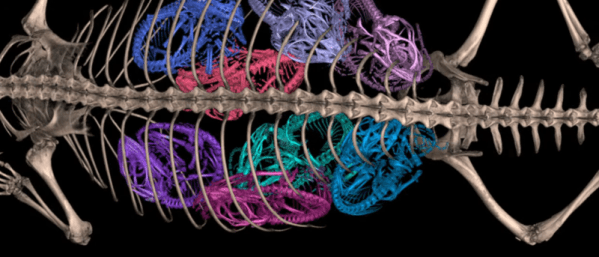
It isn’t that unusual for a home lab to have a microscope, but wouldn’t it be cool to have a CT scanner? Well, you probably won’t anytime soon, but if you are interested in scans of vertebrates — you know, animals with backbones — a group of museums have you covered.

The oVert project is scanning 20,000 specimens and making the results available to everyone. This should be a boon to educators and might even be useful for 3D printing animal forms. Check out the video about the project below.

Continue reading “3D Imaging For Natural Science — For Free”

CT Scan Reveals Secrets Of Heinz’s New Ketchup Cap

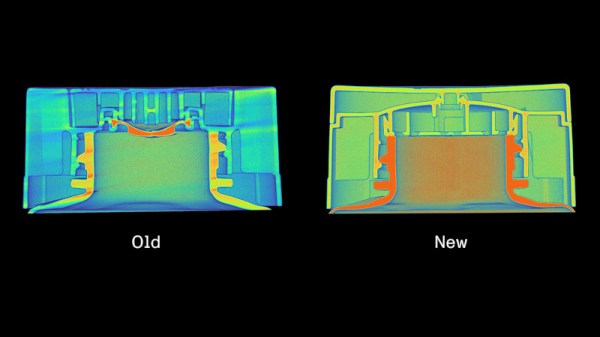
Ketchup bottles are a solved technology, right? Wrong! As it turns out, there is still great development being done in this space. Industrial imaging company Lumafield reveals to us the secrets of Heinz’s new ketchup bottle cap, reportedly the result of a seven-figure investment and eight long years of toil.

Lumafield put the cap in a CT scanner to generate three-dimensional cutaway images of the cap’s internal structure.  The trick of the new cap is in how it compares to the old design. The previous solution used multiple different plastics: likely polypropylene for the cap itself, along with a small amount of silicone for the flexible nozzle valve. The point of the valve was to regulate the flow of ketchup so the bottle squirts out the red goop in a predictable fashion.

The problem with the old cap is that the use of two materials both makes it more expensive to manufacture, and practically impossible to recycle. A solution was needed, and Heinz finally found one.

The new cap, which is fully recyclable, takes advantage of the properties of ketchup itself. As the ketchup is squeezed out of the bottle, it passes through a complicated array of channels before it gets to the nozzle outlet itself. As a sheer-thinning fluid, ketchup gets less viscous the more its under strain. Thus, as it deforms around the complex channels, it becomes less viscous and more likely to flow out at a predictable rate, rather than in thick gloopy spurts.

It’s amazing to think how much work goes into a simple ketchup cap, and yet, millions of dollars are on the line in projects like these. This isn’t the first time Lumafield used their tech to peel back the layers on a piece of common tech — last year we covered their investigation into what’s inside various AirPod knockoffs.

CT Scanner Reveals The Difference Between Real And Fake AirPods

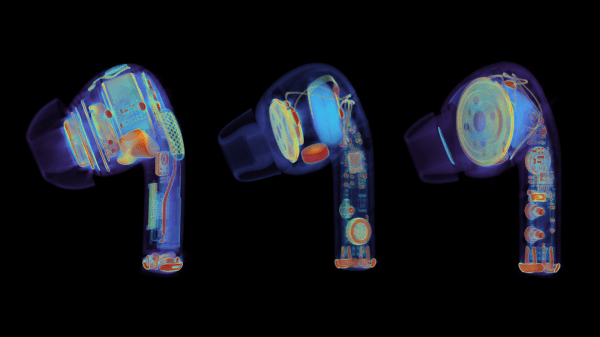
These days, you have to be careful what you buy. Counterfeit hardware is everywhere, especially when you’re purchasing things sight unseen over the Internet. [Jon Bruner] recently set out to look at a bunch of fake AirPod clones, and found that the similarities between the imposters and the real thing are only skin deep. A CT scan reveals all.

As you might expect, Apple’s AirPods are a fine example of miniaturization. They’re packed to the gills with hardware, with very little wasted space inside. Flexible PCBs hook up the electronics in an elegant and tidy fashion. Three tiny MEMS microphones are on board to capture the user’s voice and filter out noise. The battery that runs the show is a hefty lithium-ion coin cell which fills almost all the empty space behind the audio driver.

By contrast, the fakes look positively weedy inside. They cut out the bonus microphones, using just one to do the job. Wires link up the different components, with unimpressive blobby soldering visible that has splattered around the internal enclosure. Even the cases are lower-tech, with a weaker battery and a poorer charging solution. Hilariously, cheaping out on the tech makes the fakes lighter, so they compensate by adding weights to create a sense of heft for the user.

It’s amazing how much is revealed by a CT scan, that doesn’t even require opening the devices to tear them down. Fake hardware really is a scourge that many in the tech industry find themselves fighting against on a regular basis.

2000-Year Old Charred Manuscripts Reveal Their Secrets

Imagine trying to read a 2000-year old scroll from an ancient civilization. Now imagine that scroll is rolled up, and in a delicate, charred, carbonized form, having been engulfed by the fiery eruption of a volcano. The task would seem virtually impossible, and the information in the scroll lost forever. Right?|

As it turns out, new developments are changing that. Modern scanning techniques and machine learning tools have made it possible to read fragments of the heavily-damaged Herculaneum scrolls. Hopes are now that more of the ancient writings will be salvaged, giving us a new insight into the ancient past.

Continue reading “2000-Year Old Charred Manuscripts Reveal Their Secrets”

A Deeper Dive Into Reverse Engineering With A CT Scanner

We’ve recently got a look at how [Ken Shirriff] used an industrial CT scanner as a reverse engineering tool. The results were spectacular, with pictures that clearly showed the internal arrangement of parts that haven’t seen the light of day since the module was potted back in the 60s. And now, [Ken]’s cohort [Curious Marc] has dropped a video with more detail on the wonderful machine, plus deep dives into more Apollo-era hardware

If you liked seeing the stills [Ken] used to reverse engineer the obscure flip-flop module, you’re going to love seeing [Marc] using the Lumafield scanner’s 3D software to non-destructively examine several Apollo artifacts. First to enter the sample chamber of the CT scanner was a sealed module called the Central Timing Equipment, which served as the master clock for the Apollo Command Module. The box’s magnesium case proved to be no barrier to the CT scanner’s beam, and the 3D model that was built up from a series of 2D images was astonishingly detailed. The best part about the virtual models is the ability to slice through them in any plane — [Marc] used this feature to hunt down the clock’s quartz crystal. Continue reading “A Deeper Dive Into Reverse Engineering With A CT Scanner”