Mini LED Message Board Built From Retro Displays

personal_electronic_retro_telegram

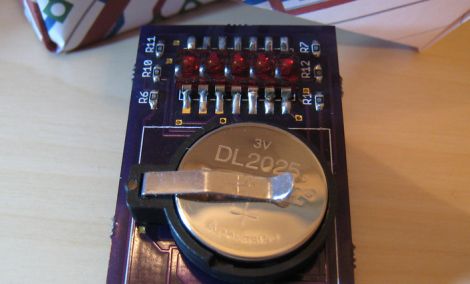
[Iain] is getting to the point in his life where he finds himself waxing nostalgic about various different technologies from his youth. One item he has always been fond of is first generation 7 segment consumer LED displays, like those found in old calculators.

He was excited to find one of these displays at the bottom of a box full of electronics odds and ends he received from a friend. After identifying the display and tracking down a data sheet online, he decided that he wanted to build some sort of little gadget out of it.

His first inclination was to build a tiny text scrolling gadget from the display, and thus his “Personal Electronic Retro Telegram” (P.E.R.T) was born. With Arduino in hand, he prototyped the circuit on a breadboard, then sent away to have some PCBs built. Once he received the boards, alll of his prototyping components were swapped out with SMD versions, including a TQFP ATMega168 chip in place of the full-sized Arduino board.

The final result is a nice melding old and new technology which he decided to give to his girlfriend as a gift. Continue reading to see a quick video of the P.E.R.T in action.

Continue reading “Mini LED Message Board Built From Retro Displays”

Junkyard Jumbotron Is Begging To For An Open Source Project Clone

Idle developers of the world take inspiration from this project and unite to create your own version. It’s called the Junkyard Jumbotron because it takes many different displays and allows them to be used as one big interactive display. The image above shows a collection of smartphones displaying a test pattern. The pattern is unique for each device and is used to calibrate the display. Using a digital camera, a picture of these test patterns is snapped, then sent to the server. The server calculates the position of each of the screens, then sends the correct slice of a large image back to each phone.

It’s funny that they use the word Junkyard in the name of the software. Each display needs to be able to run a web browser so you can’t just use junk displays. But one nice side effect of the hardware requirements is that you can still do things like panning and zooming as seen in the video after the break. Here’s the real question: can you make this work as an open source project? How about something that can be easily set up to work with a LAMP server?

Continue reading “Junkyard Jumbotron Is Begging To For An Open Source Project Clone”

Monocrome To Magnificent: Computer Display Chronology

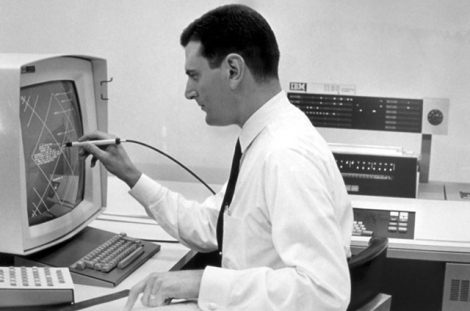
Remember when CGA came out and made monocrome monitors look horrible? Well CGA is crap, VGA is where it’s at. Wait… weren’t there a couple of standards in between those two? Take a walk down memory lane and relive the evolution of computer display technology. You’ll start with displays that are more or less CRT oscilloscopes and end up in better than high-def territory. The article is an interesting read but for those with short attention spans jump to the fourth page and check out the chart of technologies, resolutions, and implementation dates. We’ve come a long way in a few short decades.

In-button Display For Your Car’s Dashboard

OLED display in a dashboard button

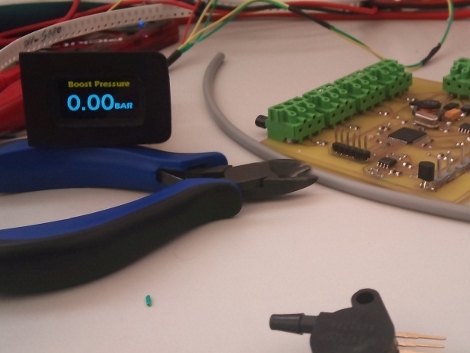
Here’s an interesting take on augmenting a car’s dashboard. [Daniel] is using a button blank to house a 1″ OLED display in his Jetta. It shows auxiliary data such as boost pressure and several sets of temperature readings. The display itself has a tiny little circuit board with a PIC 24 to drive it. A larger board, seen above, collects the temperature data from some sensors that [Daniel] added as part of the hack. There are some pictures of the installed display inside of the dark car and it looks really easy to read. It also sounds like there’s some dimming functionality built into the firmware. This is the easiest way we’ve seen to add a display to your dashboard as it just requires you to pop out a button blank, rather than disassembling the entire console or patching into what’s already there.

Swapping Speedometer Needle For LEDs

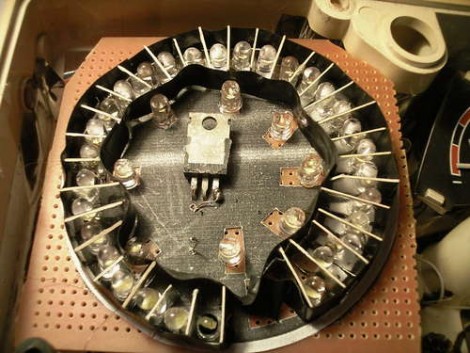
[Ah2002] didn’t like the shaky needle in his car’s speedometer so he replaced it with a ring of LEDs. The old speedometer had a cable which rotated along with the gearbox for mechanical speed measurement. By connecting the stepper motor from a printer instead of this cable, a voltage is generated that fluctuates with the speed of the car. The fluctuation is linear so a given voltage measurement can be directly associated with one particular speed. By using a trimpot to calibrate the input voltage, [Ah2002] connected the signal to an LM3914 dot/bar display driver. These can be chained together, lighting a string of outputs based on the single voltage input. The result is the board seen above, which was covered with a printed paper graph in the final assembly.

Judging from the video after the break, we’d bet there was some distracted driving during the calibration process. The driver appears to be holding the video recorder, and since a cellphone GPS was used during calibration we wonder if [Ah2002] was adjusting the trimpot, looking at the GPS, and driving all at once. It’s a fairly awesome hack, but do be careful when you’re working on something like this.

Continue reading “Swapping Speedometer Needle For LEDs”

Syyn Labs’ Glowing DNA

This beautiful music syncronized double helix was made by Syyn labs. Last time we saw them, they had created that amazing rube goldberg style music video for OK Go. This 100 foot long LED DNA strand took over 1000 combined man hours to build. It took 512 LEDs, 32 LED controllers, 4 Arduinos, 4 computers, over a mile of wire and a very dedicated team, which included [Eliot Phillips]. It takes input from beatmatching/VU software as well as a 32 button console or an iPad. You can catch a video of it in action after the break, and they plan on releasing a timelapse of the build in the near future.

Continue reading “Syyn Labs’ Glowing DNA”

Launchpad Takes Ultra Low Power To The Extreme

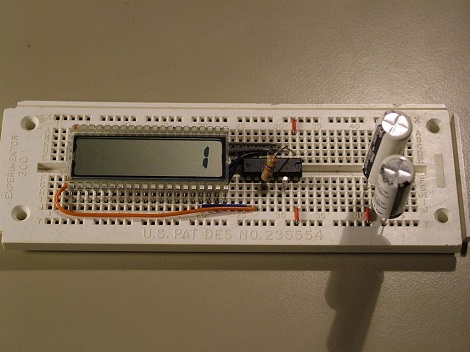
We’ve all known the MSP430s under the Launchpad are designed to be low power, but who wants to bet how long the chip can last on only 20F worth of capacitors? A couple of hours? A day at max? [Kenneth Finnegan] setup a MSP430 with supercaps to find out. To make sure the chip is actually running, [Kenneth] programmed it to count from 0 to 9 over a period of 10 seconds, and then reset. To get it ultra low power, the chip is in sleep mode most of the time, and a raw low current LCD is used to display the output. While [Kenneth] simply checks the chip every few hours to see if it’s still counting, a setup much like the Flash Destroyer, tracking a clock and then storing the current value would get a more exact time of death. Either way, it’s been over 3 weeks…and still counting. Video after the rift.

Continue reading “Launchpad Takes Ultra Low Power To The Extreme”