Accelerometer Mouse From Scratch


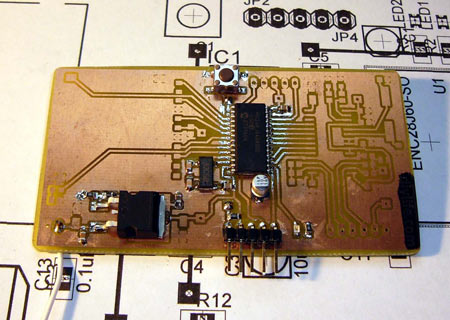
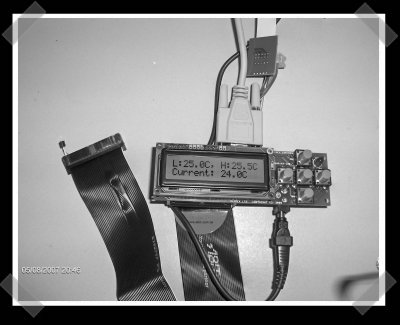
[Mahavir] sent in his group’s final project for the College of Engineering in Pune (it’s over here). They built an accelerometer based Bluetooth mouse. They ended up creating a mouse that maps rotational movements to x/y motion. From the video movement, it strikes us as responding the same way that touch pointer mice do. You can hit the demo video after the break or get more details from the project page. Even if you’re not into the mouse idea, you can probably learn something from their Bluetooth implementation.

Continue reading “Accelerometer Mouse From Scratch”

DIY HID Ballast


HID lights have a major power consumption and lumen output advantage over halogen lights. Unfortunately the ballast component isn’t very cheap. [brian]’s been building his own ballasts for his mountain bike. We couldn’t find any more info on his design, but we did find some interesting stuff. This document lays out the requirements for a ballast. Here’s an older HID ballast design to get rolling. Keep in mind that the lamp requires high voltages – don’t play with it unless you know what you’re doing. If you’d rather use off the shelf components, check out the HID dive light we wrote up a while back. It uses a fairly inexpensive ballast/lamp combo.

IR Controlled Relays


If you’re thinking of building some DIY home automation, this looks like an interesting idea. At the heart is a PIC16F84 that decodes IR signals and controls six outputs – in this case, relays to activate various appliances. The PIC is dirt cheap – if you get a deal on some relays you should be able to build a small local IR HA system for $30… This might be just the thing for my office. It’s cheap enough that it probably wouldn’t walk off.

3 Liter Homebrew Beer Keg


Beer kegs are several things. They are expensive, heavy, but most importantly delicious. We found a nice guide for creating your own 3 liter beer keg. This is an inexpensive solution for homebrewers looking to keg their own beer.

The guide goes into detail on assembly and parts needed to create the bottle adapter. Most of the parts can be picked up locally or through MoreBeer.com. CO2 cartridges are used to pressurize the bottle. To keep everything cool you can use a standard water cooler with a few simple modifications. The 3 liter bottle is too tall for some coolers so you’ll need to cut a hole in the lid. Add a piece of aluminum covered styrofoam to the top and bottom, toss in some ice, and your brew should stay cold for about 3 hours.

The author does note that this is not recommended for long term storage. So drink up!

Hydrophone


Chances are you’ve never wondered what your goldfish is trying to say, but if you have (or if you just want a project), check out this DIY hydrophone.

You will need a computer microphone, vegetable oil, plastic wrap, scissors, solder, and a small unused plastic bottle. Solder the mic capsule to an appropriate length of cable and test. The entire assembly can then be submerged in vegetable oil inside a plastic bottle. Yes, vegetable oil. Seal the bottle and you’re done.