Reviving An Old Lime-E Beta Rideshare E-Bicycle

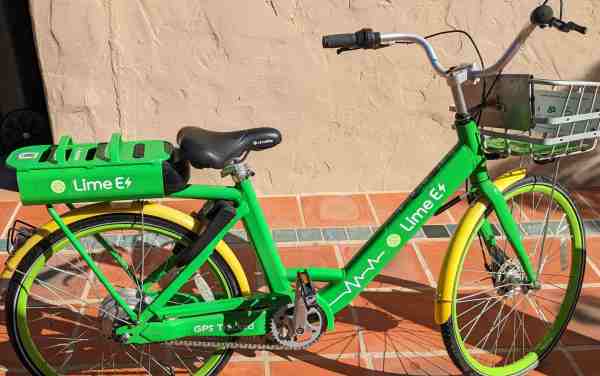
What do you do when you come across a cheap electric bicycle on Facebook Marketplace from a seller who has a few hundred of the same ones available? If you’re someone like [Max Helmetag], you figure that it’s probably legit since nobody would be reselling hundreds of Lime ridesharing e-bikes. Thus, it makes for an excellent project to see how usable an old ridesharing bicycle is. According to the information on the e-bike’s frame, it was manufactured in 2017, and based on the plastic still covering parts of the bike, it had barely been used, if at all.

Continue reading “Reviving An Old Lime-E Beta Rideshare E-Bicycle”

Pedal Car Vs Ministry Of Transport

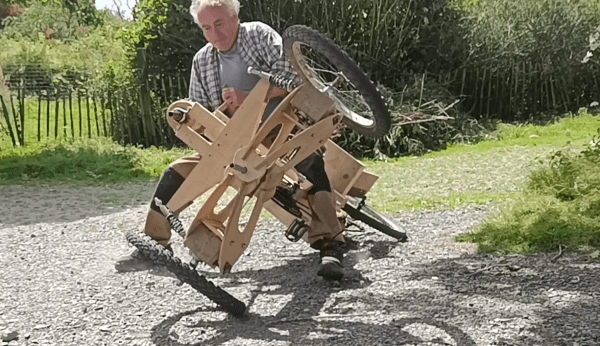
[Tim] from the “Way Out West” Youtube channels has started a fun project — building a wooden pedal-car heavily inspired by “Bugsy Malone”. The kids-sized gangsters in that movie got around in kid-sized pedal cars. Apparently kid-sized [Tim] just loved the idea, but just didn’t have the skills or tools to try to build one. But the time has come, and he has spent years putting together a workshop, tools, and skills.

The goal is a 4-wheeled vehicle that can actually be enclosed, to keep the driver out of the rain. It would be petal powered, with an optional electric assist. It should be made of simple materials, like plywood and epoxy. The design would be freely shared, and the overall cost hopefully kept low. Come back after the link to find the rest of the story, including the monkey wrench thrown into the works.
Continue reading “Pedal Car Vs Ministry Of Transport”

VanMoof E-Bike Bankruptcy: The Risks Of Cloud-Connected Transport

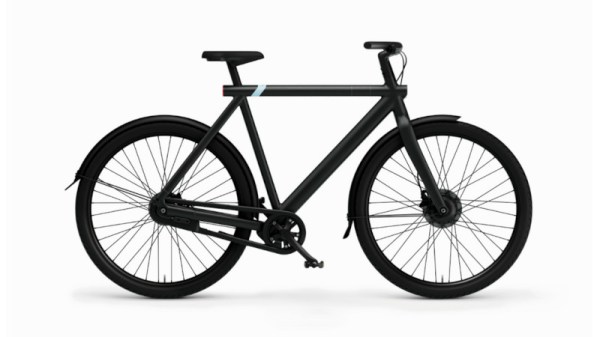
When the bankruptcy of VanMoof, the company behind a series of e-bikes, was announced recently, many probably shrugged at this news. After all, what is an e-bike but a regular bicycle that has some electronics and a battery strapped to it to assist with cycling? Unfortunately for owners of a VanMoof e-bike, their fancy wheels come with a Bluetooth-connected smartphone app that somehow involves storing a special encryption key on the VanMoof servers, as detailed by [Gergely Orosz] at the Pragmatic Engineer. Without this key that is connected to your VanMoof account, your VanMoof app cannot communicate with your VanMoof e-bike.

Although basic functionality of the e-bike will be retained, features such as setting the gear modes, changing assistance mode, locking the bicycle and other features not exposed on the bicycle itself will be lost. Essentially this is the equivalent of losing the remote control to a modern-day TV and getting locked out of 90% of the device’s features.

Fortunately, as [Gergely] and others are (urgently) pointing out to VanMoof e-bike owners, this special key can be downloaded with a Key Exporter project on GitHub, as well as obtained and used with an alternative app by Cowboy Bikes, which is a competitor of VanMoof. The unfortunate reality remains, however, that should you lose this special key, you are going to be in a world of pain as your expensive e-bike now is mostly an e-brick.

(Thanks to [Jan Praegert] for the tip)

E-Bike Battery Tapped For Off-Grid Laptop Power

If you’ve travelling via bike, you’ll know there’s a certain advantage to packing light. But what if you need to take your beefy desktop-replacement laptop with you on one of these trips? These power hungry machines can’t go far without their chargers (or a place to plug them in), which generally makes them poor traveling companions.

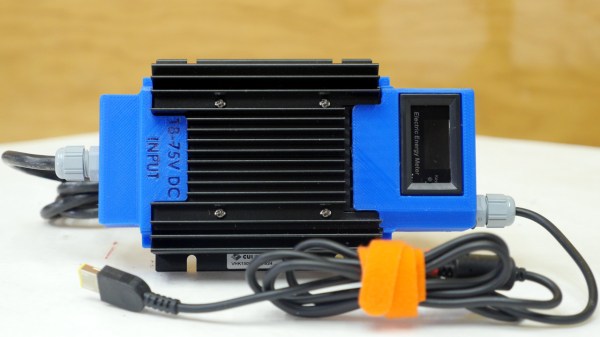
Luckily, [transistor-man] came up with a solution to this particular problem by reusing his e-bike’s battery pack as a mobile power source for his Lenovo laptop. The energy demands of this particular computer are too high for USB-C Power Delivery, and as such, he had to hack up a way to feed it 20 volts DC via its proprietary square power connector. His bike’s battery puts out between 30 and 42 VDC depending on charge, so at least on paper, it should work out fine. Continue reading “E-Bike Battery Tapped For Off-Grid Laptop Power”

Chainless “Digital Drive” Bikes Use Electric Power Transmission Instead

We’re all familiar with how regular bikes work, with the pedals connected to the rear wheel via a simple chain drive. This setup is lightweight, cheap, and highly efficient. It’s not the only way to drive a bike though, and there’s plenty of buzz around the concept of “digital drive” bikes.

Look, ma – no chains!

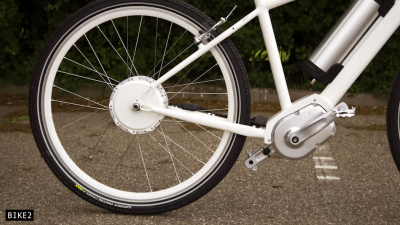
These drivetrains rely on electrical methods to transfer power in place of mechanical. The pedals are used to turn an electric generator, with power then sent to an electric motor which drives the rear wheel. The concept may sound overly complicated, but it does offer some benefits. The generator can change its operation to keep the rider pedalling at their most efficient, consistent rate. There would also be no chain to fall off, get snagged on clothing, or require regular maintenance.

It would make integrating regenerative braking possible, too, allowing the bike to harvest energy when going downhill too. This could be achieved with a storage battery or supercapacitor. As a bonus, it would be very easy to integrate power assist for the rider when tackling tough hills, for example. The lack of requirement for direct mechanical power transfer also means that there’s far more flexibility to design a bike with interesting geometry.

Such drive systems do give up some efficiency, however. All the power conversions between mechanical and electrical energy mean that a “digital drive” would likely only be 58% efficient. This compares poorly to the roughly 95% efficiency of power transfer in regular mechanically-driven bikes. There’s also a weight penalty, too.

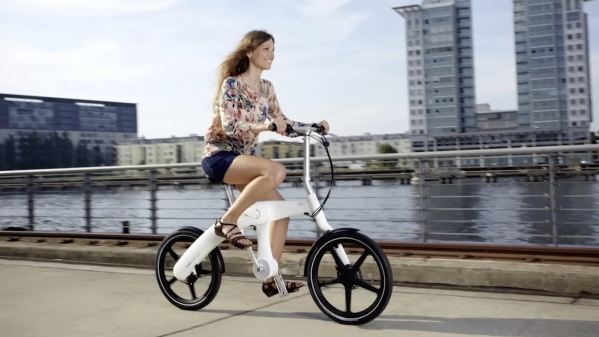
Presnetly, there’s only one “digital drive” bike on the market – known as the Mando Footloose. It’s a swooping, folding, futuristic design, that has some feel issues when it comes to pedalling. And, given the added complexity and expense of these systems, it’s unlikely regular bikes or e-bikes are going away any time soon. Regardless, it’s fun to think about the potential for other drivetrain concepts to change the way we cycle. Video after the break.

Continue reading “Chainless “Digital Drive” Bikes Use Electric Power Transmission Instead”

Adding A Third Wheel (And Speed Boost) To An Electric Scooter

The story of how [Tony]’s three-wheeled electric scooter came to be has a beginning that may sound familiar. One day, he was browsing overseas resellers and came across a new part, followed immediately by a visit from the Good Ideas Fairy. That’s what led him to upgrade his DIY electric scooter to three wheels last year, giving it a nice speed boost in the process!

The part [Tony] ran across was a dual brushless drive unit for motorizing a mountain board. Mountain boards are a type of off-road skateboard, and this unit provided two powered wheels in a single handy package. [Tony] ended up removing the rear wheel from his electric scooter and replacing it with the powered mountain board assembly.

He also made his own Arduino-based interface to the controller that provides separate throttle and braking inputs, because the traditional twist-throttle of a scooter wasn’t really keeping up with what the new (and more powerful) scooter could do. After wiring everything up with a battery, the three-wheeled electric scooter was born. It’s even got headlights!

[Tony]’s no stranger to making his own electric scooters, and the fact that parts are easily available puts this kind of vehicular experimentation into nearly anybody’s hands. So if you’re finding yourself inspired, why not order some stuff, bolt that stuff together, and go for a ride where the only limitation is personal courage?

Skarper E-Bike Conversion Kit Simplifies Electrifying Your Bike

If you’re a Hackaday reader, it’s a good bet you could figure out how to convert your bike to use an electric motor. But you might have more important things to do, so a start up company, Skarper, wants to help you with a conversion kit and the folks over at [autoevolution] took a closer look at how it works. The interesting part is that it transfers power from the motor to your wheels through a disc that substitutes for the bike’s disc brake. You can see a promotional video about the product from the company below.

Unlike some conversions, it looks like with this kit you can easily snap the assembly on the bike when you want it powered and take it off when you want it to function normally or if you want to take the electronic part inside with you.

The company claims that the 250-watt motor can to propel a bike to nearly 20 miles per hour. But we’re willing to bet you can’t go that fast and get the claimed 37-mile range. On the plus side, a 30-minute charge will net you another 12 miles and a full charge only takes 2.5 hours. The battery and motor weigh a bit more than 7 pounds. Obviously, you’ll need a bike that has disc brakes.

Cost? About $1,200, so it isn’t quite an impulse buy. Especially if you have the time and wherewithal to roll your own solution. For example, try a skateboard motor. Makes it easier, too, if you have a 3D printer.

Continue reading “Skarper E-Bike Conversion Kit Simplifies Electrifying Your Bike”