Hackaday Links: June 20, 2010

Nixie Voltmeter Clock
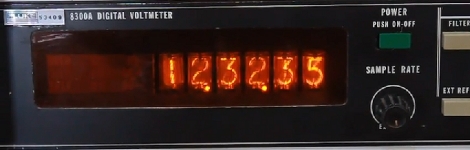
[Gmglickman] built a clock out of an old digital voltmeter. The Fluke 8300A came out in 1969 and is featured in their 60 years of innovation slideshow. What makes it a cool clock? The Voltmeter’s display is made up of Nixie tubes.

Easy optical encoder wheel generator
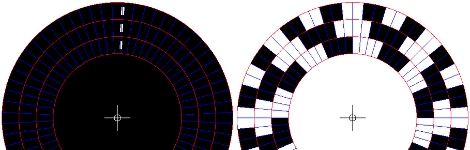
If you need to print out encoder wheels for your project there is an online tool you can use. It has almost any setting you would want to make a rotary encoder wheel.The black wheel can be used with old mouse parts and the checkered wheel with an optical sensor. [Thanks Bluewraith]

New CD without the CD
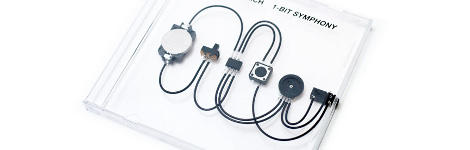
1-bit Symphony is a newly released album. It come in a CD jewel case but there’s no CD included. That’s because they’ve built a circuit to playback their music via a headphone jack. We didn’t see any info on what microcontroller was used, but we love the cleanliness of the design. This apparently isn’t the first time the artist has released an album like this either.[Thanks Juan]

Making a standard SIM work with the iPad
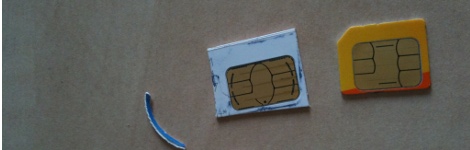
[Tony Million] used a standard SIM to reduce the monthly cost of using broadband on the iPad. This is the exact opposite of using the iPad SIM in an iPhone and requires that you cut down your standard SIM quite a lot. [Tony] did this because he imported his iPad to the UK from the United States and using AT&T wasn’t an option for him. [Thanks David]

16TB NAS is a thing of beauty
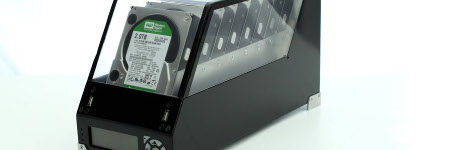
The Black Dwarf is a sixteen terabyte network attached storage device that looks more like a display counter for high-end hard drives. We’d usually think of this as a closet or basement dweller, but an item this gorgeously crafted deserves a place of honor in your home or office. Documenting the entire process was as complex as the build itself. We like seeing the time-lapse version. [Thanks Howard via Engadget]
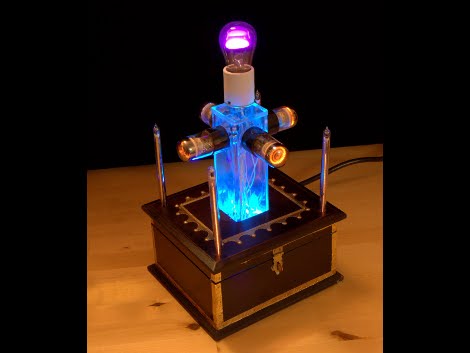
Coachella Lamp

This little art piece might be just the thing to add that mad scientist look to your room. It’s called the Coachella lamp and it makes use of several throwback display devices. At the top an Argon discharge lamp puts out ultraviolet light. Protruding from each of the four sides you can see a set of decatrons. There’s also four Nixie tube bar graphs standing tall from each corner of the base. The final touch is the colored glow in the center which is provided by LEDs. We’ve embedded some video of the device after the break.

The lamp is powered by a wall outlet and controlled with an Arduino. We’ve seen deactrons used as timing devices and would love to see some clock functionality added to the lamp. Trying to decipher the time from the different Nixie displays would put this up there with some of those other hard to read timepieces.

Continue reading “Coachella Lamp”

Nixie-display Brings More Wiring Madness

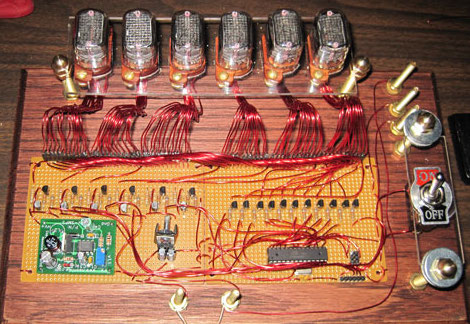
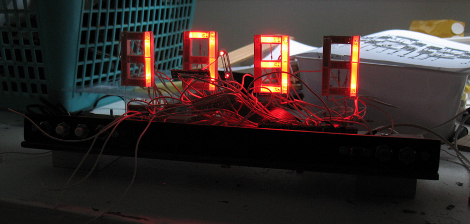
[Tim Anderson] whipped up this nixie tube display using epoxy-coated wires. He’s certainly giving the wire-wrapped LED display a run for its money. He ground the epoxy off the end of each wire using a Dremel before soldering them. We thought you could solder right through the epoxy but maybe not. Was this easier than wire wrapping would have been? We’d bet that because of the voltages wire wrapping wasn’t an option here. That board on the left is the 180V power supply for the tubes with an AVR chip running the Arduino bootloader to the right. After the break there’s a brief demo of data being pulled down over a serial connection. [Tim] also has some plans to add an atomic clock module to this setup sometime down the road.

Victorian Styled Nixie Tester

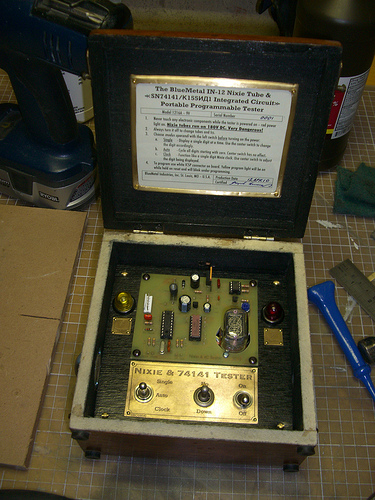
While building some nixie clocks,[Blue_Metal] ended up destroying a few tubes. He found that having a tester sitting around would have been most helpful. Taking some pride in his tools, he put some major effort into building his nixie tube tester. It is quite visually pleasing, featuring hand cut brass framing, custom etched information panels. Scroll through his flickr set to see the build process in detail.

Nixie Tachometer

[youtube=http://www.youtube.com/watch?v=nHiYCZkAq5o]

A Nixie tachometer is new to us. We’ve seen tons of various displays, but not a tachometer. After having extensive annoyances with the factory ignition timing system in his totally awesome Holden Gemini, [Brett] installed a MegaJolt electronic ignition system. To top things off and add that extra bit of flair, he built a nixie tachometer to sit on his dash. Not only does it have the numeric read out, you can see a nixie “bar graph” on top as well. Skip to about 2:30 if you want to go right to the action. You can download the Arduino code from the forum post.

Tube Clock Database

[youtube=http://www.youtube.com/watch?v=75Yl9hyPFRE]

[Brian] wrote in to show us a site he’s been working on for a while. He’s been building a tube clock database. We didn’t realize there was actually a big enough draw for such a site, but we have to admit that we spent more than a few minutes browsing through the different clocks. There isn’t a ton of data for each clock, but there are links to individual project pages wherever available. There is also a growing amount of information on the different components themselves, so submit any data you have that he’s missing to help flesh it out.

The video above wasn’t chosen for any reason other than it is quite stylish.