Mirror Mirror On The Wall…

Who wouldn’t want a mirror that compliments them first thing in the morning? [Michael]’s  Magic Mirror does this and more.  [Michael] got the idea for his mirror during an epic Macy’s shopping trip with his girlfriend. While looking for a boyfriend chair, [Michael] noticed a mirror with a lighted sign behind it. Intrigued by the effect, [Michael] realized he could build it – and build it better!

Back at home [Michael] set to work. The Magic Mirror uses a piece of one-way mirror, similar to infinity mirrors. Instead of LED’s and another mirror, [Michael] wanted to embed an entire monitor behind the glass. In order to keep the mirror thin, [Michael] needed a monitor with cables exiting toward the side or bottom rather than directly out the back. He found what he was looking for in an Iiyama monitor. Yanking the case off a brand new LCD can be a bit nerve-wracking, but [Michael] pulled it off in pursuit of a thin final product.

Magic Mirror’s frame is built with standard 2×4 lumber. [Michael] had the foresight to include some cooling holes for the heat generated by the monitor. The heavy 6.5Kg final product required a double mounting point.

With a good-looking case, it was time to get some equally good-looking data to display. [Michael] used a Raspberry Pi to drive his display. He switched the Pi’s display mode to portrait and installed Chromium  in kiosk mode. The entire mirror is essentially a web page. [Michael] used some simple HTML, CSS and Javascript to pull time and weather data down from various feeds. The page is rendered in a clean Helvetica Nueve Neue font with matching icons. A handsome build indeed!

Hackaday Links: April 27, 2014

hackaday-links-chain


The HackFFM hackerspace in Frankfurt finally got their CO2 laser up and running, and the folks there were looking for something to engrave. They realized the labels on IC packages are commonly laser engraved, so they made a DIP-sized Arduino. The pins are labelled just as they would be on an Arduino, and a few SMD components dead bugged onto the pins provide all the required circuitry. Video here.

A few years ago, we heard [David Mellis] built a DIY cell phone for an MIT Media Lab thingy. Apparently it’s making the blog rounds again thanks to the Raspi cell phone we featured yesterday. Here’s the Arduino cell phone again. Honestly we’d prefer the minimalist DIY Nokia inspired version.

The Raspberry Pi is now a form factor, with the HummingBoard, a Freescale i.MX6-powered clone, being released soon. There’s another form factor compatible platform out there, the Banana Pi, and you can actually buy it now. It’s an ARM A20 dual core running at 1GHz, Gig of RAM, and Gigabit Ethernet for about $60. That SATA port is really, really cool, too.

[Richard] has been working on a solar-powered sun jar this winter and now he’s done. The design uses two small solar panels to charge up two 500F (!) supercapacitors. There’s a very cool and very small supercap charging circuit in there, and unless this thing is placed in a very dark closet, it’ll probably keep running forever. Or until something breaks.

Here’s something awesome for the synth heads out there: it’s an analog modeling synthesizer currently on Indiegogo. Three DCOs, 18dB lowpass filter, 2 envelopes and an LFO, for all that classic Moog, Oberheim, and Roland goodness. It’s also pretty cheap at $120 USD. We really don’t get enough synth and musical builds here at Hackaday, so if you’re working on something, send it in.

A glass-based PCB? Sure. Here’s [Masataka Joei] put gold and silver on a piece of glass, masked off a few decorative shapes, and sandblasted the excess electrum away. [Masataka] is using it for jewelery, but the mind races once you realize you could solder stuff to it.

Sci-Fi Contest Roundup: Alien Autopsy And Jacking On

There’s still a few days left in our sci-fi contest, and unless you really pull out the stops today, it might be too late to get your entry in. Even though the contest is wrapping up, a lot of projects are wrapping things up and posting their finished projects. Here’s a few good ones.

These puns are awesome

chestbursterThe folks at the LVL1 hackerspace had the idea of making a life-sized game of Operation. This plan changed when someone at the hackerspace had the great idea of making it an alien autopsy. The game play remains the same, but this time the puns are awesome.

The play field is a life-sized alien, stuffed with metal-lined holes that set off a buzzer whenever the modified hemostat touches the side. Inside these holes are incredible puns that include, “Farscraped knee”, “Phantom Tentacle”, a “Tattoine removal”, “Jeffries Tuberculosis”, “HALatosis, “Babelfish in the Ear”, and “Grabthar’s Hammertoe”

The hackerspace took their alien autopsy game to the Louisville 2013 Mini Maker Faire where it was a huge hit. We’re thinking some of the puns were a little too obscure for the general population, but the attention to detail is impressive; there’s a 3D print of Pilot from Farscape. Awesome.

Jacking On

jackingon

In the Futurama universe, immoral robots get their fun by “Jacking On”, or supplanting their 6502-based CPUs with a ton of electricity. This is contraindicated by Bender’s operational manual, but a robot needs his fix, right?

[RodolpheH] and [pierrep] are building one of these jack dispensers, but instead of simply supplying a whole lot of electricity through a jack, they’re creating a Raspi-powered wireless audio streaming device. Plug some speakers into the jack, connect to the Raspi, and you’ve got a very cool audio system on your hands.

The team is going all out with the design of their jack dispenser, using random bits of plastic stuff for the enclosure and a USB-powered plasma ball for the top. It impresses random strangers, and that’s the only thing that’s important, right?

Sink Your Teeth Into PiPhone

Raspberry Pi cell phoneHave you ever dreamed of independence from smartphone bloatware? If you have a Raspberry Pi and an Adafruit TFT, you’re halfway to making your own version of [Dave]’s PiPhone.

This tasty proof-of-concept cellular sandwich is made by adding a Sim900 GSM/GPRS module, which communicates via UART, to the Pi/TFT hardware while using a piece of foam core board in the middle to prevent shorts. You won’t get free service or anything, but you can pop a pre-paid SIM card into it. He’s powering it with a LiPo battery and using a DC-to-DC converter to set up the 3.7V to 5V. You could do a lot worse than the $158 BOM, and we’re betting you have a Pi lying around already. We wish more phones had baby rocker switches.

There’s a slight problem with the PiPhone: it gets pretty warm and there isn’t a lot of room for air circulation. For best results, let it cool on a well-attended windowsill or operate it near a fan like [Dave] did. He doesn’t have the code up on GitHub as of this writing, but he will capitulate to high demand. Make the jump to see [Dave]’s tour of the PiPhone and watch him make a call with it.

Continue reading “Sink Your Teeth Into PiPhone”

A Tutorial On Using Linux For Real-Time Tasks

[Andreas] has created this tutorial on real-time (RT) tasks in Linux. At first blush that sounds like a rather dry topic, but [Andreas] makes things interesting by giving us some real-world demos using a Raspberry Pi and a stepper motor. Driving a stepper motor requires relatively accurate timing. Attempting to use a desktop operating system for a task like this is generally ill-advised. Accurate timing is best left to a separate microcontroller. This is why we often see the Raspi paired with an Arduino here on Hackaday. The rationale behind this is not often explained.

[Andreas] connects a common low-cost 28BYJ-48 geared stepper motor with a ULN2003 driver board to a Raspberry Pi’s GPIO pins. These motors originally saw use moving the louvers of air conditioners. In general, they get the job done, but aren’t exactly high quality. [Andreas] uses a simple program to pulse the pins in the correct order to spin the motor. Using an oscilloscope, a split screen display, and a camera on the stepper motor, [Andreas] walks us through several common timing hazards, and how to avoid them.

The most telling hazard is shown last. While running his stepper program, [Andreas] runs a second program which allocates lots of memory. Eventually, Linux swaps out the stepper program’s memory, causing the stepper motor to stop spinning for a couple of seconds. All is not lost though, as the swapping can be prevented with an mlockall() call.

The take away from this is that Linux is not a hard real-time operating system. With a few tricks and extensions, it can do some soft real-time tasks. The best solution is to either use an operating system designed for real-time operation, or offload real-time operations to a separate controller.

Continue reading “A Tutorial On Using Linux For Real-Time Tasks”

Black Mirror, Black Hole: Kill Your Television

don't waste your time TV screenWould you believe that some people think the internet is a time waster? Well, not at this particular address of course, but we can think of some other sites that are absolute rabbit holes without so much as a rousing game of croquet at the bottom. If you need help achieving what Tim Ferriss dubbed a Low Information Diet, there are browser extensions that will block your access to sites that keep you from getting things done. [Ivan’s girlfriend] has taken this time management tack seriously and even created a simple web page that states “Don’t Waste Your Time!” that will show if she tries to get to Facebook.

There’s one small problem with all this, and it’s been around for a long time. [Ivan’s girlfriend] still watches TV. Out of love and respect for her goals, he decided to prank her by blocking her TV viewing. In a delightful twist, the TV will display her own web page to her after 30 seconds.

They have digital and analog TVs, so he had to set up both in order to cover his bases. The digital TV is a monitor fed from a set-top box with HDMI out. As the STB can only be controlled via IR remote, [Ivan] used an HDMI switch to change from the STB input to a Raspi that will display the reprimanding web page and play Pink Floyd’s “Time“.

The analog TV took  slightly more doing. He put a Raspi on the AV input, but connected it from the inside so nothing looked suspicious. The Raspi checks the TV status every second and switches to the Pi once the TV is on. Same deal: judgmental web page, Pink Floyd. The beauty part is that both of [Ivan]’s setups also record her reaction; the digital TV uses a dash camera and the analog  uses an Android phone. Check out [Ivan]’s tour of the analog TV Pi after the break.

If you or [Ivan’s girlfriend] need even more time management help, there’s always the roll-your-own-Pomodoro timer.


Continue reading “Black Mirror, Black Hole: Kill Your Television”

HummingBoard, The Vastly More Powerful Raspi

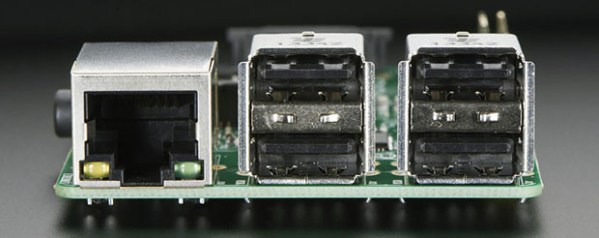
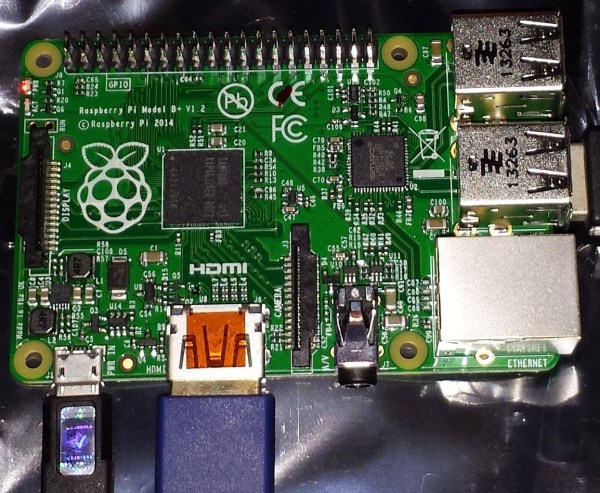
The Raspberry Pi has been around for a while now, and while many boards that hope to take the Pi’s place at the top of the single board ARM Linux food chain, not one has yet succeeded. Finally, there may be a true contender to the throne. It’s called the HummingBoard, and packs a surprising amount of power and connectivity into the same size and shape as the venerable Raspberry Pi.

The HummingBoard uses a Freescale i.MX6 quad core processor running at 1GHz with a Vivante GC2000 GPU. There’s 2GB of RAM, microSD card slot, mSATA connector, Gigabit Ethernet, a BCM4329 WiFi and Bluetooth module, a real-time clock, and IR receiver. There’s also all the usual Raspberry Pi flair, with a 26 pin GPIO connector, CSI camera connector, DSI LCD connector,  stereo out, as well as the usual HDMI and analog video.

The company behind the HummingBoard, SolidRun, hasn’t put a retail price on the board, nor have they set a launch date. You can, however, enter a contest to win a HummingBoard with the deadline this Friday. Winners will be announced in early May, so maybe the HummingBoard will be officially launched sometime around then.

It’s an amazing board with more than enough power to rival the extremely powerful BeagleBone Black, with the added bonus of being compatible with so many of those Raspberry Pi accessories we all love dearly.