Homebrew 16-Bit Computer Is A Wire-Wrapped Work Of Art

Breadboard 8-bit computer builds seem all the rage these days, and with good reason: building your own CPU from the board up using discrete logic chips is a great way to really learn how microprocessors work. Not to mention that it’s an incredible flex. But once you’ve conquered the eight-bit, what do you do? Easy: build a 16-bit computer from 74HC logic chips.

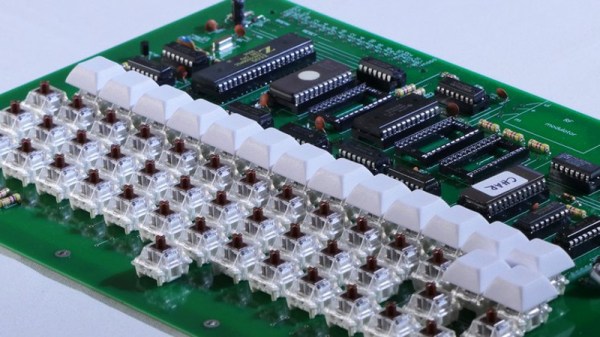
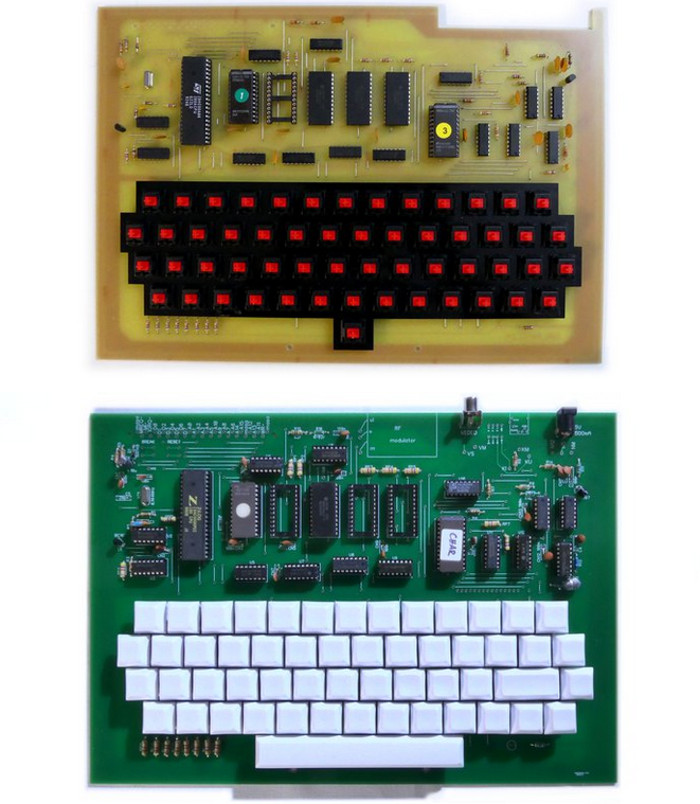
Attentive readers will likely remember this computer’s builder, [Paulo Constantino], from his previous work on 8-bit breadboard computers. As gloriously entropic as that tangled mass of wires was, it must have been a nightmare for [Paulo] to maintain. And so when the time came to upgrade, he wisely chose a more integrated construction method. The construction method is wire-wrapping, with multiple cards plugged into backplane and connected by ribbon cables. The whole card cage is far neater than the previous build, and seems to lend itself to rapid modifications. The top card in the cage acts as a control panel for now; eventually, [Paulo] planes to put a real front panel on the cage to support all the switches and blinkenlights such builds demand. Stretch goals include supporting audio and video and getting the machine online so anyone can log in.

The video below is an overview of the current state of the machine; earlier videos in the playlist cover the design and build in more detail. We hope to see schematics soon, and we’d love to know where to get some of those wire-wrap PCBs for projects of our own.

Continue reading “Homebrew 16-Bit Computer Is A Wire-Wrapped Work Of Art”

A Z80 Board With Very Few Parts

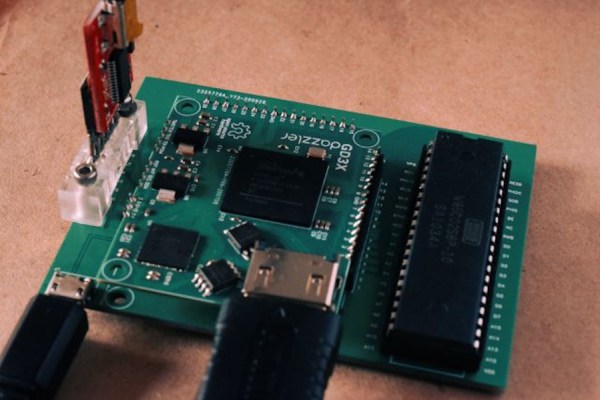
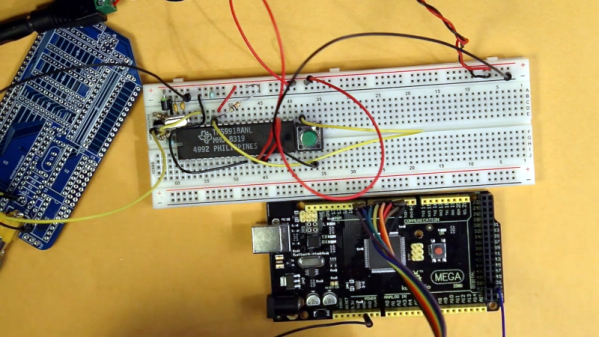
The Z80 is one of those old CPUs that is both obtainable and easy to work with — at least in some versions. [Doctor Volt] put together what may be the simplest possible setups to get a working Z80 system. He has the processor, of course. But everything else — clock, memory, and power — are from an Arduino Mega 2560. You could argue that’s two chips, but the board actually has several chips on it. On the other hand, you could probably pull off the same stunt with a bare ATMega 2560.

We’ve seen this done before, but usually with a few more support chips. If you are a purist, [Doctor Volt] also has some Z80 and CP/M experiments where the Arduino only acts as a disk drive for the computer and there are only two support chips. There are three videos for both projects that you can see below.

Continue reading “A Z80 Board With Very Few Parts”

Hackaday Links Column Banner

Hackaday Links: May 31, 2020

We begin with sad news indeed as we mark the passing of Marcel van Kervinck on Monday. The name might not ring a bell, but his project, the Gigatron TTL computer, certainly will. We did a deep dive on the microprocessor-less computer a while back, and Marcel was a regular at conferences and on the Gigatron forums, supporting users and extending what the computer can do. He was pretty candid about his health issues, and I’ll add that when I approached him a few weeks ago out of the blue about perhaps doing a Hack Chat about Gigatron, he was brutally honest about how little time he had left and that he wouldn’t make it that long. I was blown away by the grace and courage he displayed. His co-conspirator Walter Belger will carry on the Gigatron mission, including joining us for a Hack Chat on June 24. In the meantime, this might be a great time to pick up a Gigatron kit before they’re all sold out and get busy soldering all those delicious through-hole TTL chips.

May of 2020 is the month that never seems to end, and as the world’s focus seems to shift away from the immediate public health aspects of the ongoing COVID-19 pandemic to the long-term economic impact of the response to it, we happened across a very interesting article on just that topic. Mike Robbins from the Circuit Lab has modeled the economic impact of the pandemic using analog circuit simulations. He models people as charges and the flow of people between diseases states as currents; the model has capacitors to store the charge and allow him to measure voltages and filters that model the time delays needed for public policy changes to be adopted. It’s a fascinating mashup of engineering and policy. You can play with the model online, tweak parameters, and see what you come up with.

One of the things that the above model makes clear is that waiting to fully reopen the economy until a vaccine is ready is a long and dangerous game. But there has at least been some progress on that front, as Massachusetts biotech firm Moderna announced success in Phase 1 clinical trials of its novel mRNA vaccine against SARS-CoV-2. It’s important to temper expectations here; Phase 1 trials are only the beginning of human testing, aimed at determining the highest treatment dose that won’t cause serious side effects. Phase 2 and Phase 3 trials are much more involved, so there’s a long way to go before the vaccine, mRNA-1273, is ready for use. If you need to brush up on how these new vaccines work, check out our handy guide to mRNA vaccines.

In happier news, the “moar memory” version of the Raspberry Pi 4 is now on sale. Eben Upton announced that the 8GB version of the Pi 4 is now available for $75. The upgrade was apparently delayed by the lack of an 8GB LPDDR SDRAM chip in a package that would work in the Pi manufacturing process. They’ve also released a beta of a 64-bit version of the Raspberry Pi OS, if you’re interested in a bleeding-edge flex.

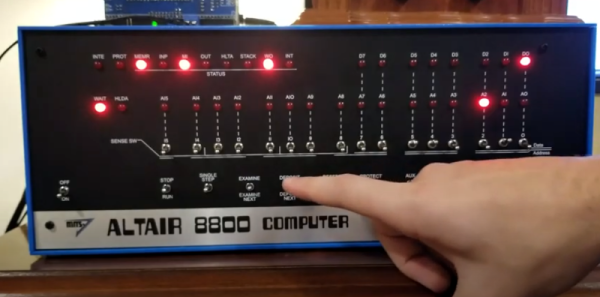
And finally, for those who missed the first wave of the computer revolution and never had a blinkenlight machine, you can at least partially scratch that itch with this Internet-connected Altair 8800. Jesse Downing has written a queueing system that allows users to connect to the machine via ssh and use Microsoft BASIC 5.0 on CP/M. Need to see those glorious front panels lights do their thing? Jesse has kindly set up a live stream for that, with an overlay of the current console output. It’s a great way to relive your misspent youth, or to get a taste of what computing was like when soldering skills were a barrier to entry.

60’s Natural Gas Pipeline Computer Retires To Play Games

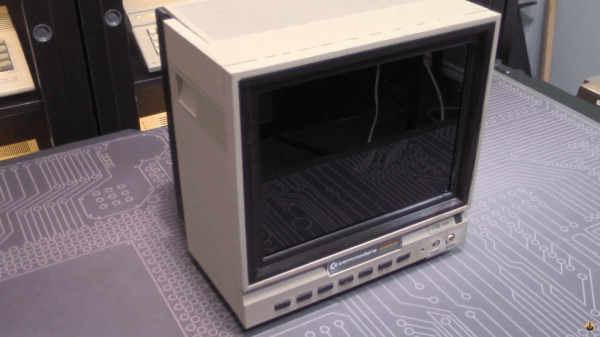
Computer gaming has come a very long way since the 1960s. While computers of that era may not run Doom or anything even close to it, many of us had our first exposure to computers playing Hunt the Wumpus, Adventure, or Star Trek over a clackety old TeleType machine. If you missed those days, or if you simply miss them, you might enjoy the video from [somecomputerguy] who fires up an old retired gas pipeline computer and loads enough paper tape into it to play Lunar Lander. (Video embedded below.)

We don’t miss the days of toggling in a bootloader so you could load the paper tape for a second bootloader before you could enter the actual program you wanted to run.

Continue reading “60’s Natural Gas Pipeline Computer Retires To Play Games”

ReactOS: Dipping A Toe In A Millennium-era Open Source Dream

Do you remember when trying a new OS meant burning a CD? Not merely downloading an ISO and mounting it on a USB drive, but taking a circle of polycarbonate and hoping you didn’t get a buffer underrun as the file you’d spent an entire day downloading was burned onto it. A couple of decades ago that was how we’d take a look at a new Linux distro, and at the time we considered it to be nothing short of incredible that such a thing was possible. One of the ISOs I remember downloading back then was an early version of ReactOS, a project with the lofty aim of creating an open-source equivalent of Windows NT. You might think that in the nearly two decades since then it would have become an irrelevance and its contributors moved on to other work, but no. ReactOS is very much still with us, and indeed has just seen a new release. Version 0.4.13 is the latest in a long line of incremental updates, and remembering those early ReactOS ISOs when I saw their announcement, I thought I’d give it a spin. The result was both a peek at the current state of the project, and a chance to think about the place of a Windows clone in 2020. Continue reading “ReactOS: Dipping A Toe In A Millennium-era Open Source Dream”

Hacking Apollo Hack Chat

Join us on Wednesday, April 22 at noon Pacific for the Hacking Apollo Hack Chat with “CuriousMarc” VerdiellKen ShirriffMike Stewart, and Carl Claunch!

When President Kennedy laid down the gauntlet to a generation of scientists and engineers to land a man on the Moon before the close of the 1960s, he likely had little idea what he was putting in motion. The mission was dauntingly complex, the science was untested, and the engineering was largely untried. Almost everything had to be built from scratch, and entire industries were born just from the technologies that had to be invented to make the dream come true.

Chief among these new fields was computer science, which was barely in its infancy when the 1960s started. By the end of the decade and the close of the Space Race, computers had gone from room-filling, power-guzzling machines to something compact and capable enough to fly men to the Moon and back. The computers that followed all built on the innovations that came about as a result of Apollo, and investigating the computers of the era and finding out what made them tick is an important part of our technological culture.

That’s where this retrocomputing dream team came into play. Together, they’ve poked and prodded at every bit of hardware from the Space Race era they could find, including a genuine Apollo Guidance Computer (AGC) that was rescued from the trash. What’s more, they actually managed to restore it to working condition with a series of epic hacks and sheer force of will.

Marc, Ken, Mike, and Carl will stop by the Hack Chat to talk about everything that went into getting the AGC working again, along with anything else that pops up. Come ready to have your Apollo-era hardware itches scratched by the people who’ve been inside a lot of it, and who have seen first-hand what it took to make it to the Moon and back.

join-hack-chatOur Hack Chats are live community events in the Hackaday.io Hack Chat group messaging. This week we’ll be sitting down on Wednesday, April 22 at 12:00 PM Pacific time. If time zones have got you down, we have a handy time zone converter.

Click that speech bubble to the right, and you’ll be taken directly to the Hack Chat group on Hackaday.io. You don’t have to wait until Wednesday; join whenever you want and you can see what the community is talking about.

Continue reading “Hacking Apollo Hack Chat”

A NES Motherboard For The Open Source Generation

As the original hardware from the golden era of 8-bit computer gaming becomes a bit long in the tooth, keeping it alive has become something of a concern for enthusiasts. There have been a succession of remanufactured parts for many of the major platforms of the day, and now thanks to [Redherring32] it’s the turn of the NES console.

The OpenTendo is a completely open-source replacement for an original front-loading Nintendo Entertainment System motherboard, using both original or after-market Nintendo CPU and PPU chips, and other still readily available components. It doesn’t incorporate Nintendo’s CIC lockout chip — Drew Littrell wrote a great article on how that security feature worked — but if you really need the authenticity there is also the NullCIC project that can simulate that component.

It’s an interesting exercise in reverse engineering as well as a chance to look at the NES at the chip level. Also for Nintendo-heads, it provides all the component footprints and schematic items in KiCAD format. Will many be built? Given that the NES was the best-selling console of its time there should be no shortage of originals to be found, but that in no way invalidates the effort put into this project. There will be NES consoles somewhere running for decades to come because of work such as this, simply remember that you don’t need to blow in the slot to make it work!