Bringing a product to market is not easy, if it were everyone would be doing it, and succeeding. The team at Pycno is in the process of launching their second product, a modular solar powered IoT unit called Pulse. It’s always interesting to get an inside look when a company is so open during the development process, and see how they deal with challenges.
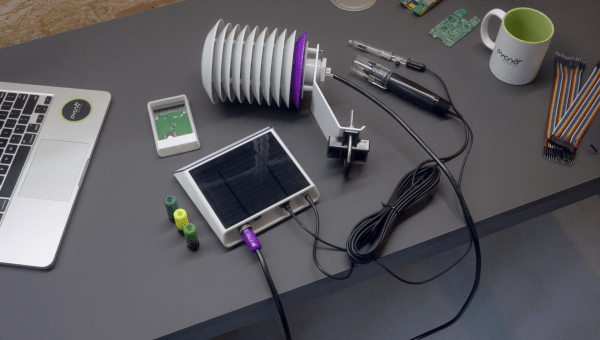
Pycno’s first product was a solar powered sensor suite for crops. This time round they are keeping the solar part, but creating a modular system that can accept wired or wireless connections (2G/3G/4G, WiFi, LoRa, GPS and Bluetooth 5) or modules that slide into the bottom of the unit. They plan to open source the module design to allow other to design custom modules, which is a smart move since interoperability can be a big driving factor behind adoption. The ease of plugging in sensors is a very handy feature, since most non-Hackaday users would probably prefer to not open up expensive units to swap out sensors. The custom solar panel itself is pretty interesting, since it features an integrated OLED display. It consists of a PCB with the cutout for the display, with solar cells soldered on before the whole is laminated to protect the cells.
Making a product so completely modular also has some pitfalls, since it can be really tricky to market something able to do anything for anybody. However, we wish them the best of luck with their Kickstarter (video after the break) and look forward to seeing how the ecosystem develops.
When a large community develops around a modular ecosystem, it can truly grow beyond the originator’s wildest dreams. Just look at Arduino and Raspberry Pi. We’re also currently running a contest involving boards for the Feather form factor if you want to get in on the act. Continue reading “Modular Solar-Powered IoT Sensors”