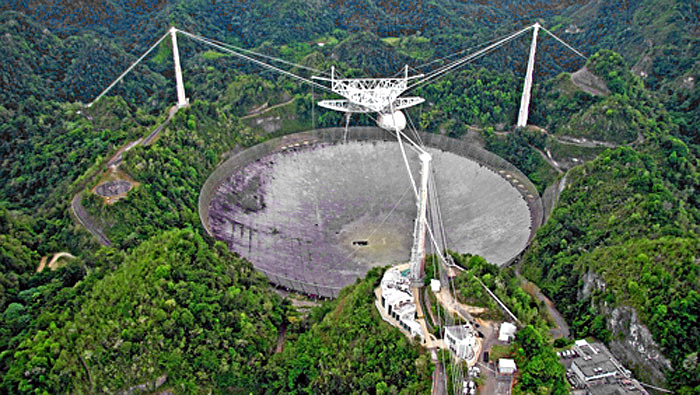
In the early morning hours of August 10th, a support cable at the Arecibo Observatory pulled lose from its mount and crashed through the face of the primary reflector below. Images taken from below the iconic 305 meter dish, made famous by films such as Contact and GoldenEye, show an incredible amount of damage. The section of thick cable, estimated to weigh in at around 6,000 kilograms (13,000 pounds), had little difficulty tearing through the reflector’s thin mesh construction.
Worse still, the cable also struck the so-called “Gregorian dome”, the structure suspended over the dish where the sensitive instruments are mounted. At the time of this writing it’s still unclear as to whether or not any of that instrumentation has been damaged, though NASA at least has said that the equipment they operate inside the dome appears to have survived unscathed. At the very least, the damage to the dome structure itself will need to be addressed before the Observatory can resume normal operations.
The Arecibo Observatory by JidoBG [CC-BY-SA 4.0]But how long will the repairs take, and who’s going to pay for them? It’s no secret that funding for the 60 year old telescope has been difficult to come by since at least the early 2000s. The cost of repairing the relatively minor damage to the telescope sustained during Hurricane Maria in 2017 may have been enough to shutter the installation permanently if it hadn’t been for a consortium led by the University of Central Florida. They agreed to share the burden of operating the Observatory with the National Science Foundation and put up several million dollars of additional funding.
It’s far too early to know how much time and money it will take to get Arecibo Observatory back up to operational status, but with the current world situation, it seems likely the telescope will be out of commission for at least the rest of the year. Given the fact that repairs from the 2017 damage still haven’t been completed, perhaps even longer than that. In the meantime, astronomers around the globe are left without this wholly unique resource.
In space, so the Alien tagline goes, nobody can hear you scream. One of the most memorable pieces of movie promotion ever, it refers to the effect of the vacuum of space on the things human senses require an atmosphere to experience. It’s a lesson that Joss Whedon used to great effect with the Serenity‘s silent engine light-ups in Firefly, while Star Wars ignored it completely to give us improbable weapon noises in space battles.
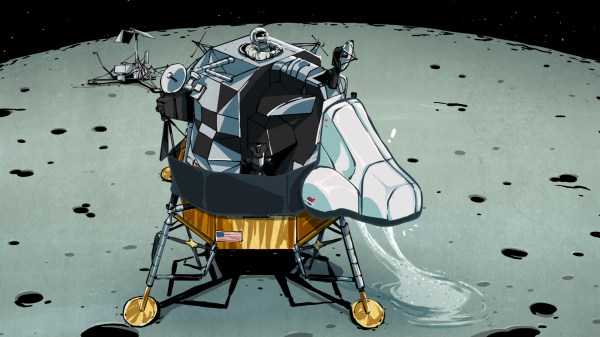
Sound may not pass through the vacuum of space, but that’s not to say there are not things other than light for the senses. The Apollo astronauts reported that moon dust released a smell they described as akin to burnt gunpowder once it was exposed to the atmosphere inside their lander, and by now you may have heard that there is a Kickstarter that aims to recreate the smell as a fragrance. Will it replace the cloying wall of Axe or Lynx Africa body spray that pervades high-school boys’ changing rooms, or is it a mere novelty?
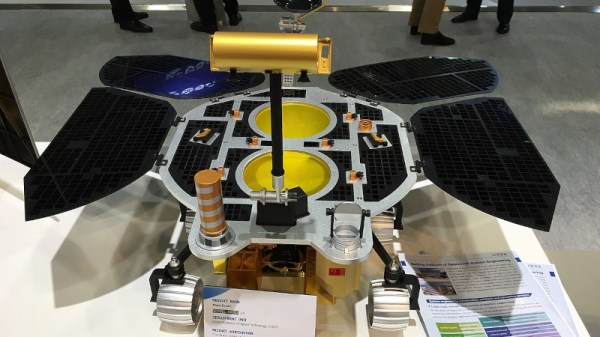
A few days ago, the Chinese National Space Administration launched their Tianwen-1 mission to Mars from their launch site in the province of Hainan. It should arrive at the Red Planet in April 2021, when it will face the daunting task of launching a surface probe from its orbiting component, which will release a rover once it has reached the surface. Like all such missions it’s in constant contact with its controllers on the ground, and as with any radio transmissions floating through the aether its telemetry has been received by the radio hacker community and analaysed by [r00t].
Straight away there’s something interesting in the modulation scheme, instead of a carrier with modulation applied to it there is a main unmodulated centre carrier, and the data appears instead on a series of subcarriers. Is this a feature of its being a space probe, the unmodulated carrier making it easier to find and track in deep space?
They quickly find the telemetry carrier, and decode its frames. It carries a series of data sets, including positional and instrumentation data. From the positional data they can tell when the craft has made any course changes, and from the sensor data such as the solar sensor its movement can be deduced and graphed. It makes for a fascinating insight into the mission, and we’re grateful for the analysis.
Mars is a notoriously difficult target for space probes, somewhere that multiple missions have for various reasons failed to reach. We hope the Tianwen-1 mission is ultimately successful and that in time the Chinese space people will in due course be showing us some of the fruits of their labours. They’re not alone in launching this month, so we’ve got a plethora of Mars-related stories to look forward to next year.
Header image: Tianwen-1 rover mockup. Pablo de León / CC BY-SA 3.0
Another couple of weeks, and a fresh crop of space news to run through as a quick briefing of the latest in the skies above us.
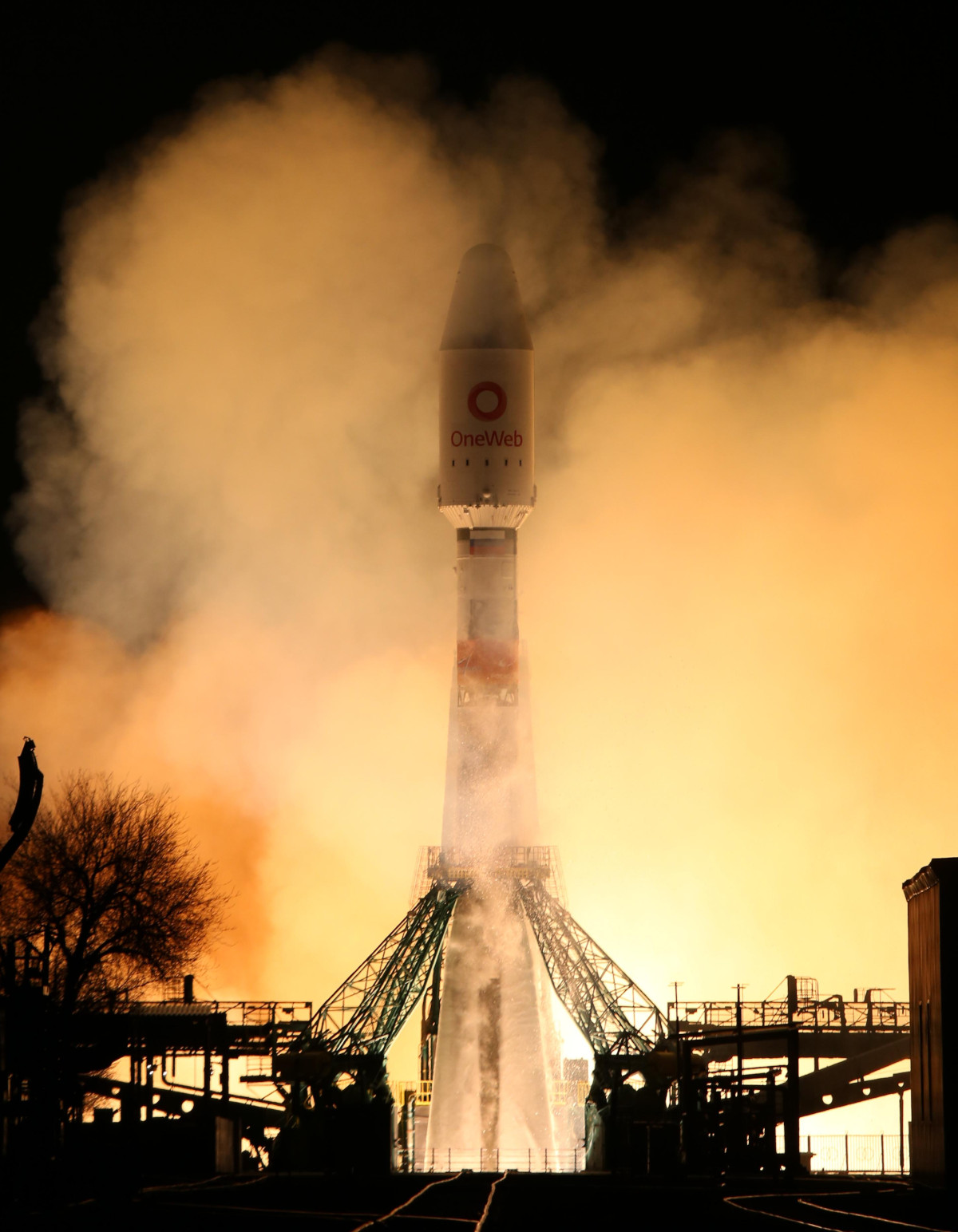
OneWeb’s most recent launch, from Baikonur on the 21st of March 2020. (OneWeb)
The global positioning orbits are getting pretty crowded, with GPS, Russia’s GLONASS, the EU’s Galileo, Japan’s QZSS, and now with the launch of the final satellite in their constellation, China’s BeiDou. As if five were not enough the chance that they might be joined by a sixth constellation from the United Kingdom resurfaced this week, as the UK government is expressing interest in supporting a rescue package for the troubled satellite broadband provider OneWeb. The idea of an independent GPS competitor from a post-Brexit UK has been bouncing around for a couple of years now, and on the face of it until this opportune chance to purchase an “oven ready” satellite constellation might deliver a route to incorporating a positioning payload into their design. The Guardian has its doubts, lining up a bevvy of scientists to point out the rather obvious fact that a low-earth-orbit satellite broadband platform is a very different prospect to a much-higher-orbiting global positioning platform. Despite the country possessing the expertise through its work on Galileo then it remains to be seen whether a OneWeb purchase would be a stroke of genius or a white elephant. Readers with long memories will know that British government investment in space has had its upsets before.
Happily for Brits, not all space endeavours from their islands end in ignominious retreat. Skyrora have scored another milestone, launching the first ever rocket skywards from the Shetland Islands. The Skylark Nano is a relatively tiny craft at only 2m high, and gathered research data during its flight to an altitude of 6km. We’ve followed their work before, including their testing in May of a Skylark L rocket on the Scottish mainland with a view to achieving launch capability in 2023.
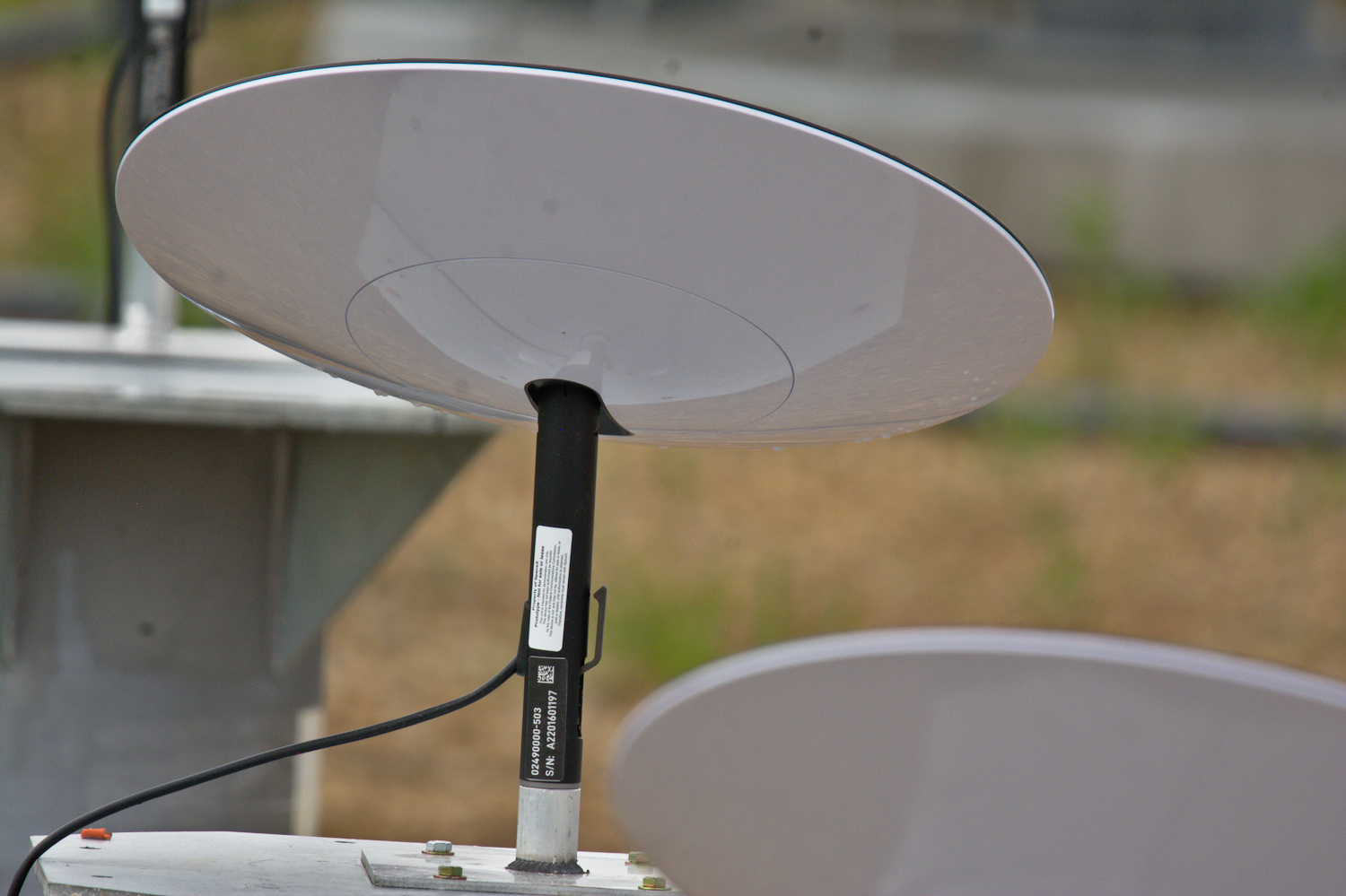
A Starlink phased array end user antenna, spotted in Winsconsin. (darkpenguin22)
SpaceX’s Starlink is never far away from the news, with a fresh set of launches delayed for extra pre-launch tests, and the prospect of signing up to be considered for the space broadband firm’s beta test. Of more interest for Hackaday readers though are a few shots of prototype Starlink ground stations and user terminals that have made it online, on the roof of a Tesla Gigafactory and at a SpaceX facility in Wisconsin. What can be seen are roughly 1.5m radomes for the ground stations and much smaller dinner-plate-sized enclosed arrays for the user terminals. The latter are particularly fascinating as they conceal computer-controlled phased arrays for tracking the constellation as it passes overhead. This is a technology more at home in billion-dollar military radars than consumer devices, so getting it to work on a budget that can put it on a roof anywhere in the world must be a challenge for the Starlink engineers. We can’t wait to see the inevitable eventual teardown when it comes.
Elsewhere, the Virgin Galactic SpaceShip Two completed its second glide test over its Mojave Spaceport home since being grounded in 2019 for extensive refitting, and is now said to be ready for powered tests leading to eventual commercial service giving the extremely well-heeled the chance to float in the zero gravity of suborbital spaceflight. And finally, comes the news that NASA are naming their Washington DC headquarters building for Mary W. Jackson, their first African American female engineer, whose story some of you may be familiar with from the book and film Hidden Figures. The previously unnamed building sits on a section of street named Hidden Figures Way.
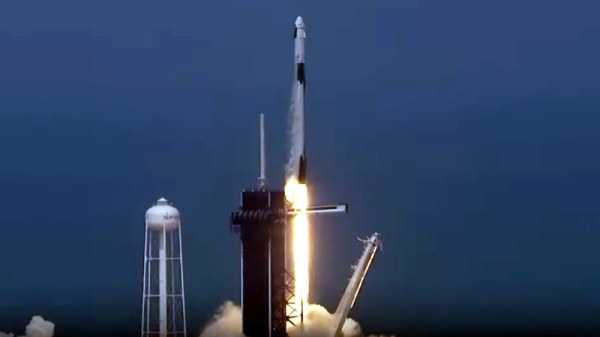
So after a false start due to bad weather, the first crewed launch of a SpaceX Crew Dragon capsule with two astronauts on board has gone ahead. After playing catch-up with the ISS for around 27 hours they’re now safely aboard. At times it seems that space launches have become everyday occurrences, but they are still heroes who have risked their lives in the furtherment of mankind’s exploration of space. Their achievement, and that of all the scientists, engineers, and other staff who stand behind them, is immense.
I watched the drama unfold via the live video feed. Having heaved a huge sigh of relief once they were safely in orbit, the feed cut to the studio, and then moved on to interview the NASA administrator Jim Bridenstine. He was naturally elated at a successful launch, and enthused about the agency’s achievement. You can watch the full interview embedded below, but what caught my attention was his parting sentence:
And if this can inspire a young child to become the next Elon Musk, or the next Jeff Bezos, or the next Sir Richard Branson, then that’s what this is all about
I was slightly shocked and saddened to hear this from the NASA administrator, because to my mind the careers of Musk, Bezos, or Branson should not be the ones first brought to mind by a space launch. This isn’t a comment on those three in themselves; although they have many critics it is undeniable that they have each through their respective space companies brought much to the world of space flight. Instead it’s a comment on what a NASA administrator should be trying to inspire in kids.
Ask yourself how many billionaire masters-of-the-universe it takes for a successful space race compared to the number of scientists, engineers, mathematicians, technicians, physicists, et al. From the anecdote of the NASA administrator it takes about three, but if he is to make good on his goal of returning to the Moon in 2024 and then eventually taking humanity to Mars it will take a generation packed full of those other roles. To understand that we’ll have to take a trip back to the Apollo era, and how that generation of kids were inspired by the spacecraft on their screens.
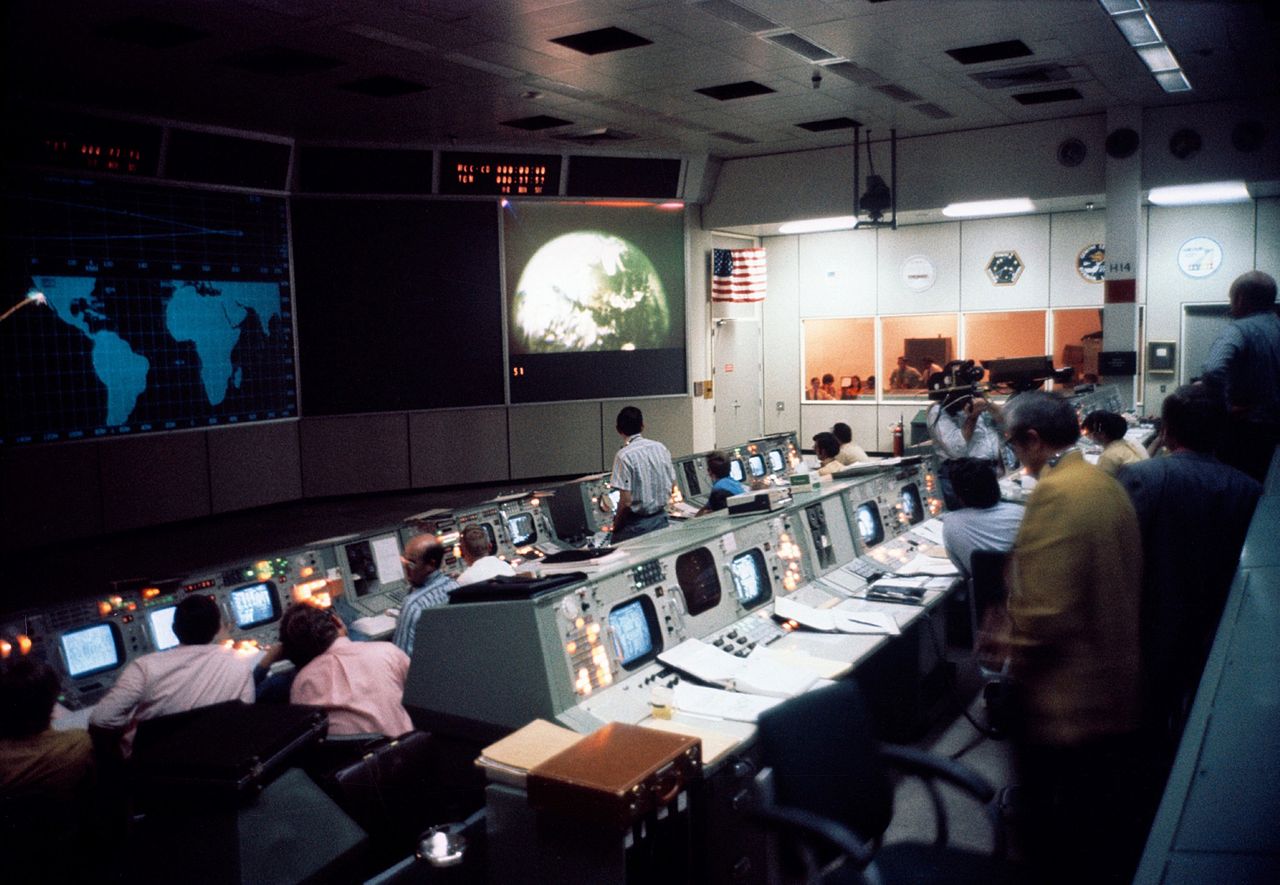
Inspiration from probably the coolest room in the world at the time, the Apollo mission control in Houston. NASA on The Commons / No restrictions
Fifty years ago, we were very much on the brink of becoming a spacefaring planet. American astronauts were taking their first steps on the Moon, and Soviet cosmonauts were occupying real space stations that would soon be capable of housing them for months at a time. Planetary probes were returning colour TV pictures from other worlds, and it was certain that in the immediate aftermath of the Apollo programme we’d be sending astronauts and probably cosmonauts too further afield. A Mars base in the 1980s perhaps, and following our fictional Star Trek heroes further afield thereafter.
We now know it didn’t quite work out that way, but a whole generation of tech-inclined kids grew up wanting nothing more than to be involved in space flight. The vast majority of us never made it, but with that inspiration we took our soldering irons and 8-bit home computers and ran with them. Those NASA folks were the coolest of role-models, and no doubt their Soviet equivalents were too for kids on the other side of the Iron Curtain.
With the best will in the world, the chances of any kid becoming the next Jeff Bezos is about as high as that of their becoming the next Neil Armstrong. Compared to the number of kids in the world, the number of billionaires and the number of astronauts both pale into statistical insignificance. But the chances of a kid becoming an engineer or a scientist is much higher, and in those careers their chances of having some of their work be involved with the space effort becomes not entirely unlikely.
I understand what the NASA administrator was trying to say, but can’t shake the feeling that if those are the people he rolls out to inspire kids watching a space launch, he’s missed an opportunity. Those are the names we all recognize, but shouldn’t we also elevate the people making the scientific breakthroughs so their names are equally recognized? Like Margaret Hamilton, Gene Kranz, and Sergei Korolev and many others before them, we should be making names like Tom Mueller and Margarita Marinova prominent examples of where a career in the sciences can take you. But to be honest, the real problem is we just don’t hear much about all the people doing this fascinating engineering and that’s a sad state of affairs.
Looks like it’s time for Hackaday to pursue a biography series based on the many great minds who are the ones delivering on the promise and vision of today’s (and tomorrow’s) space race. Get us started by talking about your favorite behind the scenes science folks in the comments below.
We keep finding more great space stories than we can cover, so here’s a speed-run through the broader picture of the moment as it applies to space flight.
The big news this week was the first launch of a manned SpaceX Crew Dragon capsule to the ISS. I was excited because the pass en route to the space station was scheduled to be visible from the UK at dusk, and on Wednesday evening I perched atop a nearby hill staring intently at the horizon. Except it had been cancelled due to bad weather. The next launch window is planned for today and you can watch it live.
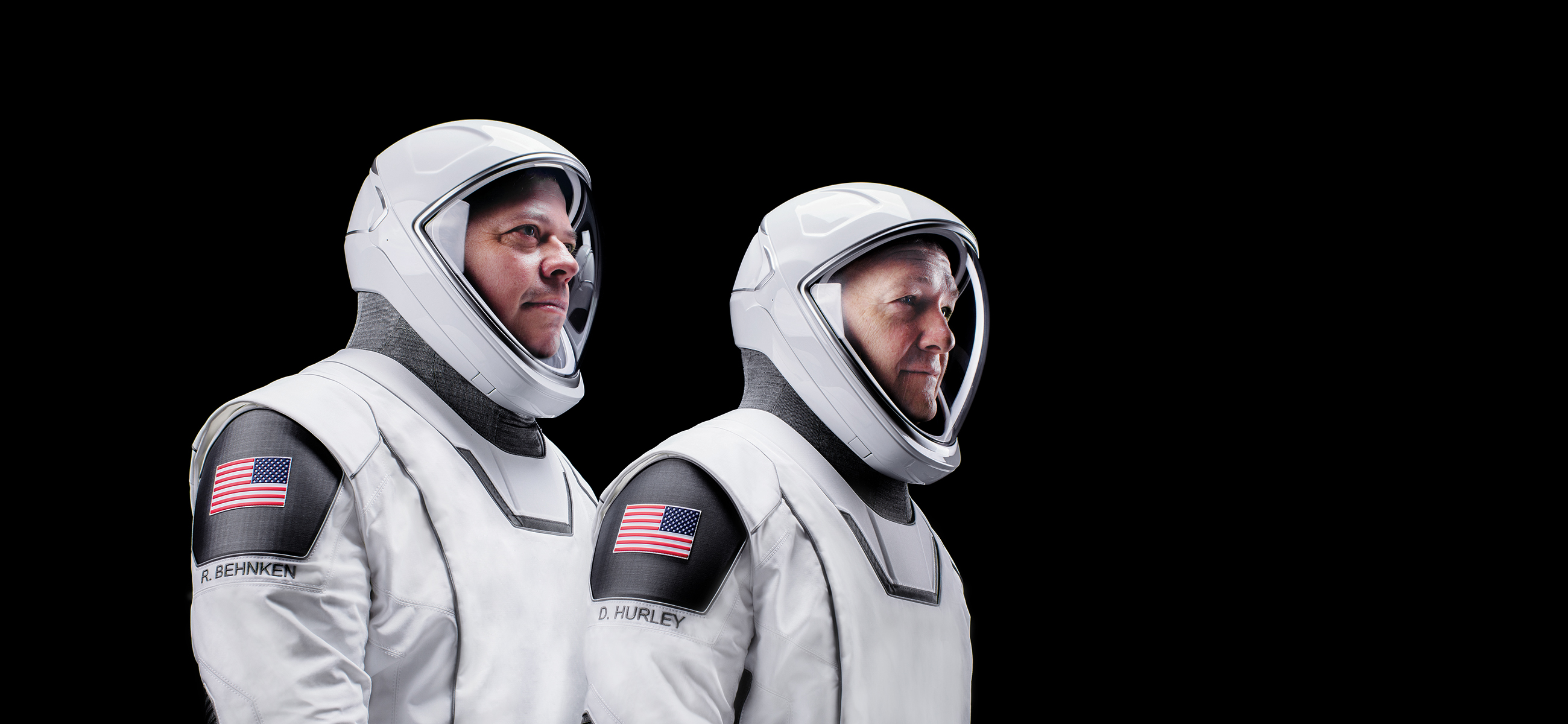
Meanwhile, fashion is the other piece of this manned-launch’s appeal. Their sharply-designed spacesuits have attracted a lot of attention, moving on from the bulky functional Michelin Man aesthetic of previous NASA and Roscosmos garments for a positively futuristic look that wouldn’t be out of place in Star Trek. Never mind that the two astronauts are more seasoned space dog than catwalk model, they still look pretty cool to us. Against the backdrop of a political upheaval at the top of NASA, this first crewed orbital mission from American soil since the retirement of the Shuttle has assumed an importance much greater than might be expected from a run-of-the-mill spaceflight.
While we’re on the subject of the ISS, it’s worth noting that we’re approaching twenty years since the first crew took up residence there, and it has been continuously crewed ever since as an off-planet outpost. This is an astounding achievement for all the engineers, scientists, and crews involved, and though space launches perhaps don’t have the magic they had five decades ago it’s still an awe-inspiring sight to see a man-made object big enough to discern its shape pass over in the night sky. We understand that current plans are to retain the station until at least 2030, so it’s a sight that should remain with us for a while longer.
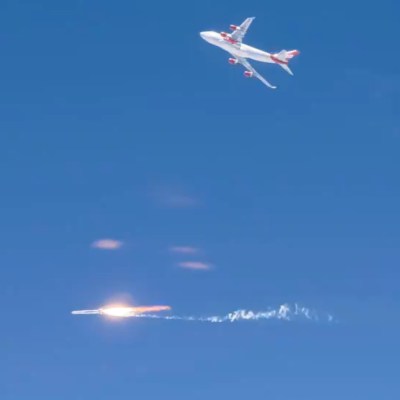
Closer to Earth are a couple of tests for relative newcomers to the skies. When Richard Branson’s Virgin group isn’t trying to boot millionaires off the planet through its Virgin Galactic operation, it’s aiming to cheaply fling small satellites into orbit from a rocket-toting airborne Boeing 747 with its Virgin Orbit subsidiary. Their first test launch sadly didn’t make it to space, once the rocket had flawlessly launched from the airliner it suffered a fault and the mission had to be aborted. Getting into space is hard.
The second test was never intended to make it into space, but is no less noteworthy. The British company Skyrora have performed a successful ground test of their Skylark L rocket, aiming for a first launch next year and for offering low-earth orbit services by 2023. This is significant because it will be the first British launch since the ill-fated Black Arrow launch in 1971, and with their Scottish launch site the first ever from British soil. If you’ve seen Skyrora mentioned here before, it is because they were behind the retrieval of the Black Arrow wreckage from the Aussie outback that we mentioned when we wrote about that programme.
Looking forward to the coming week, especially today’s rescheduled SpaceX launch. This time however, I’ll check the weather conditions before climbing any hills.
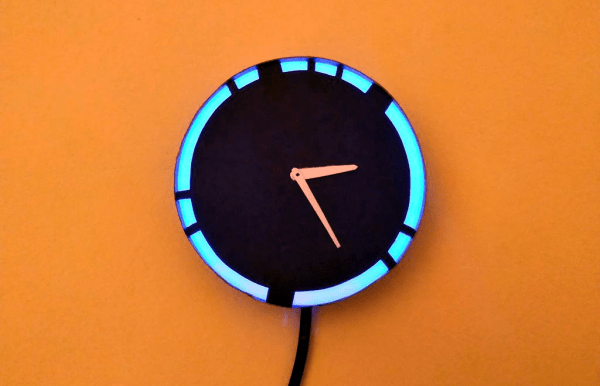
As awesome as space is, we’re inspired by the amount of Earth-saving reuse going on in this project. The actual time-telling is coming from a recycled wristwatch movement. [Artistikk] cut a bigger set of hands for it out of a plastic container, and used the lid from another container for the clock’s body.
The launch inquiries are handled by an ESP8266, which uses a Blynk app and some IFTTT magic to get notified whenever NASA yeets an astronaut into space. Then the ESP generates random RGB values and sends them to a single RGB LED. The clock body is small enough that a single LED is bright enough to light up all the parts that aren’t blacked out with thick paper. In case you’re wondering, the pattern around the edge isn’t random, it’s Morse code for ‘sky’, but you probably already knew that, right? Make a dash past the break to take the tour.