Lessons Learned From A CubeSat Postmortem

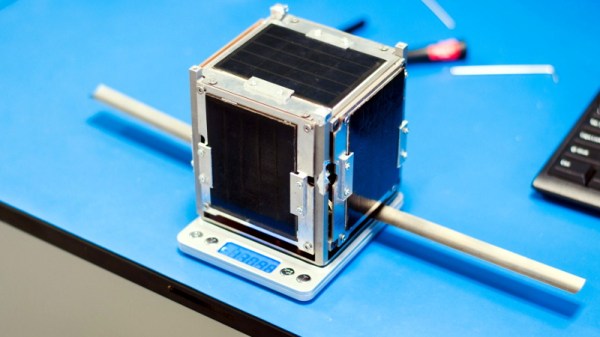
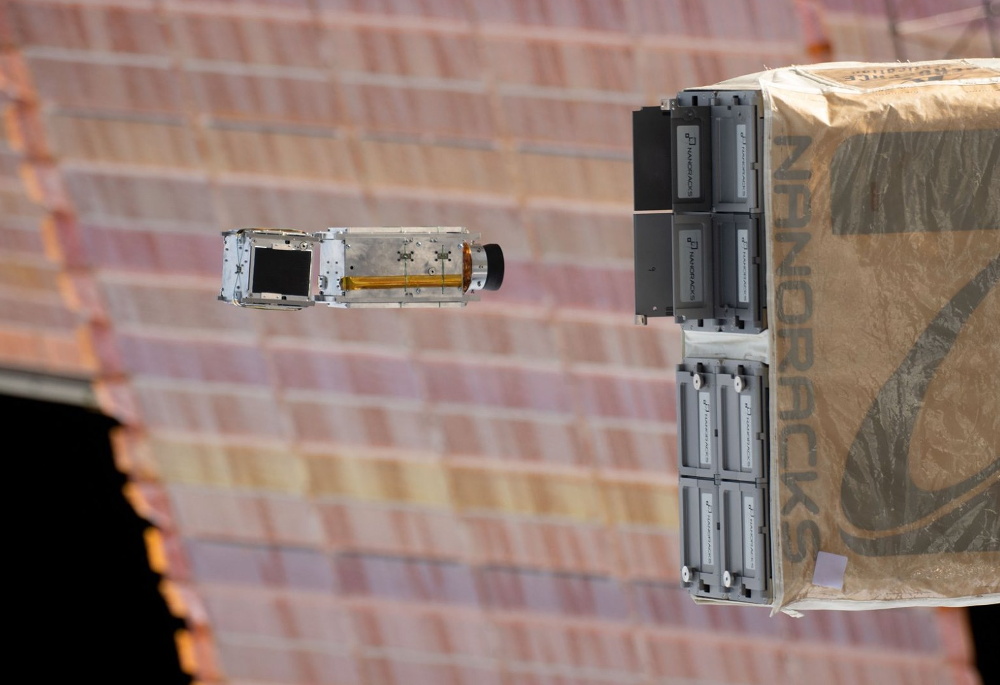
On the 3rd of June 2019, a 1U CubeSat developed by students of the AGH University of Science and Technology in Kraków was released from the International Space Station. Within a few hours it was clear something was wrong, and by July 30th, the satellite was barely functional. A number of problems contributed to the gradual degradation of the KRAKsat spacecraft, which the team has thoroughly documented in a recently released paper.

We all know, at least in a general sense, that building and operating a spacecraft is an exceptionally difficult task on a technical level. But reading through the 20-pages of “KRAKsat Lessons Learned” gives you practical examples of just how many things can go wrong.

KRAKsat being released from the ISS

It all started with a steadily decreasing battery voltage. The voltage was dropping slowly enough that the team knew the solar panels were doing something, but unfortunately the KRAKsat didn’t have a way of reporting their output. This made it difficult to diagnose the energy deficit, but the team believes the issue may have been that the tumbling of the spacecraft meant the panels weren’t exposed to the amount of direct sunlight they had anticipated.

This slow energy drain continued until the voltage dropped to the point that the power supply shut down, and that’s were things really started going south. Once the satellite shut down the batteries were able to start charging back up, which normally would have been a good thing. But unfortunately the KRAKsat had no mechanism to remain powered down once the voltage climbed back above the shutoff threshold. This caused the satellite to enter into and loop where it would reboot itself as many as 150 times per orbit (approximately 90 minutes).

The paper then goes into a laundry list of other problems that contributed to KRAKsat’s failure. For example, the satellite had redundant radios onboard, but the software on them wasn’t identical. When they needed to switch over to the secondary radio, they found that a glitch in its software meant it was unable to access some portions of the onboard flash storage. The team also identified the lack of a filesystem on the flash storage as another stumbling block; having to pull things out using a pointer and the specific memory address was a cumbersome and time consuming task made all the more difficult by the spacecraft’s deteriorating condition.

Of course, building a satellite that was able to operate for a couple weeks is still an impressive achievement for a student team. As we’ve seen recently, even the pros can run into some serious technical issues once the spacecraft leaves the lab and is operating on its own.

[Thanks to ppkt for the tip.]

A New High-Performance Camera That Detects Single Photons

There may soon be breakthroughs in the search for dark matter. A new publication in Optics Express reveals a camera consisting of superconducting nanowires capable of detecting single photons, a useful feature for detecting light at the furthest ends of the infrared band. The high-performance camera, developed by the National Institute of Standards and Technology (NIST), boasts some of the best performing photon counters in the world in terms of speed, efficiency, and color detection. The detectors also have some of the lowest dark count rates of any photon sensor, resisting false signals from noise.

The size of the detectors comes out to 1.6mm on each side, packed with 1024 sensors for high resolution imagery and fabricated from silicon wafers cut into chips. The nanowires are made from tungsten and silicon alloy with leads made from superconducting niobium.

In order to prevent the sensors from overheating, a readout architecture was used based on a previous demonstration on a smaller camera with 64 sensors adding data from rows and columns. The research has been in collaboration with the National Aeronautics and Space Administration (NASA), which seeks to include the camera in the Origins Space Telescope project.

The eventual goal is to use the arrays to analyze chemical compositions of planets outside of our solar system. By observing the absorption spectra of light passing through an exoplanet’s atmosphere, information can be gathered on the elements in the atmosphere. Currently, large-area single-photon counting detector arrays don’t exist for measuring the mid- to far-infrared signatures, the spectrum range for elements that may indicate signs of life. While fabrication success is high, the efficiency of the detectors remains quite low, although there are plans to extend the current project into an even bigger camera with millions of sensors.

In addition to searching for chemical life on other planets, future  applications may include recording measurements to confirm the existence of dark matter.

[Thanks Qes for the tip!]

See You On The Dark Side Of The Moon: China’s Lunar Radio Observatory

For nearly as long as there has been radio, there have been antennas trained on the sky, looking at the universe in a different light than traditional astronomy. Radio astronomers have used their sensitive equipment to study the Sun, the planets, distant galaxies, and strange objects from the very edge of the universe, like pulsars and quasars. Even the earliest moments of the universe have been explored, a portrait in microwave radiation of the remnants of the Big Bang.

And yet with all these observations, there’s a substantial slice of the radio spectrum that remains largely a mystery to radio astronomers. Thanks to our planet’s ionosphere, most of the signals below 30 MHz aren’t observable by ground-based radio telescopes. But now, thanks to an opportunity afforded by China’s ambitious lunar exploration program, humanity is now listening to more of what the universe is saying, and it’s doing so from a new vantage point: the far side of the moon.

Continue reading “See You On The Dark Side Of The Moon: China’s Lunar Radio Observatory”

Chandrayaan-2 Found By Citizen Scientist; Reminds Us Of Pluto Discovery

What does Pluto — not the dog, but the non-Planet — have in common with the Vikram lunar lander launched by India? Both were found by making very tiny comparisons to photographs. You’d think landing something on the moon would be old hat by now, but it turns out only three countries have managed to do it. The Chandrayaan-2 mission would have made India the fourth country. But two miles above the surface, the craft left its planned trajectory and went radio silent.

India claimed it knew where the lander crashed but never revealed any pictures or actual coordinates. NASA’s Lunar Reconnaissance Orbiter took pictures several times of the landing area but didn’t see the expected scar like the one left by the doomed Israeli lander when it crashed in April. A lot of people started looking at the NASA pictures and one Indian computer programmer and mechanical engineer, Shanmuga Subramanian, seems to have been successful.

Continue reading “Chandrayaan-2 Found By Citizen Scientist; Reminds Us Of Pluto Discovery”

AMSAT CubeSat Simulator Hack Chat

Join us on Wednesday, December 4th at noon Pacific for the AMSAT CubeSat Simulator Hack Chat with Alan Johnston!

For all the lip service the world’s governments pay to “space belonging to the people”, they did a pretty good job keeping access to it to themselves for the first 50 years of the Space Age. Oh sure, private-sector corporations could spend their investors’ money on lengthy approval processes and pay for a ride into space, but with a few exceptions, if you wanted your own satellite, you needed to have the resources of a nation-state.

All that began to change about 20 years ago when the CubeSat concept was born. Conceived as a way to get engineering students involved in the satellite industry, the 10 cm cube form factor that evolved has become the standard around which students, amateur radio operators, non-governmental organizations, and even private citizens have designed and flown satellites to do everything from relaying ham radio messages to monitoring the status of the environment.

But before any of that can happen, CubeSat builders need to know that their little chunk of hardware is going to do its job. That’s where Alan Johnston, a teaching professor in electrical and computer engineering at Villanova University, comes in. As a member of AMSAT, the Radio Amateur Satellite Corporation, he has built a CubeSat simulator. Built for about $300 using mostly off-the-shelf and 3D-printed parts, the simulator lets satellite builders work the bugs out of their designs before committing them to the Final Frontier.

Dr. Johnston will stop by the Hack Chat to discuss his CubeSat simulator and all things nanosatellite. Come along to learn what it takes to make sure a satellite is up to snuff, find out his motivations for getting involved in AMSAT and CubeSat testing, and what alternative uses people are finding the platform. Hint: think high-altitude ballooning.

join-hack-chatOur Hack Chats are live community events in the Hackaday.io Hack Chat group messaging. This week we’ll be sitting down on Wednesday, December 4 at 12:00 PM Pacific time. If time zones have got you down, we have a handy time zone converter.

Click that speech bubble to the right, and you’ll be taken directly to the Hack Chat group on Hackaday.io. You don’t have to wait until Wednesday; join whenever you want and you can see what the community is talking about.

Hackaday Links Column Banner

Hackaday Links: December 1, 2019

We can recall a book from our youth that cataloged some of the most interesting airplanes in the world. One particularly interesting beast was dubbed “The Super Guppy”, a hilariously distended cargo plane purpose-built for ferrying Saturn rocket sections around the US in the 1960s. We though the Guppies were long gone, victims like so many other fascinating machines of the demise of the Apollo program. It turns out we were only 4/5 right about that, since one of the original five Super Guppies is still in service, and was spotted hauling an Orion capsule from Florida to Ohio for vacuum testing. The almost 60-year-old plane, a highly modified C-97 Stratofreighter, still has a big enough fan-base to attract 1500 people to brave the Ohio cold and watch it land.

The news this week was filled with reports from Texas of a massive chemical plant explosion that forced the evacuation of 50,000 people from their homes the day before Thanksgiving. The explosion and ensuing fire at the TPC Group petrochemical plant were spectacular; thankfully, there were no deaths and only two injuries reported from the incident. The tie-in to the hacker community lies in what this plant made: butadiene, or synthetic rubber. The plant produced about 16% of the North American market’s supply of butadiene, which we know from previous coverage is one of the polymers in acrylonitrile butadiene styrene, or ABS. It remains to be seen if this will put a crimp in ABS printer filament supplies, or any of the hundreds of products that butadiene is in, including automotive tires and hoses.

Remember when “Cyber Monday” became a thing? We sure do; in the USA, it was supposed to be the first workday back from the Thanksgiving break which would afford those lacking a fast Internet connection at home the opportunity to do online shopping on company time. The idea seems so year 2000 now, but the name stuck, and all kinds of sales and bargains are now competing for your virtual attention and cyber dollars. That includes Tindie, of course, where the Cyber Monday Sale is running through December 6. There’s tons to chose from, including products that got started as Hackaday.io projects and certified open-source hardware products. Be sure to check out the Tindie Twitter feed and blog for extra discount codes, too.

Speaking of gift-giving, we got an interesting tip about a product we never knew we needed. Called “WorkBench”, it’s a modular development system that takes care of an oft-neglected side of prototyping: the physical and mechanical layout. Too often we just start with a breadboard on the bench, and while that’ll do for lots of smaller projects, as the build keeps growing and the breadboards keep coming, things can get out of hand. WorkBench aims to tidy things up by providing a basal platen onto which breadboards, microcontrollers, perfboards, or just about anything else can be snapped. Handles make the whole thing portable, and a clear acrylic cover protects your hard work.

We love to hear stories about citizen science, especially when the amateurs scoop the professionals. Astronomy seems to be a hotbed for this brand of discovery, usually as a lone astronomer peering into the night sky to see a comet or asteroid nobody has seen before. Catching a glitching pulsar in the act is an entirely different level of discovery, though. Back in February, Steve Olney detected a 2.5 parts-per-million increase in the 89-millisecond period of emissions for the Vela pulsar using his RTL-SDR-based observatory. Steve has some fascinating information about pulsars and his observatory on his website. Color us impressed that he was able to pull off this observation without the benefit of millions of dollars in equipment and a giant parabolic dish antenna.

Hacking Mars: InSight Mole Is On The Move Again

Your job might be tough, but spare a thought for any of the engineers involved in the Mars InSight lander mission when they learned that one of the flagship instruments aboard the lander, indeed the very instrument for which the entire mission was named, appeared to be a dud. That’s a bad day at work by anyone’s standards, and it happened over the summer when it was reported that the Mars Interior Exploration using Seismic Investigations, Geodesy and Heat Transport lander’s Heat Flow and Physical Properties Package (HP³), commonly known as “The Mole”, was not drilling itself into the Martian regolith as planned.

But now, after months of brainstorming and painstaking testing on Earth and on Mars, it looks as if the mole is working again. NASA has announced that, with a little help from the lander’s backhoe bucket, the HP³ penetrator has dug itself 2 cm into the soil. It’s a far cry from the 5-meter planned depth for its heat-transfer experiments, but it’s progress, and the clever hack that got the probe that far might just go on to salvage a huge chunk of the science planned for the $828 million program.

Continue reading “Hacking Mars: InSight Mole Is On The Move Again”