3D Printed Hose Sprayer Sets Phasers To Suds

The weather is warming up, and for many of us that means more time spent working out in the yard. You probably won’t find any new life or new civilizations out there, but if you’ve spent the last few months indoors on your computer, the garden may as well be a strange new world. In that case, you’d do well to equip the members of your landing party with this Star Trek: The Original Series hose sprayer designed by [Curt Turner].
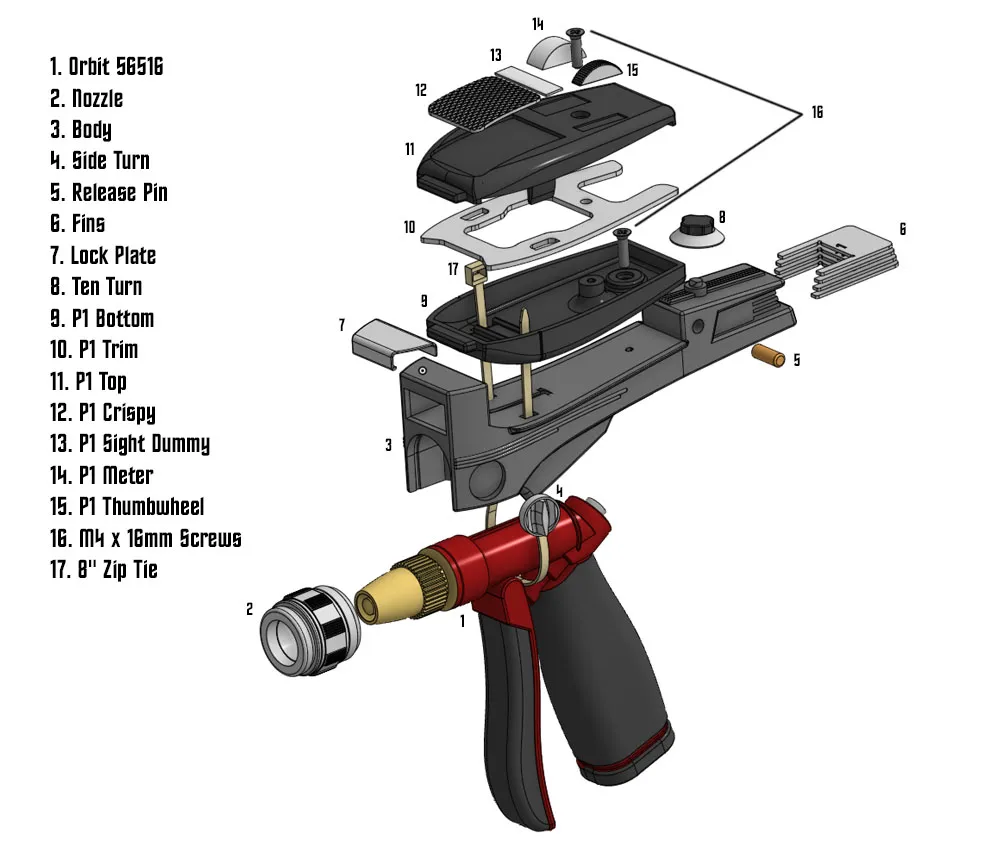
If you’re wondering how [Curt] managed to 3D print a functional hose sprayer, the short answer is that he didn’t. Once assembled, the printed parts cleverly attach to the top of a standard sprayer, specifically the model 56516 “Pro Flo” from Orbit. Without the design constraints that would have come from trying to make the thing actually contain pressurized water, [Curt] was free to focus on the aesthetics, and it shows.

Even with a garden variety — no pun intended — sprayer strapped to the bottom, it’s remarkable how much the “Sprayser” looks like the real thing. Well, not real, but you know what we mean.

[Curt] has also done an excellent job documenting this project for others that want to imagine they’re fighting off Romulans in their backyard. He’s got assembly diagrams that break down which color each of the principle components is to be printed in, as well as a build video that we’ve embedded below.

We’ve seen a fair number of Star Trek props built over the years, some of which have packed in considerably more functionality than anything they would have had back on the set. These days you can even by an officially licensed tricorder that can actually do some of the things the fictional versions were capable of.

Continue reading “3D Printed Hose Sprayer Sets Phasers To Suds”
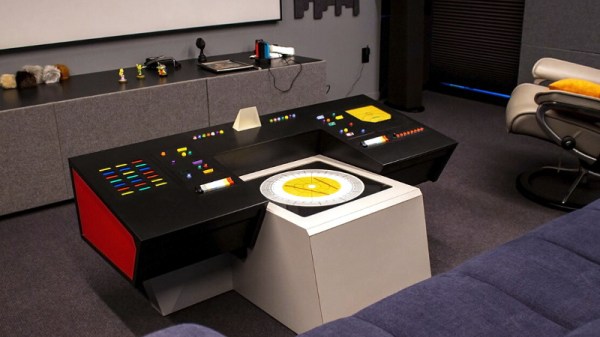
Enterprise Helm Commands The Entertainment Center

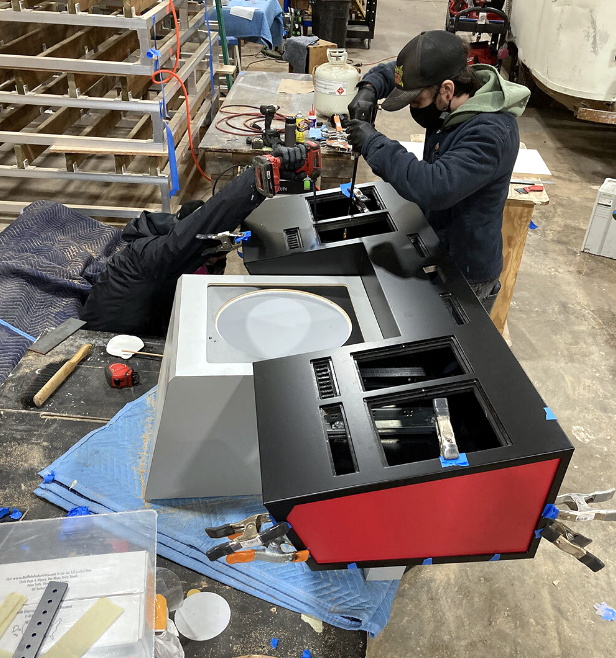
Many a young geek wished they could get a chance to sit at the helm of the USS Enterprise, wildly tapping on unlabeled technicolor buttons with the self-assured confidence of a proper Starfleet officer. For most of us it was a dream unrealized, but right now somebody in the Seattle, Washington area is getting to do exactly that in their media room. We won’t deny being jealous, but at least our collective egos can take some comfort in the knowledge that they had to outsource the construction of their replica helm to the fine folks at [Blackmouth Design].

There’s not a lot of technical details to be had, but considering the page for this project is only meant to show off the company’s design and fabrication skills, we can’t blame them too much. If we were in the business of selling these things, we’d probably keep some of the juicer details under wraps too.

But we do know there’s “Arduino technology” under the hood that fires up different light and sound effects depending on which of the vintage rocker switches has been flipped. The red momentary buttons lined up on the right side of the coffee table sized panel are tied into the home media center to do things like turn off the lights and lower the projector screen. Check out the video below for a brief demo.

In a post on Reddit, one of the engineers behind the project explains that the top surface of the helm is 3/16″ powder coated aluminum, with the plywood that makes up the base laminated in the classic Original Series color scheme of red, grey, and black. The artwork for the astrogator was created from scratch, backlit with LEDs, and placed behind a 1/4″ acrylic panel for protection. We imagine the fact that it’s parallel to the ground means it’s supposed to be a space to place your drinks or popcorn, though if it was in our house, nobody would be bringing food or drink anywhere near it.

In all honesty, while Hackaday is decidedly more about building than buying, we can’t fault anyone for forking over their hard earned cash for craftsmanship of this caliber. After all, we’ve had our eyes on that officially licensed tricorder replica for quite some time now.

Continue reading Enterprise Helm Commands The Entertainment Center”

PiCorder: Raspberry Pi Stands In For Stone Knives And Bearskins

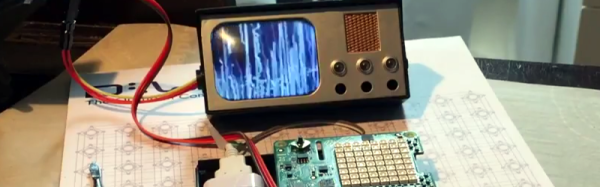
In a classic episode of Star Trek, Spock attempts to get data from a tricorder while stuck in the 1930s using what he described as “stone knives and bearskins.” In reality, he used vacuum tubes, several large coils, and a Jacob’s ladder. Too bad they weren’t in the year 2017. Then Spock could have done like [Directive0] and used a Raspberry Pi instead. You can see the result in the video below.

The build starts with a Diamond Select Toys model tricorder. The Raspberry Pi, a battery, a TFT screen, and a Pi Sense Hat make up the bulk of the build.

Continue reading “PiCorder: Raspberry Pi Stands In For Stone Knives And Bearskins”

“Norman, Coordinate!”

If Star Trek taught us anything, it’s clearly that we’re not quite in the future yet. Case in point: androids are not supposed to be little flecks of printed circuits with wires and jacks sprouting off them. Androids are supposed to be gorgeous fembots in polyester kimonos with beehive hairdos, designed to do our bidding and controlled by flashing, beeping, serial number necklaces.

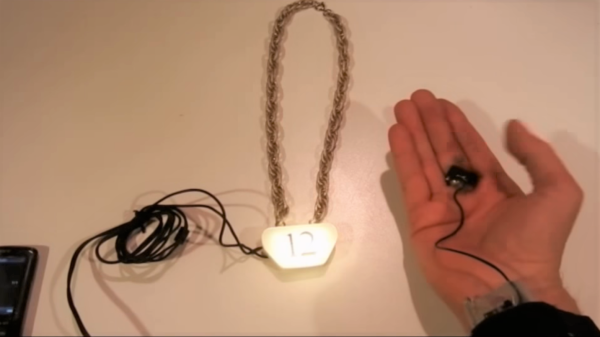
Not willing to wait till the 23rd century for this glorious day, [Peter Walsh] designed and built his own android amulet prop from the original series episode “I, Mudd.” There’s a clip below if you need a refresher on this particularly notable 1967 episode, but the gist is that the Enterprise crew is kidnapped by advanced yet simple-minded androids that can be defeated by liberal doses of illogic and overacting.

The androids’ amulets indicate when they BSOD by flashing and beeping. [Peter]’s amulet is a faithful reproduction done up in laser-cut acrylic with LEDs and a driver from a headphone. The leads for the amulet go to a small control box with a battery pack and the disappointing kind of Android, and a palmed microswitch allows you to indicate your current state of confusion.

You’ll be sure to be the hit of any con with this one, although how to make smoke come out of your head is left as an exercise for the reader. Or if you’d prefer a more sophisticated wearable from The Next Generation, check out this polished and professional communicator badge. Both the amulet and the communicator were entries in the Hackaday Sci-Fi contest.

Continue reading ““Norman, Coordinate!””