SIGGRAPH 2008: The Quest For More Pixels


Long before we started reporting on [Dan Kaminsky]’s DNS chicanery, he contributed a guest post about one of our favorite sources of new technology: SIGGRAPH. The stars have aligned again and we’re happy to bring you his analysis of this year’s convention. [photo: Phong Nguyen]

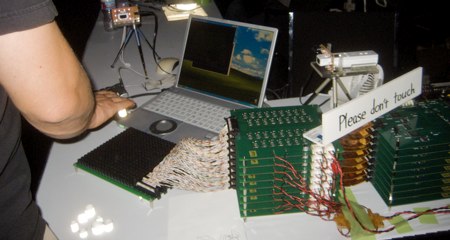
So, last week, I had the pleasure of being stabbed, scanned, physically simulated, and synthetically defocused. Clearly, I must have been at SIGGRAPH 2008, the world’s biggest computer graphics conference. While it usually conflicts with Black Hat, this year I actually got to stop by, though a bit of a cold kept me from enjoying as much of it as I’d have liked. Still, I did get to walk the exhibition floor, and the papers (and videos) are all online, so I do get to write this (blissfully DNS and security unrelated) report.

Continue reading “SIGGRAPH 2008: The Quest For More Pixels”

Scratch Built Jog Wheel


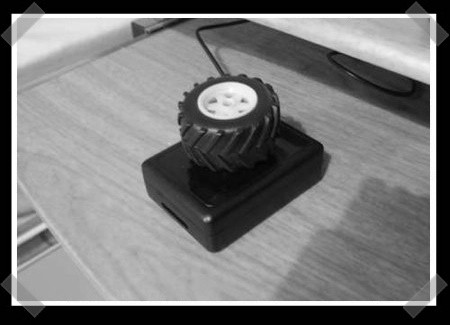
[whatsisface] sent in his scratch built clone of a Griffin PowerMate. The PowerMate… is just a big knob, so it’s easy to see why more than one person has attempted this. [whatsisface] was inspired by a bit-tech post that did nearly the same thing, only they used the head out of a VCR for the knob. All the other components, like the optical encoder, are salvaged from a mouse, which we talked about in our scavenging How-To. He used a RC car tire for the actual knob. While we’re sure it works great in dirt, we’d probably go with the weight and inertia of the VCR head instead. Have a look at the video below to see the knob being used with the Volumouse software.

Continue reading “Scratch Built Jog Wheel”

Robot That Runs On Rat Brain Cells


Scientists at the University of Reading have created a robot that runs not on microprocessors, but on brain cells extracted from a rat fetus. The robot is equipped with several sensors which stimulate the rat neurons whenever the robot approaches a wall; the response of the neurons then determines whether the robot avoids the wall or crashes into it. The truly fascinating bit is that the rat brain cells don’t automatically know how to respond to the stimuli from the sensors, but instead learn to respond appropriately through repeated stimuli.

No word yet on whether the scientists will teach the robot to sing “Despite all my rage / I am still just a brain in a vat”.

Autonomous Helicopter Learns Autorotation


Stanford’s autonomous helicopter group has made some impressive advancements in the field of autonomous helicopter control, including inverted hovering and performing aerobatic stunts. The group uses reinforcement learning to teach its control system various maneuvers and has been very successful in doing so. One of their latest achievements was teaching the bot the emergency landing technique autorotation. Autorotation is used when a helicopter’s engine fails or is disengaged and works by changing the collective pitch to use the airflow from descent to rotate the blades. The group has more flight demonstrations on their YouTube channel.

[via BotJunkie]

Free Parking Garage Access

This hack is an interesting twist that will allow you to get in or out of some parking garages when the attendant isn’t looking. Using something metal to trip the parking lot’s proximity sensor that is meant to let cars out automatically you can get into the garage or vice-versa without opening your wallet. A magnet from a hard drive might work a bit better because it is able to trip multiple types of sensors, but for this hack any kind of metal will work. This proximity sensor is a high–frequency oscillation type, so anything that attenuates, varies the frequency or stops the oscillation trips the sensor. When you can’t find a place to park, this hack will certainly impress your friends more than this method, but your street credibility could quickly turn into never lived down stories, if you end up driving over tire strips and ruining your tires, get a huge parking or trespassing ticket, or worse yet get your vehicle towed!

Make: Television

Make Magazine, famous for the Maker Faire, among other things, has announced a new project called Make: television. The show will be coming to public television stations throughout the USA starting early 2009. The big news is that you can submit 2 minute long videos of your projects to be included in the show’s Maker Channel segment. The bigger news is that if your video is selected, they’ll send you a $50 gift certificate from the Maker Shed and a free year of Make Magazine.