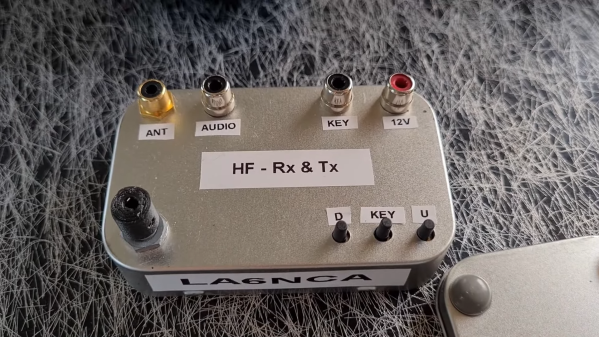
[Helge Fykse (LA6NCA)] has a type, as they say. At least as far as radios are concerned, he seems to prefer elegant designs that keep the BOM to the minimum needed to get the job done. And Altoids tins — he really seems to like putting radios in Altoids tins.
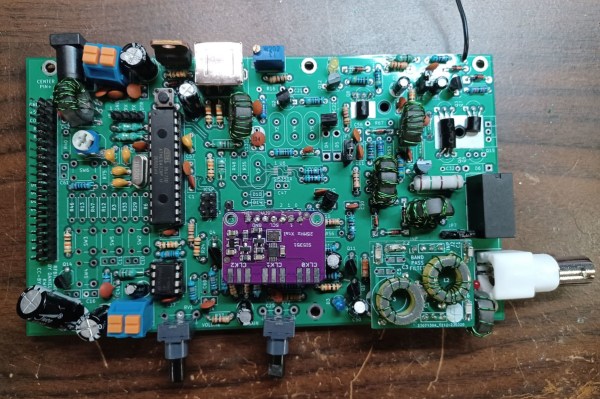
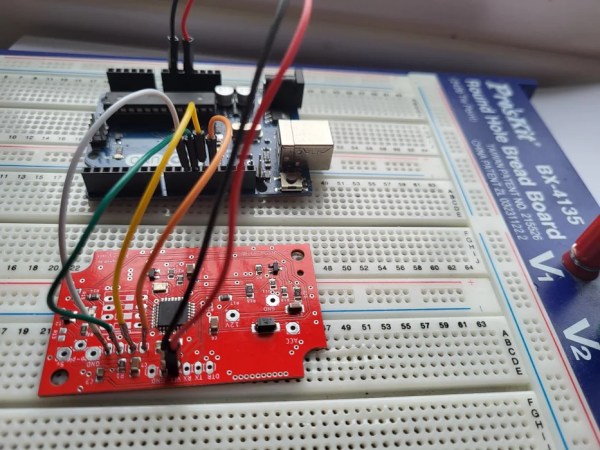
This QRP transceiver for the 60-meter amateur radio band is a perfect example of that ethos. For the unfamiliar, QRP is Morse code shorthand for decreased power, and is generally used when hams are purposely building and operating radios that radiate very little power, typically below a watt. For this transceiver, [Helge] chose to use modern components, a marked but interesting departure from his recent tube-powered spy radios. The design is centered on a custom oscillator board he designed using an Arduino Pro Mini and an Si5351 oscillator chip. Other components include an ADE-1ASK frequency mixer, an antenna tuner module that can be swapped out for operating on different bands, a receiver that’s little more than a couple of op-amps, and a Darlington pair for an RF power amplifier. Everything fits neatly on a piece of copper-clad board inside the tin box.
As is his tradition, [Helge] was on the air in the field with this radio almost before the solder had time to cool. His first contact was a 240-km shot to a friend, who reported a fine signal from this little gem. And that’s with just powering it off a 9-volt battery when it’s designed to the typical 12-volt supplies hams favor; he estimates this resulted in a signal of about 200 mW. Not too shabby.
Honestly, we’d love to learn more about that oscillator board [Helge] used, and maybe get a schematic for it. We found a little bit about it on his web page, but not the juicy details. If you’re out there, [Helge], please share the wealth.