Wiitendo: A Wii In An NES Case

[youtube=http://www.youtube.com/watch?v=jTs8c4r8m94&hl=it&fs=1]
[Matt] has managed to cram a Wii into an old NES. The write up is fairly short, but does mention a few details. He installed some Game Cube controller ports and a Game Cube memory card. He’s added some external LEDs connected to the Wii’s power button. He put a lot of effort into this, as he said almost every area of the internal case needed some serious dremel action to make the Wii fit inside. He’s even promised a more detailed write up, so keep an eye out for that.

You might also remember the Wii Laptop previously on Hackaday.
[via Hack a Wii]

Miniature Balancing Robot


It might not be as elegant or technologically-advanced as a Segway or a motorized unicycle, but this easily constructed 2-wheeled robot might be a fun project for a free afternoon. The heart of the balancing mechanism is an SPDT switch with a button cell attached that reverses the motor when the robot begins to tip in one direction. It’s not controllable and it tends to fall over quite a bit, but it’s a good starting point and could be refined by lowering the center of gravity or figuring out a simple way to change the motor speed based on how far the robot has tipped over. There are no accelerometers or tilt switches so the components could be sourced from a parts bin, and its simple design definitely leaves a lot of room for improvement.

Defcon 16: Covert Warballooning Flight


Since last month, when the Defcon warballooning event was announced, [Rick Hill] finished building his rig and even got FAA approval for the flight. Just when everything seemed set, the Riviera Hotel management decided not to allow the takeoff from their property. So, naturally, [Rick] and his team rented a moving truck and covertly inflated the balloon inside. They launched it in an abandoned parking lot and drove through the Vegas strip. They were surprised to find that about one third of the 370 wireless networks they scanned were unencrypted.

[photo: JoergHL]

[via /.]

Free Parking Garage Access

This hack is an interesting twist that will allow you to get in or out of some parking garages when the attendant isn’t looking. Using something metal to trip the parking lot’s proximity sensor that is meant to let cars out automatically you can get into the garage or vice-versa without opening your wallet. A magnet from a hard drive might work a bit better because it is able to trip multiple types of sensors, but for this hack any kind of metal will work. This proximity sensor is a high–frequency oscillation type, so anything that attenuates, varies the frequency or stops the oscillation trips the sensor. When you can’t find a place to park, this hack will certainly impress your friends more than this method, but your street credibility could quickly turn into never lived down stories, if you end up driving over tire strips and ruining your tires, get a huge parking or trespassing ticket, or worse yet get your vehicle towed!

Defcon 16: Pacemaker-B-Gone

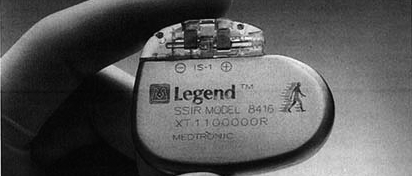
A collaboration of various medical researchers in the academic field has led to proof that pacemakers can be remotely hacked with simple and accessible equipment. [Kevin Fu], an associate professor at the University of Massachusetts at Amherst, led the team. [Kevin] first tried to get documentation from the manufacturers, believing they would support the effort, but they were not interested in helping. They were forced to get access to an old pacemaker and reverse engineer it. They found that the communication protocol used to remotely program the device was unencrypted. They then used a GNU radio system to find access to some of the machine’s reprogrammable functions, including accessing patient data and even turning it off.

Although this was only done with one particular pacemaker, it proves the concept and should be taken seriously by the medical companies who produce these devices. If you are interested in the technical aspects, check out the paper the team released in May disclosing the methods.

Fun With Barbie Karaoke Machines


[Peter Edwards] at Casper Electronics built a modular synth and integrated it with the Barbie karaoke machines we saw at Notacon last April. The complete unit consists of 25 modules which are wired together using banana cables. He’s using this homebrew step sequencer to control the bent karaoke machines which then feed into the rest of the synthesizer. If you’d like to bend your own barbie karaoke machine, [Peter] was kind enough to post schematics and instructions for his bends.

Defcon 16: MIT Boston Transit Presentation Gagged


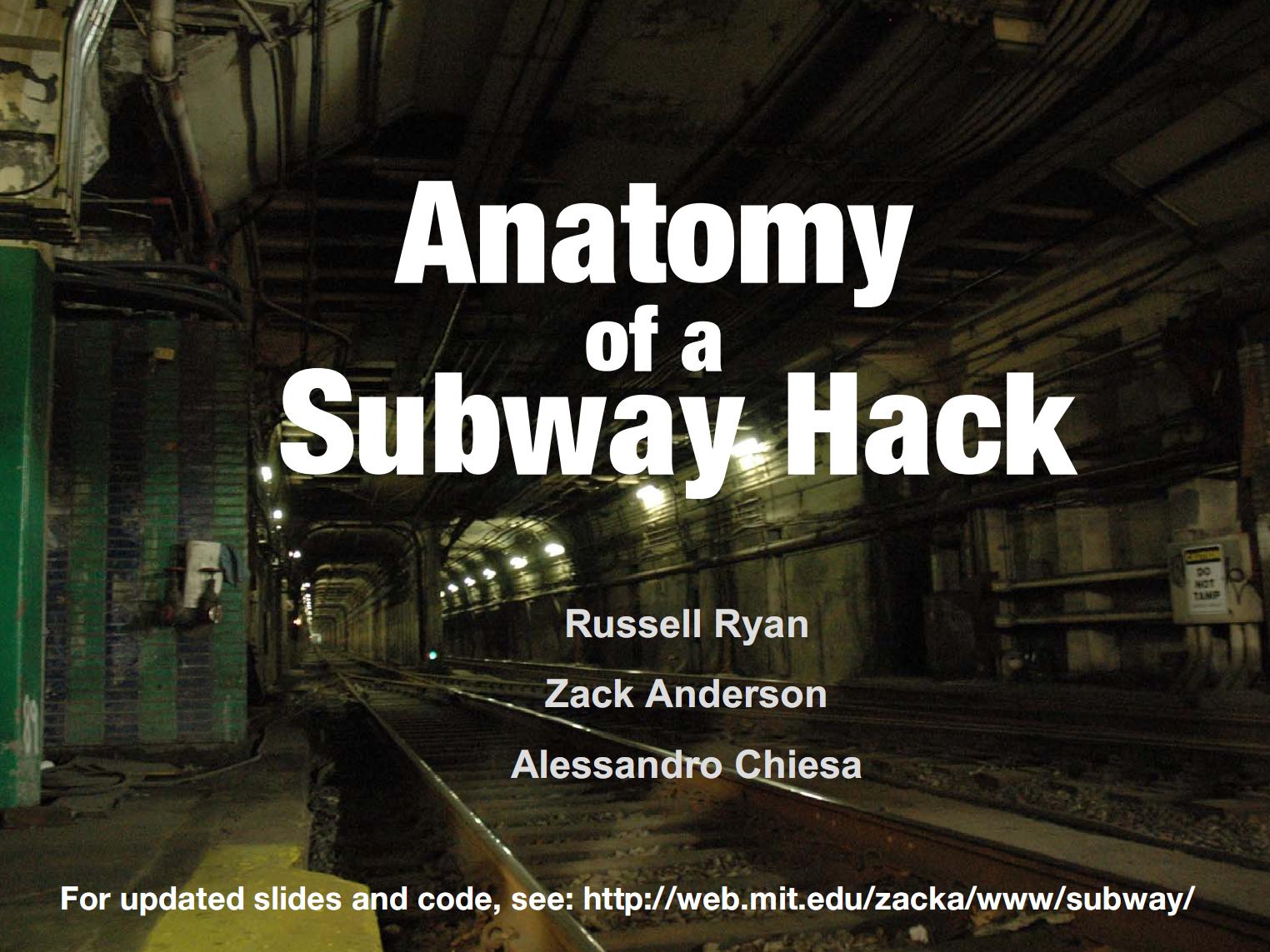
[Zack Anderson], [RJ Ryan], and [Alessandro Chiesa] were sued by the Massachusetts Bay Transit Authority for an alleged violation of the Computer Fraud and Abuse Act after copies of their presentation slides were circulated at Defcon 16. The slides give an eye widening glimpse into the massive security holes present in the Boston subway system. There are at least 4 major security flaws in the subway, which allowed them to get free subway rides by finding unlocked, back door routes into the subway, spoofing magnetic and RFID cards, and attacking the MTBA’s network. Judge Douglas P. Woodlock has issued a gag order, stopping the trio from giving the presentation at Defcon or disclosing sensitive information for ten days. However, the MIT school newspaper, The Tech, has published a PDF of the slides online. The research culminated in the trio warcarting the MTBA’s headquarters and being driven off by police.