Graffiti Analysis

Here’s a fascinating project that started with a great idea and piled on a remarkable amount of innovation. Graffiti Analysis is a project that captures gestures used to create graffiti art and codifies them through a data-type called Graffiti Markup Language (GML). After the break you can watch a video showing the data capture method used in version 2.0 of the project. A marker taped to a light source is used to draw a graffiti tag on a piece of paper. The paper rests on a plexiglass drawing surface with a webcam tracking the underside in order to capture each motion.

The newest iteration, version 3.0, has some unbelievable features. The addition of audio input means that the markup can be projected and animated based on sound, with the example of graffiti interacting with a fireworks show. The 3D tools are quite amazing too, allowing not only for stereoscopic video playback, but for printing out graffiti markup using a 3D printer. The collection of new features is so vast, and produces such amazing results it’s hard to put into words. So we’ve also embedded the demo of the freshly released version after the break.

Continue reading “Graffiti Analysis”

Photo Booth For A Wedding

[Joe Bain] built a portable photo booth for his wedding. We’ve looked in on photo booths before, both as a robust feature in your apartment and as a mobile option. But making it part of a wedding reception is the best reason we’ve found to build one. [Joe’s] electronics consist of a laptop, camera, screen, and a big pushbutton that interfaces via a serial cable and adapter. He found some software that was written for photo booths which takes care of almost everything including polling the “go” button.

The booth itself is a frame build from PVC pipe (another chance to use those fancy fittings) with fabric dividers hanging from it. This is fun for the wedding-goers and it produces a bit of nostalgia for your scrapbook.

Single String Servo Electric Guitar

its a catchy tune!

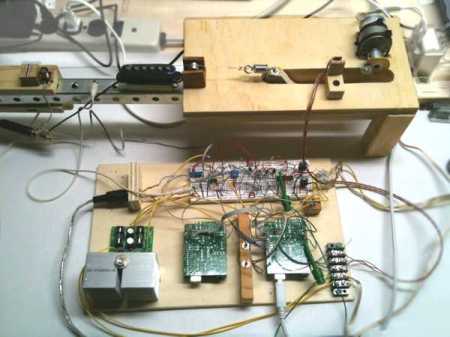
Ah, we love musical hacks that actually play music.  [Mike Baxter] is back again with a new servo electric guitar. This one, called the physical string synthesizer, and has only one string.  He’s using two Arduinos to control the unit. One to change the midi file to a note within the string’s limits and the second to actually control the servo. It seems like that could be simplified a little bit, but we’re pretty sure his end goal was to build an instrument quickly, not learn to be a circuit ninja. Last time we saw Mike Baxter, he had built a servo electric guitar that used a keypad for control. You can see a video of the single string one after the break.

Continue reading “Single String Servo Electric Guitar”

Solder Paste How-to Tutorial

The application of Solder Paste is an essential part of short run manufacturing and prototyping. After getting back bare boards from a PCB shop, its time to get down to business and populate those boards. This new tutorial set assumes you have access to things such as stencils for your boards, but does mention a couple of resources on commercially available ways to purchase stencils. Of course, if you have a laser cutter, we can help you out. After getting your solder paste chops down, make sure you check out our guide to toaster oven reflowing.

[Thanks to P. Torrone]

Homemade Solid Propellant Rocket Motors

[KoD] and [Navic] are building solid propellant motors using sugar and potassium nitrate. They cook up the two ingredients along with water and a bonding agent. They find that corn syrup is particularly good for bonding and that cooking the strange brew is more of an artform than science. Either way, the video after the break is proof of the dangers involved in this hobby. Testing the engine thrust with a bathroom scale ends badly for the scale.

There is something satisfying about the ingenuity that goes into the materials. For a casing they’re using PVC pipe, and forming a cone to focus the thrust by using a what amounts to plumber’s epoxy putty. The capping agent for the finished motor is ground up kitty litter.

This is an interesting read, but for now we’re going to stick to water rockets.

Continue reading “Homemade Solid Propellant Rocket Motors”

Work For Hack A Day

HackADay.com, a well-known and respected blog dedicated to all things hardware and hacking related, is looking for knowledgeable and passionate writers to join their team of specialized and dedicated freelance writers. This is a paid, freelance position that requires professionalism, consistency, and reliability in both writing style and deliverables. We’re eager to track down and bring in some of the most passionate folks out there in the software/hardware/tech & hacking world. We pay our writers a solid per-post rate and we’re ready to take HackADay to the next level with more content across a wider array of interests and expertise. If you’re a good writer that loves the kind of stuff we talk about, then we want you to be behind the growth and dominance of this household name in hacks.

All hardware/hack/tech junkies encouraged to apply, but folks with experience in the following fields will get bonus points:

–circuitry design
–robot building
–mobile device programming
–full desktop application programming
–computer security
–gritty hardware fabrication
–modifying existing systems

If you’re ready to join HackADays’ team of top-notch freelance writers, apply through our ONLINE JOB BOARD. Formal resumes are welcome, but cover letters with links to blogs, writing samples or any portfolio work is really what we’d like to see. Here’s an idea of what to include:

  • A short bio about yourself
  • 3 example daily posts written in the style of Hack a Day
  • 3 software or hardware how-tos you’d like to see on the web. For examples of work we’ve done in the past, look at some of our project summaries, How-tos, and software tutorials.
  • A couple sentences on how you would improve the site either through features or content
  • Any additional reasons why you would make a good fit for Hack a Day

Thanks for your interest!

GPU Processing And Password Cracking

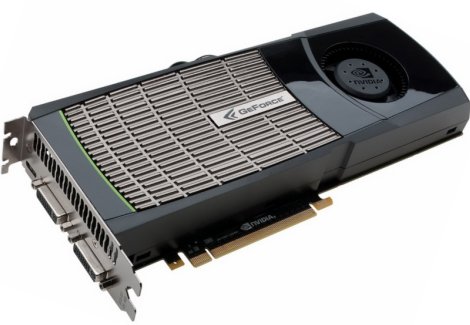
Recently, research students at Georgia Tech released a report outlining the dangers that GPUs pose to the current state of password security. There are a number of ways to crack a password, all with their different pros and cons, but when it comes down to it, the limiting factor in all of these methods is processing complexity. The more operations that need to be run, the longer it takes, and the less useful each tool is for cracking passwords. In the past, most recommendations for password security revolved around making sure your password wasn’t something predictable, such as “password” or your birthday. With today’s (and tomorrows) GPUs, this may no longer be enough.

Continue reading “GPU Processing And Password Cracking”