GoPro Slingshot

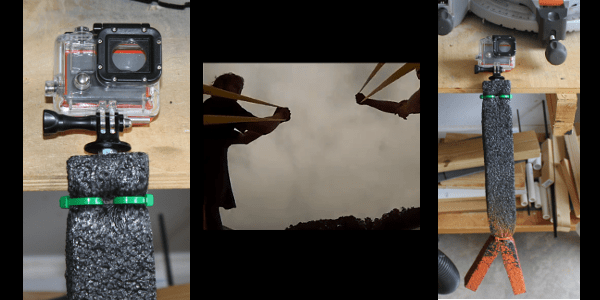
Want to try out aerial photography, but can’t afford a quadcopter? [Jeremy] rigged up a low cost GoPro Slingshot and took some pretty nice flyover shots of the lake.

The slingshot itself is meant for water balloons, but easily has enough power to fire the camera. In order to get good video, some stabilization was needed. [Jeremy] made a stabilizing fin out of packaging foam, and used an eye bolt to connect it to the GoPro’s threaded tripod mount. The simple tail fin made of out foam and zip ties actually did a good job of stabilizing the camera.

This looks like a fun experiment to try when you’re at the lake, since you can probably build it with stuff lying around the house. For [Jeremy], it also proved to be a way to keep his dog entertained since she retrieved the camera after each shot. After the break, check out the video footage from the GoPro slinging rig.
Continue reading “GoPro Slingshot”

An Arcade Controller For The Original PlayStation

I love it when you hit those switches

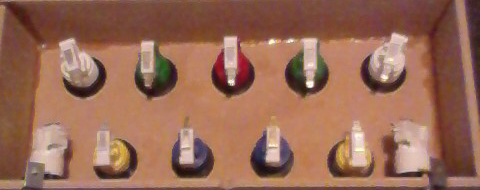
[Kevin] just finished a project for someone who lives in his apartment complex. This resident loves the game Pop ‘n Music – a Guitar Hero sort of game for the original Playstation and PS2 that uses nine colored buttons instead of five buttons along a fingerboard. His original idea was to wire up a few arcade buttons to a Playstation controller but this plan fell through, forcing [Kevin] to figure out the PSX bus all by his lonesome.

The initial code began with simply bit-banging the PSX controller interface with an AVR. This had a few problems, namely speed, forcing [Kevin] to move onto assembly programming to squeeze every last bit of performance out of a microcontroller.

The assembly route failed as well, dropping some transactions  Looking at the problem again, [Kevin] realized the PSX controller bus looked a little like an SPI bus. There were a few changes required – reversing the order of the bits, and using the MISO line to drive a transistor – but this method worked almost perfectly on the first try.

Now, [Kevin]’s building mate has a custom Playstation controller for his favorite game. Of course all the code is up on github for all your PSX controller emulation needs, but be sure to check out this completely unrelated Pop ‘N Music video from someone who desperately needs a piano.

A Fast And Easy-to-use Vision Sensor

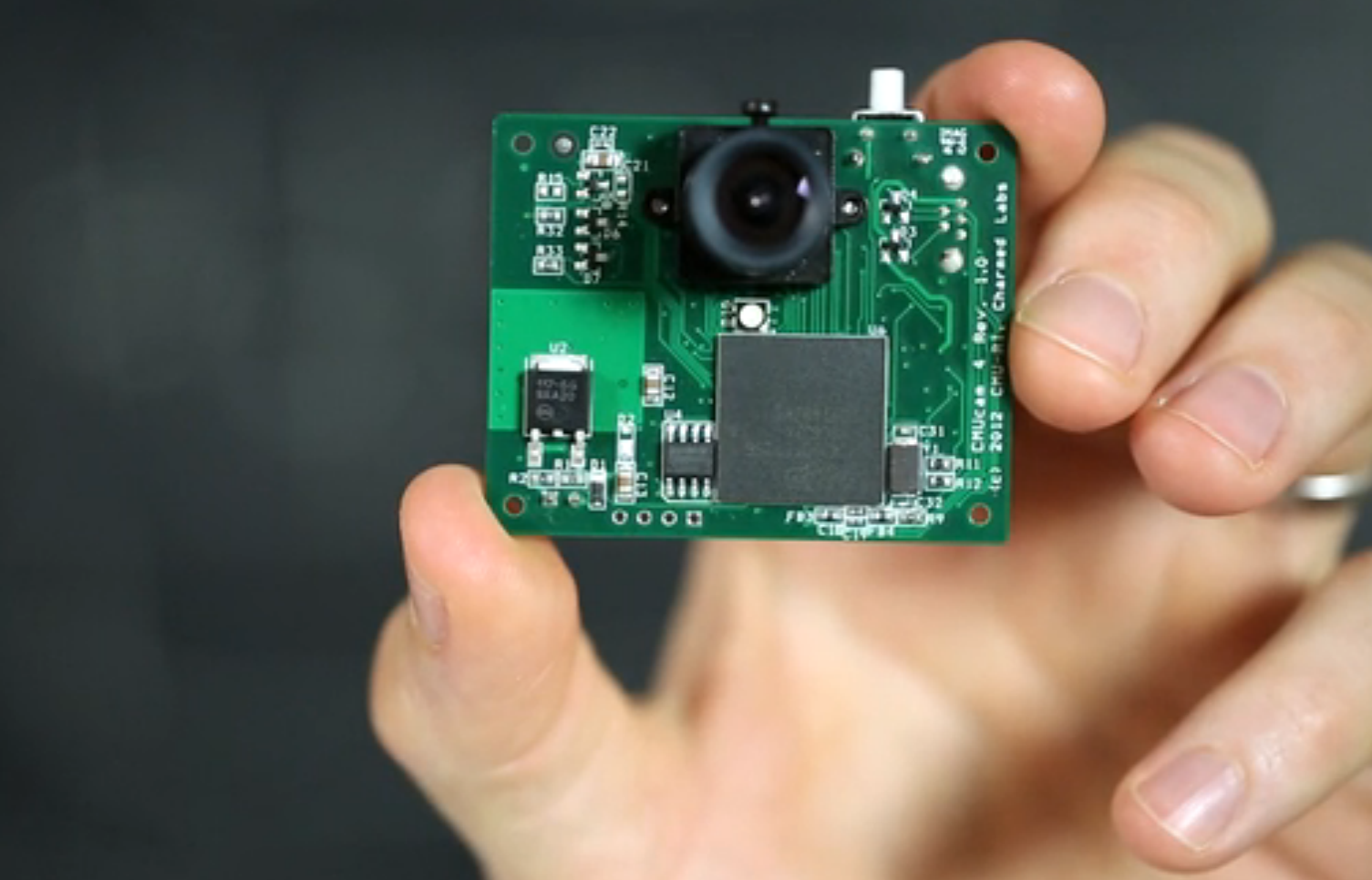
At Hackaday we don’t often feature kickstarter campaigns, but this one is worth noticing in our opinion. It is called Pixy, a small camera board about half the size of a business card that can detect objects that you “train” it to detect.

Training is accomplished by holding the object in front of Pixy’s lens and pressing a button. Pixy then finds objects with similar color signatures using a dedicated dual-core processor that can process images at 50 frames per second. Pixy can report its findings, which include the sizes and locations of all detected objects, through one of several interfaces: UART serial, SPI, I2C, digital or analog I/O.

The platform is open hardware, its firmware is open source and GPL licensed, making the project very interesting. It is based on a 204MHz dual core ARM cortex M4 & M0, uses a 1280×800 image sensor and can stream the processed camera output to your computer. You can get one Pixy in the kickstarter campaign for $59, which is not that expensive for what it is.

Hacking Coin Collection

Coin Acceptor

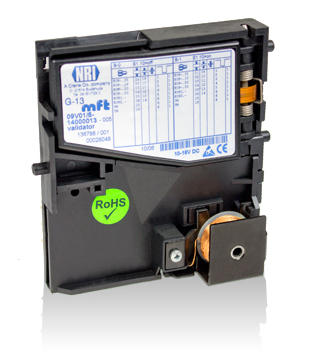
Devices that collect coins for payment typically use standardized coin acceptors like the one shown here. These devices use a protocol called ccTalk to let the system know what coins were inserted. [Balda] has built tools for implementing the ccTalk protocol to let you play around with the devices. He also gave a talk at DEF CON (PDF) about the protocol.

[Balda] got started with ccTalk because he wanted to add a coin acceptor to a MAME cabinet, and had a coin acceptor. His latest project converts ccTalk to standard keyboard keystrokes using a Teensy. The MAME cabinet can then interpret these and add to the player’s credits.

There’s two interesting sides to this project. By providing tools to work with ccTalk, it’s much easier to take a used coin acceptor off eBay and integrate it into your own projects. On the other hand, these acceptors are used everywhere, and the tools could allow you to spoof coins, or even change settings on the acceptor.

Retrotechtacular: The History Of ANSI And ASCII Art

These slides may not be the style of character art you remember from the days of 2400 baud modems; they’re more advanced than what was out there in the beginning. It turns out there is still some life left in this art subculture. For this week’s installment of Retrotechtacular we look in on [Doug Moore’s] talk on the history and survival of ANSI and ASCII art given at this year’s BSides conference.

ASCII is still a common character encoding so chances are you’re already familiar with it. ANSI on the other hand is a rather confusing term as it’s been lost in obscurity when referring to character sets. In this case it refers to a set of extended characters which is better described as Windows Code Pages.

Most of what we know about the ANSI art scene is from watching BBS: The Documentary (which is on our ten best hacking videos list). We certainly remember seeing the vertically scrolling art after connecting to a dial-up BBS back in the day. But understanding the factions that formed around the creation, bundling, and distribution of this is art is fascinating. [Doug] does a great job of covering this history, sharing side-by-side examples of the shunned practice of “ripping” another artists work. This image is actually not a rip. Later in his talk he discusses the continued existence of the subculture, showing what a modern take on the same subject looks like.

If you’re merely into the technical the first half of the video below is worth watching. But we bet it’ll be hard not to continue to the end for a side-trip into art history.

Retrotechtacular is a weekly column featuring hacks, technology, and kitsch from ages of yore. Help keep it fresh by sending in your ideas for future installments.

Continue reading “Retrotechtacular: The History Of ANSI And ASCII Art”

Building An Analog Whistle Detection Device

Hackaday readers may remember a whistle detection device that I [limpkin] designed some time ago. As [Kevin] saw the new Staff roll call, he discovered this project and wanted to make his version of it.

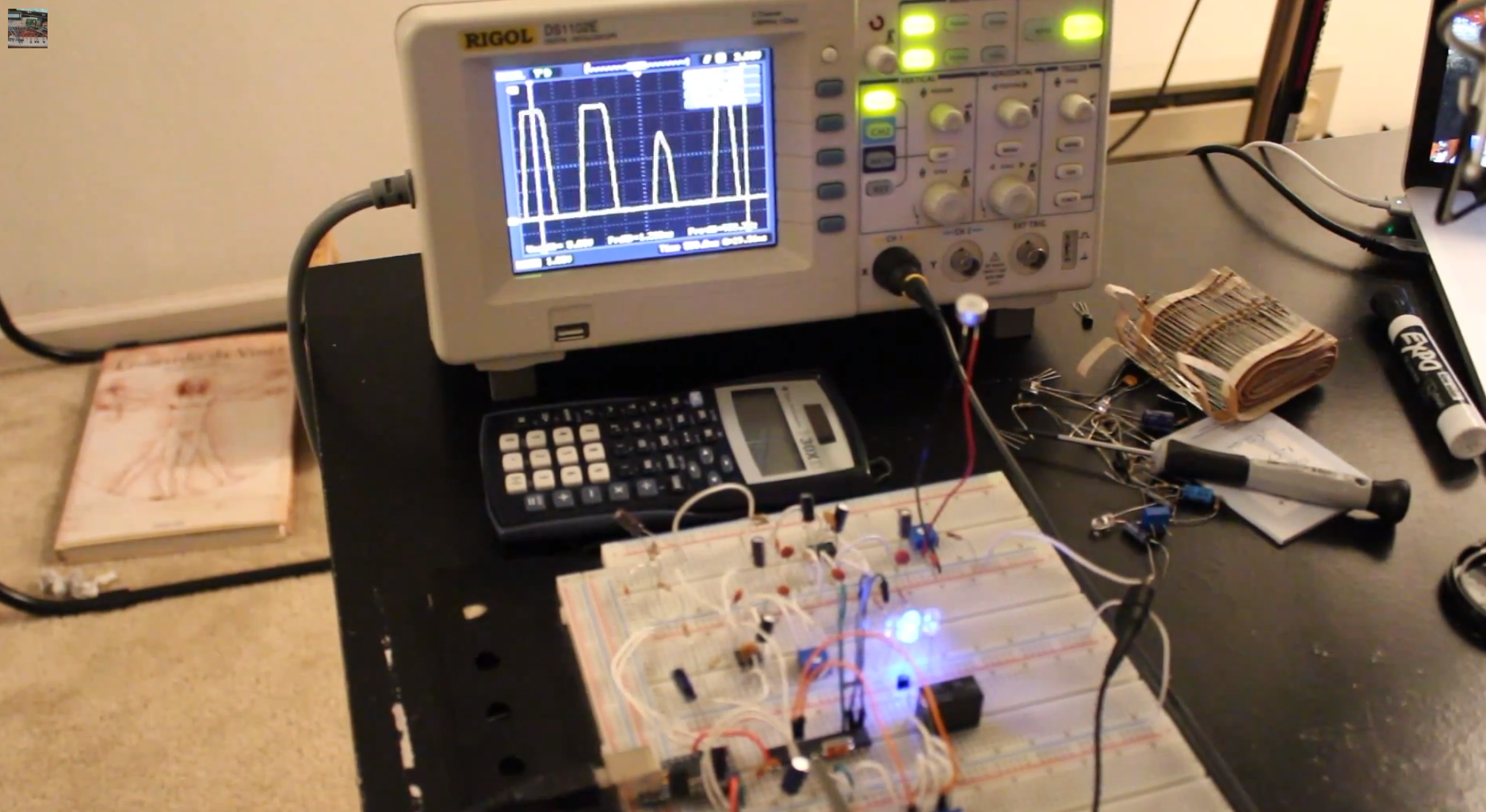
In contrast with the original Whistled where all the signal processing is done in an ARM Cortex m4 microcontroler, [Kevin] uses discrete components, operational amplifiers and an Arduino Uno to detect someone’s whistle. In his video (embedded below), he goes into great lengths to explain how his circuit works along with the theory behind it. In his setup, his microphone’s signal is amplified, passed through a 1KHz-3KHz passive band-pass filter to a non-inverting amplifier with a 1000x gain (!) and finally to a voltage comparator. The Arduino measures the frequency of the signal coming out from the comparator and triggers a relay if the whistle is a ramp-up / ramp-down.

If you want to make the comparison between the two versions of the electronics, here is the link to the original whistled project.

Continue reading “Building An Analog Whistle Detection Device”

Sensor Gloves From Joystick Pots

joy

After working on the DARPA Virtual Robotics Challenge this summer, visions of a Heinlenesque robotic actuator filled [Hunter]’s head. His lab had access to something called a Cyberglove that used flexible pots in each of the fingers, but each of these gloves cost the lab $15,000 each.

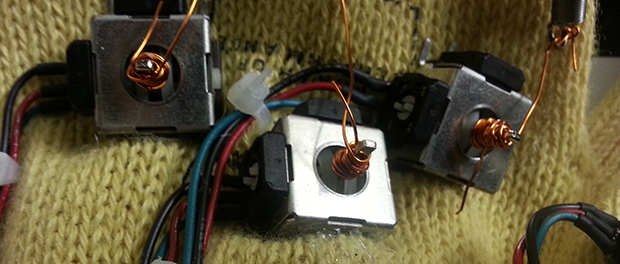
With a little help from some joystick potentiometers, [Hunter] whipped up a decent approximation of a $15,000 device that measures how much a user’s fingers are bent. The pots are tied into an Arduino and read with analogRead(), while a small Python script interprets the data for whatever application [Hunter] can imagine.

There are a few drawbacks to [Hunter]’s design – it’s not wireless, unlike the $15,000 version, and they certainly don’t look as cool as the real thing. Then again, the DIY version only cost 0.2% as much as the real deal, so we’ll let any apparent problems slide for now.