Hackaday Podcast Episode 252: X1Plus Hacks Bambu, Scotto Builds A Katana Keyboard, And Bass Puts Out Fire

This week, Editor-in-Chief Elliot Williams and Kristina Panos met up to discuss the best hacks of the previous week. It’s CES time once again in Las Vegas, and you know what that means — some wacky technologies like this AI pet door that rejects dead mice.

Then it’s on to What’s That Sound, which Kristina managed to nail for once. Can you get it? Can you figure it out? Can you guess what’s making that sound this week? If you can, and your number comes up, you get a special Hackaday Podcast t-shirt.

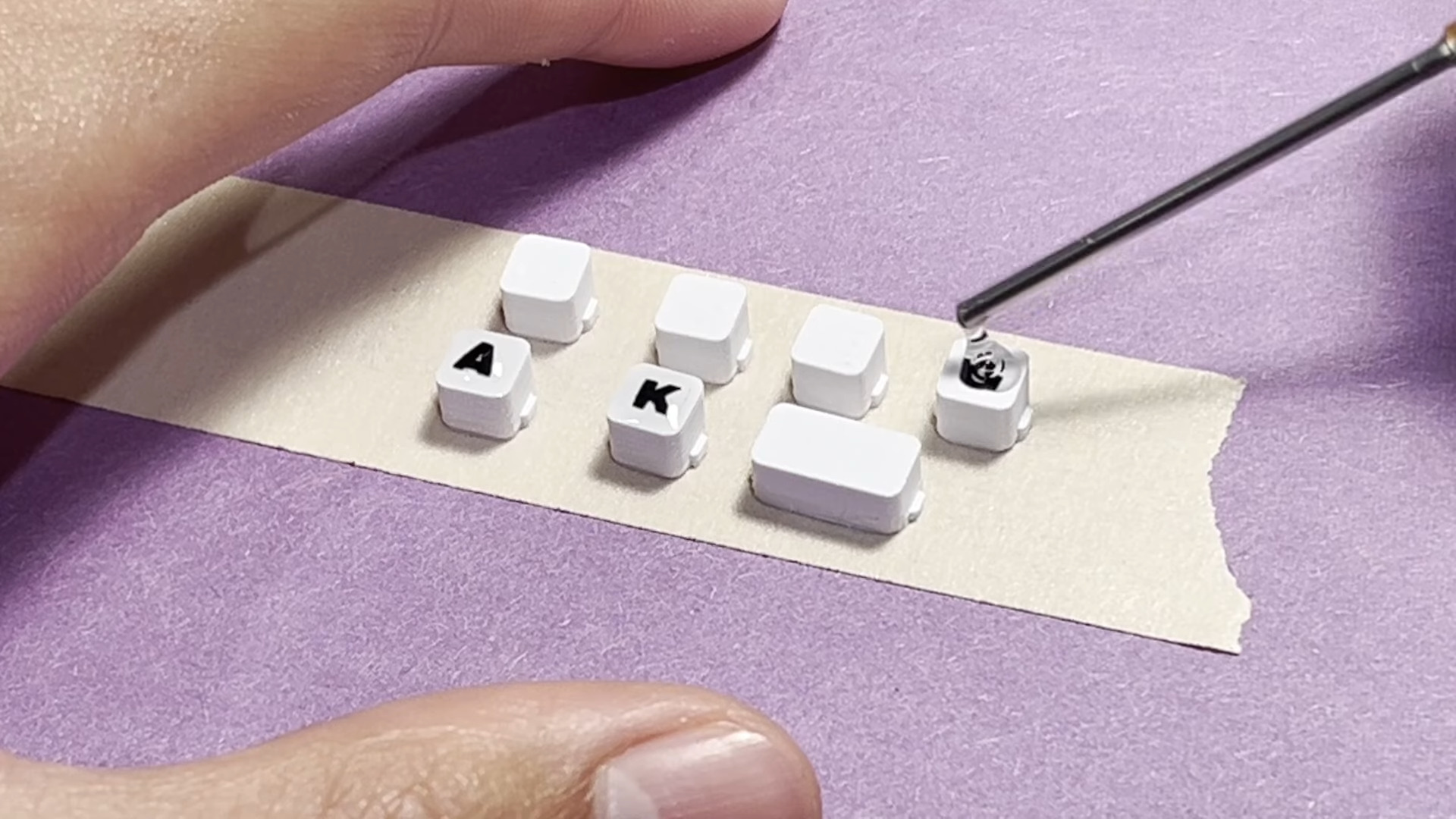
But then it’s on to the hacks, beginning with a new keyboard from [Joe Scotto] and an exploration of all you can do with an LED strip, like 1D fireworks and roller coasters without any moving parts. From there, we marvel at the ability of sound waves to extinguish flames, and the tech behind life as a quadriplegic. Finally, we examine not one, but two of Jenny List’s finely-crafted rants, one about web browsers, and the other about the responsible use of new technology.

Check out the links below if you want to follow along, and as always, tell us what you think about this episode in the comments!

Download and savor at your leisure.

Continue reading “Hackaday Podcast Episode 252: X1Plus Hacks Bambu, Scotto Builds A Katana Keyboard, And Bass Puts Out Fire”

AI Pet Door Rejects Dead Mice

If you have pet with a little access door to the outside world, and that pet happens to be a cat, you’re likely on the receiving end of all kinds of lifeless little lagniappes. Don’t worry, it’s CES season out in Las Vegas and a company called Flappie has the solution — an AI-powered cat door that rejects dead mice and other would-be offerings.

Image by Nathan Ingraham via Engadget

It works about like you might expect — there’s a motion sensor and a night-vision camera on the exterior side of the door. Using Flappie’s “unique and proprietary” dataset, the door distinguishes between Tom and Jerry and keeps out unwanted guests with more than 90% accuracy. To do this, Flappie collected video of a lot of cats and prey in a variety of lighting conditions. There’s even a chip detection system that will reject all other cats.

Thankfully, it’s not all automation. The prey detection system can be turned off entirely, and there are manual switches on the inside for locking and unlocking the door at will. You don’t even have to hook it up to the Internet, it seems.

Americans will have to wait a while, as the company is rolling out the door in Switzerland and Germany first. No word on when the US launch will take place, but interested parties can expect to pay around $399.

Of course, this problem can be solved without AI as long as you’re willing to review the situation and unlock the door yourself.

A Picture Frame For Your Eyes Only

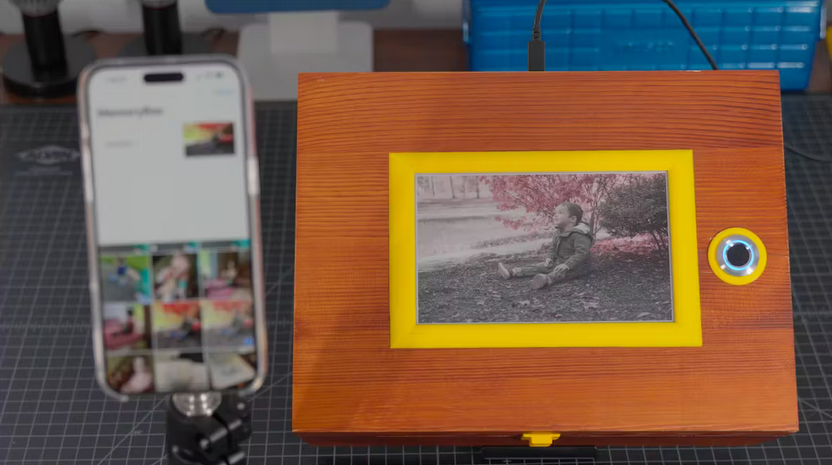
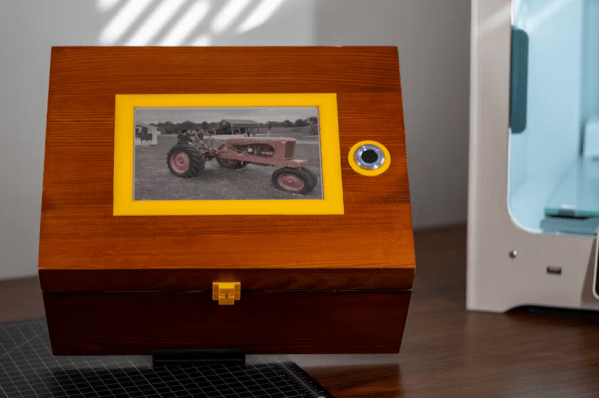
We can think of all kinds of reasons you’d want to display a picture that only you and the family can see, and we don’t even have to work blue to do it. Whether as a joke, or as a serious way to hide a special image, this magical picture frame by [Placitech] is just the thing.

You might recognize this as using PDLC switchable “smart” film. Whenever power is applied, the panel goes from frosty opacity to near-crystal clarity in an instant. The trick here is to to image recognition and only allow certain faces to unlock the picture.

The brains of this operation is an ESP32-CAM module, which does all the heavy lifting of getting the image in the first place, handling it, and deciding via code who is eligible to flick the switch. Everything is housed in a nice 3D printed frame that [Placitech] designed.

Be sure to check out the build video after the break, and files are available via [Placitech]’s Discord if you’d like to build this yourself.

There’s a lot you can do with PDLC panels, as evidenced by this amazing dress.

Continue reading “A Picture Frame For Your Eyes Only”

There Are Stradi-various Ways To Make A Violin, And This Is One

We’ve always said that if we had enough money, we’d have a large room that housed every musical instrument we’ve ever been even mildly interested in. While that dream may never come to pass, it would be far more likely to happen if many of the instruments could be 3D-printed, like this electric violin.

We really like this compact design, which mimics a headless guitar with the tuning pegs down by the bridge. [Carmensr] started with a model on Thingiverse, which uses violin strings wound around electric guitar tuners instead of wooden friction pegs. To further the guitar comparison, the three-piece neck contains a truss rod of sorts.

So how does it work, though? The magic is in the special bridge, which contains a piezo element. The bridge picks up the strings’ vibrations and sends them to a little pre-amplifier, which creates a signal that can then be used by a program like Audacity or connected directly to a speaker. Be sure to give it a listen in the video after the break.

Of course, there’s no reason not to design and print acoustic violins. It would be fun to experiment with different filaments for different sounds.

Continue reading “There Are Stradi-various Ways To Make A Violin, And This Is One”

Remote-Control Kinetic Sand Table Uses A Single Arduino

There’s nothing fun about a Sisyphean task unless you’re watching one being carried out by someone or something else. In that case, it can be mesmerizing like this Arduino-driven kinetic sand table.

What you can’t see. Image via [thang010146] on YouTube
Like many of these builds, it all started with an ordinary coffee table from the hacker’s favorite furnitüre store. [NewsonsElectronics] opened it up and added a 3mm-thick board to hold the sand and another to hold the rails and magnets.

After designing some pieces to connect the rails and pulleys together, [NewsonsElectronics] let the laser cutter loose on some more 3mm stock. A pair of stepper motors connected to a CNC shield do all of the work, driving around a stack of magnets that causes the ball bearing to trudge beautifully through the sand.

Be sure to check out the videos after the break. The first is a nice demonstration, and the second is the actual build video. In the third video, [NewsonsElectronics] explains how they could write the world’s smallest GRBL code to swing this with a single Arduino. Hint: it involves removing unnecessary data from the g-code generated by Sandify.

Don’t have a laser cutter? Here’s a sand table built from 3D printer parts.

Continue reading “Remote-Control Kinetic Sand Table Uses A Single Arduino”

1D Fireworks Are Nice And Quiet

Maybe you do it out of respect for the dogs and parents of young children in the neighborhood. Or maybe you do it because they’re harmful to the environment, or just because it’s too darn cold outside. Whatever your reasoning for not setting off fireworks, don’t fret — you can probably put together your own silent one-dimensional “fireworks” display from what you’ve got in the parts bin.

[Daniel Westhof]’s design is simple, requiring little more than a Wemos D1 Mini and a strip of WS2812 LEDs. Once activated, a red rocket shoots up from the ground and detonates, sending lights in both directions on the strip to imitate the bombs bursting in air. It’s controlled with a small push button switch, and there’s a deliciously large red LED indicator that shows the thing is ready for detonation.

You might be surprised to find that there’s a wide array of 1D gaming and animation projects out there, many of which made possible by the ubiquitous addressable RGB LED strip. We’ve seen a dungeon crawler, at least two different versions of the classic PONG, and even the makings of a simplified Wolfenstein.

3D Printed Eel Could Cost Less At Scale

Be it a matter of cost, principle, or just plain being landlocked, the idea of 3D printed vegan eel over the real deal is quite an attractive development. An Israeli company called Steakholder Foods has introduced this very thing — something they claim is the world’s first plant-based, printed eel.

One thing to note about eel is that they are quite intricately textured, a problem which seems tailored for 3D printing. The company say they achieve similarity through precise layering and “a unique combination of materials”, which are proprietary. Although the current product is based solely on plant materials, the plan is to incorporate eel cells in the future. Right now, the company is looking to collaborate by providing printers and ink so that participants can create short-term revenue.

While it’s unclear whether the eel is printed and then cooked, or print-cooked like this chicken, it sure looks tasty. Would you eat printed food? Have you done so already? Let us know in the comments.