Commodore Datassette Does Barbershop Quartet

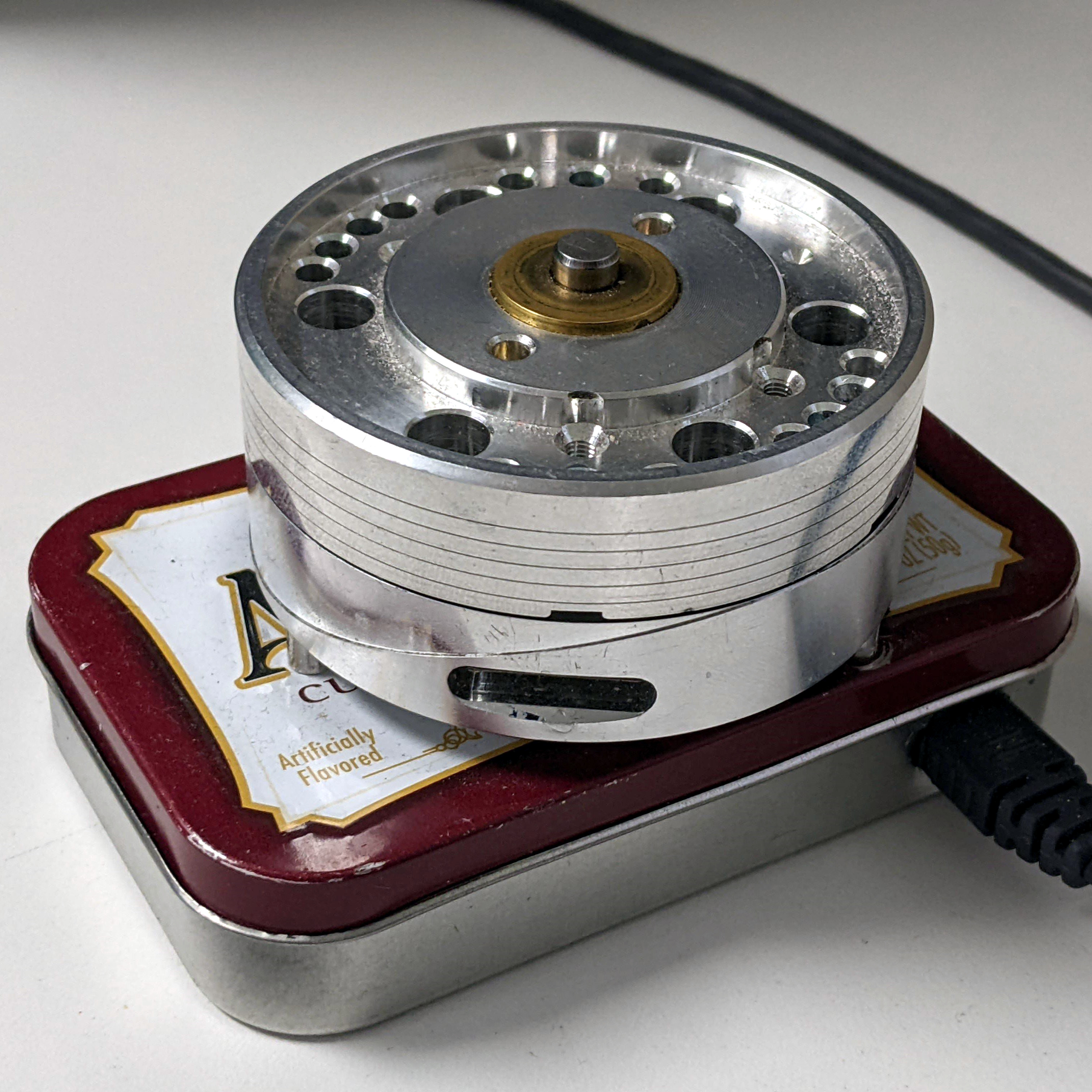
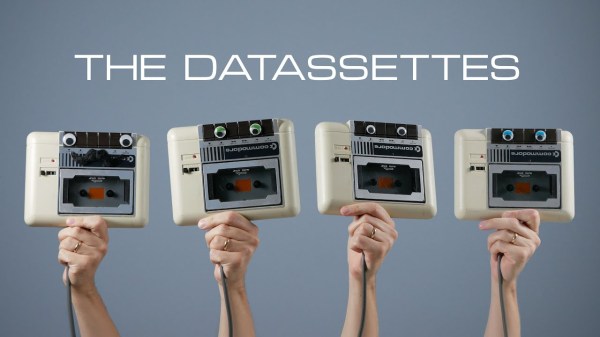
Okay, now this is just plain fun. [Linus Ã…kesson] modified a Commodore Datassette player to move its “mouth” and, when quadrupled, sing a clever barbershop tune called “Sweet End of Line” that’s a play on “Sweet Adeline“, a top hit from the summer of 1903.

What? Let us explain. Those with Commodore 64s who lacked disk drives often had the Datassette — a magnetic storage tape device, or cassette player used to load and save files. But they couldn’t open the doors themselves with a keypress, and they certainly couldn’t sing barbershop.

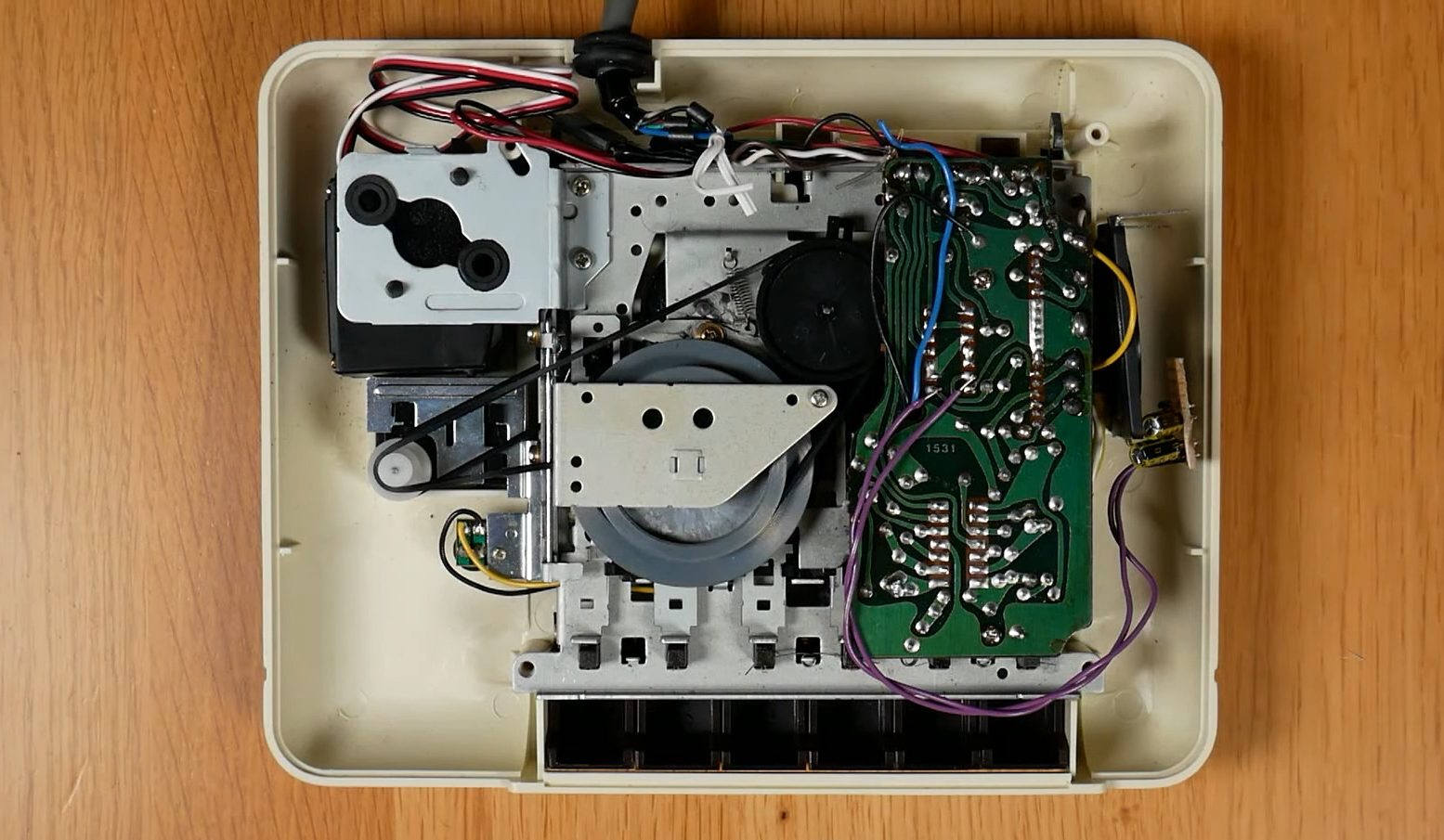
First off, [Linus] redirected the current that drives the magnetizing tape head through a speaker coil instead. Then he replaced the motor with a servo that opens the lid from the inside. A simple rubber band pulls the lid back shut. Software-wise, [Linus] is using a timer interrupt to run code that toggles the output signal, the rate of which determines the pitch.

Don’t worry — all of these modifications are reversible, so no Datassettes were truly harmed in the making. Don’t forget to check out the brief build/demo video after the break.

We’ve seen our share of tape players, but we’d never seen one with a crank until recently.

Continue reading “Commodore Datassette Does Barbershop Quartet”

You’ve Got Mail: Grilled, Scrambled, And Other Delicious Stamps

Well, we’re just zipping right through this series, no? So far we’ve looked at various postal machines and how they work to flip mail around, cancel the postage, and sort it, all in a matter of seconds. We explored the first automated post office and found out why it was a failure, and we learned why it all depends on ZIP code. Now, it’s finally time for some really fun stuff: the stamp trivia.

Now I’m no philatelist by any standard, though I do have a few hundred stamps strewn about the house. The danger in philately is that you learn all sorts of cool things about stamps and their history, and you just want to buy more and more of them. So let’s go!

Continue reading “You’ve Got Mail: Grilled, Scrambled, And Other Delicious Stamps”

The Birdy44 Keyboard Is Something To Crow About

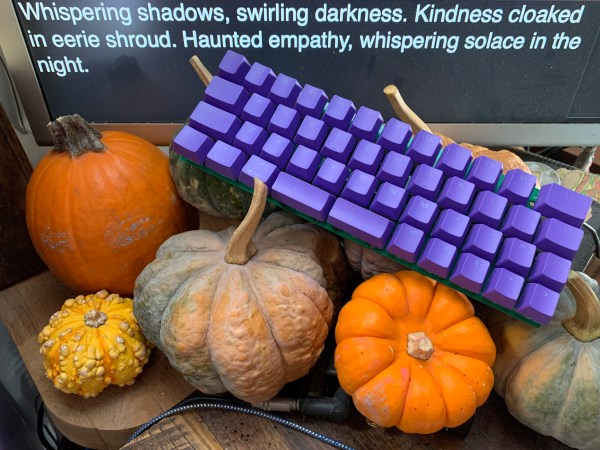
The funny thing about keyboard end game is that it usually involves more than one keyboard. Rare is the board that is great for both home and away. Having finished their dactyl build, [RalphCoder13] was looking to build something slimmer and more portable, and the Birdy44 was born.

This hand-wired beauty uses a pair of Waveshare RP2040 Zeros and features a pair of 40mm Cirque track pads that were salvaged from a Steam controller.

As you may have guessed, there are 44 Kailh Chocs that sit underneath a combination of MBK and 3D-printed keycaps. Our favorite part might be the tenting legs, which are optional and connect magnetically.

Part of portability is how you decide to carry the thing. You probably don’t want it naked and loose in your backpack if you can avoid it, right? To that end, he designed a nice little case for the halves. The original plan was to use magnets to hold them in place inside the topless case, but that didn’t work out so well, so he added wide elastic bands to stretch around the case.

Is this still not portable enough for you? Check out this folding split keyboard.

Via KBD

2023 Halloween Hackfest: A Spooky “Severance” Speaker

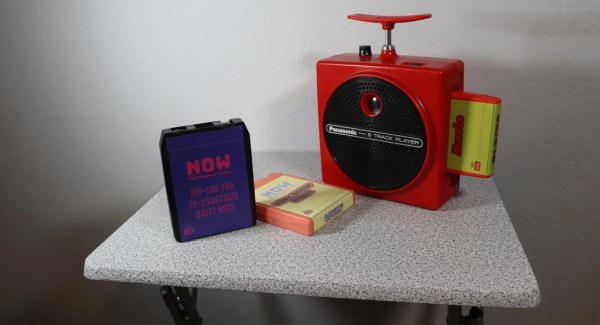
If you know, you know. After becoming fully engrossed in the sci-fi psycho-thriller “Severance“, [Ben Brooks] absolutely needed to have a version of the ominous speaker known as the Board.

This speaker represents the Board, who is the enigmatic governing body of Lumon Industries, the fictional and gigantic biotechnology company featured in the show.

The Board cultivates an air of mystery by rarely speaking, and when it does, it speaks through a single person who paraphrases the Board’s responses. The audio that comes out is a mix of the show’s theme song, pertinent show quotes, and static.

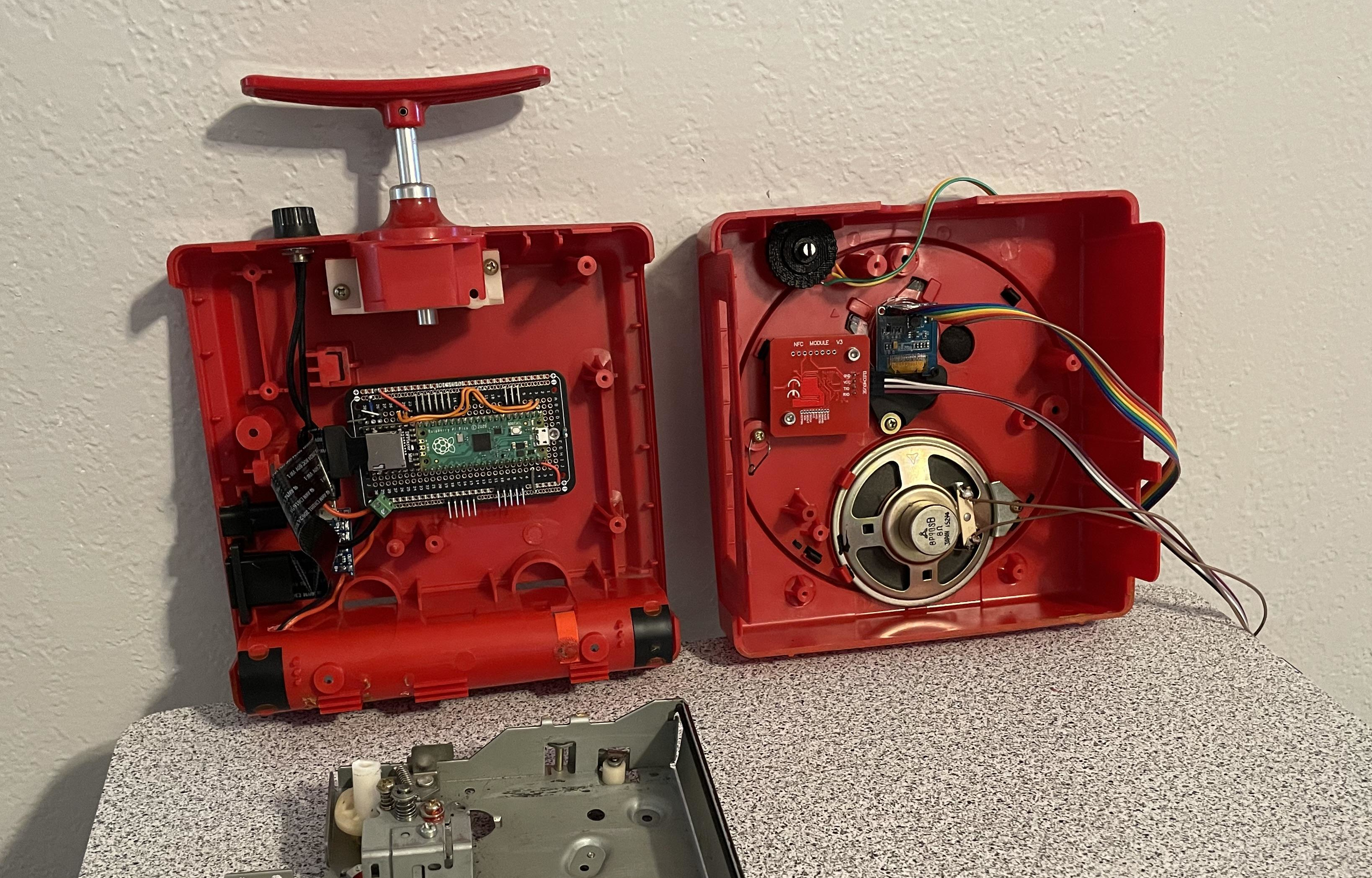
The guts of this freaky little thing are pretty simple — an ESP8266, a DF Player Mini, and a couple of small speakers. In fact, [Ben] had all the parts leftover from a previous home automation project, including the PCB.

Although the original plan was to program it in Arduino, [Ben] ended up using ESPHome to make it easier to integrate with sensors for the big night. Be sure to check out the demo video after the break.

We’ve seen a few fun hacks for the porch this year, including the treat trough of terror and this Ouija robot that out-creeps the real thing.

Continue reading “2023 Halloween Hackfest: A Spooky “Severance” Speaker”

Bone-Shaking Haunted Mirror Uses Stable Diffusion

We once thought that the best houses on Halloween were the ones that gave out full-size candy bars. While that’s still true, these days we’d rather see a cool display of some kind on the porch. Although some might consider this a trick, gaze into [Tim]’s mirror and you’ll be treated to a spooky version of yourself.

Here’s how it works: At the heart of this build is a webcam, OpenCV, and a computer that’s running the Stable Diffusion AI image generator. The image is shown on a monitor that sits behind 2-way mirrored glass.

We really like the frame that [Tim] built for this. Unable to find something both suitable and affordable, they built one out of wood molding and aged it appropriately.

We also like the ping pong ball vanity globe lights and the lighting effect itself. Not only is it spooky, it lets the viewer know that something is happening in the background. All the code and the schematic are available if you’d like to give this a go.

There are many takes on the spooky mirror out there. Here’s one that uses a terrifying 3D print.

2023 Halloween Hackfest: A Spooky Muscle-Brain Interface

What could be better than a Halloween decoration? Something more perennial, or even something that could also be found in a classroom or lab. Something like [Markus Bindhammer]’s spooky muscle-brain interface. It was inspired by a series called “Tales From the Loop” in which a character’s muscle electrical activity is measured in preparation to adjust his prosthetic hand.

Essentially, it does what you think it does: attach the sensors to your muscles, move them around, and watch the brain light up. [Markus] started with a children’s learning kit that involves molding the brain and discs out of red rubbery goop, the vertebrae out of plaster, and then assembling the whole thing.

Instead, [Markus] molded the brain and vertebrae in two-part silicone for durability, and used two-component colored epoxy for the discs.

As the inspiring series is set in the 80s (we assume the brown, dingy 80s and not the fun, neon 80s), [Markus] gave the enclosure/stand an appropriate color scheme. Inside that box there’s an Arduino Pro Micro, a Grove EMG detector, and a mini step-up converter module. And of course, under the brain, there’s a NeoPixel ring. Don’t miss the build and demo video after the break.

There are a ton of things you can do with blinkenlights for Halloween. How about a light-up candy slide, or a bucket that seems them coming?

Continue reading “2023 Halloween Hackfest: A Spooky Muscle-Brain Interface”

Illustrated Kristina with an IBM Model M keyboard floating between her hands.

Keebin’ With Kristina: The One With The Tile-Based Macropad

Prolific Hackaday.io member [Michael Gardi] has hit upon the biggest problem with making reprogrammable macro pads — the legend situation. What do you do when the whole point is that the keys can so easily be changed?

There are a couple of options: blank keycaps and memorization, re-legendable keycaps, and little screens instead of keycaps. Surely there has to be another way, and [Michael] has discovered one: a tile-based system of descriptors.

As you can see, the labels are removable 3D-printed tiles that swap out with ease thanks to tiny magnets. But these aren’t just tidy labels. Inserting a new label automatically changes the macro! Each tile holds a “simple numeric value” which maps it to a macro when inserted and detected by a Hall effect sensor. I can’t wait to hear these tiles click in action during a demo video, which I can only hope is forthcoming.

Continue reading “Keebin’ With Kristina: The One With The Tile-Based Macropad”