Can Robots Give Good Hugs?

We could all use a hug once in a while. Most people would probably say the shared warmth is nice, and the squishiness of another living, breathing meatbag is pretty comforting. Hugs even have health benefits.

But maybe you’re new in town and don’t know anyone yet, or you’ve outlived all your friends and family. Or maybe you just don’t look like the kind of person who goes for hugs, and therefore you don’t get enough embraces. Nearly everyone needs and want hugs, whether they’re great, good, or just average.

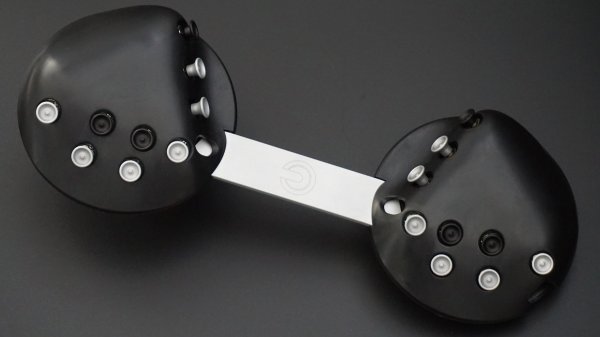
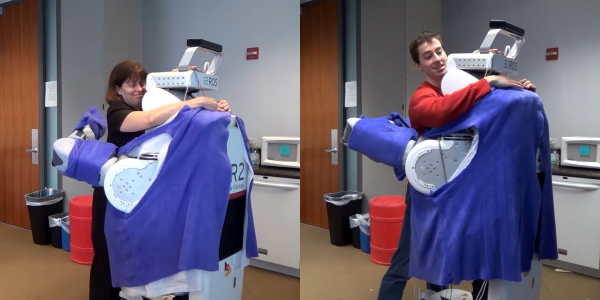
So what makes a good hug, anyway? It’s a bit like a handshake. It should be warm and dry, with a firmness appropriate to the situation. Ideally, you’re both done at the same time and things don’t get awkward. Could a robot possibly check all of these boxes? That’s the idea behind HuggieBot, the haphazardly humanoid invention of Katherine J. Kuchenbecker and team at the Max Planck Institute for Intelligent Systems in Stuttgart, Germany (translated). User feedback helped the team get their arms around the problem.

Continue reading “Can Robots Give Good Hugs?” →

Illustrated Kristina with an IBM Model M keyboard floating between her hands.

Keebin’ With Kristina: The One With The Tri-lingual Typewriter

Isn’t it just fantastic when a project finally does what you wanted it to do in the first place? [Simon Merrett] isn’t willing to compromise when it comes to the Aerodox. His original vision for the keyboard was a wireless, ergonomic split that could easily switch between a couple of PCs. Whereas some people are more into making layout after layout, [Simon] keeps pushing forward with this same design, which is sort of a mashup between the ErgoDox and the Redox, which is itself a wireless version of the ErgoDox.

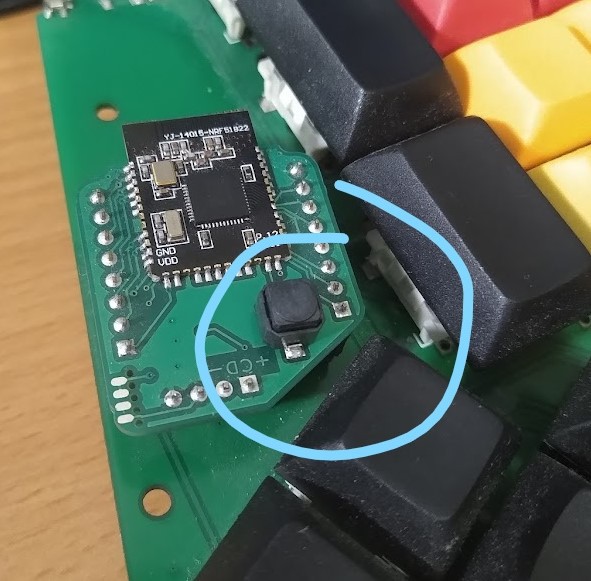
The Aerodox has three nRF51822 modules — one for the halves to communicate, one for the control half to send key presses, and a third on the receiver side. [Simon] was using two AA cells to power each one, and was having trouble with the range back to the PC.

The NRFs want 3.3 V, but will allegedly settle for 2 V when times are hard. [Simon] added a boost converter to give each a solid 3.3 V, and the Aerodox became reliable enough to be [Simon]’s daily driver. But let’s go back to the as-yet-unrealized potential part.

Continue reading “Keebin’ With Kristina: The One With The Tri-lingual Typewriter” →

It's a keyboard!

The Charachorder Keyboard Is Too Fast For Competition

We interrupt the flow of Keebin’ with Kristina to bring you this special bulletin. When three different people alert you to a keyboard within 48 hours or so, it calls for more than just a paragraph in the roundup column. So here are several paragraphs, an animated GIF, and some extended commentary about the Charachorder, a new kind of input that came up through Kickstarter in 2021.

Driving this hype train are some short viral videos that show the founder hitting 500+ WPM on this crazy thing. FYI, that is fast enough to get you banned from typing competitions, including the monkeytype leaderboard. Those apes forbid chorded input altogether, and automatically throw out entries above 300 WPM. It acheives these insane speeds through clever mechanical design and, of course, firmware.

Continue reading “The Charachorder Keyboard Is Too Fast For Competition” →

Macro-popsicle

Macropopsicle Melts On Your Desk, Not In Your Mouth

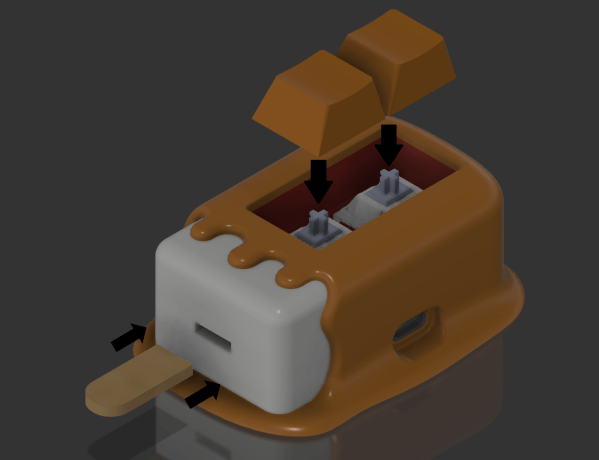
We all know by now that macropads are super cool shortcut machines. And what’s cooler than a popsicle? Well, this cute little thing, which goes by the name of Macropopsicle.

The freezer’s open if you want your own Macropopsicle. There’s not much more to this tasty and practical desktop treat than an adafruit QT Py, a couple of Cherry MX-style switches, some wires, and a handful of printed parts. One cool thing about this design is that all the pieces print with little to no supports, and many of them snap together.

We say there’s a lot to like about Macropopsicle — it’s cute, it’s useful, and there’s even a little bite taken out of it that you can see in some of the renders. [oxisidia] even shoved a real popsicle stick in there to complete the look.

Keyboard aficionados will no doubt recognize Macropopsicle as a great companion to Milk, a 2% keyboard.

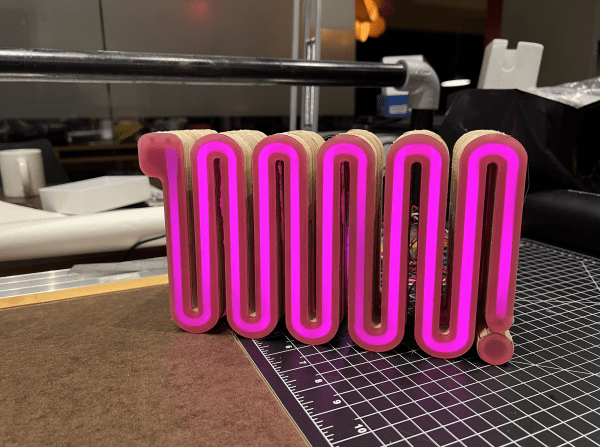
Segments light up as a person's step goal is achieved.

Slither: A Visual Pedometer That Sheds Light

Have you already broken that New Year’s resolution to get more exercise? Yeah, us too. Maybe the problem is simply that we didn’t gamify the goal. A simple visual aid that shows your progress can help make a goal more achievable and easier to stick to, day after January day. That’s the idea behind [skhackett]’s Slither, the visual pedometer.

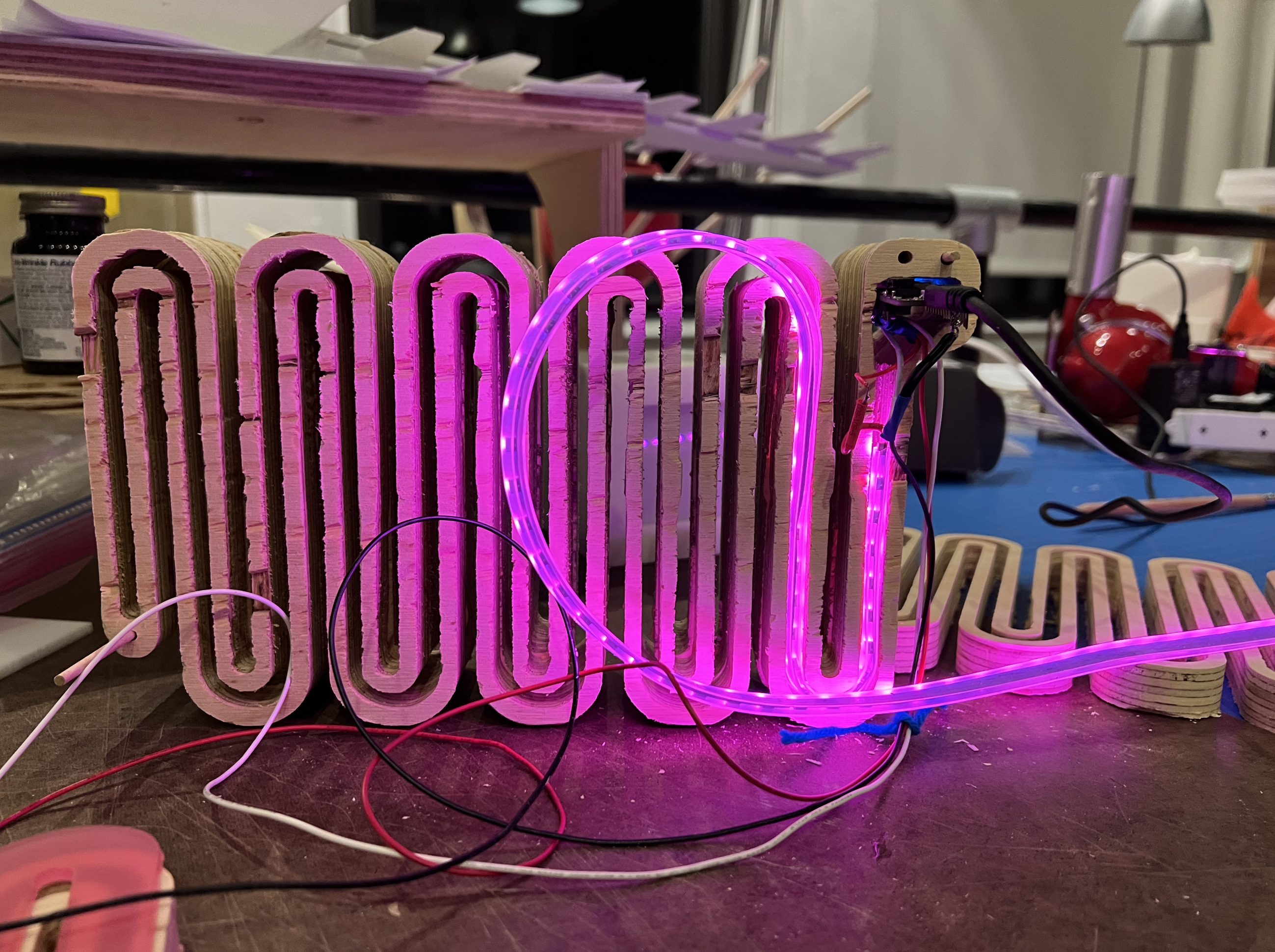
Slither's backssssideAlthough Slither uses the Fit Bit app, no actual Fit Bit is required — great news for those of us who don’t like to wear accessories. But you will have to carry your phone everywhere if you want your steps to count. By tracking the steps taken each day, the sum of Slither’s segments signifies a weekly total goal of 50,000 steps.

Around back is a Feather Huzzah that receives step data from the phone and drives a strand of side-lit LED strips. There’s a Hall effect sensor in the tail, and Slither is powered on and off with a small, separate piece of wood and acrylic with a magnet embedded inside. Isn’t that a classy way to switch a snake?

We really like the look of the plywood here, though [skhackett] recommends using MDF instead because they experienced a fair amount of chipping. If you just want to watch the snake light up, it shouldn’t be too hard to cheat the pedometer.

What You Should Know Before Buying An Industrial Sewing Machine

I’ve been sewing off and on since I was a kid, and I really started to get into it about ten years ago. Even though I technically outgrew my little 3/4 size domestic machine pretty quickly, I kept using it because it always did whatever I asked it to. I even made my first backpack on it before deciding it was time for something bigger. Don’t ask me how I managed to not kill that machine, because I have no idea.

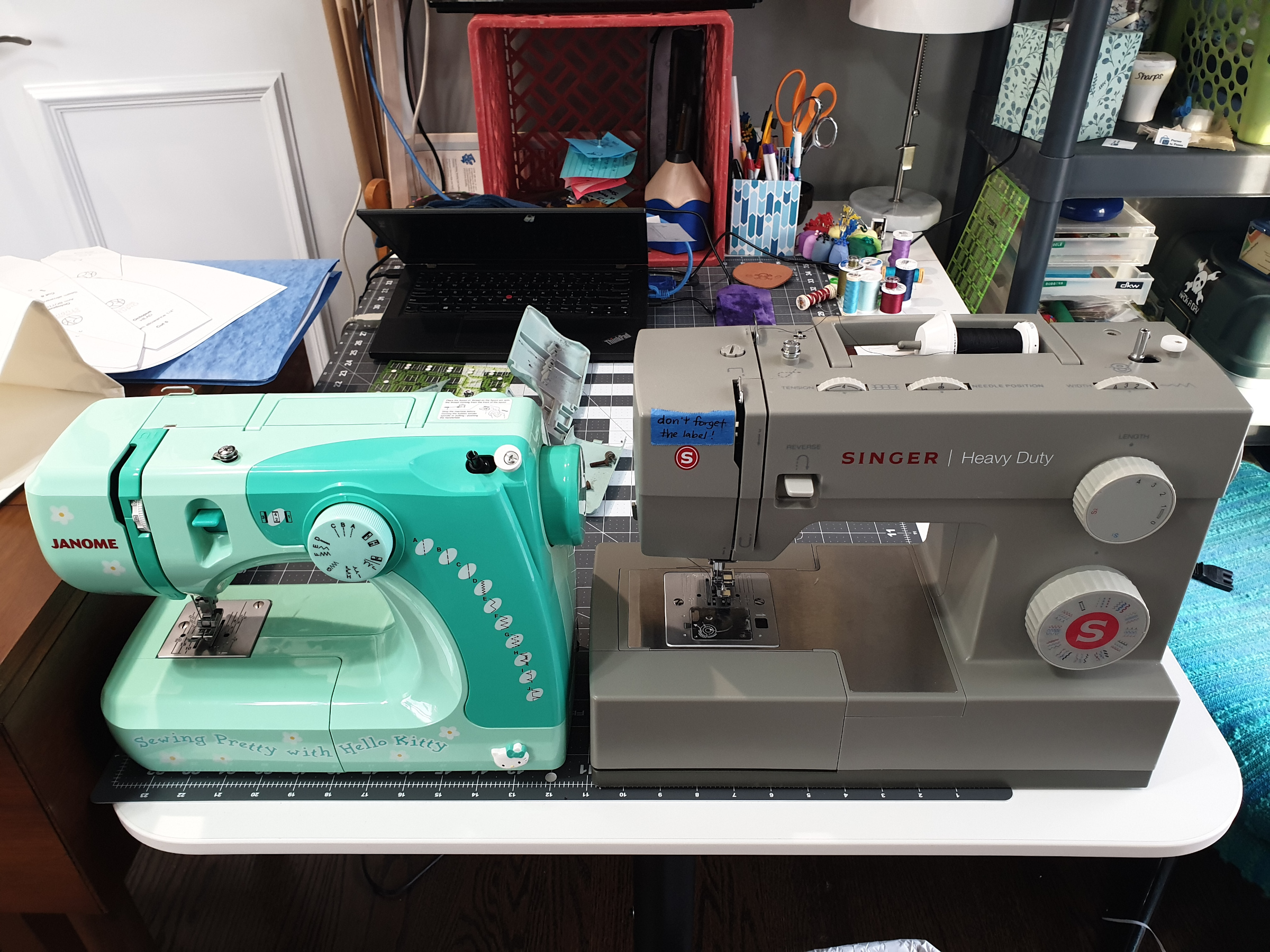
Left: a 3/4 size Janome 11706. Right: a full-size Singer Heavy Duty 4452.

Last year, I got a so-called heavy duty Singer that claims to have 50% more power than a standard domestic machine. This bad boy will make purses and backpacks with ease, I thought. And it does. Well, most of the time.

I found its limits when I tried to make a bag out of thick upholstery material. And honestly, when it comes down to finishing most bags — sewing the thickest and most difficult seams — the machine often lifts up from the table on the end opposite the needle.

What I really need is an industrial sewing machine. Not to replace the Singer at all, but to complement it. I can totally justify this purchase. Let me tell you why.

Continue reading “What You Should Know Before Buying An Industrial Sewing Machine” →

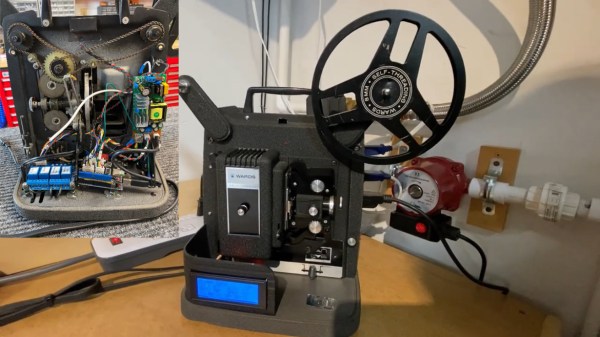
This film projecter is hiding an Arduino Uno that controls a water-based cooling system.

Cool The Shop With A Thermal Battery-Based System

Having any kind of shop is pretty great, no matter how large it may be or where it’s located. If the shop is in an outbuilding, you get to make more noise. On the other hand, it will probably get pretty darn hot in the summer without some kind of cooling system, especially if you don’t have a window for a breeze (or a window A/C unit).

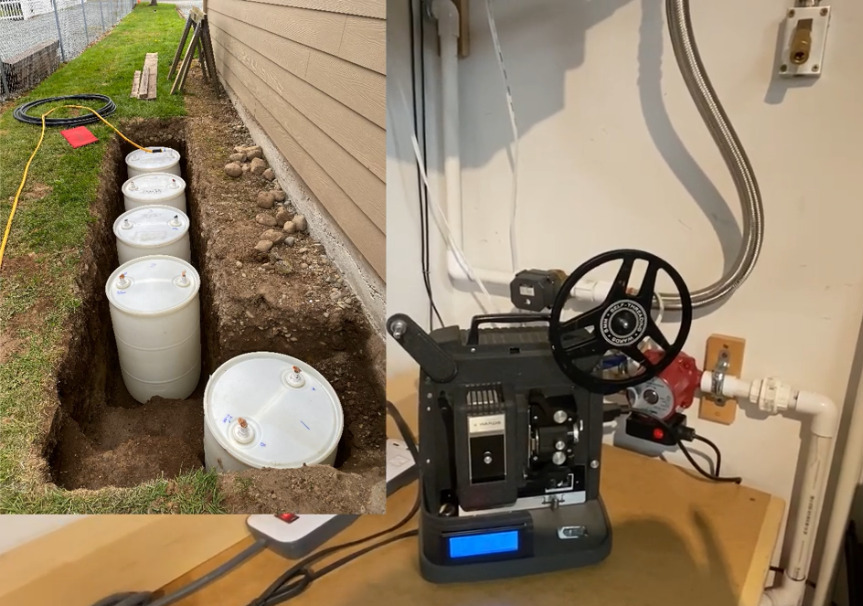
Five 55-gallon tanks of tap water are buried just outside the shop.[Curtis in Seattle] built an awesome thermal battery-based cooling system for his shop. The battery part consists of five 55-gallon drums full of tap water that are connected in series and buried a foot underground, about two feet out from the wall. There are two radiators filled with water and strapped to 20″ box fans  — one inside the shop, which sends heat from the shop into the water, and another outside that transfers heat out of the water and into the cool night air. Most summer days, the 800-square-foot shop stays at a cool 71°F (21.7°C).

We love that the controls are housed in an old film projector. Inside there’s an Arduino Uno running the show and taking input from four DS18B20 one-wire temperature sensors for measuring indoor, outdoor, battery, and ground temperatures. There are four modes accessible through the LCD menu — idle, cool the shop, recharge mode, and a freeze mode in case the outside temperature plummets. Why didn’t [Curtis in Seattle] use anti-freeze? It’s too expensive, plus it doesn’t usually get that cold. (Although we hear that Seattle got several inches of snow for Christmas.) Check it out after the break.

If you can’t just go burying a bunch of 55-gallon drums in the ground where you live, consider building a swamp cooler out of LEGO.

Continue reading “Cool The Shop With A Thermal Battery-Based System” →