Defcon 16: Badge Details Released


Defcon will once again be one-upping the sophistication of the conference attendee badges. Wired has just published a preview of this year’s badge. The core is a Freescale Flexis MC9S08JM60 processor. The badge has an IR transmitter and receiver on the front plus eight status LEDs. On the back (pictured below), there is a mode select button, CR123A battery, Data Matrix barcode, and an SD card slot. You can add a USB port to the badge and upload code to it using the built in USB bootloader. All the dev tools needed will be included on the conference CD or you can download the IDE in advance. The low barrier to entry should lead to some interesting hacks. In previous years, you needed a special dongle to program the hardware. There is no indication as to what the badge does out of the box. Releasing the badge early is a first for Defcon and the one pictured isn’t the attendee color, but we’re sure someone will still come up with a clone.

Now comes the fun part: What do you think the best use of this badge will be? Would Defcon be so cavalier as to equip everyone in the conference with a TV-B-Gone? I think our favorite possibility is if someone finds a security hole and manages to write an IR based worm to take over all the badges.

Defcon 14 introduced the first electronic badge which blinked in different patterns. Defcon 15 had a 95 LED scrolling marquee. [Joe Grand] will be posting more specific Defcon 16 badge details to his site after the opening ceremony. Check out more high resolution photos on Wired.
Continue reading “Defcon 16: Badge Details Released”

CNC Wood Router


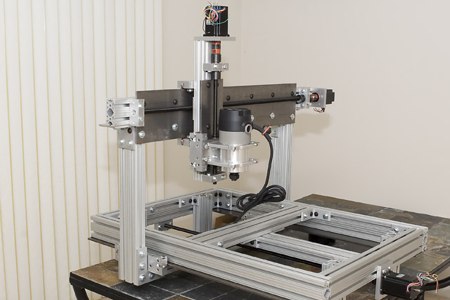
[GlacialWanderer] has published the first pictures from his CNC machine build. It’s a three axis gantry style machine that he intends to route and engrave wood with. He’s posted a detailed cost breakdown: $1800. He estimates spending 30 hours researching on sites like CNCzone. The build time for the mechanical side was around 50 hours. The electrical system hasn’t been hoooked up yet, so look for that in a future post. It looks like an incredible machine already, so we can’t wait to see what’s next.

New From SparkFun


SparkFun is rolling out interesting things to play with every week. They’ve added a NanoMuscle actuator that uses a shape memory alloy to lift nearly 70 times its own weight. Their LilyPad collection has expanded to include small momentary switches and a thermistor type temperature sensor. Lastly, they’ve got an FM receiver module. It just needs an antenna and uses I2C or SPI for control.

Apple Newton Dev Kit?


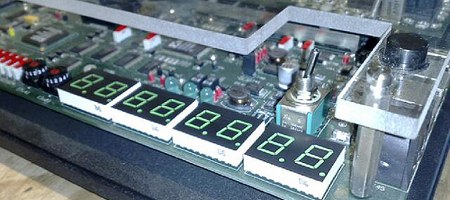
[phooky] picked up this bizarre bit of dev hardware three years ago and isn’t really sure what it is. It has lots of general purpose switches, LEDs, and audio jacks. The processor is a StrongARM chip in a ZIF socket. It has two serial ports, a CF, and PCMCIA slot too. Commenter [Glen Raphael] says it looks a lot like the early prototype development boards for the Apple Newton which also used a StrongARM chip. It’s definitely an interesting piece of history. Make sure you check out the full item on NYC Resistor.

Laser Etching Printed Circuit Boards


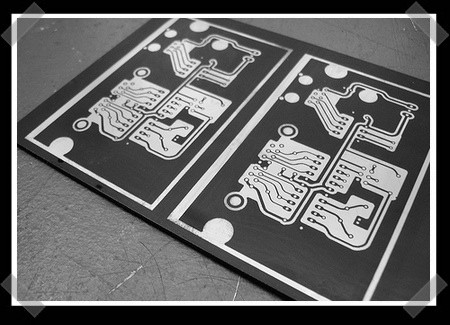
While we hope you enjoyed our How-To: Etch a printed circuit board, toner transfer certainly isn’t the only way to get the job done. [Garrett] from macetech has recently been playing around with using an Epilog laser to etch PCBs. He started by applying a thin even coat of flat black spray paint to the copper board. The laser is used to remove paint in areas that you want the copper removed. Once that’s done, you proceed with etching as usual. He eventually removed the paint mask using acetone. The result has very fine, sharp traces, but most people that have tried this agree that using spray paint is less than ideal.

More Defcon 16 Events Announced


Defcon keeps announcing more and more interesting events for next week’s conference. A free workshop is planned for the soon to be released DAVIX live CD. DAVIX is a collection of tools for data analysis and visualization. They’ll be running through a few example packet dumps to demonstrate how the tools can help you make sense of it all. [Thomas Wilhelm] will be driving out from Colorado Springs in his Mobile Hacker Space. He’s giving a talk Sunday, but will be giving presentations a few hours every day at the van. Some researchers from NIST will be setting up a four node quantum network and demonstrating some of the possible vulnerabilities in the system. Finally, as part of an EFF fundraiser, Defcon will feature a Firearms Training Simulator. Conference attendees will participate in drills designed to improve their speed, accuracy, and decision making skills.

Red Bull Flugtag Portland


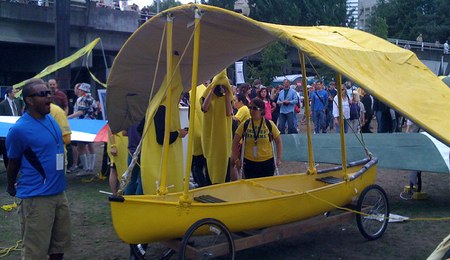
Off all the competitions for poorly performing human powered flying machines, the Red Bull Flugtag is one of our favorites. Honestly, it’s the only one we can think of, but that doesn’t mean we’re any less enthusiastic about giving flight to half baked ideas. Today was the Portland round of the international event. Teams have to submit an application for their craft in advance. The vehicle can have a maximum wingspan of 30 feet and a weight with pilot of 450 pounds or less. Power is from muscle or simply gravity. The vehicle also has to be easily retreivable so they can get it out of the water. Judging isn’t just for distance, but for creativity, too.

Flickr users [pdx-kate] and [Jabin] have uploaded images and video from the day: The winner was Team Yakima’s big wheel that flew 62 feet. Second place went to Greased Lightning at 55 feet. Third was the FreeBallin sneaker which you can see in flight here. The People’s Choice award went to the Space Balls Winnebago, which we unfortunately can’t find a very good picture of. You can read more about each individual entry on the results page.

Embedded below is the video of the current US record holder: a banjo that went 155 feet in Nashville. The next US event will be September 6th in Chicago.

Continue reading “Red Bull Flugtag Portland”