2026 Hackaday Europe: Pre-party, More Workshops, And Everything Else

With Hackaday Europe no more than two days away, we want to help you wrap up all of the last loose ends. And that means last-minute changes in the workshop schedule, details on the Friday night pre-party, and more! Some tickets for the event itself, the workshops, and the pre-party (reservations required) are still available right here.

Pre-Party, Friday May 15th

Kick off the weekend with us at the official Hackaday Europe pre-party at Soqquadro Restaurant, Piazza Era 7, 23900 Lecco, Italy. Enjoy the Italian aperitivi on the gorgeous Lago di Lecco waterfront. Your ticket includes two drinks and an array of delicious snacks. It’s the Italian way to pregame the weekend ahead. Bring a hack, or just relax and hang out. Your choice. Either way, make sure you pre-register. (On the preregistration page, scroll all the way down past the workshops.)

Workshops

Unfortunately, the Let’s Mesh workshop has been canceled, but the good news, thanks to our incredible sponsors, we’ve added two great new workshops to the lineup. On Saturday, May 16th, we’ll have Tiny Tapeout, When Code Needs a Body, and Fault Injection 101. Sunday features EchoGlow: Arduino UNO Q Workshop with the brand-new Arduino Q devices, from 11:00 AM – 2:00 PM.

Tickets and full descriptions are available at registration.

Lightning Talks

On Sunday afternoon, we’ll dedicate some time to Lightning Talks. These are short, seven-minute talks, with or without slides, on whatever interests you at the moment. If you’ve got hacks or deep thoughts to share with us, you’ll never find a more receptive audience. Register now! Talk slots are FIFO.

Thanks, and See You Soon!

If you’ve never attended a Hackaday event before, we’re excited to see you. Half the fun is the crowd that convenes. If you want to bring along a hack to informally show-and-tell, it’s a great icebreaker. You won’t have to bring food or drinks – we’ve got that covered all weekend.

If you’re an old Hackaday hand, we’re stoked to see you again! A first at Hackaday Europe is going to be whatever large fraction of our SAO collection fits into carry-on luggage, and a sweet-looking SAO wall made by Hackaday Superfriend [Thomas Flummer]. If you have an SAO that you’d like to add to our pile, bring it along! It’s about time for us to do a photo gallery and write-up of everything we’ve got.

And we can’t leave without thanking our broad array of sponsors who make Hackaday Europe possible:

Copy Or Redesign?

We got asked a great question in the mailbag segment on the Podcast this week: are there hacks that we have read about on Hackaday that we use in our everyday life? The answer was absolutely yes, and I loved Tom’s take it often goes the other way – he sees a hack, tests it out, and then writes it up.

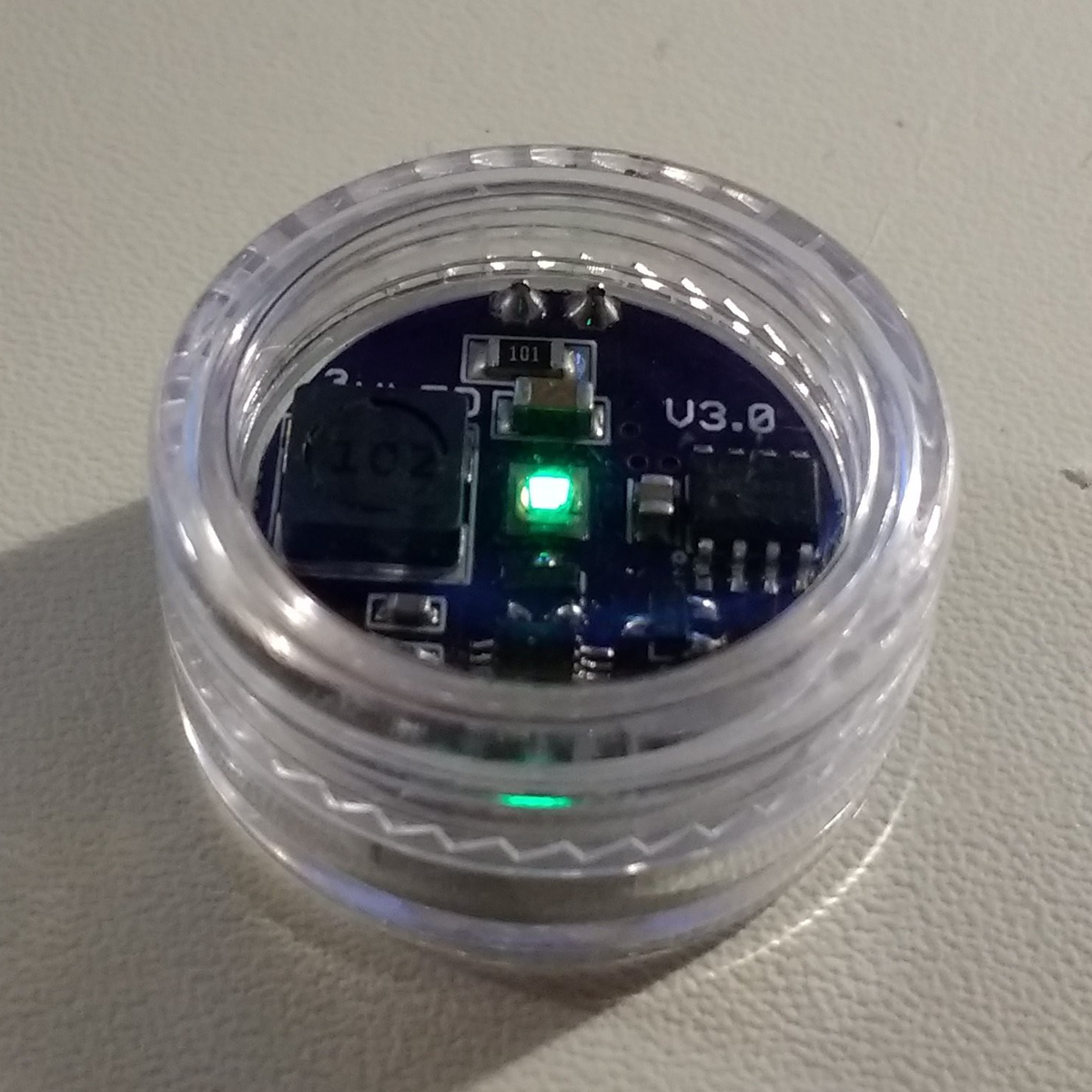
But I started looking around the office and I found more examples of projects that were absolutely inspired by projects I had seen on Hackaday, yet weren’t the same. I made a DIY mechanical keyboard because I saw someone else do it. There are a few home-made battery packs that I probably wouldn’t have attempted without having read about someone doing the same thing. I riffed on [Ted Yapo]’s Tritiled project, making a slightly inferior, but workable knockoff, and they’ve been glowing for many years now.

That got me to thinking about reproducing a project versus taking inspiration from it, and though I enjoy both, I’m find myself most often in the “inspiration” mode. I just can’t leave well enough alone, even when I’m fundamentally copying someone. NIH syndrome? Expediency? Probably both, and sometimes with a dose of hubris or feature creep.

Looking back at [Ted]’s TritiLED, though, I found some great examples in both the rebuild and redesign modes on Hackaday.io. [schlion]’s Making Ted Yapo’s TritiLED couldn’t be a clearer example of the former, and it’s great to look over his shoulder and appreciate all the lessons he learned along the way. [Stephan Walter]’s Yet another ultra low power LED is inspired by [Christoph Tack]’s Ultra low power LED, which is in turn inspired by [Ted]’s project, like a conceptual grandchild.

In a way, I look at this like with music: sometimes you play the notes the way they were written down, and sometimes you riff on someone else’s theme. Both are equally valid, and both owe a debt to the upstream source. Is Hackaday the hackers’ jazz club? And which of these modes do you find yourself working in most?

Congratulations To The Green Powered Challenge Winners!

For this challenge, we asked you to show off your hacks that power themselves sustainably from the environment around them. After all, nobody likes wires, and changing batteries is just a hassle. What’s better than an autonomous gizmo? Nothing.

Because this is Hackaday, we expected to see some finished-looking projects, some absolutely zany concepts, and basically everything in-between, and you did not disappoint! So without further ado, let’s have a look at the 2026 Green Powered Challenge winners, each of whom will be going on a $150 shopping spree at DigiKey, our contest’s sponsor.

Continue reading “Congratulations To The Green Powered Challenge Winners!”

Peripherals Hacks

Custom peripheral projects are among the most rewarding. Especially if you’re like me and you sit at the computer eight hours per day, anything that you can use on a daily basis is super satisfying. This topic of DIY peripherals came up on the podcast while chatting with Kristina, who is no stranger to odd inputs herself.

We were talking about a trackball that had been modified to read twisting gestures, by a clever hijacking of the twin mouse sensors inside. If you do a lot of 3D modeling, you can absolutely get by with just a mouse and shift-ctrl-alt as modifiers, but it’s so much more immediate to use a dedicated 3D input device. (I’ve got an ancient serial Space Mouse just under my left hand as I type this.)

My old favorite, which I haven’t used in ages, is the guts of a 5” hard-drive platter stack that I turned into a scroll wheel. Unfortunately, I don’t have space for it on my desk anymore, but it was just so pleasing to scroll through a document with something that had some real chonky momentum to it.

And it’s easier than ever to make your own. The classic blocky macropad is a great introduction, but as long as you’re doing the design yourself, why not extend it, or at least make it fit your hand? Or take your flights of fancy even further away from the mainstream. Consider the Bluetooth mouse ring, for instance.

Point is, the software side of almost any peripheral device you can imagine is sorted out already, and interfacing with the hardware is equally simple. Peripheral hacks have such a low barrier to entry, but afford so many creative hardware possibilities. And nothing says “Jedi” like building your own lightsaber.

Hackaday Europe: Last Round Of Speakers, Workshops

If you don’t already have your tickets to Hackaday Europe, pick them up now. The clock is ticking! Today, we’d like to announce our keynote speaker, the remainder of our featured talks, and two more workshops. (And if you want workshop tickets, which always go fast, get those soon!)

Hackaday Europe is super excited to welcome back Hackaday Superfriend [Sprite_tm] to kick off the event with a keynote talk on how he made a retrogaming PC from bare silicon. Don’t miss it.

Continue reading “Hackaday Europe: Last Round Of Speakers, Workshops”

Tool Embodiment And The Dead Trackball

There is a currently ongoing debate in the neuropsychology world about how we relate to the tools that we use. The theory of “tool embodiment” says that when we use some tools frequently enough, our brain recognizes them similarly to how it recognizes our own hands, for instance. There is evidence and counter-evidence from experiments with prosthetics, trash-grabber arms, and rubber dummy arms, just to name a few. It’s fair to say the jury is still out.

All I know is that today my trackball broke, and using a normal gaming mouse to edit the podcast was torture. It would be an exaggeration to say that I felt like I’d lost a hand, but I have so much motor memory apparently built up in my use of the trackball that switching over to another tool to undertake the exact same series of hundreds of small audio edits – mostly compensating for the audio delay across continents, but also silencing coughs and background noises – took an extra hour.

Anyone who has switched from one keyboard to another, or heck even from emacs to vim, knows what I experienced. My body just knows how to flick my wrist to make the cursor on the screen move over to the beginning of that “umm”. It’s not like I don’t conceptually know how to use a mouse either, and it does exactly the same job. But the mouse wasn’t my tool for this application. And saying that out loud makes it almost sound like I’m bordering on embodying my trackball.

I probably should have taken the trackball apart and replaced the bad tact switch on the left-click – that would have taken maybe twenty minutes – but I completely underestimated how integral the tool had become to the work. Anyway, as I write this, tomorrow is Saturday and I’ll have time to fix it. But today, I learned something pretty neat about myself in the process, even if I don’t think my single datapoint is going to rock the academic psych world.

What’s Your Favorite Kind Of Hack?

Talking with [Tom Nardi] on the podcast this week, he mentioned his favorite kind of hack: the community-developed open-source firmware that can be flashed into a commercial product that has crappy firmware, thus saving it. The example, just for the record, is the CrossPoint open e-book reader firmware that turns a mediocre cheap e-book into something that you can do anything you want with. Very nice!

And that got me thinking about “kinds of hacks” in general. Do we have a classification scheme for the hacks that we see here on Hackaday? For instance, the obvious precursor to many of Tom’s favorite hacks is the breaking-into-the-locked-firmware hack, where a device that didn’t want you loading your own firmware on it is convinced to let you do so. Junk-hacking is probably also a category of its own, where instead of finding your prey on AliExpress, you find it on eBay, or in the alleyway. And the save-it-from-the-landfill repair and renovation hacks are close relatives.

The doing-too-much-with-too-little hacks are maybe my personal favorite. I just love to see when someone manages to get DOOM running in Linux on a computer made with only 8-pin microcontrollers. Because of the nature of the game, these often also include a handful of abusing-a-component-to-do-something-it’s-not-meant-to-do hacks. Heck, we even had a challenge for just exactly those kind of hacks.

Then there are fine-art-hacks, where the aesthetic outcome is as important as the technical, or games-hacks where fun is the end result.

What other broad categories of hacks are we missing? And which are your favorite?