2022 Supercon: Schedule Released, And [Odd Jayy]

It’s finally time! We’ve put together the 2022 Supercon Schedule, and you can check out all the talks, workshops, and events in one place – right now.

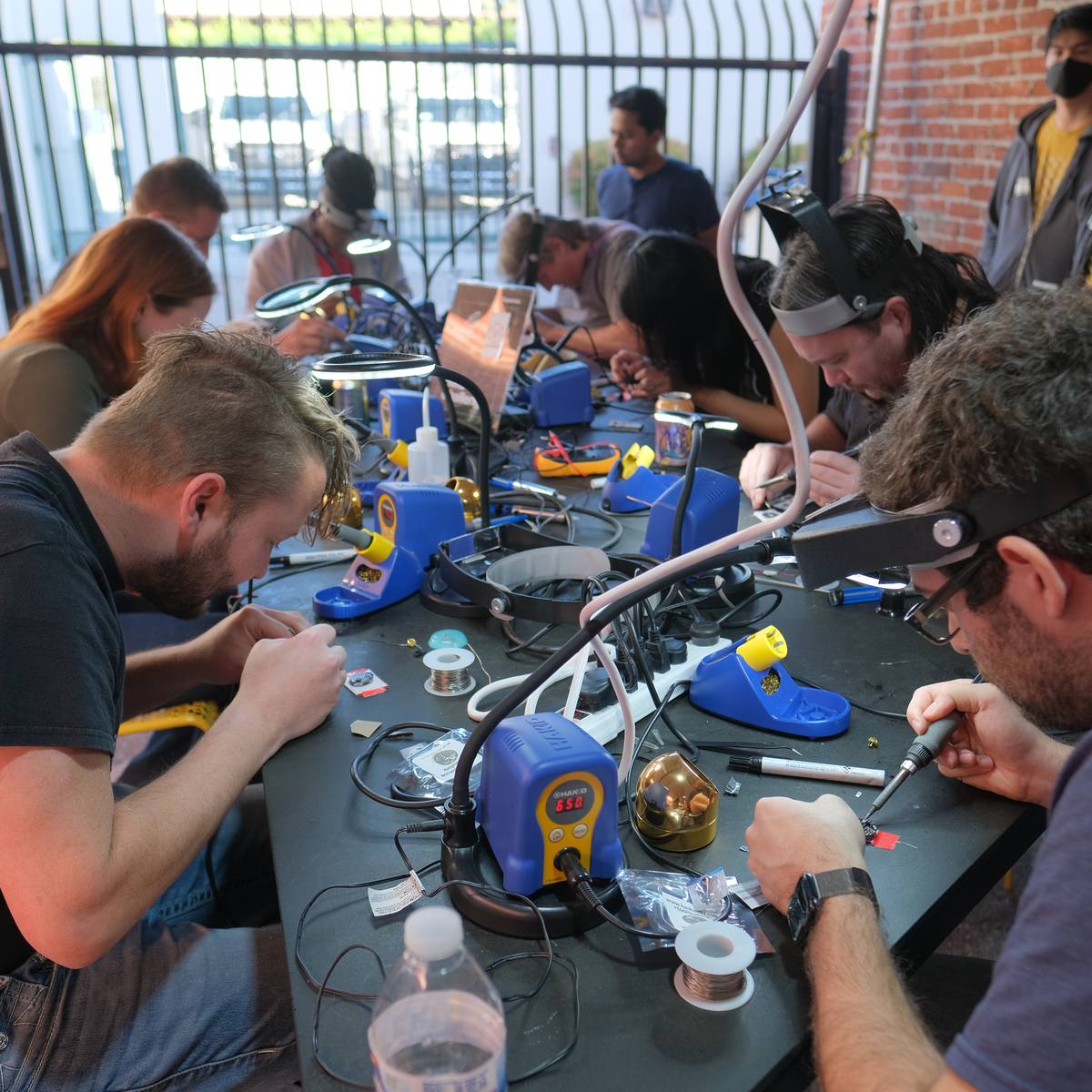
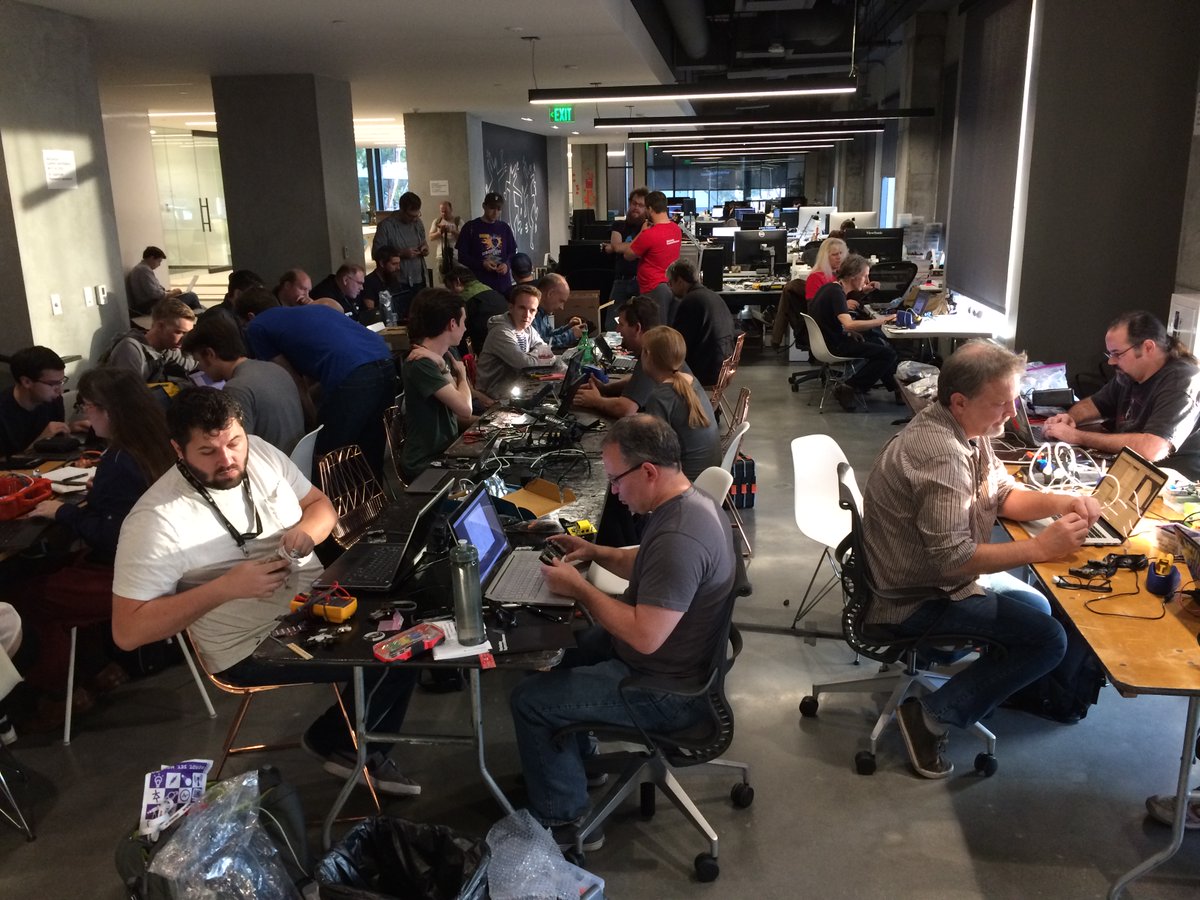
Badge hacking heating up (photo by @hackerwarehouse)

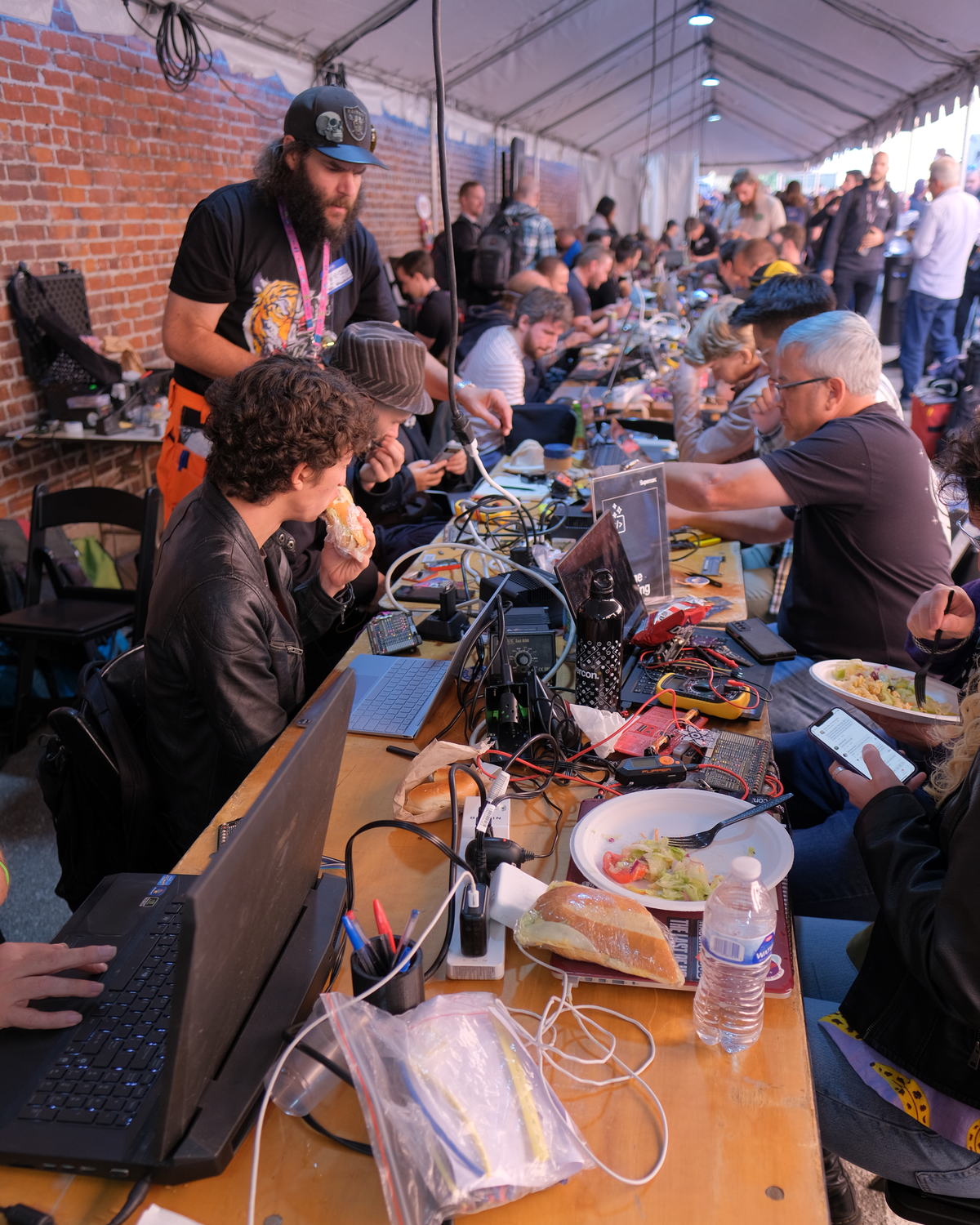
It all starts off with breakfast on Friday morning to power you up for a full day of badge hacking, workshops, and general mixing and mingling before the Friday night party. Fridays are significantly less formal, but swing by Supplyframe HQ any time to get registered, get your badge, and get a mellow head start on Supercon.

Saturday morning, the talks begin! After a brief introduction and welcome, keynote speaker Joe Grand takes the stage to kick things off. And from then on, it’s two tracks of talks on two stages until your brain explodes. Or at least until the Hackaday Prize Awards ceremony at 7:00 PM, followed by the awards after-party.

Pull yourself out of bed Sunday morning for another full day of stellar talks. And squeeze in some more last minute badge-hacking time somehow, because we close up Sunday evening with the always entertaining badge hacking contest and awards.

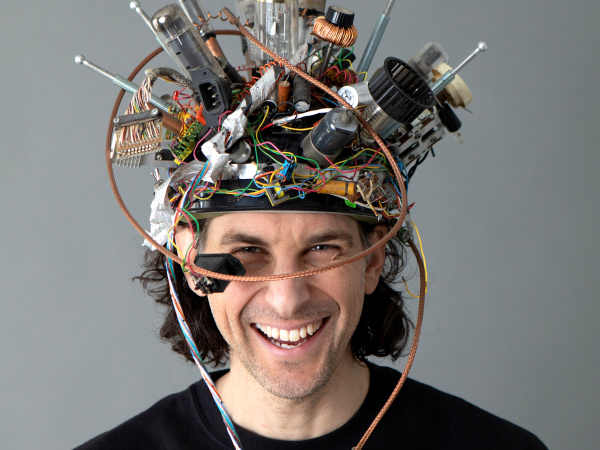
Jorvon [Odd Jayy] Moss to Speak

Plus, we’ve got one last bit of great news: Jorvon [Odd Jayy] Moss is giving a talk on his adventures in making companion robots, and his latest forays into adding more intelligence into his animatronic and artistic creations.

So if you haven’t bought your tickets yet, do it. ‘Nuff said. See you at Supercon!

And if you’re not able to make it live, all of the talks on the LACM Stage will be streamed live on our YouTube channel, and you can join in the discussion over at the Hackaday Discord server or on Hackaday.io’s Supercon Chat channel. And all the talks that we can’t stream, we’re recording for later release, so you can always catch up later.

2022 Hackaday Supercon: Joe [Kingpin] Grand Keynote And Workshops Galore

It’s our great pleasure to announce that Joe [Kingpin] Grand is going to be our keynote speaker at the 2022 Supercon!

If you don’t know Joe, he’s a hacker’s hacker. He’s behind the earliest DEFCON electronic badges, to which we can trace our modern #badgelife creative culture. He was at the l0pht when it became the most publicly visible hackerspace in the USA, at the dawn of what we now think of as cybersecurity. And moreover, he’s a tireless teacher of the art of hardware hacking.

Joe’s talk at DEFCON 22 about reverse engineering PCBs on a hacker budget is on our top-10 must watch playlist, and his JTAGulator debug-port enumeration device has been present at the start of countless hacking sessions. But again, it’s his enthusiasm for creating, his inspiring “what if I poke at this thing this way?” attitude, and overwhelming hacker spirit that make Joe a long-overdue speaker at Supercon! Continue reading “2022 Hackaday Supercon: Joe [Kingpin] Grand Keynote And Workshops Galore”

“Reversing Shorts” Demystify Phone Security

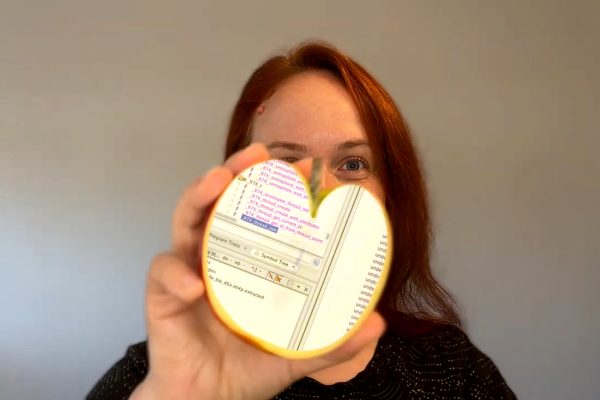
Ever wonder what makes a cellphone’s operating system secure, or what that app you just installed is saying about you behind your back? In a brand new video series, [Jiska] gives us a peek into different topics in smartphone software reverse engineering.

For instance, her latest video, embedded below takes us through some steps to poke at Apple’s RTKit OS, which is the realtime OS that runs inside most of their peripheral devices, including AirPods, but also on their bigger devices too.  We don’t know much about RTKit OS, but [Jiska]’s trick in this video is to get a foothold by looking through two different RTKit OS versions and noting which symbols are common — these are probably OS function names. Now you’ve got something to look for.

Each of the videos is short, to the point, and contains nice tips for perhaps the intermediate-to-advanced reverser who is looking to get into phones. Heck, even if you’re not, her demonstrations of the Frida dynamic tracing tool are worth your time.

And if you want a longer introduction into the internals of cellphones, we heartily recommend her talk, “All Wireless Stacks Are Broken“.

Continue reading ““Reversing Shorts” Demystify Phone Security”

Retrofitting Robots

Al Williams wrote up a neat thought piece on why we are so fascinated with robots that come in the shape of people, rather than robots that come in the shape of whatever it is that they’re supposed to be doing. Al is partly convinced that sci-fi is partly responsible, and that it shapes people’s expectations of what robots look like.

What sparked the whole thought train was the ROAR (robot-on-a-rail) style robot arms that have been popping up, at least in the press, as robot fry cooks. As the name suggests, it’s a robot arm on a rail that moves back and forth across a frying surface and uses CV algorithms to sense and flip burgers. Yes, a burger-flipping robot arm. Al asks why they didn’t just design the flipper into the stovetop, like you would expect with any other assembly line.

In this particular case, I think it’s a matter of economics. The burger chains already have an environment that’s designed around human operators flipping the burgers. A robot arm on a rail is simply the cheapest way of automating the task that fits in with the current ergonomics. The robot arm works like a human arm because it has to work in an environment designed for the human arm.

Could you redesign a new automatic burger-flipping system to be more space efficient or more reliable? Probably. If you did, would you end up with a humanoid arm? Not necessarily. But this is about patching robotics into a non-robotic flow, and that means they’re going to have to play by our rules. I’m not going to deny the cool factor of having a robot arm flip burgers, but my guess is that it’s actually the path of least resistance.

It feels kind of strange to think of a sci-fi timeline where the human-looking robots come first, and eventually get replaced by purpose-built intelligent machines that look nothing like us as the environments get entire overhauls, but that may be the way it’s going to play out. Life doesn’t always imitate art.

2022 Hackaday Supercon: Final Talks Announced

The third and final round of the 2022 Supercon talks announcements brings us closer to a complete picture of the full spectrum of hacking awesomeness taking the stage in just a few weeks. (And we haven’t even announced the keynote yet!)

Supercon is the Ultimate Hardware Conference and you need to be there! We’ll continue to announce speakers and workshops over the next couple weeks. Supercon will sell out so get your tickets now before it’s too late. And stay tuned for the next round of talk reveals next week! Continue reading “2022 Hackaday Supercon: Final Talks Announced”

2022 Hackaday Prize: Congratulations, Wildcard Winners!

The Wildcard Round is the wildest round, and the 2022 Hackaday Prize had a slew of great entries. We’ve winnowed the wildcards down to a large handful, and we’re happy to announce the finalists. Every winner receives a $500 award, and is automatically entered for the final round of the Hackaday Prize. The grand prize winners will be announced during Supercon on Nov. 5th, and we’ll be streaming so you can root for your favorites whether you’re with us in Pasadena or not.

So without further ado, the finalists. Continue reading “2022 Hackaday Prize: Congratulations, Wildcard Winners!”

Why Learn Ancient Tech?

The inner orbits of the Hackaday solar system have been vibrating with the announcement of the 2022 Hackaday Supercon badge. The short version of the story is that it’s a “retrocomputer”. But I think that’s somehow selling it short a little bit. The badge really is an introduction to machine language or maybe a programming puzzle, a ton of sweet blinky lights and clicky buttons, and what I think of as a full-stack hacking invitation.

Voja Antonic designed the virtual 4-bit machine that lives inside. What separates this machine from actual old computers is that everything that you might want to learn about its state is broken out to an LED on the front face, from the outputs of the low-level logic elements that compose the ALU to the RAM, to the decoder LEDs that do double-duty as a disassembler. You can see it all, and this makes it an unparalleled learning aid. Or at least it gives you a fighting chance.

So why would you want to learn a made-up machine language from a non-existent CPU? Tom Nardi and I were talking about our experiences on the podcast, and we both agreed that there’s something inexplicably magical about flipping bits, calling the simplest of computer operations into action, and nonetheless making it do your bidding. Or rather, it’s anti-magical, because what’s happening is the stripping away of metaphors and abstractions. Peering not just behind, but right through the curtain. You’re seeing what’s actually happening for once, from the bottom to the top.

As Voja wrote on the silkscreen on the back of the badge itself: “A programmer who has never coded 1s and 0s in machine language is like a child who has never run barefoot on the grass.” It’s not necessary, or maybe even relevant, but learning a complex machine in its entirety is simultaneously grounding and mind-expanding. It is simply an experience that you should have.