Could North Korea’s New Satellite Have Spied On Guam So Easily?

Earlier this week, another nation joined the still relatively exclusive club of those which possess a satellite launch capability. North Korea launched their Malligyong-1 spy satellite, and though it has naturally inflamed the complex web of political and military tensions surrounding the Korean peninsula, it still represents something of a technical achievement for the isolated Communist state. The official North Korean news coverage gleefully reported with much Cold War style rhetoric, that Kim Jong-Un had visited the launch control centre the next day and viewed intelligence photographs of an American base in Guam. Could the satellite have delivered in such a short time? [SatTrackCam Leiden] has an interesting analysis. Continue reading “Could North Korea’s New Satellite Have Spied On Guam So Easily?”

What It Takes To Make A Raspberry Pi Killer

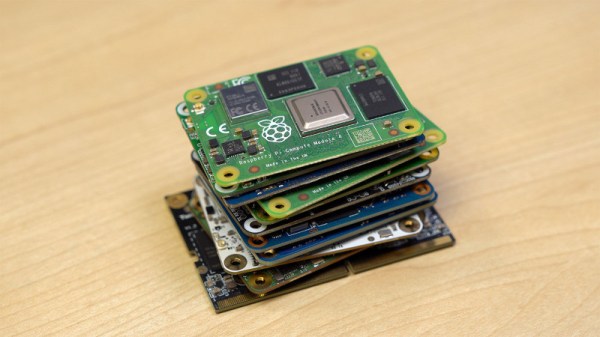
The folks at Raspberry Pi are riding on a bit of a wave at the moment, with the launch of the Pi 5 with its PCIe and RP1 peripheral chip, the huge success of the RP2040 microcontroller, and the supply chain issues that dogged the Pi 4 and Compute Module 4 during and after the pandemic finally working themselves out. But as always there are plenty of would-be competitors snapping at their heels, so [Jeff Geerling] has posed the question of what it takes to make a Raspberry Pi killer. He’s in a good position to do this, as he’s amassed an impressive collection of every competing Compute Module board.

It’s a well-observed analysis of the world of small Linux SBCs, on hardware, software, community, and price, and we find ourselves pretty much in agreement with it. The Pi hardware has quirks and is rarely the best on paper when compared to the competition, but they win hands-down on distribution support and community. In a sense what you really buy when you get a PI is this, because Raspberry Pi OS will run on it for the reasonable future. Rival makers would do well to read his piece, because we sense that if one of them tried to give the Pi a run for its money away from the hardware it would make for a much better SBC ecosystem. Take a look at his Compute Module comparison below the break.

We recently took a look at the strategic importance of the Pi 5 and in particular the RP1.

Continue reading “What It Takes To Make A Raspberry Pi Killer”

Tesla Claims To Have Open Sourced The Roadster

In an interesting step for anyone who follows electric car technology, the automaker Tesla has released a trove of information about its first-generation Roadster car into the public domain. The documents involved include service manuals, circuit diagrams, and technical details, and Elon Musk himself Tweeted posted on X that “All design & engineering of the original @Tesla Roadster is now fully open source.

We like the idea and there’s plenty of interesting stuff there, but we can’t find an open-source licence anywhere and we have to take issue with his “Whatever we have, you now have” comment. What we have is useful maintenance information and presents a valuable window into 2010’s cutting edge of electric vehicles, but if it’s everything they have then something must have gone very wrong in the Tesla archives. It’s possible someone might take a Lotus Elise and produce something close to a Roadster replica with this info, but it’s by no means enough to make a car from. Instead we’re guessing it may be a prelude to reducing support for what is a low-production car from over a decade ago.

When it comes to electric vehicle manufacturers open-sourcing their older models we already have a model in the form of Renault’s open-source version of their Twizy runabout. This is a far more credible set of information that can be used to make a fully open-source version of the car, rather than a set of workshop manuals.

Tesla Roadster, cytech, CC BY 2.0.

An Automated Watch Cleaner From An Older 3D Printer

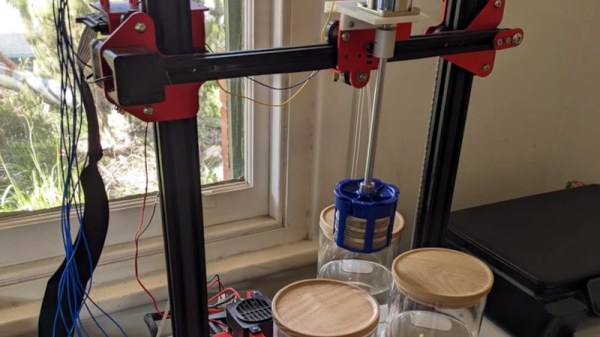
The many delicate parts in a mechanical wristwatch present a tricky cleaning problem, one that for professionals there is a variety of machines to tackle. As you might expect, such specialty equipment doesn’t come cheap, so [daveburkeaus] came up with his own solution, automated using an older 3D printer.

The premise is straightforward enough: it’s a machine with a succession of stations for cleaning, rinsing, and drying, through which the watch is moved on a set cycle. The hot end and extruder is replaced with a motor and shaft, on the end of which is a basket in which the watch sits. The basket is a commercial part for simplicity of construction, though one could certainly fabricate their own if need be. The printer gets a controller upgrade and of course a motor controller, and with a software stack built upwards from the Klipper firmware seems ready to go. There is the small matter of the heater used for drying not keeping the firmware happy as a substitute for the heated bed it thinks it’s driving, but that is fixed by controlling it directly.

We’ve remarked before that superseded 3D printers are present in large numbers in our community, and particularly now a few years since that article was written we’re reaching the point at which many very capable machines are sitting idle. It’s thus particularly good to see a project that brings one of them out of retirement for a useful purpose.

Sometimes It’s Worth Waiting: Kodak Finally Release Their Super 8 Camera

Think of all those promised products that looked so good and were eagerly awaited, but never materialized. Have you ever backed a Kickstarter project in the vain hope that one day your novelty 3D printer might appear? Good luck with the wait! But sometimes, just sometimes, a product everyone thought was dead and gone pops up unexpectedly.

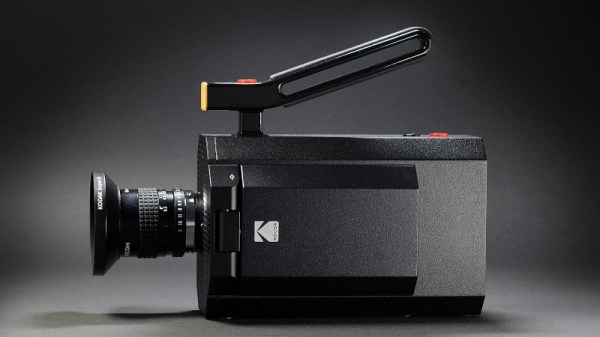
So it is with Kodak’s infamous new Super 8 camera, which they announced in 2018 and had the world of film geeks salivating over, then went quiet on. It’s abandoned, we all thought, and then suddenly five years later it isn’t. If you really must have the latest in analog film-making gear, you can put your name down to order one now.

Continue reading “Sometimes It’s Worth Waiting: Kodak Finally Release Their Super 8 Camera”

A Low Voltage Tube Makes For A Handy Preamplifier

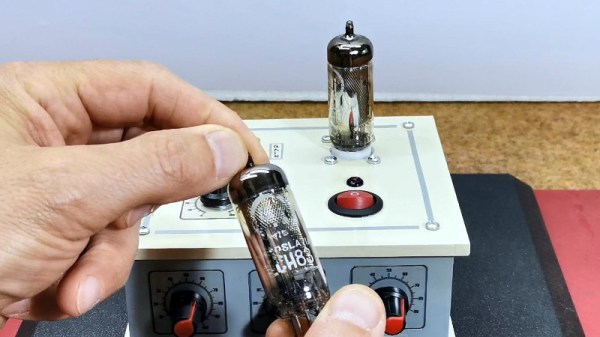
When most people think of tube circuits, the first thing that comes to mind is often the use of high-voltage power supplies. It wasn’t a given for tube circuits, though, as a range of low-voltage devices were developed for applications such as car radios. It’s one of these, an ECH83 triode-heptode, which [mircemk] has taken as the basis of an audio preamplifier circuit.

The preamp circuit is pretty simple, being a two-stage single-ended design using both halves of the tube. Between the two is a three-band tone control circuit as used in classic guitar amplifiers, making for a serviceable and easily achievable way to chase that elusive “valve sound.”

There is much discussion among audio enthusiasts about the supposed benefits of vacuum technology as opposed to transistors in an amplifier. Much of it centres around the idea that tubes distort in the even harmonics while semiconductors are supposed to do so in the odd harmonics. Still, we’d be inclined to spot a bit of snake oil instead and point to early transistor amplifiers simply being not very good compared to the tube amps of the day. That said, a well-made tube amplifier set-up will sound just as amazing as it always did, and since this one is paired with a matching power amp we wouldn’t say no to it ourselves.

If you fancy messing about with tubes for not a lot, there’s a cheap module for that.

You Can Now Build Your Own Polaroid-style Pack Film Cartridge

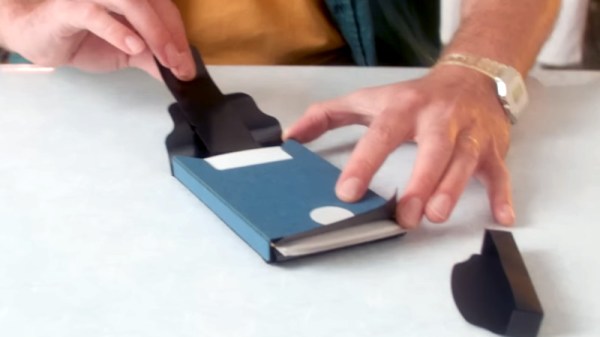
Instant photography was one of the twentieth century’s coolest-to-have consumer inventions, but when the digital photography revolution came it had few answers. It survives as a niche format thanks to Fuji’s Instax line and a group of Dutch entrepreneurs who revived a defunct Polaroid works, but what hasn’t made it are the earlier pack and roll film formats for which the picture is revealed by peeling apart a negative and positive side. All isn’t lost though, because a small Austrian company has been producing pack film cartridges as a handmade artisan product. To reduce the cost per print they’re now available as a DIY self-assembly kit, and it’s this which [In an Instant] is taking a look at in their latest video.

The kit has enough components for eight shots, and where the original cartridge would have held multiple exposures this one can only hold one at a time. The cartridge itself is cleverly formed from folded card as opposed to the plastic and metal of the original, and the components are a relatively straightforward assembly task. It’s a fascinating window into how the Polaroid pack film process worked, with the light-sensitive layer behind a pull-away black light screen, in front of the white positive sheet and with a pouch of developer chemicals to one side. It’s in no way cheap at somewhere about 10 dollars a shot, but it’s amazing that pack film can be recreated and for enthusiasts it’s a lifeline that keeps their cameras useful.

This isn’t the first time we’ve looked at revitalising a pack film camera, but it’s a lot easier than hacking a Fuji cartridge to do the job.

Continue reading “You Can Now Build Your Own Polaroid-style Pack Film Cartridge”